Where the Missouri Decal Mounts
It’s a common scenario: you’ve gone through the whole process of buying your ATV, getting it titled, and finally, securing that precious registration decal from the Missouri Department of Revenue. You feel a sense of accomplishment, ready to hit the trails or tackle that farm work. But then you look at that little sticker, look at your machine, and wonder, "Okay, where exactly does this thing go?" It’s a seemingly small detail that can cause a lot of head-scratching, and honestly, doing it wrong can lead to unnecessary hassle. This guide is here to clear up that confusion once and for all, showing you precisely where that Missouri ATV decal needs to be mounted to keep your machine legal and your mind at ease.
Understanding Missouri's ATV Decal Requirement
When it comes to off-highway vehicles in Missouri, the system can feel a little different from what you might be used to with cars or even motorcycles. That little decal is more important than you might think, and understanding its purpose can help clarify why its placement is so specific.
Why Missouri Issues a Decal, Not a Plate
You might be used to seeing a shiny metal license plate on the back of any vehicle allowed on public roads. That's the standard for cars, trucks, and even some types of utility vehicles. However, when it comes to ATVs, Missouri opts for a decal. Why the difference? Well, think about where ATVs typically operate. They’re designed for rough terrain, tight trails, and often get covered in mud, dust, or brush. A standard license plate, which requires specific mounting hardware and a clear display area, simply isn't practical for most ATVs. There isn't a universal, protected spot on every quad where a plate would be visible and safe from damage.
This is a point of frequent confusion for many new ATV owners, especially if they’ve previously only registered road-legal vehicles. The state understands the unique nature of these machines, which is why [Why Missouri Issues a Decal and Not a Plate] is all about providing a more durable and adaptable form of identification. The decal is designed to be sturdy, adhesive, and able to withstand the elements to a degree, fitting more naturally onto the existing structure of an ATV. It’s a pragmatic solution to a unique vehicle type, aiming for functionality over the traditional road-vehicle approach.
What the Decal Represents for Your ATV
That small sticker you get isn’t just a piece of pretty artwork; it’s tangible proof that your ATV has gone through the proper channels and is legally registered in the state of Missouri. Think of it as your ATV’s official ID card. When you decide to [Registering an ATV in Missouri], you're essentially telling the state that this machine belongs to you, that its ownership is recorded, and that you’ve paid the necessary fees to use it in authorized areas. This decal is the visible sign of that completed process.
It represents compliance with state law, which is crucial if you plan to ride on any public lands, state parks, or county roads where ATVs are permitted. Without this decal, or with an improperly displayed one, you could face questions from law enforcement or park rangers. It connects directly to the [Titling an ATV in Missouri] process, as you generally can’t register a machine without first having a title. The decal, with its unique identifier number, ensures that your specific machine can be traced back to its registered owner, providing accountability and helping to maintain order on shared riding areas. It's a small but mighty piece of paper that signifies your legal right to ride.
The Official Placement: Right Front Fork
Now for the million-dollar question: where do you actually stick that decal? Missouri law is quite specific about this, and it’s a detail that many riders, especially those new to the Show-Me State, often overlook or misunderstand.
Specifics of "Right Front Fork"
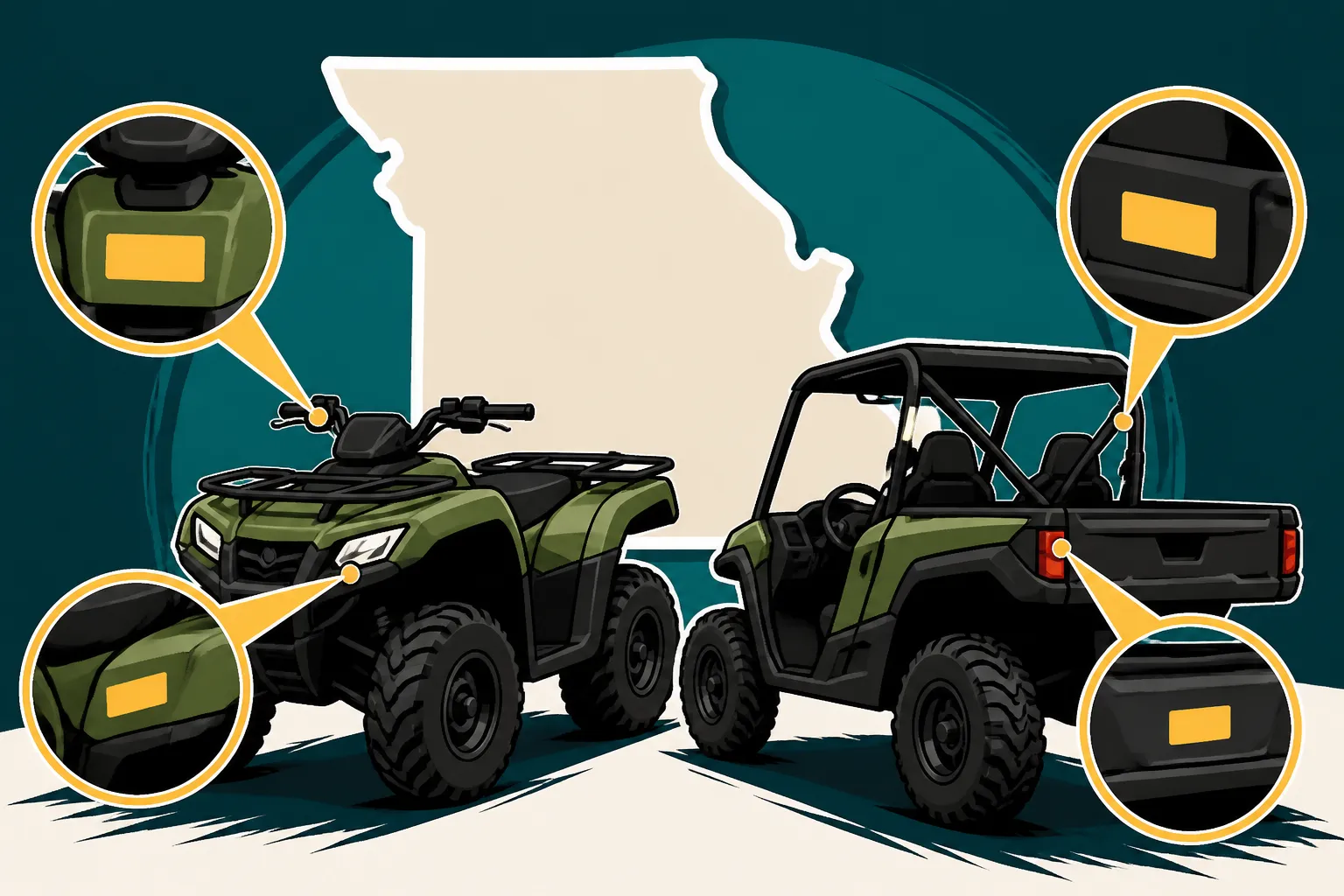
The official directive from the Missouri Department of Revenue is clear: the ATV decal must be mounted on the "right front fork." But what does "right front fork" really mean in practical terms when you're standing there with a sticker in hand? Imagine you're sitting on your ATV, in the rider's seat, looking forward. Your right hand is on the right handlebar. The right front fork is the suspension component directly below that right handlebar, extending down towards the front wheel.
The key is not just where but how it's placed. It needs to be clearly visible and permanently affixed. This means finding a spot on that fork where the entire decal can lay flat, without being wrapped around a curve too sharply, or obscured by cables, hoses, or protective covers. You want it positioned so that if a park ranger or deputy were standing to the right front side of your ATV, they could easily read the decal number without having to bend down too much or move anything out of the way. It’s about accessibility and instant identification. For a deeper dive into this precise location, you might find [Why the Decal Goes on the Right Front Fork] particularly enlightening. It’s a rule designed for quick visual checks, making it easy for officials to verify your registration status without causing delays.
Challenges with Placement on Different Machine Types
While the rule is straightforward – right front fork – the reality is that not all ATVs are created equal, and this can present some real-world challenges. Modern ATVs, and even older models, come with a variety of designs, accessories, and protective gear. You might have a beefy brush guard that wraps around the front suspension, or perhaps extra lighting, winch cables, or even aftermarket covers on your forks. These additions, while practical for riding, can make finding that perfect, unobstructed flat spot on the right front fork a bit of a jigsaw puzzle.
It's completely understandable to feel a bit frustrated trying to navigate these variations. You want to protect your machine, but you also need to comply with the law. Sometimes, the only available flat surface might be a bit lower or higher than what feels "ideal," or you might have to slightly adjust an accessory to ensure the decal has a clear view. The goal is always maximum visibility. Don't be afraid to test out different spots with a temporary piece of paper before peeling off the actual decal. You want to make sure the entire decal adheres properly and isn't prone to peeling off due to constant rubbing or bending. It’s about finding that sweet spot that satisfies both the legal requirement and the practical realities of your specific machine's setup.
The Importance of Visibility and Condition
Once you’ve got that decal firmly attached to your right front fork, your job isn’t quite over. That decal isn't just a one-time application; it needs to remain visible and in good condition throughout its lifespan. This is critical for avoiding any potential issues when you're out enjoying your ATV.
Ensuring Your Decal is Clearly Visible
A decal that's mounted correctly but then becomes caked in mud, scratched, or faded to the point of being unreadable really defeats its purpose. The whole point of the specific placement on the right front fork is to ensure that your ATV's registration can be quickly and easily verified by law enforcement or park personnel. Imagine a ranger doing a quick check at a trail entrance or during a patrol; they need to be able to see that decal and read its numbers without any fuss.
If your decal is obscured by dirt, a loose cable, or even just general wear and tear, it could lead to them stopping you for a closer inspection, or worse, issuing a citation. It feels like a small detail, doesn't it? But it's these "small details" that can turn a fun day of riding into a frustrating conversation. Make it a habit to glance at your decal before you head out, especially after a particularly muddy or dusty ride. A quick wipe with a damp cloth can make all the difference. Regular cleaning of your machine, including the decal area, is a simple step to ensure it remains legible and visible, keeping you in good standing with the rules.
Protecting Your Decal from Wear and Tear
Missouri's ATV decal is designed to last for three years, but let's be realistic: ATVs operate in some pretty harsh conditions. Mud, water, direct sunlight, brush scraping against it, and even simply washing your machine can take a toll on that little sticker. While it’s made to be durable, it's not invincible. A decal that’s peeling, torn, or has its numbers worn off can be just as problematic as not having one at all.
You might be wondering how to keep it pristine when your quad is constantly battling the elements. While you can't encase it in a bubble, there are some proactive steps you can take. Some riders opt for a thin, clear protective film over the decal itself, similar to what's used on phone screens, to add an extra layer of defense against scratches and UV fading. Just make sure it doesn't obscure the decal's details. When washing your ATV, be gentle around the decal – avoid directing high-pressure streams directly at its edges, which can cause it to lift. If, despite your best efforts, your decal becomes unreadable or gets knocked off by a rogue branch, it’s important to address it promptly. [Replacing a Lost Missouri Decal] or dealing with [What to Do When a Decal Number Wears Off] is a necessary step, and you’ll want to sort it out before your next ride to avoid any issues. Remember, a well-maintained decal is a clear sign you’re a responsible rider.
Common Misconceptions and Where NOT to Mount It
Just as important as knowing where the decal should go is knowing where it absolutely shouldn't. The state's requirement for the "right front fork" isn't arbitrary; it's chosen for specific reasons, and placing it elsewhere can lead to problems.
Why Other Locations Are Not Acceptable
It’s easy to think, "Well, as long as it's somewhere visible on the ATV, it'll be fine, right?" Unfortunately, that's not the case. The requirement for the right front fork is a specific one, and straying from it can land you in hot water. Common incorrect placements often include the handlebars, the front or rear fender, the frame itself, or even creative spots like a helmet (which isn't attached to the machine) or a storage box.
The problem with these alternative locations is multifold. First and foremost, they simply don't comply with the exact wording of the Missouri regulation. While a ranger might appreciate your effort to display it, they are ultimately bound by the specific legal definition of where it must be. Secondly, many of these locations are far more prone to damage, becoming obscured by mud or gear, or simply falling off during a rough ride. A decal on a fender might get ripped by a tire, while one on the handlebars could peel from constant gripping. For instance, if you've ever wondered [Can the Decal Go on the Frame Instead?], the answer is definitively no, and it's because the frame often lacks a consistently visible, flat surface suitable for inspection without getting up close and personal with your machine. Sticking to the official instruction ensures clarity and compliance.
The Dangers of Incorrect Placement
So, what’s the big deal if your decal isn't exactly on the right front fork? The "danger" isn't necessarily a life-threatening one, but it can certainly ruin your day and cost you some money. The primary danger is receiving a citation or a warning from law enforcement or park rangers. While some might offer a polite reminder to correct the placement, others might not be so lenient, especially if the decal is completely missing, unreadable, or placed in a way that seems deliberately obscured.
Imagine you're at a popular riding area, having a fantastic time, when you're stopped for a routine check. If your decal isn't where it's supposed to be, or if it's in poor condition, that interaction can quickly escalate. You could be asked to leave the trail, potentially be fined, or even have further action taken, depending on the severity of the non-compliance. It’s an avoidable headache. Furthermore, a decal that’s improperly placed is more likely to get damaged or fall off, meaning you’ll have to go through the process and expense of requesting a replacement sooner than necessary. It's truly one of those situations where spending a few extra minutes getting it right the first time saves you a lot of grief down the trail.
Applying the Decal Correctly
You've got your new decal in hand, you know exactly where it needs to go, and you're ready to apply it. But don't just rip off the backing and slap it on! A little bit of preparation goes a long way in ensuring your decal adheres properly and lasts for its full three-year lifespan. This isn't just about looks; it's about durability and compliance for the entire term of your [Missouri's Three-Year ATV Decal].
Step-by-Step Application Guide
Getting your decal to stick and stay put involves a bit more than just good intentions. Here’s a simple step-by-step process to ensure a secure application:
- Clean the Surface Thoroughly: This is arguably the most crucial step. The right front fork, especially on an ATV, is constantly exposed to dirt, grease, oil, and grime. Use a good degreaser or rubbing alcohol on a clean cloth to meticulously clean the exact spot where the decal will go. You want to remove all residue.
- Rinse and Dry Completely: After cleaning, make sure the area is completely free of any cleaning solution. Then, allow the surface to dry completely. Any moisture trapped underneath the decal will prevent proper adhesion and could lead to bubbles or peeling.
- Ensure Proper Temperature: Decals adhere best when the surface and ambient temperature are moderate, ideally not too cold (which makes the adhesive less effective) or too hot (which can cause it to set too quickly and trap bubbles). If it's a chilly day, you might consider warming the fork with a hairdryer (on a low setting) for a minute or two before application.
- Careful Peel and Placement: Carefully peel the backing off the decal, trying not to touch the adhesive side with your fingers, as oils from your skin can compromise the glue. Position the decal over your chosen spot on the right front fork. Take your time to align it perfectly before making contact.
- Smooth from Center Out: Once the decal makes initial contact, use a squeegee, a credit card, or even just your thumb, to smooth it down firmly from the center outwards. This pushes out any air bubbles and ensures full contact between the adhesive and the fork surface. Work slowly and methodically.
- Apply Firm Pressure: After smoothing, apply firm, even pressure across the entire decal for a minute or two. This helps to activate the adhesive fully and creates a strong bond.
By following these steps, you’ll give your decal the best possible chance to stay put and remain legible for the entire duration of your registration.
What to Do if Your Decal is Damaged or Lost
Life happens, especially when you're riding an ATV. Despite your best efforts, your Missouri ATV decal might get damaged, become unreadable due to wear, or even fall off completely. It's frustrating, no doubt, but it's important to know that there's a process for addressing it. You definitely don't want to continue riding with a missing or illegible decal, as that puts you at risk of non-compliance.
If you find yourself in this situation, you’ll need to apply for a replacement decal through the Missouri Department of Revenue. This typically involves filling out a specific form, often available online or at your local license office, and paying a nominal fee. It's not a free replacement, unfortunately, so it's best to try and protect your original decal as much as possible. You can find more details on what this entails, including the associated costs, by looking into [Missouri ATV Decal Replacement Cost]. The key takeaway here is to act swiftly. Don't put off getting a new decal. The sooner you replace it, the sooner you can get back to riding legally and without the worry of being stopped for a missing or damaged sticker. Treat it like a miniature license plate—if it's gone or unreadable, you need to fix it.
When Your Decal Needs Renewal and What Changes
Just like your driver's license or car tags, your ATV registration decal in Missouri isn't forever. It has a specific lifespan, and understanding its renewal cycle is key to continuous, hassle-free riding.
Understanding the Decal's Lifespan
In Missouri, your ATV registration decal is valid for a period of three years. This is a pretty generous timeframe compared to some other state vehicle registrations, but it also means it's easy to forget when it's coming due! Once you initially register your ATV and get your first decal, you're good to go for 36 months. This period is clearly marked on the decal itself, usually with the year of expiration printed prominently.
It's a good practice to note down the expiration date in your calendar or set a reminder on your phone. Many riders get their initial decal, stick it on, and then don't think about it again until they're stopped by a ranger or try to enter a state park and are told their registration is expired. Knowing [How Long a Missouri ATV Decal Lasts] and [When a Missouri ATV Decal Expires] is crucial for proactive planning. Don't let that three-year window sneak up on you; a simple reminder can save you a last-minute scramble or, worse, riding with an expired decal and facing potential penalties.
The Renewal Process and New Decal Placement
When your three-year period is nearing its end, you’ll need to go through the renewal process to obtain a new decal. The good news is that renewing your ATV decal is generally a much simpler process than the initial titling and registration. You won't typically need all the same extensive paperwork you did the first time around. Often, it involves a simple application and payment of the renewal fee at your local Missouri license office. For specific details on this, checking out [Renewing a Missouri ATV Decal] can be very helpful, as it outlines the steps and what you'll need.
Once you receive your shiny new decal, the placement instructions remain exactly the same: on the right front fork of your ATV. It's important to remove the old, expired decal before applying the new one. Leaving the old decal on can create confusion and make the fork look cluttered, potentially obscuring the new, valid information. Take the time to clean the area thoroughly, just as you did the first time, to ensure the new decal adheres perfectly. While the [Missouri ATV Decal Renewal Cost] is generally a set fee, the peace of mind that comes with a fresh, properly displayed decal is priceless. And remember, for any official documents you might need throughout your ATV ownership, from bills of sale to general legal agreements, services like LawDepot can be incredibly useful for generating accurate, professional paperwork. This can apply whether you're renewing a registration, buying a part for your machine, or even just keeping your personal records meticulously organized.
Special Considerations for Different Scenarios
The world of Missouri ATV and UTV regulations isn't always black and white, and there are some nuances that can lead to confusion, especially regarding decals. It's important to differentiate your machine and its requirements.
Machines Overlapping ATV Definitions
One of the biggest sources of confusion for off-highway vehicle owners in Missouri is the difference in how various types of machines are treated. You might see a friend with a side-by-side or a UTV and notice they don't have a registration decal like your ATV. This isn't an oversight or a loophole; it's because Missouri’s legal definitions separate these vehicles, and only ATVs (All-Terrain Vehicles) are required to obtain this specific decal for registration purposes.
Utility vehicles (UTVs) and recreational off-highway vehicles (ROVs), which are commonly known as side-by-sides, operate under a different set of rules. They are not titled or registered in the same way as ATVs, and therefore, they do not receive a registration decal from the state. This is a critical distinction, and you can learn more about it in [Why Missouri Does Not Register Side-by-Sides]. This means if you own a side-by-side, you won’t be looking for a spot on your fork to stick a decal, because you won't be issued one. It's essential not to confuse the requirements for an ATV with those for other off-highway vehicles, as their legal standing and allowed uses often differ significantly. This guide, and the decal placement it discusses, is strictly for ATVs.
Riding in State Parks and Other ORV Areas
Having your Missouri ATV registration decal properly displayed is a huge step toward legal riding, but it's important to understand that it might not be the only piece of paper you need. While your state registration confirms your ATV is identified and recorded, many designated Off-Road Vehicle (ORV) areas, particularly state parks and national forests, have their own separate permit requirements.
This means that even with your shiny, perfectly placed state decal, you'll still likely need to purchase an additional permit specific to that park or forest area on a daily, multi-day, or annual basis. These permits are crucial for funding trail maintenance, safety programs, and facility upkeep within those specific riding zones. It's a two-tiered system: the state decal covers your machine's general registration, while the park/forest permit grants you access to their specific trails. You can find more information about these additional requirements by looking into [Missouri ORV Permits Explained] and [Missouri State Park ORV Permit Prices]. Never assume your state registration decal is a golden ticket to every trail; always check the specific rules of the riding area you plan to visit before you load up and head out. Having both your state decal and the relevant park permit ensures you're fully compliant wherever your adventures take you. Just like ensuring you have all your necessary legal documents for any significant purchase or agreement, such as those you might use LawDepot for, confirming you have all required permits for riding is about being prepared and responsible.
The Decal and Private Land Use
Many ATV owners in Missouri primarily use their machines on private property—their own farm, a friend's land, or leased hunting grounds. This often leads to questions about whether the state registration decal is still necessary in these situations.
Does a Pasture-Only Quad Still Need a Decal?
This is a common question, and it speaks to a very practical side of ATV ownership in Missouri. If your ATV never leaves private property, meaning it's only ever ridden on land you own or have explicit permission to use, and it never touches public roads or designated trails, then technically, it may not require state registration. The Missouri Department of Revenue's rules for ATV registration primarily apply to machines that will be operated on state land, in designated off-road areas, or anywhere that requires official identification for public access.
However, there's a strong argument to be made for registering and obtaining a decal even for a "pasture-only" quad. What if you need to quickly move it a short distance on a county road to get to another field? What if you decide to take it to a state park for a weekend ride? Without that registration and decal, you wouldn't be legal. It also provides a layer of official identification for your machine, which can be useful in cases of theft or recovery. While the primary intent of the decal is for public use, many owners find the peace of mind and flexibility of having their machine registered to be well worth the modest cost, regardless of their immediate riding plans. Think of it as having insurance—you hope you never need it, but you're glad it's there.
The Decal and Crossing Public Roads
Even if your primary use is on private land, there might be instances where you need to cross a public road to get from one section of property to another. Missouri does have some allowances for this, such as the "3-mile rule" for certain UTVs/ROVs (though not ATVs, remember that distinction!) or specific agricultural exemptions, but these typically come with their own set of rules regarding visibility, flags, and sometimes even local permits.
The key here is that if your ATV touches a public road, even for a brief moment to cross, it's entering a regulated space. While an agricultural exemption might allow the operation for farm purposes, having your state registration decal prominently displayed on the right front fork shows compliance with fundamental state identification laws. If you are stopped by a deputy while crossing a road, having that decal clearly visible instantly verifies that your machine is registered, streamlining the interaction. It separates you from an unidentifiable machine and demonstrates your adherence to Missouri's vehicle identification standards, even if you're operating under another specific exemption for the road use itself. It’s always best to be over-prepared when it comes to navigating the sometimes-tricky waters of public land and road use with an ATV.
Missouri ATV Decal Placement Summary
Getting your Missouri ATV decal in the right spot might seem like a small detail, but it’s a crucial one for hassle-free riding. This table breaks down the essentials for quick reference.
| Aspect | Requirement | Important Details |
|---|---|---|
| Official Placement | Right Front Fork (from rider's perspective) | Must be clearly visible and permanently affixed. Ensure no cables, accessories, or parts obscure it. |
| Adhesion | Must be fully adhered to a clean, dry, and appropriate temperature surface. | Clean with degreaser/alcohol. Smooth from center out. Avoid bubbles and peeling. |
| Visibility | Must be legible and unobstructed at all times. | Regularly check for mud, dirt, or damage. Clean as needed. Prevents unnecessary stops by law enforcement. |
| Durability | Expected to last for three years in operating conditions. | Consider clear protective film. Avoid high-pressure water streams directly on edges. |
| Incorrect Placement Risks | Can lead to warnings, citations, or fines; increased risk of decal damage/loss. | Avoid handlebars, fenders, frame, or other non-specified locations. These are not legally compliant. |
| Replacement | Required if damaged, lost, or unreadable. | Apply through the Missouri Department of Revenue. Involves a fee. Do not ride with an invalid/missing decal. |
| Renewal | Every three years. | Remove expired decal, clean surface, apply new decal to the same right front fork location. |
| UTVs/Side-by-Sides | Do NOT receive a state registration decal. | These vehicles have different regulations and are not subject to the ATV decal requirement. |
| Park/Forest Permits | State decal does NOT replace area-specific riding permits. | Always check local rules for additional permits needed for state parks, national forests, or other ORV areas. |
Disclaimer
This article is for general informational purposes only and does not constitute professional advice. Laws, prices and regulations vary by location and change over time. Consult a qualified professional for guidance on your specific situation.