Missouri ATV Registration Grace Period
Let's be honest, when it comes to the rules for our ATVs and UTVs here in Missouri, things can get a little… murky. Many folks are used to the idea of a "grace period" for vehicle tags, thinking they have a little wiggle room after an expiration date. This guide is here to clear up that common misconception, specifically for ATVs, and help you understand the precise deadlines and what happens if you miss them.
The Reality of an ATV Registration Grace Period in Missouri
It’s completely understandable why so many of us assume there’s a grace period for ATV registration in Missouri. We’re used to seeing it with our cars and trucks, where the state might give you an extra month or two past your license plate sticker’s expiration before you start facing real trouble. But when it comes to your beloved quad, the rules play a little differently, and relying on a grace period can actually land you in a bind.
Why "Grace Period" Can Be Misleading for ATVs
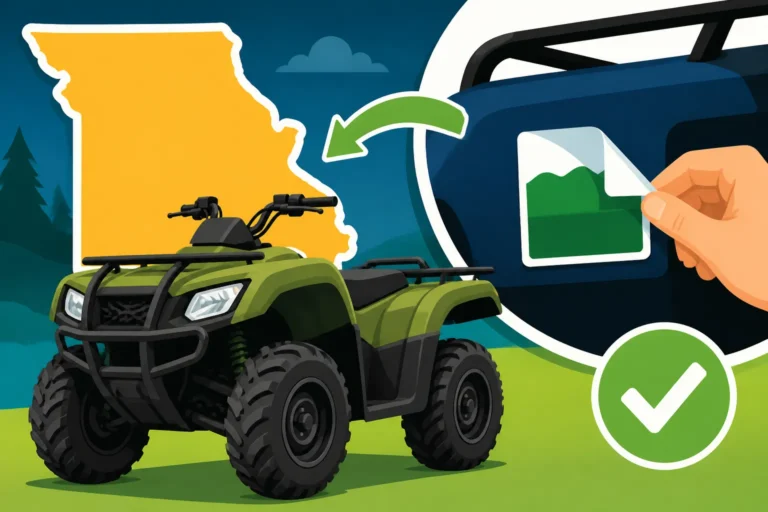
The biggest hurdle in understanding Missouri’s ATV rules is that they aren’t always directly comparable to standard vehicle regulations. While your car has a license plate that needs annual renewal, your ATV gets a decal – a small sticker that signifies its official "registration" for off-road use, particularly on public trails. This decal is valid for a much longer period, three years to be exact, which can make people think there's less urgency or a built-in cushion when it comes to renewing. However, the system isn't designed with a "grace period" in the traditional sense where you can legally continue to operate on an expired decal for a set amount of time without consequence. If your decal is expired, you're technically not registered for where it's required.
Missouri's Focus on Titling Deadlines, Not Registration Grace
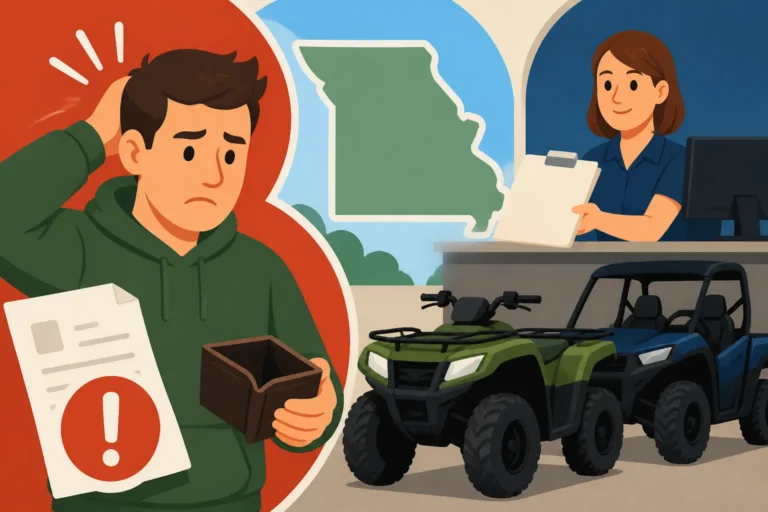
Here's where a lot of the critical distinction comes in. Missouri places a much stricter, and penalizing, emphasis on titling your ATV promptly after purchase, rather than on the "registration" (decal) renewal having a grace period. When you buy a new-to-you ATV, whether from a dealer or a private seller, you have a hard deadline of 30 days to get that title transferred into your name at a Missouri license office. If you miss this [Missouri's Thirty-Day Titling Deadline], that's when you start incurring late penalties, and those can add up quickly. This is often the source of financial pain, not missing a decal renewal date. The decal is more about permission to ride on public land, whereas the title is about proving ownership and paying sales tax.
Understanding Missouri's ATV Decal Renewal Process
Unlike your car, which might have an annual renewal that triggers a late fee fairly quickly, Missouri's ATV decal system operates on a different rhythm. Understanding this cycle is key to staying compliant and avoiding any unnecessary headaches.
The Three-Year Decal Cycle and Its Expiration
Your Missouri ATV decal is designed to be a long-term companion for your machine, valid for a full three years from its initial issuance. This is a fantastic benefit for riders, as it means fewer trips to the license office compared to annual vehicle renewals. However, this longer cycle can also lead to forgetting when it's actually due. The decal typically expires on the last day of the month it was originally issued, three years later. For example, if you first titled your ATV and received a decal in May of 2024, it would expire on May 31, 2027. It’s crucial to keep track of this date because, as we've discussed, there isn't a state-sanctioned grace period where you can legally continue to ride on public lands or trails with an expired decal. You can find more details on [Missouri's Three-Year ATV Decal].
What Happens If You Miss Your Decal Renewal Date
So, what’s the real impact if you look down at your ATV’s right front fork one day and realize that snazzy decal is past its prime? The immediate consequence isn't a crushing financial penalty from the state, at least not in the same vein as a late title transfer. What happens is much simpler: your ATV is no longer legally "registered" for use in areas where a current decal is required. This means if you're riding at St. Joe State Park, Finger Lakes State Park, or any other public trail system that mandates a current Missouri decal, you could be cited by a park ranger or law enforcement officer.
You can still renew your decal after it expires; the state will gladly take your renewal fee. However, the catch is that you cannot legally ride on required public land until you have a current, valid decal affixed to your machine. There's no retroactive coverage or "grace" for the period it was expired. The best course of action is to make sure you know [When a Missouri ATV Decal Expires] and plan to renew it beforehand. You can handle the renewal process at any Missouri license office, and in some cases, you might even be able to manage it online, making it quite convenient to get back in compliance. The key is to renew before you ride anywhere that requires it, or accept that you're riding an unregistered machine if you don't.
The Critical Distinction: Titling vs. Decal Renewal
Many of the questions we get about grace periods and penalties stem from a fundamental misunderstanding of the two distinct processes involved with getting your ATV legally recognized in Missouri: titling and decal renewal. While both are important, they carry very different deadlines and consequences.
The Strict 30-Day Titling Rule
This is where Missouri really flexes its muscle when it comes to deadlines. When you acquire an ATV, whether it’s brand new from a dealer or a fantastic find from a private sale, you have precisely 30 days from the date of purchase to apply for a new title in your name. This 30-day clock starts ticking the moment the machine officially becomes yours. If you blow past this deadline, the state of Missouri levies a late titling penalty. This isn't a minor slap on the wrist; it’s a cumulative penalty that adds up for every 30-day period (or portion thereof) you're late, capping out at a maximum of $200. We've heard too many stories from riders who simply "forgot" or thought they had more time, only to be hit with a significant fee.
This 30-day rule also applies to payment of sales tax, which is due at the time of titling. If you bought from a private seller, you’ll need a bill of sale to document the purchase date and price. Sites like LawDepot offer templates for a standard bill of sale, which can be invaluable for ensuring you have all the necessary information, especially the date. A solid [A Missouri Bill of Sale for an ATV] will protect both you and the seller. Make sure you understand the nuances of the [Missouri ATV Late Title Penalty] so you're not caught off guard.
Why UTVs and ROVs Have Different Rules
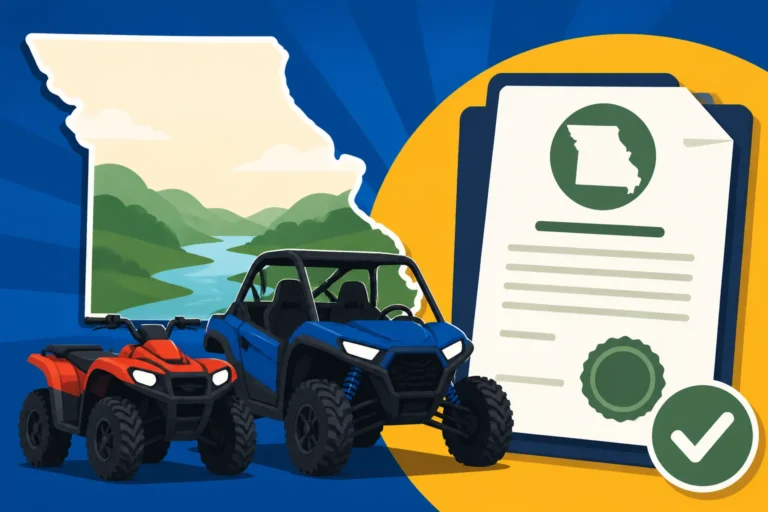
Now, if you own a side-by-side (UTV or ROV), you might be scratching your head because many of these machines don’t actually get a Missouri decal or "registration" in the same way an ATV does. This is a common point of confusion, and it’s critical to understand the difference. In Missouri, Utility Vehicles (UTVs) and Recreational Off-Highway Vehicles (ROVs) are generally treated differently by the Department of Revenue than All-Terrain Vehicles (ATVs).
For most UTVs and ROVs, you will title them, just like an ATV, and you will pay sales tax. However, the state typically does not issue a three-year decal for them. This means there's no "registration" to renew in the traditional ATV sense, and therefore, no grace period or renewal penalty to worry about for the decal itself. Instead, if you want to operate a UTV or ROV on roads in certain Missouri cities or counties, you'll need to obtain specific local permits for road use, which is a completely separate process from the ATV decal system. This is why you often hear that [Why Missouri Does Not Register Side-by-Sides] and [Do You Need to Register a UTV in Missouri?] lead to different outcomes than for ATVs. Many UTVs fall under the category of [Utility Vehicles Outside the Missouri System] for decal purposes, though they still require a title.
Here's a quick comparison of the key differences:
| Feature | Missouri ATV (Quad) | Missouri UTV/ROV (Side-by-Side) |
|---|---|---|
| Titling Required | Yes, within 30 days of purchase | Yes, within 30 days of purchase |
| Sales Tax Due | Yes, at time of titling | Yes, at time of titling |
| State "Registration" | Yes, three-year decal issued | Generally No, no state decal issued |
| Grace Period for Decal | No, not in the traditional sense | N/A, as no state decal is issued |
| Late Titling Penalty | Yes, if past 30 days | Yes, if past 30 days |
| Public Land Access | Decal often required for state parks/forests | May be restricted without specific rules |
| Road Use | Generally not permitted | Often requires local city/county permits |
Practical Steps and Avoiding Issues
Navigating the various rules and deadlines for your ATV or UTV in Missouri doesn't have to be a source of stress. With a little organization and proactive planning, you can easily stay compliant and avoid any unexpected fees or citations.
How to Stay on Top of Your ATV Decal Renewal
The best way to avoid issues with an expired ATV decal is to be prepared. Since the decal lasts for three years, it's easy to forget about it until it's too late. Here are some practical steps to keep you on track:
- Mark Your Calendar (Digital or Physical): Immediately after you get your new decal, make a note of the expiration month and year. Set a reminder on your phone or computer for two or three months before the expiration date. This gives you plenty of time to gather what you need and head to the license office.
- Check Your Decal Regularly: Get into the habit of glancing at your ATV decal (usually on the right front fork) periodically. The expiration month and year are clearly printed there. This is especially helpful if you own multiple machines or if you purchased one used and aren't entirely sure of its original issue date.
- Visit a License Office: When it's time to renew, your most reliable option is to visit a Missouri license office. They can process your renewal on the spot and get you a new decal. Make sure to bring your existing title or prior registration paperwork. You can often find information about how to handle [Renewing a Missouri ATV Decal] directly on the Department of Revenue's website.
- Online Renewal (If Available): While not always an option for initial titling, sometimes renewals for decals can be done online. Check the official [The Missouri Department of Revenue and ATVs] website to see if this convenience is offered for your specific situation. This can save you a trip and get your new decal mailed directly to you.
What to Do If Your Title Transfer Is Delayed
Life happens, and sometimes, despite your best intentions, a title transfer can get held up. Perhaps the previous owner lost the title and needs to apply for a duplicate, or there’s a lien that needs to be released. If you find yourself in a situation where you can’t get your ATV titled within the 30-day window, here’s what you should consider:
- Document Everything: This is paramount. If you bought from a private seller, ensure your bill of sale, perhaps from LawDepot, clearly states the purchase date. If there’s an agreement for the seller to provide a clear title at a later date, get that in writing too. Any communication regarding delays should be documented.
- Contact the Seller Immediately: If the delay is on their end, follow up promptly and respectfully. Understand what the issue is and what steps they are taking to resolve it. A good seller will be transparent and work with you.
- Consult the Department of Revenue: If you foresee a significant delay beyond your control, or if you’re unsure how to proceed, don’t hesitate to contact the Missouri Department of Revenue. While they may not waive the late penalty, they can offer guidance on the specific paperwork needed or alternative solutions. Sometimes, demonstrating that you’ve been actively trying to comply can make a difference, even if the penalty still applies.
- Understand the Penalty Cap: Remember, the late titling penalty caps at $200. While no one wants to pay extra, knowing this limit can help you budget and understand the maximum exposure, even if the delay drags on.
By being proactive with renewals and meticulous with titling, you can ensure your ATV is always ready for the trails and that you're not caught off guard by unexpected fees or legal issues.
Disclaimer
This article is for general informational purposes only and does not constitute professional advice. Laws, prices and regulations vary by location and change over time. Consult a qualified professional for guidance on your specific situation.