Why a Big Bore Quad Still Counts
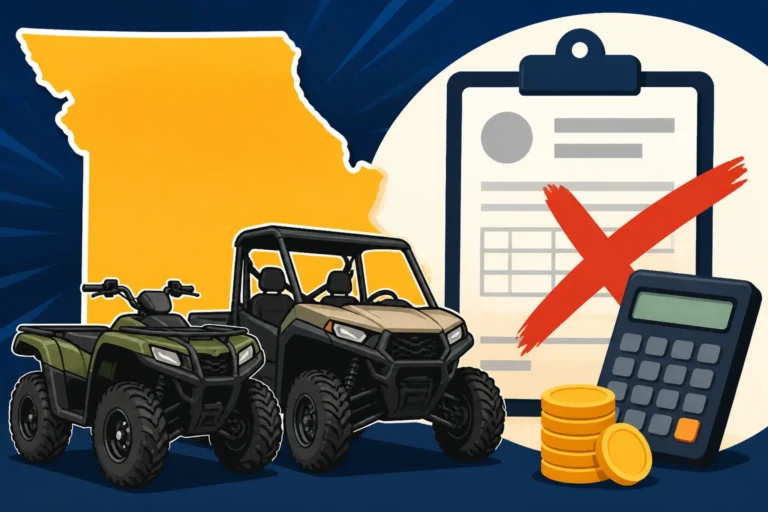
It's incredibly frustrating when you're trying to do the right thing and title your ATV in Missouri, only to find conflicting information or just plain confusion about what the state considers an "all-terrain vehicle." Many riders assume that the bigger the engine, the more complicated or different the rules might be, but that's not necessarily the case. This guide will cut through the noise, explaining why your quad's engine size truly doesn't factor into its classification for titling and registration in Missouri, and what criteria actually matter.
Missouri's Definition of an ATV: It's Not About Engine Size
One of the biggest misconceptions out there is that the sheer power or displacement of your ATV's engine will somehow change how Missouri categorizes it. You might have a 700cc beast or a modest 300cc workhorse, and in the eyes of the Missouri Department of Revenue for titling purposes, they're treated essentially the same. The state isn't concerned with how many cubic centimeters your engine boasts; they're looking at specific physical characteristics of the machine itself. This focus ensures clarity and consistency, preventing endless debates over what constitutes a "small" or "large" engine.
Think about it this way: if engine size were a factor, where would the line be drawn? Would a 450cc quad be treated differently than a 500cc? It would create an administrative nightmare and lead to constant confusion for riders and license office staff alike. By removing engine size from the equation, Missouri streamlines the process and keeps the focus on the machine's intended use and design. This is a crucial point when you're preparing to head to the license office, as it simplifies what you need to know about your particular machine.
The Key Criteria: Straddle Seat and Handlebars
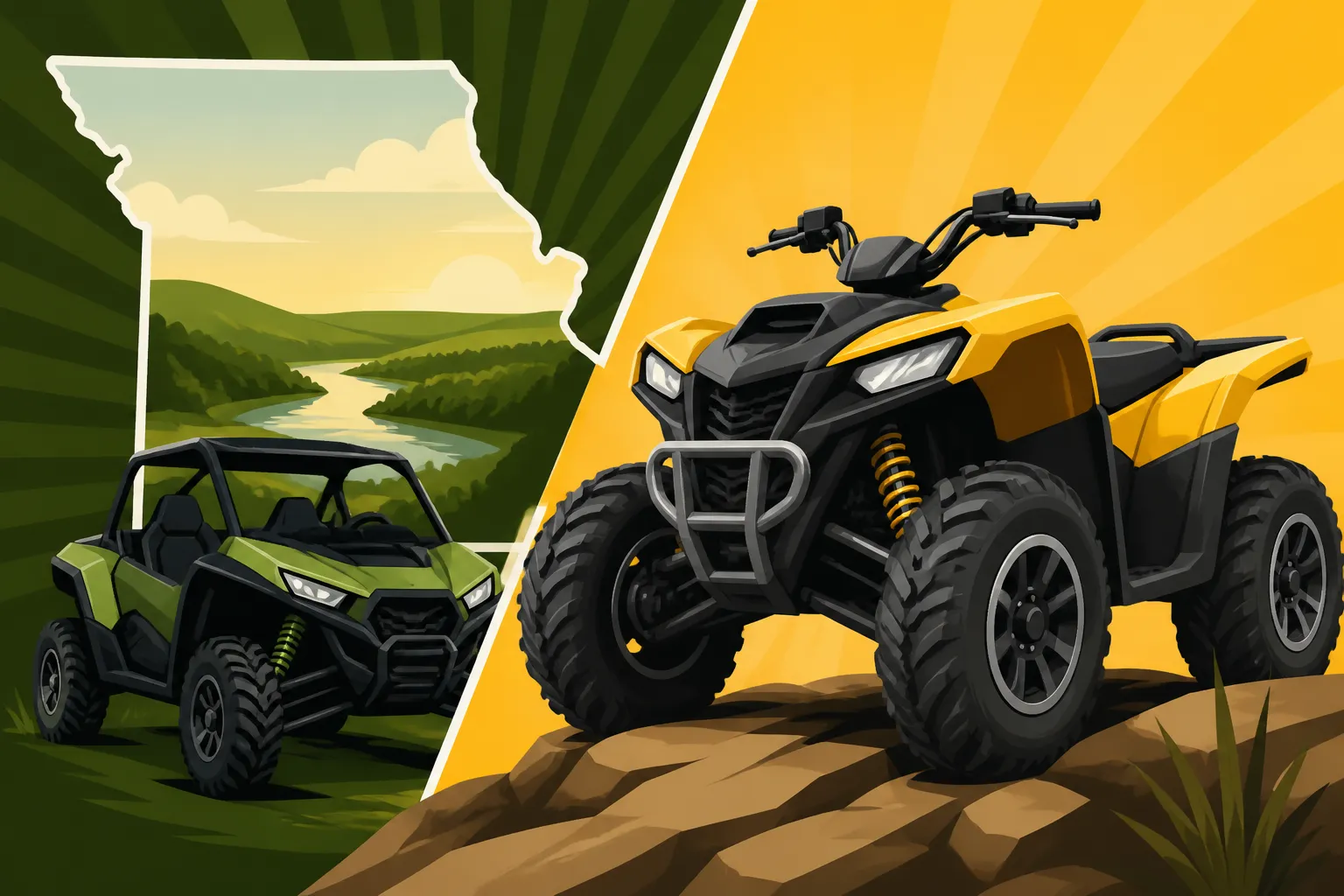
So, if engine size doesn't matter, what does Missouri actually look at when defining an ATV? The core of the definition hinges on two primary design elements: a straddle seat and handlebars for steering. If your machine requires you to sit astride it like a horse or motorcycle, and you steer with handlebars, it's almost certainly going to be classified as an ATV. This design is fundamental to how an ATV operates and differentiates it from other types of off-road vehicles.
Imagine pulling up to the license office with your paperwork ready. The clerk isn't going to ask you about your engine's horsepower. Instead, they'll verify that your machine fits these basic physical descriptions. This is the bedrock of [What Missouri Counts as an ATV]. These features define the rider's interaction with the vehicle and are what the state uses to categorize it. It's about the riding posture and control interface, not the grunt under the hood.
For example, a common scenario involves someone buying a new, powerful sport quad. They might worry that its high performance will put it into a special, more complex category. But as long as it has that straddle seat and handlebars, it slots neatly into the ATV definition, just like a much smaller utility quad would. It keeps things consistent for everyone, regardless of their machine's performance capabilities.
Width and Weight: The Other Important Factors
Beyond the straddle seat and handlebars, Missouri's definition of an ATV also includes limitations on width and dry weight. Specifically, an ATV is typically defined as being 50 inches wide or less and having a dry weight of 1,500 pounds or less. These dimensions are critical for distinguishing ATVs from larger utility vehicles (UTVs) or recreational off-highway vehicles (ROVs), which often exceed these measurements.
These limits are in place for practical reasons related to trail use, safety, and classification. Wider or heavier machines may not be suitable for certain ATV trails, and different regulations often apply to them. For instance, you can find a lot more information about [The 1,500-Pound Dry Weight Test in Missouri] and [50 Inches Wide or a Straddle Seat] to really understand these nuances. It’s a way to clearly separate machines that share common characteristics and operational risks.
It’s not uncommon for a rider to measure their quad after a purchase, especially if they’ve added aftermarket tires or accessories that might slightly alter its dimensions. While most factory-built ATVs will fall within these parameters, it’s always good practice to know your machine's exact specifications. If your "big bore quad" still meets these width and weight criteria, in addition to having a straddle seat and handlebars, it definitively counts as an ATV in Missouri for titling and registration purposes.
Why Engine Displacement Doesn't Matter for Titling
The idea that a "big bore" quad would be treated differently often stems from how other vehicles, like motorcycles or cars, are sometimes categorized by engine size for licensing or taxation. However, Missouri has taken a different approach for off-road vehicles. For ATVs, the focus is squarely on the machine's physical design and dimensions, rather than the internal combustion engine's capacity. This simplifies the legal framework and makes it easier for everyone to understand.
This approach acknowledges the diverse range of ATVs available, from high-performance sport models to utility-focused machines, all of which share common operational characteristics. By not using engine size, the state avoids penalizing or complicating the process for those who choose more powerful machines for their riding or work needs. It levels the playing field, ensuring that all ATVs are subject to the same foundational rules for ownership and operation. This consistency is a major benefit to riders across the state.
Imagine if you had to consult a complex chart based on engine CCs just to figure out what type of title or decal you needed. It would add an unnecessary layer of bureaucracy to an already important process. By cutting out engine displacement, Missouri makes the path to legal ownership much more straightforward, allowing you to focus on the fun parts of riding. This is a key reason [Why Missouri Has No Engine Size] criteria for ATV classification.
Focusing on Physical Characteristics
Missouri's approach is entirely logical when you consider the purpose of titling and registration: to identify the vehicle and its owner, and to regulate its use, particularly on public lands. These regulatory goals are best served by focusing on immutable physical characteristics that define the type of vehicle. A quad's engine might be powerful, but its form factor dictates where and how it can be ridden, and thus, how it should be categorized.
For example, whether your quad has a 500cc engine or an 800cc engine, it still presents the same profile on a trail, requires the same riding skills, and fits the same general safety considerations based on its design. The physical attributes, like the presence of a straddle seat and handlebars, or its overall width, are directly observable and consistent across all models within the ATV category. This makes for a much clearer legal definition than something as variable as engine displacement.
This emphasis on physical design also helps distinguish true ATVs from other motorized recreational vehicles. It’s about the tangible aspects that make an ATV an ATV, rather than an abstract numerical value. This means your "big bore quad" is still a quad because of how it's built, not how big its engine is.
What the Law Doesn't Say About CCs
It's important to understand that when Missouri laws and regulations pertaining to ATVs are written, they intentionally omit any reference to engine size or cubic centimeters (CCs). This isn't an oversight; it's a deliberate choice to simplify the classification process. You won't find any thresholds like "over 600cc" or "under 250cc" that trigger different titling or registration requirements for ATVs.
This omission is beneficial for consumers and dealers alike. It means you don't have to factor engine displacement into your purchasing decision when considering the legal aspects of ownership. You can buy the machine that best suits your needs for power and performance, knowing that its size won't complicate the fundamental steps of getting it titled and registered. This clarity promotes a more accessible environment for ATV enthusiasts.
So, if you've heard rumors or been told that your powerful quad might fall into a different class because of its engine, rest assured that this is a common misunderstanding. The law is silent on CCs for ATVs, and that silence speaks volumes: your big bore quad counts as an ATV for titling and registration purposes as long as it meets the physical design criteria.
The Titling and Registration Process for Any ATV in Missouri
Regardless of whether your quad is a nimble 250cc or a roaring 1000cc, the process for [Titling an ATV in Missouri] and [Registering an ATV in Missouri] follows the same established steps. There's no separate "big bore" application or a special tier of fees based on engine size. This unified approach simplifies administration for the state and ensures that every ATV owner understands their responsibilities.
Understanding this streamlined process can save you a lot of headaches and wasted trips to the license office. It means you can focus on gathering the correct documents and knowing what to expect, rather than worrying if your powerful machine will throw a wrench in the works. The key is to be prepared with the right paperwork, regardless of what's under your hood.
It's important to note that while the titling and registration process itself is uniform, you'll want to ensure you're compliant with all other relevant laws, like those regarding safety gear or age restrictions, which might apply regardless of engine size. But for the fundamental act of making your ATV legal to own and ride on designated areas, the steps remain constant.
Gathering Your Paperwork
Before you even think about heading to a Missouri license office, you'll need to make sure you have all your ducks in a row concerning paperwork. This is often the most critical step and where many people encounter delays. For a new ATV, you'll generally need the Manufacturer's Statement of Origin (MSO) or Certificate of Origin (MCO). If you're buying a used machine, you'll need the properly assigned previous title. Without the correct document proving ownership, you won't be able to proceed.
In addition to proof of ownership, you'll need a completed application for Missouri title and license (Form 108). You’ll also need to have proof of identification and ensure any applicable sales tax has been paid or is being paid at the time of titling. If you bought your machine privately, a clear [A Missouri Bill of Sale for an ATV] is incredibly helpful, even if not strictly required in all cases, especially for documentation and ensuring details are clear. Many people find templates online, from resources like LawDepot, to ensure they have all the necessary information captured when buying or selling a used machine.
Having all these documents organized and filled out correctly before you arrive at the license office will make your visit much smoother. Double-check everything, including VIN numbers, to avoid any discrepancies. This preparation is the best way to ensure your "big bore quad" gets its title without a hitch. You can also review [Missouri ATV Title Paperwork] for a comprehensive list.
Where to Go and What to Expect
Once your paperwork is in order, your next step is to visit a Missouri Department of Revenue fee office or a licensed contract office. These are the locations authorized to process ATV titles and registrations. You can't just send your paperwork in; an in-person visit is typically required to verify documents and pay fees. Many people mistakenly think they can do it all online, but for the initial titling, you'll need to go in person.
When you arrive, expect to present all your documents to a clerk. They will review everything, ensure your machine meets the ATV definition (straddle seat, handlebars, width, weight), and calculate the appropriate fees. These fees usually include the title fee and the three-year decal fee. You can find detailed breakdowns like [Missouri ATV Title Cost] and [Missouri ATV Registration Cost] to help you budget. The process is designed to be straightforward, but any missing or incorrect information will cause delays.
The entire process, from submitting your application to receiving your temporary registration and decal, usually takes one visit if all your paperwork is correct. You’ll leave with proof of titling and a decal to mount on your machine, ready for the trails. This efficiency is one of the benefits of Missouri's clear, consistent approach to ATV classification.
Understanding the Decal System
Unlike highway vehicles that receive license plates, ATVs in Missouri are issued a decal. This decal serves as your proof of registration and must be visibly displayed on your machine. [Missouri's Three-Year ATV Decal] is typically valid for three years from the date of issuance, and it's essential to renew it before it expires to remain compliant.
The decal indicates that your ATV has been properly titled and registered with the state, making it legal for use on designated trails and areas where ATVs are permitted. It's not a license plate for street use; rather, it’s proof of off-road registration. This is a common point of confusion, but the system is designed specifically for off-road vehicles. [Why Missouri Issues a Decal and Not a Plate] explains this further.
When you receive your decal, make sure to affix it correctly, usually on the right front fork of your ATV, where it's easily visible to enforcement officers. A properly displayed, current decal is your ticket to legally enjoying Missouri's extensive network of riding areas. Keeping your decal current is a key part of responsible ATV ownership, regardless of how big or small your engine is.
Common Misconceptions About ATV Classification
Beyond the engine size myth, there are other areas where riders often get confused about how Missouri classifies off-road vehicles. The landscape of ATVs, UTVs, and ROVs has grown significantly, and with it, the potential for misunderstanding about which rules apply to which machine. It’s not just about what you call your machine, but what the state calls it, and that distinction is critical for compliance.
One of the biggest areas of confusion comes when trying to differentiate between an ATV and a side-by-side. While both are off-road vehicles, Missouri's laws treat them quite differently, especially when it comes to registration and road use. Understanding these distinctions will prevent you from accidentally breaking rules or incurring penalties.
It's also common for people to confuse the requirements for an ATV with those for other vehicles like dirt bikes or even golf carts. Each type of vehicle has its own set of rules, and what applies to one may not apply to another. This section aims to clear up some of these widespread misunderstandings.
Distinguishing ATVs from Side-by-Sides and UTVs
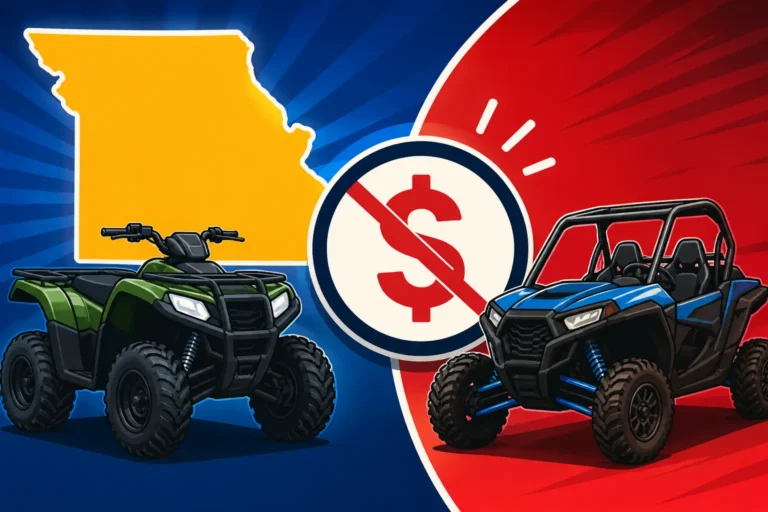
One of the most frequent sources of confusion for riders in Missouri is differentiating between an ATV and a side-by-side (often referred to as a UTV or ROV). While they are both off-road vehicles, Missouri law classifies them distinctly, leading to different requirements for titling and registration. The key differences lie in seating, steering, and overall dimensions.
An ATV, as we’ve discussed, has a straddle seat and handlebars, and typically fits within the 50-inch width and 1,500-pound dry weight limits. A side-by-side, on the other hand, usually features bucket seats or a bench seat, a steering wheel, and often exceeds the 50-inch width and 1,500-pound dry weight. These machines are designed for multiple passengers sitting side-by-side, hence the name. For example, [Why a Side-by-Side Has No Decal to Buy] clarifies why these machines are handled differently for registration.
Because of these fundamental design differences, side-by-sides do not receive the same three-year ATV decal that quads do. They have a separate titling process, and their road-use rules are far more nuanced, often requiring special permits at the local level rather than a statewide registration. This is a critical distinction, and misunderstanding it can lead to issues if you try to operate a side-by-side under ATV rules.
What Happens if Your Machine Doesn't Fit the ATV Definition
If your machine—even if you call it a "quad" in common parlance—doesn't meet Missouri's specific definition of an ATV, it will likely be classified as a utility vehicle (UTV) or a recreational off-highway vehicle (ROV). This isn't a minor detail; it fundamentally changes how your machine is handled under state law for titling, registration, and permissible use.
For instance, if your machine is wider than 50 inches or heavier than 1,500 pounds dry weight, and it has a steering wheel and side-by-side seating, it will be titled as a UTV/ROV. These machines do not receive the standard ATV decal. Instead, owners simply title their machines with the Department of Revenue, and then navigate local ordinances for any potential road use. A document like a bill of sale, which you can create using a service like LawDepot, will still be important for proving ownership for titling purposes, regardless of the vehicle's classification.
Operating a UTV or ROV on public trails or roads under the assumption it's an ATV can lead to fines or other penalties, as the rules for each category are distinct. Always confirm your vehicle's classification based on its physical characteristics and Missouri's definitions, rather than assuming it falls under the "ATV" umbrella simply because it's an off-road machine. Understanding these distinctions is crucial for responsible ownership and preventing any legal issues.
| Feature | ATV (All-Terrain Vehicle) | UTV/ROV (Utility/Recreational Off-Highway Vehicle) |
|---|---|---|
| Seating | Straddle seat | Side-by-side bucket seats or bench seat |
| Steering | Handlebars | Steering wheel |
| Width (typical) | 50 inches or less | Often exceeds 50 inches (e.g., 60-70+ inches) |
| Dry Weight (typical) | 1,500 pounds or less | Often exceeds 1,500 pounds |
| Registration | 3-year decal from MO Dept. of Revenue | Titled by MO Dept. of Revenue, no state registration decal for off-road use |
| Road Use | Generally prohibited on public roads, limited exceptions | More specific local ordinances and permits for road use, strict state exceptions |
Disclaimer
This article is for general informational purposes only and does not constitute professional advice. Laws, prices and regulations vary by location and change over time. Consult a qualified professional for guidance on your specific situation.