Short Distances for a Disabled Missouri Rider
Many folks in Missouri rely on their ATVs or UTVs for a variety of tasks, from farm work to just getting around their property. For disabled riders, the need to cross a short stretch of road to access fields, neighboring properties, or even a local store can be a frustrating hurdle, given Missouri's general restrictions on off-road vehicles on public roads. This guide aims to thoroughly explain the specific provisions Missouri law offers to disabled riders who need to operate their off-road machines for short distances on public roads, helping you understand when and how this crucial exception applies.
Understanding Missouri's General Stance on ATVs and Roads
It's no secret that Missouri has a pretty firm stance against ATVs and UTVs being generally "street legal" in the same way your car or truck is. This can be a huge source of confusion and frustration for owners who just want to use their machines efficiently and safely. The state legislature has carefully crafted different definitions and rules for various types of off-road vehicles, which directly impacts where you can and cannot ride. Understanding these foundational rules is essential before we dive into any exceptions.
The Core Principle: Off-Road Means Off-Road
Missouri law primarily designates All-Terrain Vehicles (ATVs), Utility Vehicles (UTVs), and Recreational Off-Highway Vehicles (ROVs) as machines intended for off-road use. This isn't just a suggestion; it's the underlying legal classification that dictates where they can be operated. Unlike some other states that might have broader allowances or specific "street legal" kits for ATVs, Missouri generally prohibits these machines from public roads and highways unless a very specific exception applies. This means that for the vast majority of riders, venturing onto a state highway or even a county road without explicit legal permission can lead to tickets and fines. It's a common misconception that if a machine looks capable of road travel, it is allowed, but the law draws a clear line. This is why you often see trucks hauling ATVs to trailheads rather than the ATVs driving themselves there.
The state defines an ATV in a very specific way, looking at characteristics like dry weight, width, and whether it has a straddle seat. [What Missouri Counts as an ATV] provides more detail on these classifications. These definitions are critical because they determine which set of rules your machine falls under, and consequently, which exceptions might apply. For instance, a traditional ATV with handlebars and a straddle seat faces different challenges than a side-by-side (ROV/UTV) when it comes to any form of road use. Many people invest in great aftermarket parts from companies like SuperATV, hoping to make their machine more versatile, but these modifications don't automatically grant street legality in Missouri.
Distinguishing ATVs, UTVs, and ROVs in Missouri Law
Missouri law is particular about the names it gives to different types of off-road machines, and these distinctions are far more than just semantics—they determine where and how you can ride. Generally, the state recognizes ATVs as those smaller, straddle-seat machines, while UTVs and ROVs typically refer to side-by-sides. This separation is crucial because certain limited road-use exceptions apply only to UTVs/ROVs, not to traditional ATVs. This is a source of frequent confusion, as many folks colloquially call all off-road machines "ATVs."
For instance, the well-known "3-mile rule" for limited road use, which we'll discuss later, applies exclusively to ROVs. This means if you have a traditional quad, that particular avenue for road use is simply not open to you. Understanding [Why Missouri Splits ATVs, UTVs and ROVs] is key to making sense of the various rules. The legislative intent behind these separate classifications often revolves around factors like vehicle stability, passenger capacity, and perceived safety on public roadways. While a utility vehicle might seem like it should be treated the same as an ATV for all purposes, the state clearly doesn't see it that way, leading to different legal pathways for limited road access.
The Specific Exception for Disabled Riders and Short Distances
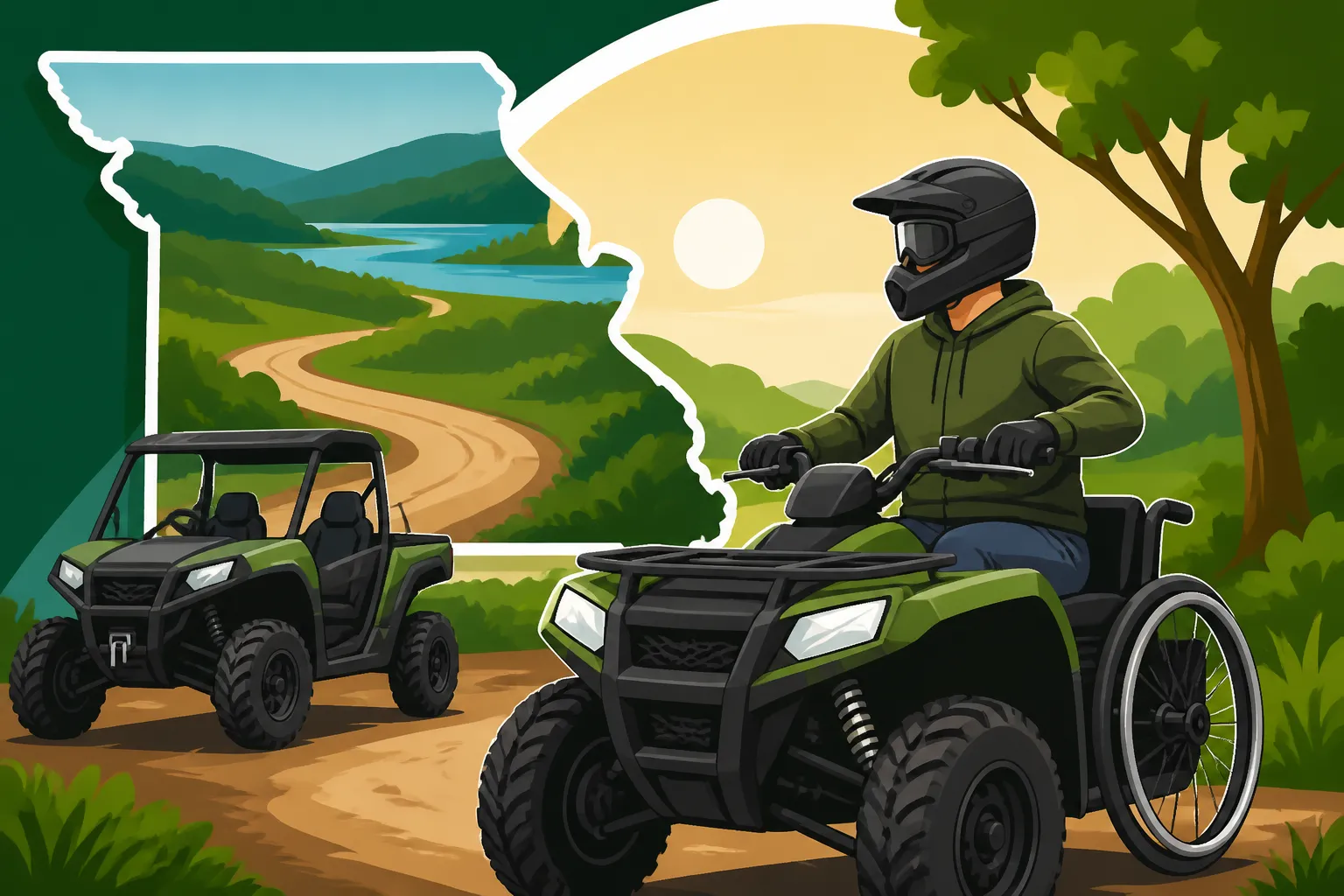
While the general rule in Missouri leans heavily against off-road vehicles on public roads, the state does make specific allowances for disabled individuals. This exception is designed to provide reasonable access and mobility for those who genuinely need to use their off-road machine for essential short distances, recognizing that for some, these vehicles are not merely recreational but a vital tool for daily living or accessing their property. This isn't a carte blanche for road use, but a carefully defined provision.
Who Qualifies as a Disabled Rider in Missouri
To qualify for this specific exception, the rider must meet the state's criteria for a "disabled person." While the law doesn't explicitly list every medical condition, it generally refers to individuals with a physical disability that impairs their mobility and necessitates the use of an off-road vehicle for short-distance travel on public roads. This could include a wide range of conditions, from those requiring the use of a wheelchair or crutches to other physical limitations that make walking or using a standard vehicle for short, specific purposes impractical or impossible. It's not about convenience; it's about necessity due to a verifiable disability.
Typically, proof of disability might involve a doctor's note, a disabled parking placard, or other official documentation. It's always a good idea to carry such documentation when operating your machine under this exception, as law enforcement may ask for verification. The intent is to assist those truly in need, not to create a loophole for general road use. This exception acknowledges that for some individuals, their ATV or UTV, especially a side-by-side like those equipped with various utility enhancements from SuperATV, might be the most practical or only way to traverse short distances for critical access.
Defining "Short Distances" for Necessity
The phrase "short distances" is critical here, and while the law doesn't always specify an exact number of miles for every scenario, the spirit of the provision is clear: it's for necessary travel over brief stretches. This isn't meant for joyriding on county roads or long commutes. Instead, it's typically understood to mean crossing a road to get to an adjacent field, visiting a neighbor a quarter-mile down a gravel lane, or perhaps getting to a mailbox at the end of a long driveway that requires traversing a public road. The emphasis is on necessity and proximity.
It's about enabling a disabled individual to access their property, perform essential tasks related to their land, or connect to an immediate adjacent area that would otherwise be inaccessible. For example, a disabled farmer might need to cross a county road to move between two sections of their land, or a disabled homeowner might need to travel a short distance on a paved road to reach a medical appointment if their property access is challenging for standard vehicles. The key is that the trip must be directly tied to the individual's disability and the specific need for the off-road vehicle to overcome a mobility barrier for a short, practical distance.
Applicable Machines and Conditions
This specific disabled rider exception typically applies to both ATVs and ROVs/UTVs, which is a key difference from other limited road-use rules that often exclude traditional ATVs. However, regardless of the machine type, certain conditions must be met to operate under this exception. The operator must possess a valid driver's license (or other appropriate state-issued identification if a license isn't feasible due to disability but the machine is still operated safely). The machine itself must be operated safely and prudently, respecting traffic laws, and yielding to other vehicles.
While the law might not explicitly demand specific safety equipment beyond what's usually required for off-road use, it's always wise to ensure your machine is highly visible and equipped with basic safety features if it's going to be on a public road, even for a short distance. This includes working headlamps, tail lamps, and potentially a safety flag. Investing in high-quality lighting or mirrors, perhaps from a reputable aftermarket provider like SuperATV, can significantly enhance safety for these necessary trips. Remember, while you have an exception, you still share the road with others, and safety is paramount.
Navigating Local Ordinances and State Exceptions for Road Use
Missouri's approach to ATV and UTV road use is often a patchwork of state law, county regulations, and specific city ordinances. This can make understanding where and when you can legally ride incredibly complex. While state law provides general frameworks and certain exceptions, many local jurisdictions have the power to create their own rules for their specific roads, often leading to different regulations from one town to the next, or even from one county to an adjacent one.
The Role of County and City Permits for UTVs/ROVs
Beyond the state-level disabled rider exception, many Missouri counties and cities have adopted ordinances that allow for limited operation of UTVs and ROVs (but typically not ATVs) on their roads. These are often referred to as "special permits" or "municipal permits." These permits are usually issued by the local police department or county sheriff's office and come with specific requirements. [A City or County Special Permit in Missouri] details this process. These requirements often include proof of insurance, a valid driver's license, working headlamps and tail lamps, turn signals, a horn, and often a safety flag mounted at a specific height.
The "3-mile rule" is a common element of these local ordinances, allowing ROV operators to travel up to three miles from their residence for specific purposes, often related to accessing services or adjacent property. This local permission is separate from the state's disabled rider exception, though both aim to provide reasonable access. A disabled rider living in a city with such an ordinance might find themselves covered by both the state exception and a local permit, depending on their specific needs and the machine they operate. It's crucial to understand which set of rules applies to your situation and geographical location.
How a City Ordinance Opens a Street to UTVs
When a city council or county commission decides to "open" their roads to UTVs/ROVs, they do so by passing a specific ordinance. This ordinance will lay out all the conditions, fees, and areas where such operation is permitted. It's not a universal opening; these are often carefully controlled to balance the needs of off-road vehicle owners with public safety concerns. For example, some cities might only allow UTVs on certain classes of roads (e.g., those with speed limits under 35 mph) or prohibit them on state highways that run through town.
These local ordinances can be incredibly helpful for residents, including disabled individuals, who own side-by-sides. If you live in a town like Harrisonville or Lake Ozark, which are known to have specific rules regarding UTVs on their streets, understanding their local permit system is paramount. [How a City Ordinance Opens a Street to UTVs] explains this in more detail. Even with an ordinance, general traffic laws always apply, and riders are expected to operate their machines with the same care and attention as any other vehicle on the road. Remember, merely having a UTV doesn't mean you can drive it anywhere; local permission is key.
The Interplay Between State and Local Rules
The challenge for many Missouri riders, especially those with disabilities, is understanding how the state's exceptions interact with local rules. Generally, state law sets the baseline, and local jurisdictions can often create more restrictive rules, or specific allowances like the UTV permits, within their boundaries, as long as they don't directly contradict state law. The disabled rider exception in state law provides a general allowance for all applicable roads in Missouri, but local ordinances might impose additional safety requirements (like flags or turn signals) even for those short, necessary trips.
It's always best practice to check with your local city hall or county sheriff's office to understand the specific rules in your immediate area. A disabled rider who needs to cross a state highway, for instance, might be covered by the state exception, but if they are within city limits, that city might still require a specific permit and safety gear. There's no single "street legal" answer for Missouri; it's always dependent on your machine, your specific needs (like disability), and your location. For a machine modified with specific road-safety components from SuperATV, knowing if those meet local requirements is vital.
Essential Safety Considerations for Road-Legal (or Road-Excepted) Machines
Even when operating an ATV, UTV, or ROV under an exception, such as for a disabled rider or under a local permit, safety on public roads is absolutely paramount. These machines are not designed with the same crash protection as passenger cars, and their handling characteristics are different. Taking extra precautions and ensuring your machine is adequately equipped for the unique challenges of road sharing is not just good practice; it's often legally required and can prevent serious accidents.
Visibility and Lighting Requirements
One of the most critical safety aspects for any off-road vehicle on a public road, even for short distances, is visibility. Other drivers on the road are simply not looking for an ATV or UTV, especially at dusk, dawn, or in inclement weather. Missouri law, where road use is permitted, often requires specific lighting. This typically includes a working headlamp (or two), tail lamps, and brake lights. Some local ordinances might go further, requiring turn signals and a horn. For side-by-sides, [Missouri Lighting Requirements for ROVs] are particularly important.
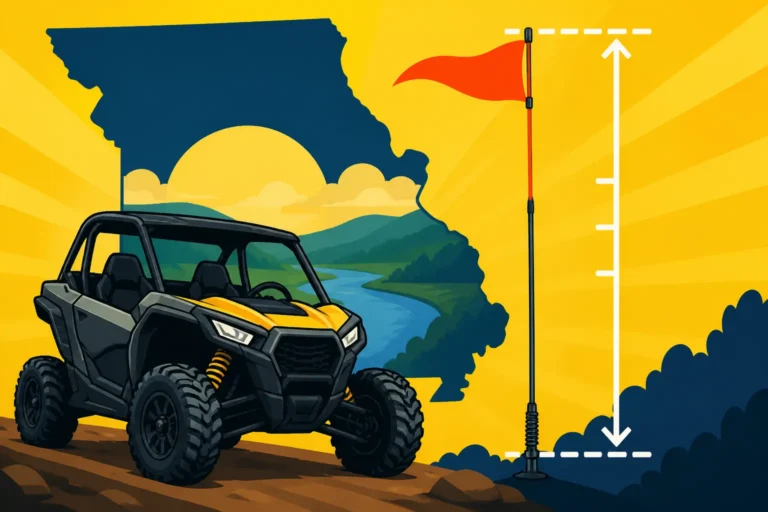
Beyond the legal minimums, consider adding extra measures to enhance visibility. A bright, high-mounted safety flag is often required by state parks and many local ordinances; even if not explicitly mandated for your specific exception, it's a wise addition for road use. Reflective tape on the machine, bright clothing for the rider, and even auxiliary lighting can make a significant difference. Aftermarket accessories like LED light bars or enhanced turn signal kits from SuperATV can drastically improve your machine's visibility to other motorists, reducing the risk of a collision during those critical short-distance road transits.
Operator Licensing and Insurance Mandates
For any operation on a public road, even under an exception, the operator generally needs to possess a valid driver's license. This ensures that the individual has demonstrated a basic understanding of traffic laws and safe vehicle operation. While the state's disabled rider exception allows the machine on the road, it doesn't waive the requirement for a competent, licensed operator. In the case of UTVs/ROVs under local ordinances, [An Operator's or Chauffeur's License in Missouri] is often a strict requirement.
Insurance is another non-negotiable aspect. Many local ordinances and the spirit of responsible road use mandate at least liability insurance for any off-road vehicle operated on public roads. This protects you and others in the event of an accident. It's crucial to check with your insurance provider to ensure your policy covers limited road use for your ATV or UTV under the specific circumstances (e.g., disabled rider exception, local permit). Don't assume your off-road policy automatically extends to public road operation; clarify this with your agent to avoid being caught without coverage.
Personal Protective Equipment and Machine Maintenance
Regardless of whether you're on a trail or briefly on a road, personal protective equipment (PPE) remains essential. While Missouri's helmet law primarily applies to riders under 18 for ATVs, and is often required for all riders at state parks, wearing a helmet is always recommended for safety, especially on roads where higher speeds and interactions with other vehicles increase risk. Eye protection, gloves, and sturdy footwear are also vital. For ROV riders, ensuring seat belts are worn and roll bars (if applicable) are in good condition are also critical safety measures. [Missouri Helmet Law for Riders Under 18] outlines the state's specific requirements for minors.
Finally, regular machine maintenance cannot be overstated. Before venturing onto any public road, even for a very short distance, ensure your ATV or UTV is in top mechanical condition. Check tires for proper inflation and wear, test brakes, verify all lights are working, and ensure steering and suspension components are sound. A mechanical failure on a public road, especially for a disabled rider, could have severe consequences. A well-maintained machine is a safe machine, and ensures reliability when you need it most.
Defining the Legal Boundaries: Where You Can and Cannot Ride
Even with exceptions and local ordinances, there are still clear boundaries for where ATVs and UTVs can and cannot operate in Missouri. Understanding these limits is crucial for staying legal and safe. No exception is limitless, and knowing what constitutes legal operation versus illegal activity is the rider's responsibility.
Prohibited Areas and Common Misconceptions
Despite any permits or exceptions, certain areas remain generally off-limits to ATVs and UTVs in Missouri. State highways and interstate highways are almost universally prohibited for off-road vehicles. These high-speed thoroughfares are simply too dangerous for machines not designed for such speeds and traffic volumes. While a disabled rider might use a local road to access property, the exception is not intended for travel on major state routes that form the backbone of Missouri's highway system. This is where [Crossing a Missouri Highway on a Quad] often comes up, emphasizing the narrow circumstances for even brief crossing.
Another common misconception is that gravel roads or county roads are automatically open to ATVs and UTVs. While some counties have specific ordinances allowing UTVs on these roads, it is not a blanket rule statewide. Without an explicit local ordinance or a valid state exception (like the disabled rider provision), these roads are generally closed to off-road vehicles. Similarly, private property without explicit permission from the landowner is illegal to ride on, and "private trails" often means exactly that – not publicly accessible. Always get written permission from a Missouri landowner before riding on their land.
Enforcement and Potential Penalties
Operating an ATV or UTV illegally on public roads in Missouri can lead to various penalties. At a minimum, you could face fines for illegal operation, which can quickly add up. Law enforcement officers, whether state troopers, county deputies, or city police, are well-versed in these regulations and will enforce them. If your machine is unregistered (for ATVs) or if you lack the proper permit or documentation for an exception, these can be additional citations. [Missouri Fines for Illegal ATV Road Use] can be substantial, making it far more expensive than simply adhering to the rules.
In some cases, particularly for repeated offenses or dangerous operation, your machine could even be impounded. For disabled riders relying on their ATV or UTV for mobility and access, losing the use of their machine due to legal violations would be a significant hardship. Always carry any documentation related to your disability and your machine's registration/decal (for ATVs) or local road permit. Being prepared and informed is your best defense against unintended legal trouble.
The Importance of Due Diligence
Given the nuanced nature of Missouri's ATV and UTV laws, especially concerning road use and exceptions for disabled riders, performing due diligence is critical. This means actively seeking out the specific regulations that apply to your situation, your machine, and your intended riding area. Don't rely on hearsay or assumptions. Start by understanding the state statutes, then investigate any relevant county ordinances, and finally, check with city authorities if you plan to operate within municipal limits.
A quick call to the Missouri Department of Revenue for ATV titling and decal information, and then calls to your local sheriff's office or city police department for road use permits, can save you a lot of grief. For a disabled rider, ensuring you understand the precise boundaries of your exception is paramount. Equipping your machine with appropriate safety features, many of which can be found through companies like SuperATV, is a proactive step toward safe and legal operation, but those modifications need to align with the specific rules you're operating under.
Missouri's Three-Mile Rule and Other Specific UTV/ROV Road Exceptions
While the state's allowance for disabled riders provides crucial flexibility, it's important to understand it within the broader context of other limited road use provisions, especially those applying specifically to Utility Vehicles (UTVs) and Recreational Off-Highway Vehicles (ROVs). These are distinct from the disabled rider exception but often come into play when discussing any form of road travel for off-road machines in Missouri.
The General UTV/ROV Three-Mile Rule Explained
Missouri law has a very specific "three-mile rule" that only applies to Recreational Off-Highway Vehicles (ROVs), which are typically side-by-sides. This rule allows an ROV operator to drive their machine on any public street or highway for a distance not to exceed three miles from the operator's home, provided it's done for the purpose of "accessing a contiguous or noncontiguous tract of property." This means you can use your UTV to get to your other property nearby or cross a road to reach a field, as long as it's within that three-mile radius from your residence. [Missouri's 3-Mile Rule for Side-by-Sides] delves deeper into this.
However, this rule comes with a strict set of conditions. The ROV must be equipped with specific safety features, including headlamps, tail lamps, a stop lamp, a horn, and often a safety flag, and the operator must possess a valid driver's license and proof of insurance. Importantly, this three-mile rule does not apply to traditional ATVs; it is explicitly for ROVs. It’s also often supplemented by local permits, which may have additional requirements or restrict travel to certain types of roads. This means just having a side-by-side isn't enough; you must meet all the equipment and licensing criteria.
Agricultural and Industrial Use Exemptions
Beyond the disabled rider exception and the general three-mile rule for ROVs, Missouri law also provides specific exemptions for agricultural and industrial uses of off-road vehicles on public roads. These are typically for machines like UTVs or even ATVs when they are being used directly for farming or industrial operations. For instance, a farmer might be able to drive their UTV on a county road for a short distance to access fields, transport equipment, or check livestock. [Missouri Rules for Agricultural Road Use] elaborates on this.
These exemptions are usually tied to the purpose of the travel—it must be directly related to the agricultural or industrial activity. They often specify limitations such as "sunrise to sunset" operation, the need for a slow-moving vehicle sign, and the shortest practical distance of travel. While these aren't directly related to a rider's disability, a disabled farmer, for example, could potentially operate under both the agricultural use exemption and the disabled rider exception, depending on the specifics of their travel and machine. This flexibility is important for those who rely on their machines for their livelihood.
How Different Exceptions Interact
The various exceptions—disabled rider, three-mile ROV rule, agricultural, and industrial use—can sometimes overlap or apply in different scenarios, creating a complex web of regulations. For a disabled rider, the state-level exception is broadly applicable to both ATVs and UTVs for necessary short distances. If that disabled rider happens to operate an ROV and lives in an area with a three-mile rule ordinance, they might find their travel covered by both, or by whichever rule is most lenient for their specific trip.
It's crucial to understand that meeting the conditions for one exception does not automatically exempt you from the requirements of another, nor does it override local rules. For example, a disabled rider using a UTV for a short distance might be exempt under state law, but a local city ordinance might still require a special permit and additional safety equipment like a higher safety flag. Always consider the most restrictive applicable rule. This ensures compliance and prioritizes safety for all users of Missouri's public roads, regardless of whether they're driving a car or a modified side-by-side from SuperATV.
Essential Documentation and Compliance for Road Use
Whether you're a disabled rider utilizing a specific state exception, or an ROV owner traveling under a local three-mile permit, having the correct documentation and understanding compliance requirements is absolutely vital. This isn't just about avoiding a ticket; it's about being prepared to prove you are operating within the bounds of Missouri law, which can save you a lot of hassle and stress during an unexpected interaction with law enforcement.
Key Documents to Carry
When operating any ATV, UTV, or ROV on a public road in Missouri, even for short distances under an exception, there are several key documents you should always have on your person or readily accessible in your machine:
| Document Type | Purpose | Applicable Machines | Notes |
|---|---|---|---|
| Driver's License | Proof of legal driving privilege and identification. | All | Required for any road operation. |
| Proof of Insurance | Demonstrates financial responsibility in case of an accident. | All | Often mandated by local permits and recommended for all road use. |
| ATV Decal/Title | State registration (decal) and ownership papers for ATVs. | ATVs Only | [Missouri's Three-Year ATV Decal] and [Titling an ATV in Missouri] are critical. |
| Local Road Permit | Specific permit from city/county for ROV road use (if applicable). | ROVs/UTVs Only | Many local ordinances require this for the 3-mile rule or other local allowances. |
| Disability Proof | Doctor's note, disabled placard, or other official documentation. | All | Highly recommended for disabled riders using the state exception. |
Having these documents neatly organized in a waterproof bag or compartment on your machine can be a lifesaver. A deputy or police officer might ask for any or all of these, and being able to produce them promptly demonstrates your compliance and responsibility.
Understanding Decals, Titles, and Permits
For traditional ATVs, Missouri requires titling and the display of a three-year decal. This decal indicates that your ATV is officially recognized by the state for off-road recreational use and that you've paid the necessary fees. [Why Missouri Issues a Decal and Not a Plate] clarifies the nature of this registration. While a decal isn't a "street legal" plate, it's essential for official identification and for compliance with general ATV laws. If you're a disabled rider using an ATV on the road under exception, having this decal is part of your overall compliance.
For ROVs and UTVs, the situation is different. Missouri does not require these machines to be registered or to display a decal for general off-road use, which can lead to confusion. [Why Missouri Does Not Register Side-by-Sides] explains this. However, if you plan to use an ROV on public roads under a local ordinance or the three-mile rule, you will need to acquire a special local road permit, which is distinct from the ATV decal. These permits typically have their own display requirements, such as a sticker or placard that needs to be visible on the machine.
Staying Updated and Proactive
Laws and regulations, especially at the local level, can change. What was permitted last year might have new conditions this year, or a town might decide to implement a new ordinance opening its streets to UTVs. It's the rider's responsibility to stay informed about the current rules that apply to their machine and their intended riding area. Regularly checking with your city or county clerk's office, sheriff's department, or even local ATV/UTV clubs can help you stay abreast of any changes.
Being proactive means not just knowing the rules, but also ensuring your machine is equipped to meet them. If an ordinance requires specific lighting, a horn, or a safety flag, make sure you have those components. Many riders find useful upgrades and parts from companies like SuperATV to ensure their machine meets or exceeds these safety requirements. By staying informed and properly equipped, you can enjoy the limited road access provisions Missouri offers with confidence and peace of mind, knowing you're riding legally and safely.
Disclaimer
This article is for general informational purposes only and does not constitute professional advice. Laws, prices and regulations vary by location and change over time. Consult a qualified professional for guidance on your specific situation.