Cobb Ridge Recreation Area Camping
Cobb Ridge Recreation Area is a popular base for camping and off-road riding near Missouri’s Chadwick trail system, but a good weekend takes more than booking a campsite and loading the machines. You’ll want to confirm campground amenities, trail access, permits, closures, and fuel plans before leaving home. This guide walks through those details so you can arrive prepared rather than sorting them out at the trailhead.
Planning a Camping Trip to Cobb Ridge
Where Cobb Ridge Fits Into a Chadwick Riding Weekend
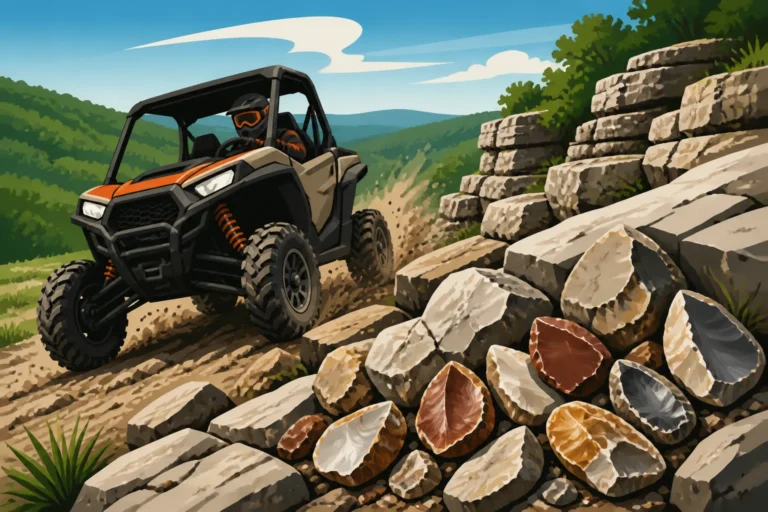
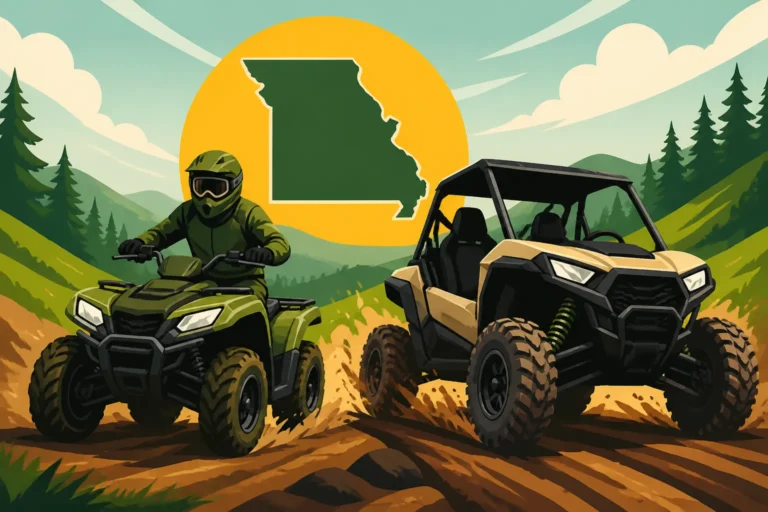
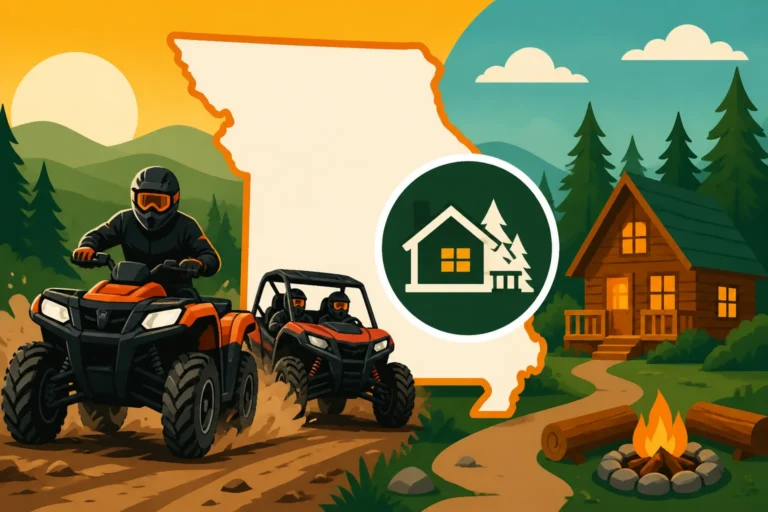
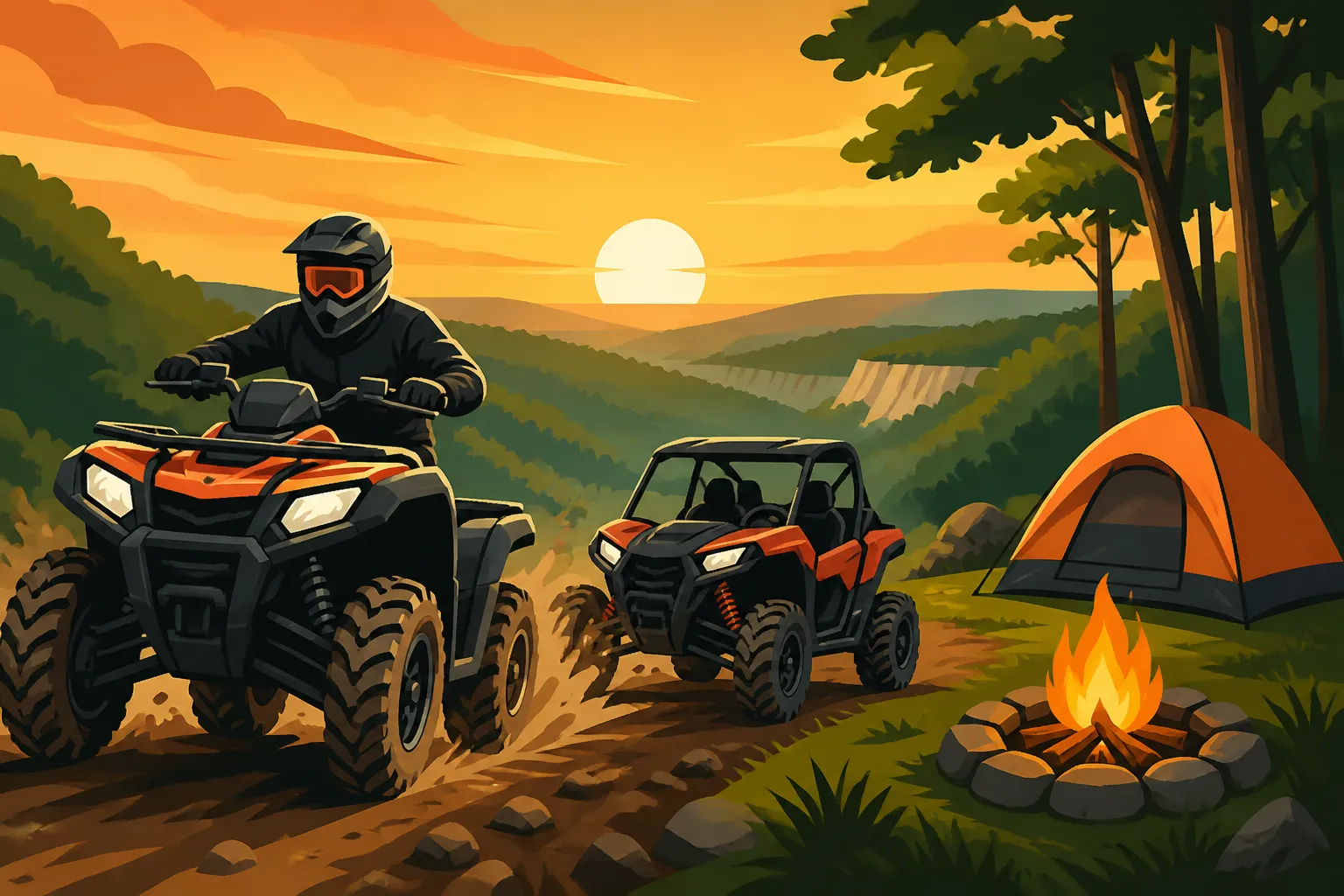
Cobb Ridge Recreation Area is associated with the Chadwick area of the Mark Twain National Forest, southeast of Springfield. It can work well as a base for riders who want to camp near their machines and spend time on forest trails, rather than driving back and forth from a distant motel or campground. The setting is wooded and rural, so plan for a more outdoors-focused stay than you might expect at a full-service commercial campground.
It helps to think of the campground and the riding area as connected but separate parts of your trip. A campsite gives you somewhere to sleep and organize gear; it does not automatically answer whether a particular trail is open, whether your machine is allowed on it, or which permit you need. For a broader sense of the riding area, read [Chadwick's 80 Miles in Missouri] and [Riding Chadwick in the Ava Ranger District] before deciding how many days to book.
Cobb Ridge also suits groups with different ideas of a good weekend. One person may be eager to ride from morning to evening, while another may prefer a shorter loop, camp cooking, and a relaxed evening under the trees. Agreeing on the trip’s pace before you arrive can prevent a familiar kind of vacation friction: one rider feels held back, while someone else feels pressured into a longer or harder ride than they wanted.
Check Campground Details Before You Pack
Campground facilities and operating details can change, and assumptions are an easy way to make a weekend uncomfortable. Before departing, check the current information for Cobb Ridge through the responsible land manager or campground listing. Confirm the available campsite features, whether reservations are offered, how payment works, and whether water, electricity, toilets, or trash service are available during your visit.
Don’t plan around an amenity simply because another campground has it. If you need electricity for a medical device, for example, verify the site’s facilities rather than assuming every site has a hookup. If you’re bringing a large trailer, ask whether the campsite layout can accommodate the tow vehicle, trailer, and riding machine without blocking the access lane or spilling into another site.
A useful approach is to make two packing lists: one for a fully serviced campground and one for a more basic forest stay. The second list might include drinking water, a way to wash hands, extra lighting, trash bags, and a plan for charging phones or navigation devices. You may not need every item, but having the basics packed is less stressful than discovering a missing supply after the nearest store has become a long drive away. For general trip-planning ideas, [Camping Near a Missouri Trailhead] can help you think through what belongs in camp versus what belongs in the riding gear.
Choosing a Campsite and Setting Up Camp
Match Your Site to Your Trailer and Group
A campsite that looks spacious in a listing may feel much smaller once you add a truck, a trailer, machines, chairs, and a place to cook. Measure your full setup at home, including the trailer’s length and the space needed to turn it. If your group is sharing a site, count every vehicle and machine rather than focusing only on the number of people.
Think about how you will move through the site once you arrive. You’ll want a safe area to unload and park, a place to keep fuel and riding equipment separate from cooking and sleeping areas, and enough room to walk around without stepping over tie-down straps. If you’re arriving after dark, a site that is easy to enter and maneuver in matters even more. A headlamp and a few low-glare lanterns make setup easier without lighting up the whole campground.
If you’re traveling with multiple households, decide how you’ll arrange the group before booking. Two families may be more comfortable at neighboring sites than squeezed into one; a smaller group may prefer a single site where everyone can keep an eye on the kids and gear. Confirm the campground’s rules about site occupancy and vehicle parking instead of assuming that an extra tent or trailer can be added once you arrive.
Keep Camp Safe, Tidy, and Respectful
A well-organized camp is not just more pleasant; it makes the start and end of each ride smoother. Choose a consistent place for helmets, gloves, keys, and trail permits. Keep food secured and dispose of waste according to campground rules. Put tools and spare parts where they are easy to find, but don’t leave them spread across the campsite where someone can trip over them in the dark.
Fuel deserves special care. Keep it in approved containers and follow the campground’s rules for storage and use. Refuel machines away from open flames, cooking areas, and hot equipment, and clean up any spills promptly. If your group is sharing fuel, label containers clearly so nobody has to guess which machine or mix a can is intended for.
Quiet hours and shared-space etiquette are part of the experience too. A late-night engine test can carry across a quiet campground, and a trailer left across a shared lane can make another camper’s arrival difficult. Keep generators, music, and machine maintenance within posted rules. Leave the site as you would want to find it, including picking up small items such as cable ties, food wrappers, and broken straps that are easy to miss in leaf litter.
| Trip detail | What to confirm before leaving | A practical backup |
|---|---|---|
| Campsite | Site size, reservation or payment process, occupancy rules | Have a second nearby camping option in mind |
| Water and power | Which amenities are available at your site and when | Bring drinking water and a charging plan |
| Trail access | Open routes, permitted machine types, closures | Save a shorter alternate ride |
| Riding permits | Which permit applies and where it is sold | Keep permit details and proof accessible |
| Fuel and supplies | Nearby services and the distance between stops | Arrive with enough fuel and essentials for the first ride |
| Navigation | Maps, phone coverage, and offline access | Carry a paper map or downloaded map |
Permits, Trail Access, and Navigation
Treat Camping and Riding as Separate Checks
One of the most common planning mistakes is treating a campground stay as permission to ride anywhere nearby. Camping access and off-highway vehicle access may be governed by different rules. Before unloading, confirm that the route you intend to use is open to your machine and that you have the required riding permit. Start with [Missouri National Forest ATV Permit] and [Where Chadwick Permits Are Sold] to understand what to check for your particular trip.
Make sure you know which riding area your permit covers. A permit for one park or trail system may not apply somewhere else, even if the locations are in the same general part of Missouri. Keep proof of purchase where you can reach it, and make sure every rider in the group understands where the permit should be displayed or how it may need to be shown.
The same care applies to machine eligibility. Don’t rely on a friend’s recollection of what was allowed on a previous trip. Check the current posted rules for machine types, width or equipment requirements, passengers, and trail use. If one person arrives with a machine that does not meet the rules, the entire group may have to change plans. A quick group text before departure can catch that problem while there is still time to make a different choice.
Plan for Navigation Gaps and Changing Trail Conditions
Forest trails can feel very different from the road map you used to reach the campground. A trail may fork, loop back, cross a drainage, or connect to an access road that is not obvious from a small phone screen. Download the maps you need before leaving reliable service, and carry a backup plan in case a phone battery fails or a device gets wet.
Navigation apps such as onX Offroad can help you review routes and keep track of your position, but don’t treat any app as a replacement for posted signs, official trail information, or common-sense route decisions. Save the area map offline before the trip, bring a portable battery if you rely on a phone, and tell someone at camp which route you expect to ride. A paper map tucked into a waterproof bag is a useful backup when a screen is unreadable or a device stops working.
Conditions can change after rain, wind, or maintenance work. Check [Missouri Trail Conditions Before You Ride] and [Missouri Trail Closures to Check First] before you leave camp, then look for signs and notices at the trailhead. If a trail is closed, don’t try to bypass the closure by cutting around a barrier. That risks damaging the land, putting riders into an unsafe area, and creating problems for everyone who uses the trail system.
Preparing Your Machine and Riding Group
Give the Machine a Practical Pre-Ride Check
A short inspection before the first ride can prevent an avoidable breakdown from becoming the main event of the weekend. Check tire pressure and condition, brakes, lights, steering, fluid levels, and visible fasteners. Look for damaged belts, loose components, or leaks, especially if the machine has recently been through mud or water. Bring the basic tools and spare items your machine is likely to need, rather than assuming another rider will have the right equipment.
Pay particular attention to items that are easy to overlook when loading in a hurry. Confirm that the battery is charged, the fuel cap is secure, and tie-downs have not damaged a hose, cable, or plastic panel. If you have a winch, test it before you need it. If your machine has a known quirk, explain it to anyone who might ride or help recover it.
A small repair kit can be more valuable than a large collection of tools that nobody knows how to use. Pack tire-repair supplies suited to your tires, a compact air source, basic hand tools, and any machine-specific spares you normally carry. Keep items dry and together in one bag. When the group is ready to ride, a five-minute check of every machine is often quicker than trying to locate a missing tool after someone has already had a problem on the trail.
Set Expectations for Riders of Different Experience Levels
A mixed-skill group should choose a ride that works for its least experienced rider, not just its most confident one. Before setting out, agree on a comfortable pace, a turnaround point, and what to do if anyone wants to stop. Newer riders may need time to get used to loose surfaces, ruts, rocks, or narrow wooded routes; a patient start makes the rest of the day more enjoyable for everyone.
Use a simple group system on the trail. Riders should know who is leading and who is bringing up the rear, and the group should stop at forks or confusing intersections until everyone has arrived. Don’t let a long gap open between riders. If someone has trouble, stop in a safe place and make sure the rest of the group knows before continuing. The point is not to ride in a rigid convoy; it is to make sure nobody gets separated without realizing it.
If children are riding, plan shorter outings and regular breaks. Kids can become tired, thirsty, or overwhelmed before they say so, particularly when they are concentrating on unfamiliar terrain. Make sure they have properly fitting protective gear and understand the boundaries of the ride. For a family that includes riders with very different abilities, splitting into two supervised groups may be more enjoyable than asking everyone to manage the same route.
Making the Weekend Work in Real Conditions
Plan Fuel, Food, and Communication Before You Need Them
The quiet, forested setting is part of Cobb Ridge’s appeal, but it can also mean that convenient services are not right around the corner. Check where fuel and groceries are available along your route, and don’t assume a nearby business will be open when you need it. [Fuel Between Ozark Towns] is a useful reminder to plan refueling around the area rather than waiting until a tank is nearly empty.
Build a little extra margin into your fuel plan. A slower trail, a detour, or an unexpected stop can use more fuel than you planned, and machines may consume fuel differently on technical terrain than they do on an easy road. Decide whether you’ll fuel before reaching camp, carry approved spare fuel, or make a planned stop during the day. Keep refueling away from campfires and other ignition sources.
Phone coverage can be inconsistent in rural and wooded areas. Tell someone outside the riding group where you’re camping and when you expect to return, and agree on what they should do if you miss that check-in. Download maps and important campground details in advance. onX Offroad’s offline mapping features can be useful when you’ve saved the area before losing service, but test your downloaded map and device settings before the trip rather than discovering a problem in a hollow.
Have a Weather and Plan-B Option
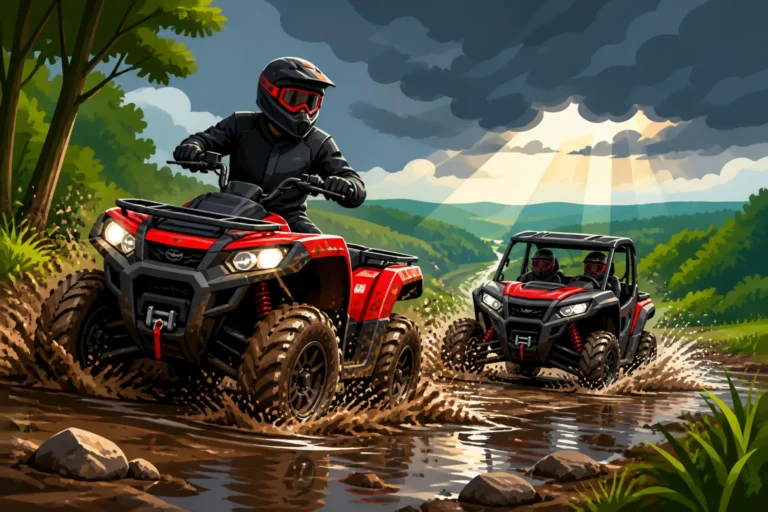
A wet weekend can change the condition of a trail, the comfort of a campsite, and the amount of time you want to spend outside. Check the forecast close to departure and pack clothing for changing temperatures, not just the conditions at home. Keep dry layers in a sealed bag, and bring footwear that can handle damp ground around camp. A tarp can help keep gear dry, but use it in a way that does not block drainage or create a hazard for neighboring campers.
Set a reasonable threshold for changing plans. Heavy rain, damaged trails, high water, or poor visibility can make a ride unsafe or inappropriate. If the trail system or land manager closes a route, respect that decision and choose another activity. A weather-related rest day is not a failed trip; it may be the right time to relax at camp, explore nearby communities, or head home early if conditions make travel difficult.
Before the weekend, identify one fallback option that does not depend on the trails being open. That could mean bringing books and card games, planning a scenic drive, or choosing a nearby place to eat. This small step helps when a closure or storm arrives after you’ve already made the drive. It also takes pressure off the group to ride in marginal conditions just because everyone came prepared to ride.
Use the Right Expectations for a Forest Campground
Cobb Ridge is best approached as a practical outdoor base, not as a full-service resort. Be ready to manage your own meals, keep track of your supplies, and follow posted instructions. If a detail is important to your comfort or safety—such as accessible facilities, a particular hookup, or room for a specific trailer—confirm it with the campground before making the trip.
A good weekend usually comes down to small decisions made early: choosing a site that fits your setup, checking the rules for the machine you’re bringing, downloading maps, and agreeing on a route that suits the whole group. With those pieces handled, you can spend less time troubleshooting and more time enjoying the wooded setting and riding opportunities around Chadwick.
For more guidance on staying prepared across Missouri riding areas, see [Missouri Trail Etiquette on Shared Ground] and [Cell Dead Zones in the Ozarks]. Keep your plans flexible, follow local notices, and leave enough time to pack up safely when the trip is over.
Disclaimer
This article is for general informational purposes only and does not constitute professional advice. Laws, prices and regulations vary by location and change over time. Consult a qualified professional for guidance on your specific situation.