Lapping a Professionally Built Track
A professionally built track can look inviting from the fence and feel surprisingly demanding once you’re on it. At Finger Lakes State Park near Columbia, Missouri, riders need to think about more than throttle: track conditions, spacing, machine setup, and park rules all affect a good day. This guide explains how to prepare, ride consistent laps, and avoid common mistakes without treating the course like an ordinary trail.
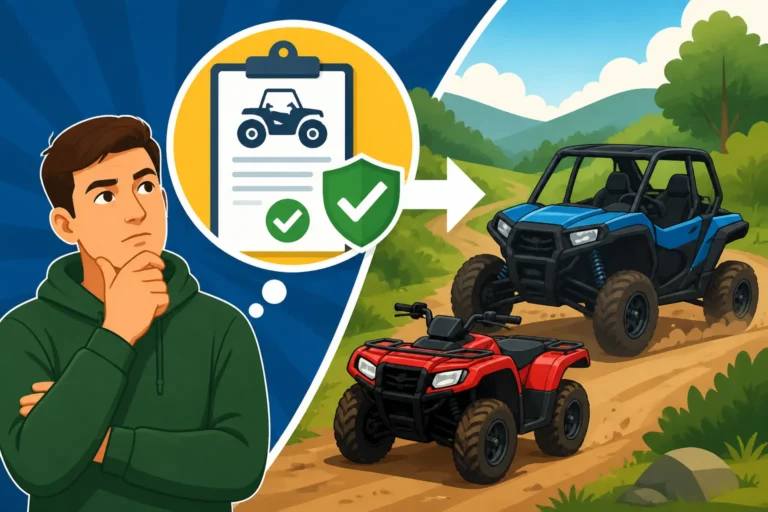
Get Ready Before You Enter the Track
Check access, conditions, and park rules
A track is not automatically open just because the riding area is open. Access can depend on maintenance, weather, seasonal conditions, or park operations, so check the latest information from the park before loading your machine. That quick check can save a long drive to Finger Lakes from Columbia or elsewhere in Boone County only to find that the course is unavailable.
Read the posted rules when you arrive, too. Requirements for helmets, sound levels, flags, and other equipment can differ between public riding areas and local roads. A road-use decal or permit should not be assumed to cover every riding area or satisfy every track rule. For broader context, review [Finger Lakes State Park in Missouri] and [Missouri State Park ORV Permit Prices] before planning your trip.
Weather changes the way a track rides. Rain can soften the surface, create slick patches, or leave ruts that weren’t there on your last visit. Dry conditions can make some sections dusty or hard-packed. Look for updates and inspect the riding surface from a safe location before heading out. [Missouri Trail Conditions Before You Ride] offers useful general planning habits, even though a motocross track can change faster than a long trail.
Prepare the machine and your riding gear
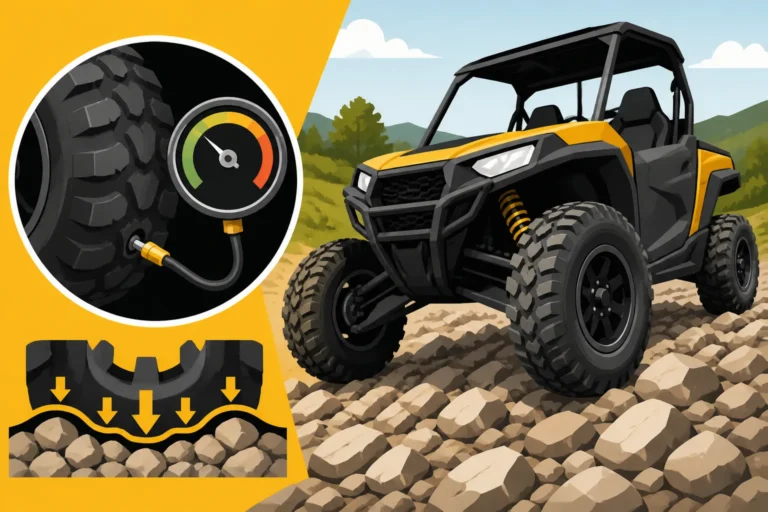
Do a basic machine check while you still have room to work beside your trailer. Inspect tires for cuts or low pressure, check that the brakes feel firm, and make sure the throttle returns smoothly. Look over the handlebars, controls, chain or drive components, and visible fasteners. If something feels loose or unfamiliar, deal with it before the first lap rather than trying to diagnose it beside the course.
Use protective gear that fits and stays secure when you move. A properly fastened helmet is essential, and eye protection, gloves, boots, and durable riding clothes help with dust, debris, and contact with the machine. Rules may specify equipment beyond your personal preference, so read the park’s posted requirements. See [Helmets at a Missouri State Park] for related park-riding considerations.
Bring water, basic tools, and any parts or supplies that make sense for your machine. Keep them at your staging spot, not where they can become a hazard near the track. A small preparation routine also helps prevent the rushed feeling that can lead to missed checks: unload, inspect, gear up, watch a few laps, then decide whether the course and conditions match your ability.
Learn the Track Before You Push the Pace
Watch a few laps and identify the rhythm
Before riding, take time to observe the course from a safe, permitted viewing area. Notice where riders slow down, where the surface changes, and which features require more room than they appear to from a distance. A jump or berm can look manageable from the side while being difficult to approach cleanly at speed.
A professionally built course is shaped to create a rhythm, but that doesn’t mean every rider should take every feature the same way. Look for predictable lines and places where riders tend to bunch up. Pay attention to how they enter turns and how much space they leave when landing or setting up for the next section. If you cannot clearly see how a feature is being approached, don’t guess from the fence.
Then decide on a modest first-lap goal. You might focus on learning the direction of travel, identifying the safest line through turns, and finding a pace where you can stop or adjust without panic. That is more useful than trying to match the fastest rider you see. The dedicated course is a distinct experience from exploring the park’s broader riding options; [Riding the Pro-Built Motocross Track at Finger Lakes] and [Riding Finger Lakes Outside Columbia] can help frame that difference.
Build speed gradually and leave room
Your first lap should be a reconnaissance lap, not a test of courage. Ride at a controlled pace, keep your eyes ahead, and leave enough space that you can respond if the rider in front slows, takes a different line, or has trouble. Don’t accelerate simply because another rider is closing in behind you. Hold a predictable line and let them pass only when it is safe and allowed.
On later laps, change one thing at a time. You might work on smoother braking before a turn, a more consistent entry speed, or keeping your body balanced through a series of bumps. If you try to increase speed, change your line, and tackle a new feature all at once, it becomes hard to tell what caused a mistake. Small adjustments make it easier to improve without turning every lap into a gamble.
If you’re uncertain about a jump, you do not have to take it. Choose a safe route around it if one is available, or slow down and avoid entering a section you cannot ride confidently. Never stop in a blind landing area or directly in the path of other riders. If you need to regroup, move to a designated safe area and follow the park’s instructions.
Ride With Awareness of Other People and the Surface
Keep spacing and communicate predictably
A track is shared space, and a rider’s decisions affect everyone nearby. Avoid sudden direction changes, stopping on the course, or cutting across another rider’s line. Before entering, look for approaching riders and wait until there is a clear opening. When you are on the course, make your movements steady and easy to read.
Passing calls for patience. Don’t crowd someone into a turn or pass where they have limited room to react. If you’re the slower rider, stay predictable rather than swerving to make space at the last second. If a rider falls, approach cautiously and give them room. A sudden group stop can create a second hazard, so use judgment and follow any posted procedures for incidents.
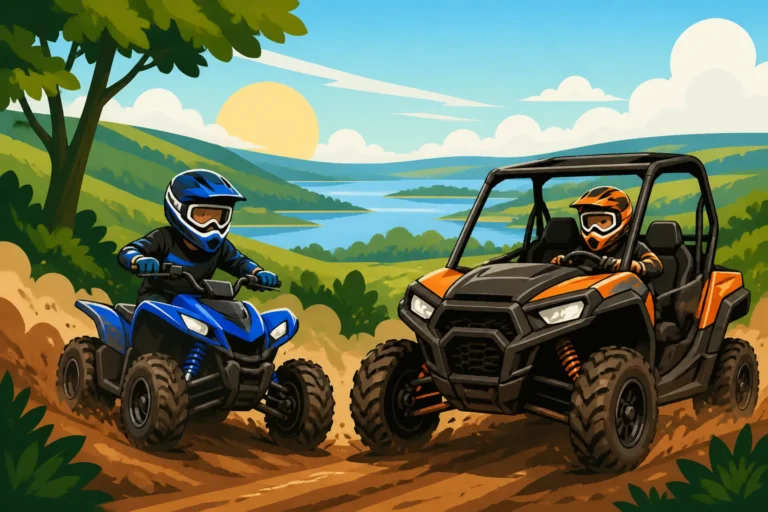
Keep children and spectators in permitted viewing and staging areas. A child standing too close to the track may not understand how quickly a machine can arrive or how little room a rider has to correct a mistake. Finger Lakes has a separate youth riding area, so families should check the boundaries and requirements rather than assume the main course is suitable for every young rider. [Finger Lakes' Youth Riding Area] is a useful place to learn more about that distinction.
Adapt to changing dirt, dust, and visibility
The course can change as more machines pass over it. A smooth section may develop ruts, loose soil, or rough braking bumps. Watch the track as you ride, but don’t stare only at the ground immediately in front of the tires. Look far enough ahead to see where the surface is changing and make adjustments early.
Dust affects more than comfort. It can reduce your ability to see the next turn or another rider entering the course. Increase your following distance when visibility drops, and avoid charging into a section you cannot see. If dust becomes persistent or the surface gets uncomfortable, take a break rather than trying to ride through fatigue and poor visibility.
Sound and equipment rules matter on public riding land as well. A machine that seems reasonable in a private field may not meet the standards applied at a public park. Check local requirements and keep your exhaust system in good condition. For related background, see [Missouri Sound Limits at a State Park] and [Missouri Trail Difficulty Ratings]. The latter can help you think about matching terrain to ability, though a motocross course requires its own careful assessment.
Plan a Better Day at Finger Lakes
Use mapping tools for the trip, not as a substitute for rules
Planning the drive and understanding the surrounding area can make a day at Finger Lakes less hectic. A mapping app such as onX Offroad may help you review your route and orient yourself before leaving home, but it should not replace official park information. An app map does not establish that a track is open, authorize riding somewhere, or override a posted closure.
Use onX Offroad as one planning reference, then confirm access and regulations through the appropriate park information. This is especially helpful if your trip includes more than one destination or you’re coordinating trailers and vehicles with friends. Save the address and directions before you leave, and make sure everyone in the group knows the meeting point if cell reception is unreliable.
For a single-track day, keep the plan simple: confirm access, arrive with enough time to unload and inspect, observe the course, and leave a buffer for breaks and cleanup. If you’re considering other public riding areas during the same trip, verify that each has its own requirements. Park access rules, trail permits, machine-width limits, and closures may not be interchangeable.
Set a realistic session plan
Instead of deciding to ride until you’re exhausted, set a session plan before the first lap. For example, ride a few controlled laps, stop to check how you feel and how the machine is behaving, then decide whether another short session makes sense. Rest before your reactions slow down, especially on a warm day or after a physically demanding ride.
Pay attention to signs of fatigue: missed braking points, tense arms, delayed reactions, or repeatedly drifting from your intended line. These are reasons to stop, hydrate, and reassess—not signs that you need to push harder. A break also gives the machine time to cool and gives you a chance to check for loose parts, tire damage, or anything that changed during the session.
Before loading up, inspect the machine and gather your equipment from the staging area. Follow any park instructions for washing, waste, and departure. If the track was muddy, clean the machine where permitted and avoid carrying loose soil or debris into places where it does not belong. A careful end-of-day routine makes the next ride easier and helps protect the park for other visitors.
Use this quick checklist
| Before riding | During each session | Before leaving |
|---|---|---|
| Confirm the track is accessible and review posted rules | Start with a controlled lap and leave space | Inspect the machine for damage or loose parts |
| Check brakes, tires, controls, and visible fasteners | Keep a predictable line and watch for changing surface | Collect gear and belongings from the staging area |
| Secure a properly fitting helmet and other protective gear | Stop only in a designated safe area | Follow park directions for cleanup and departure |
| Watch the course and identify traffic patterns | Take breaks when focus or control begins to slip | Check official information before planning your next visit |
Lapping a professionally built track is most rewarding when you treat each lap as a chance to ride smoothly, not simply faster. At Finger Lakes, good preparation, steady spacing, and attention to changing conditions make the day safer and more enjoyable. Let the course’s features come to you gradually, follow the park’s rules, and finish the session while you’re still riding with control.
Disclaimer
This article is for general informational purposes only and does not constitute professional advice. Laws, prices and regulations vary by location and change over time. Consult a qualified professional for guidance on your specific situation.