Measuring Your Machine at a 50-Inch Trail Gate
A machine that looks narrow in the driveway can be too wide for a Missouri trail entrance, especially once you account for tires, wheel spacers, or other add-ons. At a 50-inch trail gate, a close guess is not good enough. This guide explains how to measure your ATV or UTV accurately and check whether it is suitable for restricted trails such as those at Sutton Bluff.
What a 50-inch trail restriction means
Check the trail’s limit before you load
A 50-inch restriction is a machine-width limit, not a promise that every vehicle under that width will fit comfortably everywhere. At Sutton Bluff in Reynolds County, trails are limited to machines no wider than 50 inches. That makes checking your vehicle’s actual width an important part of planning a ride, rather than something to figure out when you reach the trailhead.
Trail rules and access conditions can change, so confirm the current information before leaving home. Read the official trail or area information, and check notices about closures or restrictions. [Why Sutton Bluff Stops Machines at 50 Inches] explains the reason for the area’s width limit, while [Missouri Trail Closures to Check First] can help you remember to check access before hauling your machine.
A trail entrance may not be a literal measuring gate. The restriction can apply to the trails even if there is no marked 50-inch barrier at the staging area. Do not treat the absence of a physical gate or sign at one spot as permission to ride a wider machine. When the stated limit is unclear, contact the managing office before your trip.
Why a few inches matter
A machine can be close to the limit even if its model name or sales description makes it sound compact. Width varies by trim, model year, wheels, tires, and installed accessories. A manufacturer’s published specification is a useful starting point, but it may not describe the exact machine you own today.
That difference matters when navigating narrow trail entrances, wooded sections, or other tight spots. A vehicle that measures just under 50 inches on paper may have a tire or accessory extending beyond the measurement you expected. Conversely, a broad-looking body panel may not be the widest point. You need to measure the machine itself, at its widest point, rather than relying on appearance.
For an overview of Sutton Bluff’s riding area, start with [Sutton Bluff's 45 Miles in Missouri]. If your machine exceeds the limit, look for trails specifically suited to wider vehicles rather than trying to squeeze onto a restricted route. [Missouri Trails for a Wide Machine] is a useful next step for finding options to investigate.
How to measure your ATV or UTV accurately
Prepare the machine and measuring area
Park on firm, level ground with enough room to walk around both sides of the vehicle. Uneven gravel, a sloped driveway, or soft ground can make it harder to hold a tape straight and compare the sides reliably. Set the parking brake, switch the machine off, and remove any loose cargo that might interfere with access to the tires or body.
Check the machine in the configuration you intend to ride. If you usually ride with a particular set of tires, wheel spacers, fender extensions, or other width-affecting accessories, leave them installed for the measurement. Do not measure one setup and then change to a wider setup before your trip.
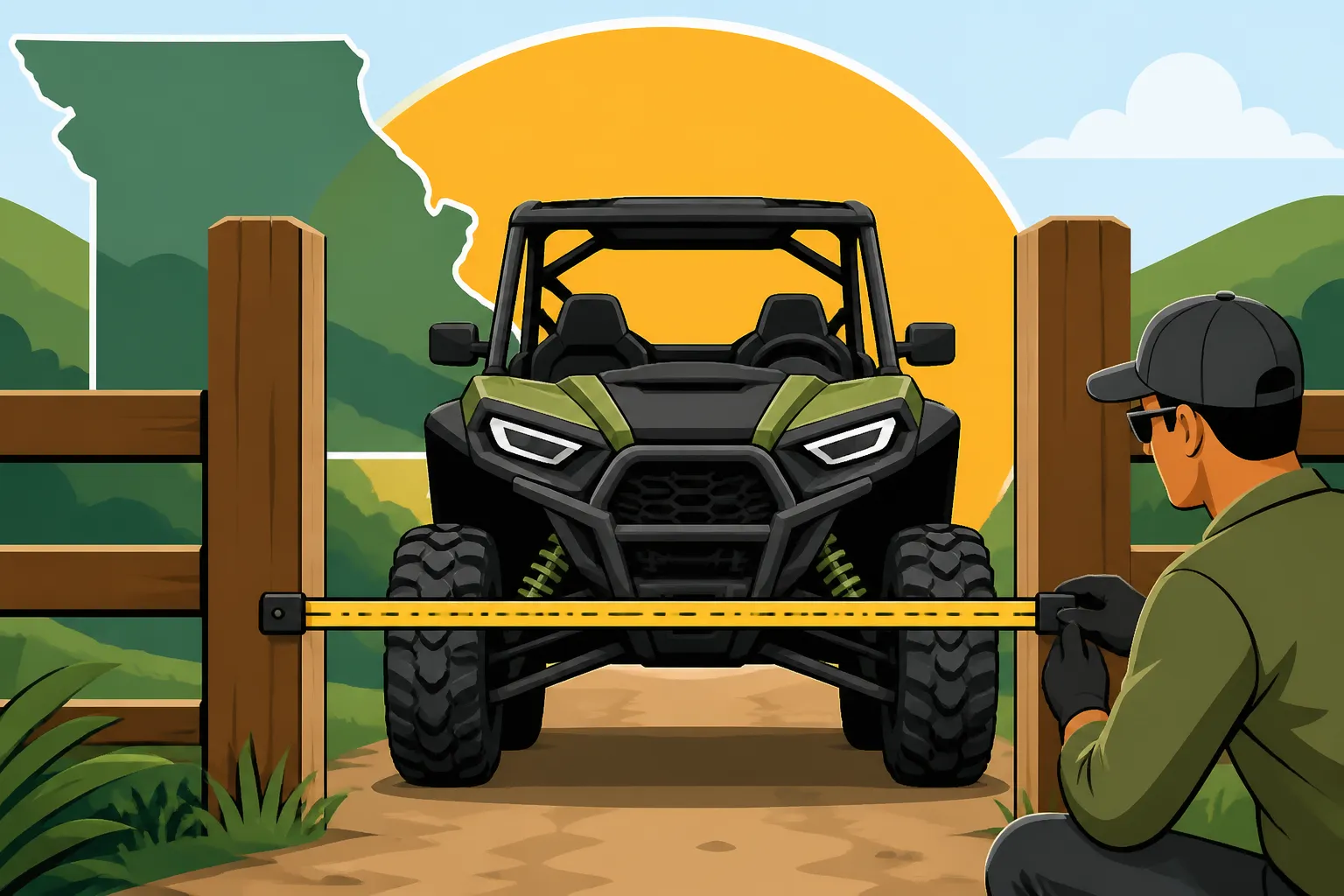
Have a helper hold one end of a tape measure if possible. A second person makes it easier to keep the tape level and read the measurement without pulling it diagonally. If you are measuring alone, mark the farthest points on the ground with small pieces of tape or other removable markers, then measure between those marks.
Find the widest points
Stand in front of the machine and look across it from side to side. Identify the farthest outward point on the left and the farthest outward point on the right. Depending on the design, the widest points are often the outer edges of the tires, but they could be another part of the machine or an installed accessory.
Measure straight across between those two points. Keep the tape parallel to the ground and perpendicular to the machine’s direction of travel. A tape that angles from one side to the other can produce a misleadingly large reading; a tape that runs diagonally or misses a protruding part can produce one that is too small.
Repeat the measurement from the opposite side or ask your helper to verify it. Write down the result, including any fraction of an inch. If you are near 50 inches, measure again carefully. Treat a borderline measurement as a reason to recheck the machine and the trail requirements—not as a reason to round down.
Include changes that affect width
Aftermarket wheels and spacers can move the tires outward. Wider replacement tires, guards, or other accessories may also become the machine’s widest point. Even if a part seems small, include it if it extends beyond the normal outline of the vehicle.
If your machine has adjustable suspension or removable components, measure it in the configuration you will actually use. Do not assume that removing a part makes the machine trail-eligible unless the trail manager’s measurement rules allow that setup and you are certain the remaining machine fits the limit.
A phone photo of the tape in place can help you remember your measurement later, but it is not a substitute for a current check. If you change tires or install accessories, measure again. You can also save notes about your machine and planned routes in onX Offroad, then compare those plans with the trail information you have confirmed. The app can help with trip organization, but it does not determine whether a machine meets a specific access rule.
Common measurement mistakes to avoid
Relying on a brochure or model name
Specifications are helpful, but they can describe a particular factory configuration rather than your modified machine. A trim package may use different wheels or tires, and owners may add spacers or other parts after purchase. Use the published width as a reference, then check the actual vehicle from its widest point.
It is also easy to confuse width with another listed dimension. A machine’s overall length, wheelbase, or width measured at a different point does not tell you whether it meets a trail’s 50-inch limit. Look for a clear width specification, and independently measure your setup before relying on it.
Measuring body panels instead of the whole machine
A sleek body can make a vehicle appear narrower than it is. Tires often extend beyond the fenders, and accessories can project beyond both. Measuring only from one body panel to the other may leave out the very part that determines whether the machine exceeds the limit.
For consistency, record what you measured and how. For example, note that you measured across the outer edges of the installed tires, or across an accessory that extended farther. That detail helps you repeat the process after repairs or upgrades. It also makes it easier to explain your result if you need to confirm a trail rule with the managing office.
Rounding down or measuring only once
When the reading is close to 50 inches, a small measuring error can change your decision. Do not round a measurement down to make the machine fit. Check that the tape is level, confirm the widest points, and repeat the measurement. If the result still sits at or near the limit, ask the trail manager how the restriction is applied.
Keep in mind that machine width is only one part of responsible trail planning. A route may have other requirements, seasonal closures, or conditions that make it unsuitable for your vehicle. [Missouri Trail Conditions Before You Ride] offers another useful reminder to check more than the map before heading out.
Plan your ride around the machine you measured
Match your route to your machine
Once you have a reliable measurement, compare it with the specific trail’s access rules. Do not assume that a width limit at one Missouri riding area applies everywhere, or that a machine accepted at one park is automatically suitable for another. Sutton Bluff’s 50-inch restriction is specific to that riding context; other areas may use different limits or other requirements.
A mapping app such as onX Offroad can help you organize route ideas and keep trail notes together, particularly when you are comparing locations. Still, use official land-manager information to confirm access and closures. A line shown on a map does not override a posted restriction or establish that a route is open to your particular machine.
For example, a rider preparing for a weekend might measure a side-by-side at 52 inches and discover that Sutton Bluff is not an appropriate choice under its 50-inch limit. That rider can then look for a different area with rules that accommodate the vehicle instead of towing there and hoping for an exception. For other state-park access limits, [Measuring 64 Inches at the Gate] is a reminder that width restrictions can differ from one riding area to another.
Recheck after repairs or upgrades
Measure again whenever a change could affect the machine’s overall width. This includes switching tire sizes, adding wheel spacers, installing guards, or replacing damaged parts with components that sit farther out. A quick recheck at home is easier than discovering a mismatch at the trailhead.
Make a simple note of the measurement, the setup, and the date you checked it. Keep that note with your trip planning details, but revisit it if the machine changes. If you use onX Offroad for planning, you can keep a reminder alongside your route notes; still verify the area’s current access information separately before you go.
A careful measurement does not guarantee that every trail will be passable, but it removes one avoidable uncertainty. Pair it with current trail information, respect posted restrictions, and choose a route that fits the machine you actually have—not the width you hoped it would be.
Disclaimer
This article is for general informational purposes only and does not constitute professional advice. Laws, prices and regulations vary by location and change over time. Consult a qualified professional for guidance on your specific situation.