Keeping Paperwork in a Dry Bag
Picture this: you're out on your favorite Missouri ATV trail, enjoying the sun or splashing through a creek, when suddenly you remember that critical piece of paper tucked into your cargo box. Did it get wet? Is it covered in mud? The thought alone can ruin a good ride. Keeping your essential ATV or UTV documents safe, dry, and legible isn't just about avoiding a headache; it's about staying compliant and making sure your adventures aren't cut short by damaged paperwork. This guide will walk you through the why and how of protecting your vital documents, ensuring peace of mind on every journey.
Why Your ATV Paperwork Needs Protection On The Trail
Riding an ATV or UTV in Missouri is an exhilarating experience, full of mud, dust, water, and plenty of bumps. Unfortunately, these very elements that make riding so much fun are also the biggest threats to your important documents. Thinking a Ziploc bag is enough? While it's a start, the trail environment often demands a lot more.
The Perils of the Missouri Trail Environment
Our beautiful Missouri trails, from the sand flats of St. Joe State Park to the rocky, creek-laden paths of Chadwick, are not kind to paper. Imagine splashing through a deep creek crossing at Sutton Bluff, water flying everywhere. Or perhaps you're cruising a dusty gravel road near a Mark Twain National Forest trailhead, and the fine grit permeates everything. Unexpected rain showers are common, turning a pleasant afternoon ride into a scramble for shelter, and often drenching anything not properly secured. Even sweat from a hot summer day can seep into pockets or storage compartments, making documents damp and sticky. Then there's the sheer vibration and jostling of a rough ride, which can cause paper to fold, tear, or wear thin against other items. It's a relentless assault on anything fragile.
The Critical Documents You Carry
When you're out riding, there are several pieces of paperwork that are absolutely essential to have on hand, or at least easily accessible. First and foremost is your proof of ownership, usually the ATV or UTV title itself, though often a copy is sufficient for trail riding. Then there's your current registration decal or permit. For Missouri residents, this means the three-year decal, and if you're riding in a state park or national forest, your daily or annual ORV permit. [Missouri ORV Permits Explained] is a good read on this. Your driver's license or identification card is a must-have, as is proof of insurance, especially if you're riding on any public roads where it might be required by a special permit. [Missouri ATV Insurance Requirements] covers this in more detail. Some riders also carry emergency contact information, medical alerts, or even a [Missouri Bill of Sale for an ATV] if they've just purchased a machine and haven't fully titled it yet. Each of these documents is vital for different situations, from a routine stop by a conservation agent to an emergency.
The Consequences of Damaged Paperwork
The thought of pulling out a soggy, illegible title or a mud-smeared permit is enough to make any rider cringe. But the consequences go beyond mere inconvenience. If a law enforcement officer or park ranger cannot clearly read your registration decal number or verify your permit, you could face fines or be asked to leave the trail. Having to replace a damaged document means time and money spent at the license office, dealing with forms and fees. [Replacing a Lost Missouri Decal] can be a hassle you definitely want to avoid. If your title gets ruined, selling your machine becomes infinitely more complicated, as the buyer will want a clear, untarnished document. Imagine trying to explain to a potential buyer that their new ATV's title looks like it went through a washing machine. Damaged insurance cards could also complicate matters in the event of an accident, potentially delaying claims or proving coverage. It's a cascade of potential problems, all stemming from inadequate protection.
Choosing the Right Dry Bag for Your ATV or UTV
Now that we understand why your paperwork needs serious protection, let's talk about how to achieve it. A good dry bag isn't just a waterproof pouch; it's a purpose-built piece of gear designed to withstand the rigors of the trail.
What to Look for in a Quality Dry Bag
When you're hunting for the perfect dry bag, don't just grab the cheapest option. Think about the conditions your paperwork will face.
First, material matters. Look for bags made from durable, waterproof fabrics like PVC, TPU (thermoplastic polyurethane), or heavy-duty nylon with a waterproof coating. PVC is often more budget-friendly and very effective, while TPU offers superior abrasion resistance and flexibility in colder temperatures. Avoid anything that feels flimsy or like it could easily puncture from a sharp twig or a corner of a toolbox.
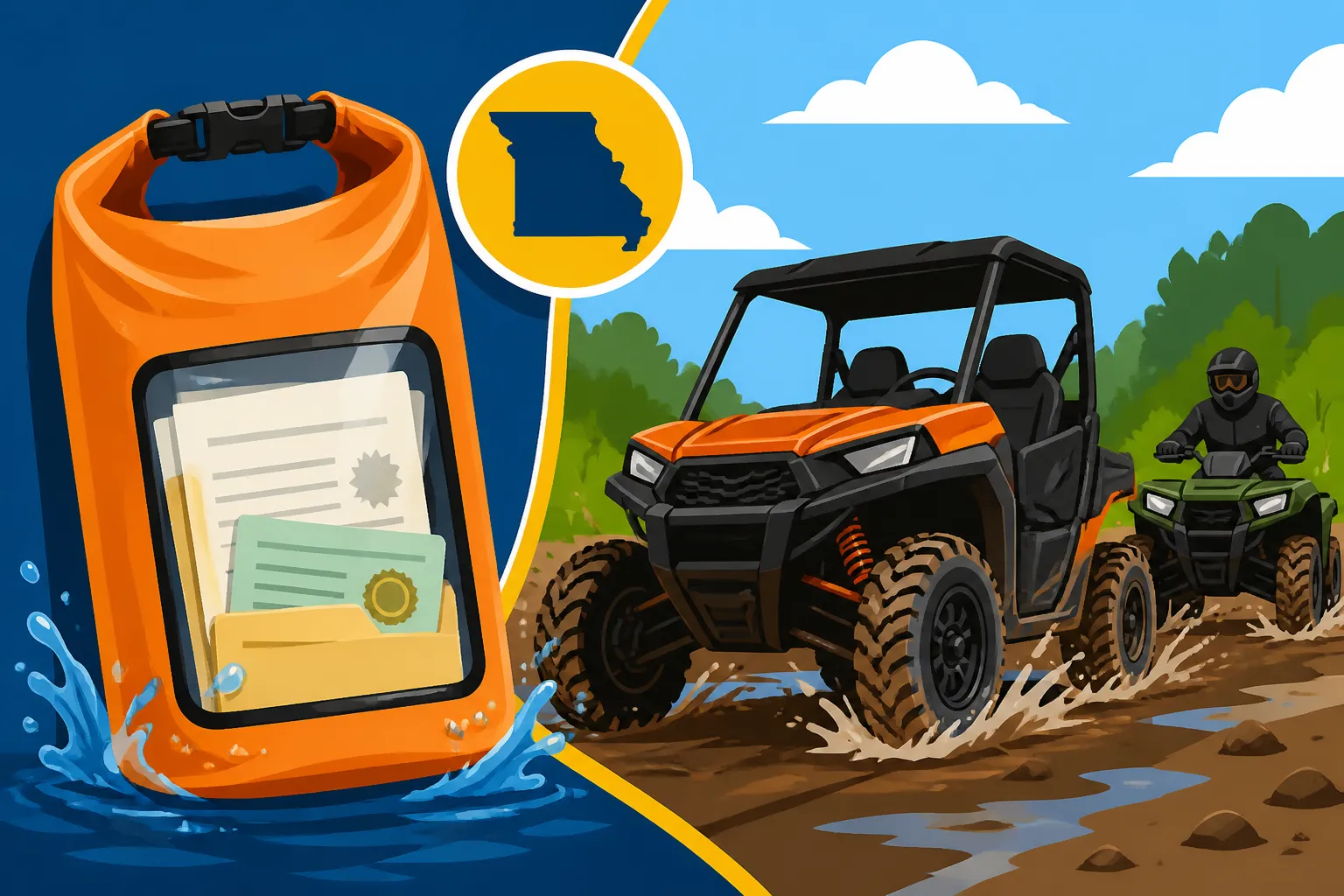
Next, consider the closure type. The most common and reliable is the roll-top closure. This involves rolling the top edge down several times and then securing it with buckles. When done correctly, this creates an impenetrable seal against water, dust, and mud. Zippers, even "waterproof" ones, can sometimes fail over time, especially with fine dust or grit getting into the teeth. Look for bags that require at least three tight rolls to ensure a proper seal.
Durability is paramount. Your dry bag will likely be strapped down, jostled, and perhaps even scraped. Check for reinforced seams, sturdy buckles, and robust straps. A bag that can handle being bounced around on the back of your quad or side-by-side for an entire season is what you're after.
Finally, size is important. You don't need a huge dry bag that takes up half your cargo space just for documents. A small, compact dry bag—think 5 to 10 liters—is usually plenty for your essential papers, perhaps a phone, and a small first-aid kit. You want something big enough for documents to lie flat without being folded, but not so big that it becomes cumbersome.
Here’s a quick comparison of common dry bag features:
| Feature | Description | Pros | Cons |
|---|---|---|---|
| Material: PVC | Polyvinyl chloride, thick and durable. | Excellent waterproofing, affordable. | Can be stiff in cold, heavier, less eco-friendly. |
| Material: TPU | Thermoplastic polyurethane, more flexible and abrasion-resistant. | Lighter, more flexible, better puncture resist. | More expensive. |
| Closure: Roll-Top | Top edge rolled multiple times, secured with buckles. | Highly waterproof, reliable, simple. | Requires effort to open/close, can be bulky when rolled. |
| Closure: Zipper | Waterproof zipper (often T-zip or similar heavy-duty design). | Easy access, less bulk. | Can fail if dirty, less reliable for submersion over time. |
| Capacity: Small (5-10L) | Ideal for documents, phone, keys, small essentials. | Compact, easy to mount. | Limited storage for larger items. |
| Capacity: Medium (15-20L) | Can hold documents, extra layer, snacks, small tools. | Versatile. | Can be overkill if only carrying documents. |
Different Types of Dry Bags and Their Best Uses
While "dry bag" often conjures images of a roll-top cylinder, there are a few variations that might suit your specific needs.
Roll-top dry bags are the classic choice and for good reason. They are incredibly versatile and offer excellent waterproofing. You can find them in various sizes and shapes, from tall, slender bags that fit into tight spaces to wider ones that are better for flatter items. For paperwork, a roll-top dry bag that allows documents to lie flat is ideal. Many have D-rings or webbing loops, making them easy to strap down securely.
Waterproof hard cases are another option, particularly if you need absolute crush protection in addition to waterproofing. Think Pelican cases or similar rugged containers. These are fantastic for electronics, but they can be bulkier and heavier than a soft dry bag. However, for a truly irreplaceable document like a physical title that needs to stay perfectly flat and protected from physical damage, a small hard case might be worth considering.
Specialized waterproof pouches are often designed for specific items like phones or maps. While good for individual items, they might not offer enough space or durability for a full suite of ATV documents. They are excellent as a secondary layer of protection inside a larger dry bag or hard case for truly sensitive items. For example, you might put your phone in a dedicated waterproof pouch, and then put that pouch (along with your physical documents) into a larger roll-top dry bag.
Placement and Accessibility on Your Machine
Where you store your dry bag is almost as important as the bag itself. You want it to be secure, protected from external damage, and easily accessible when you need it.
For ATVs, common spots include a front or rear cargo rack, secured with bungee cords or cargo nets. Some riders opt for a tank bag that has a waterproof compartment. For side-by-sides, the options open up considerably: under a seat, in a glove compartment (if it's truly waterproof, which many are not), or securely strapped into a cargo bed. The key is to find a spot where it's not exposed to direct impact from branches, rocks, or other trail hazards. Avoid strapping it to the very rear of a machine where it might get hit by roost from another rider, or where it could bounce loose.
Consider accessibility. If a conservation agent asks for your permit, you don't want to be fumbling with layers of gear to dig out your dry bag. Position it so you can quickly and safely retrieve its contents without putting yourself or others in a risky situation on the trail. A small dry bag with just your essential paperwork could be clipped inside a larger cargo box or strapped to the outside of a more frequently accessed bag.
Beyond the Bag: Best Practices for Paperwork Management
While a good dry bag is your first line of defense, a comprehensive approach to paperwork management can save you even more headaches. Think about what happens if the worst-case scenario occurs and your physical documents are compromised.
Digital Backups: Your Safety Net
In today's digital age, relying solely on physical paper is risky. Always, always, always have digital backups of your essential documents. Take clear, well-lit photos of your ATV's title, registration decal, permit, and insurance card. Store these photos on your smartphone, and even better, upload them to a cloud storage service like Google Drive, Dropbox, or Apple iCloud. This way, if your phone gets lost or damaged, you can still access them from another device. [Is a Phone Photo of Your Title Good Enough?] is a question many riders ask, and while it's not a substitute for the original, it can be incredibly helpful for verification in a pinch.
These digital copies can be invaluable if your physical documents are ever lost, stolen, or damaged beyond recognition. They can expedite the replacement process by providing all the necessary information, such as VINs, license plate numbers, or policy details, without you having to remember them from memory.
What to Keep on Your Person vs. on the Machine
Deciding what goes in the dry bag on your machine and what stays on your person is a strategic choice.
On Your Person: Your driver's license or state ID should always be on your person, usually in your wallet or a dedicated pocket. This is for quick access during any interaction with law enforcement, and also for personal identification in case of an emergency. Some riders also keep a copy of their insurance card in their wallet. This ensures that even if you're separated from your machine, you still have your personal identification.
In the Dry Bag on Your Machine: This is where your ATV-specific documents should live. The actual title (or a high-quality copy if you keep the original secured at home), your current state park or national forest ORV permits, and perhaps an additional copy of your insurance card. If you've recently bought or sold a machine, a copy of the [A Missouri Bill of Sale for an ATV] might be in there too. For specific situations, like riding a side-by-side with a special city permit, that permit would also be in this bag. The idea is to have all the machine-related paperwork together, protected, and accessible when you're with your vehicle.
[Where to Keep an ATV Title Safe at Home] is another important consideration. Many experienced riders advise keeping the original title in a secure, fireproof location at home, and carrying only a high-quality, legible color photocopy on the trails. This minimizes the risk of losing or damaging the irreplaceable original document.
When to Replace Damaged Documents
Despite your best efforts with a dry bag, accidents happen, and documents can still get damaged. Knowing when and how to replace them is crucial.
If a document becomes illegible due to water damage, tearing, or fading, it's time to replace it. An officer cannot verify a document that can't be read. For Missouri ATV decals, you can typically apply for a replacement at a local license office. [Replacing a Lost Missouri Decal] costs a nominal fee and gets you a fresh decal. For titles, the process is a bit more involved, requiring an application for a duplicate title through the Missouri Department of Revenue. The important thing is to act quickly. Don't wait until you're stopped on the trail to realize your paperwork is unreadable. Regular checks of your dry bag contents—especially after a particularly muddy or wet ride—can help you catch issues early.
If you are dealing with a vehicle that has a lien, make sure you have a [Getting a Notarized Lien Release From a Lender] if you've paid it off. Damaged lien releases can cause headaches during titling.
Common Paperwork Pitfalls and How a Dry Bag Helps
Many common frustrations and potential legal issues for ATV and UTV riders in Missouri revolve around paperwork. A dry bag acts as a silent guardian, preventing many of these problems before they even start.
Dealing with Lost or Illegible Decals and Permits
One of the most frequent headaches for riders is realizing their ATV decal or ORV park permit has either fallen off, been scraped away by brush, or simply faded into oblivion. This often happens because decals aren't placed in the most protected spots, or because the material itself isn't designed for extreme wear. The dry bag solution doesn't protect the decal on your machine, but it protects the proof of purchase that you often need to show if questioned.
However, many riders also carry a copy of their permit or decal registration receipt in their dry bag. If an officer spots an unreadable decal or missing permit, being able to immediately produce a clear, pristine copy of the receipt or a digital image from your dry bag can often clear things up quickly, avoiding a citation for [Missouri Fines for Riding Without a Permit]. While you'll still need to replace the physical decal on your machine (read [Missouri ATV Decal Placement] for tips on where to stick it best), having the proof of purchase readily available can make a world of difference in the moment.
Proving Ownership and Registration on the Go
Imagine you're riding with friends when a conservation agent pulls you over. They ask for your identification, your ATV's registration, and proof of ownership. If your copy of the title is a soggy mess or your registration receipt is barely legible, it can raise red flags and lead to delays. The agent might need to call it in, slowing down your ride and potentially causing an uncomfortable situation. With a perfectly preserved copy of your [Missouri ATV Title Paperwork] and registration in your dry bag, you can quickly and confidently present the requested documents, demonstrating your compliance and often leading to a much smoother interaction. This is especially true for visitors. [Missouri ORV Permit for a Visitor] means you'll definitely want that permit to be clear and accessible.
Ensuring Smooth Transactions When Selling or Transferring
When the time comes to sell your beloved quad or side-by-side, the condition of your title document is paramount. A clean, untarnished original title ensures a smooth transaction for both buyer and seller. If your title has water damage, tears, or is stained, it can cause suspicion for the buyer or, worse, make it difficult to transfer ownership at the Missouri license office. The buyer might assume there's something shady about the machine or demand a duplicate title be issued before they finalize the purchase, causing delays and extra costs. By diligently keeping your title, or at least a pristine copy of it if you store the original securely elsewhere, in a dry bag when it's on the machine, you protect its integrity. When you are ready to sell, having that perfect title in hand makes the process straightforward. Using a reputable service like LawDepot for a bill of sale template, combined with a well-preserved title, ensures all legal bases are covered.
Disclaimer
This article is for general informational purposes only and does not constitute professional advice. Laws, prices and regulations vary by location and change over time. Consult a qualified professional for guidance on your specific situation.