Helmet Rules for Missouri Riders
Navigating the world of off-road vehicle laws in Missouri can feel like trying to find your way through a dense patch of timber without a map. Many riders, especially those new to ATVs and UTVs, are completely confused about when they absolutely need to wear a helmet, when it's just a good idea, and what the law actually says. This guide will cut through the fog, detailing Missouri's specific helmet regulations for ATV and UTV riders, explaining the crucial distinctions, and empowering you to make informed, safe choices for every ride.
The General Rule: Who Needs a Helmet in Missouri (and Who Doesn't)
Let's start with the most common question: "Do I have to wear a helmet?" In Missouri, the answer isn't a simple yes or no; it really depends on your age and where you're riding. This nuanced approach often catches people off guard, especially if they're used to more blanket laws in other states. It's frustrating when you just want a straightforward answer, but the reality is that Missouri's laws are designed to protect specific vulnerable groups while allowing adults more freedom in certain situations.
The Age Divide: Riders Under Eighteen
Here’s the clearest rule you'll find: if you're under the age of eighteen, Missouri law is unequivocal – you must wear a safety helmet when operating or riding as a passenger on an all-terrain vehicle. This isn't a suggestion; it's a firm legal requirement. This rule applies regardless of whether you're tearing up trails on private land, cruising down a gravel county road where permitted, or spending the day at a state park. The legislature made this distinction to protect young, developing brains from the severe risks associated with off-road vehicle accidents. Think of it as a parental responsibility enshrined in law, aimed at preventing tragic outcomes that could otherwise be avoided.
Imagine a family weekend at a deer camp in the Ozarks. Little Timmy, age 14, is eager to ride his new quad. His dad might think, "We're on our own land, no one cares." But if a conservation agent or even a county deputy happened to be passing by and saw Timmy without a helmet, his dad could face a citation. It’s not about being a killjoy; it's about a clear-cut safety standard for minors. This also extends to passengers; if Timmy has his 12-year-old cousin riding pillion on a machine designed for two, both minors must have helmets securely fastened. The law simply doesn't differentiate between operator and passenger when it comes to age and head protection. [Missouri Helmet Law for Riders Under 18] is not to be trifled with.
Adults on Private Property: Making Your Own Choices
Now, for those 18 and older, things loosen up considerably. If you're riding an ATV or UTV on private property, the state of Missouri does not mandate helmet use for adults. This means if you're on your own farm, a friend's hunting lease, or any other land where you have permission to ride, you're legally free to choose whether or not to wear a helmet. This is where personal responsibility really comes into play. Many seasoned riders, even without a legal requirement, still choose to wear a helmet due to the inherent risks of off-road riding.
Consider a seasoned farmer checking fences on his vast property in rural Dent County. He's been riding ATVs for decades, knows his land like the back of his hand, and feels comfortable without a helmet while driving at slow speeds. Legally, he's in the clear. However, if that same farmer were to hit an unseen washout or encounter a sudden mechanical issue, the risk of head injury remains. While the law grants this freedom, it doesn't diminish the potential consequences of an accident. It's a personal call, but one that demands a serious assessment of risk versus perceived comfort.
The Gray Areas: When the Rules Get Fuzzy
The real confusion often arises when adults venture beyond purely private land or when the machine itself blurs the lines. For instance, what about riding on a county road that allows UTVs, or entering a state-managed ORV park? These scenarios often introduce new layers of regulation, sometimes layered on top of state law by local ordinances or park rules. It’s not always obvious, and many riders assume that if they don't need a helmet on their own land, they don't need one anywhere else. This is a dangerous assumption that can lead to fines or worse.
Imagine planning a trip to a designated off-road park like St. Joe State Park. You might think, "I'm an adult, I don't need a helmet." However, state park rules are often stricter than general state law, particularly concerning safety. They might mandate helmets for all riders, regardless of age, to ensure a safer environment for everyone enjoying the shared trails. Similarly, if your local town has passed an ordinance allowing UTVs on city streets, that ordinance might include specific helmet requirements that supersede the general private land rule. The key takeaway here is to always check the specific rules of your intended riding location, as the general "no helmet for adults on private land" rule has significant exceptions. [Missouri Rules for Riding Public Land] are often different from private land.
Understanding Missouri's ATV Helmet Laws for Minors
The state of Missouri has a clear stance on protecting its youngest off-road enthusiasts: helmets are a must for anyone under 18. This isn't just some arbitrary rule; it's a fundamental part of keeping kids safe in an activity that, while incredibly fun, carries inherent risks. As parents, guardians, or even just adult riders who share the trails, understanding these laws is crucial for ensuring the well-being of the next generation of riders and avoiding legal trouble ourselves.
The Law's Intent: Protecting Young Riders
Missouri's helmet law for minors is rooted in public health and safety. Children and teenagers are, quite simply, more vulnerable to severe injuries in an accident. Their bodies are still developing, and their decision-making skills aren't fully mature. A head injury at a young age can have devastating, lifelong consequences, impacting everything from cognitive function to motor skills. The law steps in to provide an essential layer of protection, recognizing that even the most careful supervision can't prevent every mishap. This isn't about stifling fun; it's about minimizing tragedy.
Consider the physics of an ATV accident. Even at relatively low speeds, a sudden stop or rollover can eject a rider, or cause them to hit their head on the machine, the ground, or a stationary object. For a child, the impact can be far more severe than for an adult. A properly fitted helmet absorbs and distributes impact forces, dramatically reducing the risk of skull fractures, concussions, and traumatic brain injuries. It's a non-negotiable piece of equipment, much like a car seat for a toddler, designed to safeguard a vulnerable population.
Parental Responsibility: Ensuring Compliance
The burden of ensuring minors wear helmets falls squarely on the shoulders of adults. This means parents, guardians, or any adult supervising a minor riding an ATV or UTV are responsible for compliance. It’s not enough to simply own a helmet; it must be worn and worn correctly. This responsibility extends beyond just your own children. If you’re hosting a riding event and a friend’s child wants to join, you have a moral and legal obligation to ensure they are properly helmeted. It’s about creating a culture of safety where head protection is the norm, not the exception, for young riders.
Imagine a situation where a group of teenagers are riding at a local gravel pit on a Saturday afternoon. If one of them, age 16, is seen by law enforcement without a helmet, the adult who owns the machine or is supervising the group could be held accountable. It’s a moment where a simple oversight can turn into a legal issue. This also means educating young riders about why they need to wear a helmet, not just telling them to do it. Explaining the dangers and the helmet's protective function can foster a greater sense of personal responsibility, even if the law is the ultimate driver. [Missouri Rules for Riders Under 16] also cover supervision, reinforcing adult responsibility.
Penalties for Non-Compliance: What to Expect
Ignoring Missouri’s helmet law for minors can lead to consequences. While specific fines can vary, a violation typically results in a misdemeanor charge. This could mean a fine for the adult responsible, and potentially other penalties depending on the circumstances. Beyond the legal ramifications, there's the far more significant "penalty" of potential injury. No fine can compare to the devastation of a child suffering a serious head injury that could have been prevented by a helmet.
Let's say a county sheriff pulls over a group of riders, and a 15-year-old on an ATV is found without a helmet. The sheriff isn't just going to give a stern warning; the adult who permitted the ride or is supervising could receive a citation. This isn't just about a ticket; it goes on your record. More importantly, it highlights a lapse in judgment regarding child safety. The law is there to act as a deterrent, but its primary purpose is preventative. Compliance is not just about avoiding a fine, it's about upholding the duty to protect young lives. [Missouri Fines for Illegal ATV Road Use] (or public land use) often include this type of violation.
When Helmets Become Mandatory for Adults: Specific Scenarios
While Missouri's general rule for adults on private land is "no helmet required," there are critical situations where even adult riders are legally obligated to wear head protection. These scenarios typically involve public access or specific types of riding environments where the risks are either heightened or regulated by additional governmental bodies. Missing these distinctions can lead to citations, fines, or, most importantly, serious injury.
Riding on Public Roads: Missouri's Street-Legal Exceptions
This is perhaps the biggest gray area and source of confusion for many adult riders. While ATVs and UTVs are generally not street legal in Missouri, there are specific exceptions, such as local ordinances in some cities and counties that allow UTVs on designated streets, or agricultural use permits. When you transition from private land to these public road exceptions, the rules often change dramatically, bringing helmet requirements into play, particularly for UTVs.
If you're in a town like Harrisonville, which has its own permit system for UTVs on city streets, you'll find that these permits often come with a list of safety requirements that can include helmet use for all occupants. Similarly, if a county has opened its gravel roads to UTVs, the ordinance might stipulate that all riders must wear helmets. It's not the ATV or UTV itself that dictates the helmet rule here, but the specific legal framework that allows it on a public way. You might have added accessories from SuperATV to make your UTV more road-ready, like a turn signal kit or a horn, but those won't exempt you from helmet laws if the local ordinance requires it. Always check the specific ordinance for the town or county you plan to ride in. [Are ATVs Street Legal in Missouri?] and [Can You Drive a UTV on a Missouri Road?] delve deeper into these exceptions.
State Parks and Designated ORV Areas: Park-Specific Regulations
Missouri's state parks and designated off-road vehicle (ORV) areas, such as St. Joe State Park or Finger Lakes State Park, often have their own comprehensive set of rules that supersede general state laws concerning private land. These rules are designed to manage safety within a shared recreational space, where various skill levels and machine types coexist. Here, it's very common for helmets to be mandatory for all riders, regardless of age.
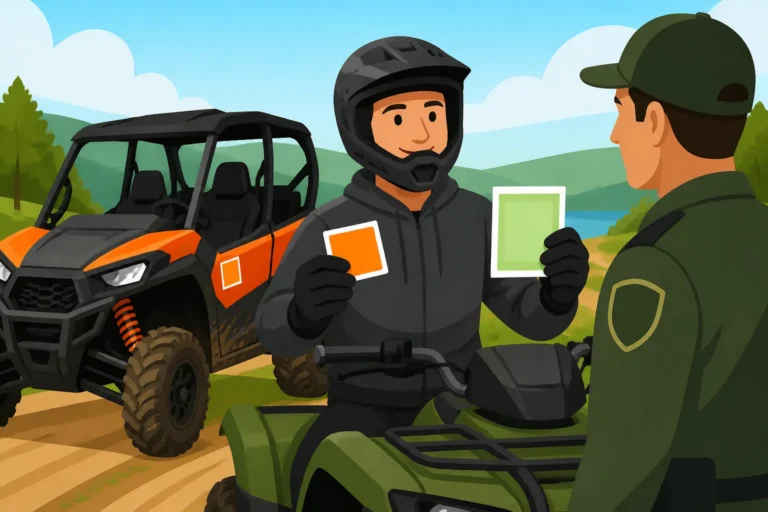
Imagine pulling your trailer into the staging area at St. Joe State Park, ready for a day of ripping through the sand flats. You might see signs clearly stating that helmets are required for everyone. A park ranger will check for this, along with other safety equipment like spark arresters and proper flags. These parks are high-traffic areas, and the potential for collisions or rollovers is greater than on an isolated private trail. The mandatory helmet rule ensures a baseline of safety for every participant. It’s not just about protecting yourself; it’s about contributing to a safer environment for everyone enjoying the facilities. [Missouri State Park ORV Permit Prices] often cover the cost of access, but not the safety gear you need to bring.
Local Ordinances and Permits: City and County Rules
Beyond the state parks, individual cities and counties in Missouri have the authority to establish their own ordinances regarding ATV and UTV use on public roads within their jurisdiction. These local rules can vary wildly from one municipality to the next, and many include mandatory helmet requirements for all riders, adults included, when operating under such permits. It's a patchwork of regulations that requires due diligence from riders.
For example, a small town in rural Missouri might pass an ordinance allowing UTVs on its streets, but as a condition, it might require helmets for all occupants, proof of insurance, and perhaps even a seven-foot safety flag. You could be riding your UTV with a roll cage and seatbelts, feeling quite secure, but if the local ordinance says "helmets required," then you need one. Before you venture onto any public road, whether it's a city street or a county gravel lane, you absolutely must check with the local police department or county sheriff's office for the specific rules. Assuming the state's "adults on private land" rule applies everywhere else is a recipe for a citation and a potentially dangerous situation. [Missouri Special Permit Cost for ATVs] or UTVs often comes with a list of rules that dictate helmet use.
Choosing the Right Helmet for Missouri Riding
Okay, so you've understood when you need a helmet. Now, let's talk about which helmet. Just grabbing any old helmet won't cut it. A proper helmet isn't just a legal requirement in some situations; it's your most important piece of safety gear, designed to protect your most vital organ. Making an informed choice means understanding safety certifications, different helmet types, and the crucial factor of fit and comfort.
Safety Certifications: DOT and Snell Ratings
When you're looking at helmets, you'll often see stickers or labels indicating certifications like DOT and Snell. These aren't just fancy marketing terms; they represent rigorous testing standards that confirm a helmet's ability to protect your head in a crash.
- DOT (Department of Transportation): This is the minimum legal standard for helmets used on public roads in the United States. A DOT-certified helmet has passed a series of tests to ensure it meets federal safety standards for impact absorption, penetration resistance, and retention system strength. If a helmet is required by law, it almost certainly needs to be DOT-certified. It signifies that the helmet is designed to protect your head from serious injury in a crash.
- Snell Memorial Foundation: Snell is a non-profit organization that conducts even more stringent and comprehensive testing than DOT. Snell certifications (like M2020) are typically seen on higher-end helmets and are often preferred by serious riders, racers, and those who want an extra layer of protection. Snell tests for multiple impacts, more diverse impact angles, and higher energy absorption. While not legally required everywhere DOT is, a Snell-certified helmet offers a superior level of protection.
When you're shopping, always look for at least a DOT certification. For extra peace of mind, especially if you're tackling more aggressive trails or higher speeds, a Snell-certified helmet is an excellent investment. Many quality helmet brands offer both certifications across their product lines.
Types of Helmets: Full-Face, Open-Face, and Modular
The world of helmets offers different styles, each with its own benefits and drawbacks for ATV/UTV riding:
- Full-Face Helmets: These offer the most comprehensive protection, covering your entire head, face, and chin. They typically have a built-in visor for eye protection. For aggressive trail riding, racing, or any situation where maximum protection is desired, a full-face helmet is the go-to choice. They protect against impacts from all directions, as well as roost (debris kicked up by other riders) and weather.
- Open-Face (3/4) Helmets: These helmets cover the top, back, and sides of your head, but leave your face exposed. They are often preferred by riders who like a greater sense of freedom, better airflow, and an unobstructed view. However, they offer no chin or facial protection, making separate eye protection (goggles) essential. While cooler in hot Missouri summers, the trade-off is reduced impact protection.
- Modular (Flip-Up) Helmets: These combine features of both full-face and open-face helmets. The chin bar and visor can flip up, allowing you to easily talk, drink, or get some fresh air without removing the entire helmet. When locked down, they function much like a full-face helmet. They offer versatility but can be heavier and sometimes noisier than a dedicated full-face helmet.
For ATV/UTV riding, especially with the speeds and potential for debris, a full-face helmet is often recommended. However, personal preference and riding style play a huge role. If you choose an open-face or modular, ensure you always pair it with quality eye protection.
Fit and Comfort: Why It Matters for Long Rides
A helmet can have all the certifications in the world, but if it doesn't fit properly, it won't protect you effectively, and it will be miserable to wear. A well-fitting helmet should be snug without being uncomfortably tight, and it shouldn't move around on your head when you shake it.
- Snug Fit: The helmet should press evenly around your head and cheeks. There shouldn't be any pressure points that cause pain. If you can wiggle the helmet from side to side or up and down easily, it's too big.
- Eye Port: Ensure the eye port provides a good field of vision and that your goggles or visor fit comfortably without obstructing your view.
- Chin Strap: The chin strap should be securely fastened, but not digging into your throat. It's designed to keep the helmet on your head in a crash, so don't leave it loose!
- Comfort for Long Rides: Think about how the helmet feels after an hour or two. Is it well-ventilated for hot days? Is it too heavy? Riding for hours with an ill-fitting or uncomfortable helmet can be distracting and detract from your enjoyment.
Many riders find that trying on several different brands and sizes is essential. Head shapes vary, and what fits one person perfectly might feel awful on another. Take your time, try them on with any other gear you typically wear (like glasses), and don't hesitate to ask for assistance at a reputable gear shop. Investing in a good helmet is investing in your safety and enjoyment on the trails, whether you get your gear from a local dealer or online from a site like SuperATV. [Missouri ATV Helmet Costs] are a factor, but safety should be the priority.
Common Misconceptions About Missouri Helmet Laws
It's easy to misunderstand the nuances of ATV and UTV laws, especially with so many different regulations and specific exceptions floating around. These misconceptions can lead to trouble, either with law enforcement or, more critically, with your safety. Let's clear up some of the most common myths about helmet rules in Missouri.
"It's Only for Motorcycles": The ATV Distinction
One pervasive myth is that helmet laws in Missouri only apply to motorcycles. While it's true that motorcycle helmet laws are very prominent, they are distinct from ATV/UTV helmet laws. The state differentiates between these vehicle types, and the specific statutes regarding ATVs and UTVs (or what the state calls "off-road vehicles") have their own set of rules, particularly concerning minors.
Many people hear "helmet law" and automatically think of the universal requirement for motorcycle riders under 18 or specific requirements for adults on motorcycles in certain situations. They then mistakenly assume that if they don't see an explicit "ATV helmet law" sign, it doesn't apply. This is a dangerous oversight. Missouri's statutes specifically address "all-terrain vehicles" and require helmets for operators and passengers under 18, regardless of whether they are on public or private land. The legislative intent for ATVs is to protect young riders from the unique hazards of off-road operation, which differ from those on a street-legal motorcycle.
"I'm Just Crossing the Road": The Quick Dash Exception Myth
Another common misconception, especially in rural areas, is that if you're "just quickly crossing a road" or driving a very short distance on a public thoroughfare (even an allowed one), you don't need to comply with helmet rules. This "quick dash" exception is a myth that can lead to fines and accidents.
If you're operating an ATV or UTV on any public road where a helmet is legally required – whether it's a specific county road, a state park access road, or a city street under a local ordinance – that requirement applies from the moment your wheels touch that public surface. There is no grace period for short distances. A quick hop across a highway to get to another section of your property, or a short trip down a gravel lane to a neighbor's house, still falls under the same legal obligations. A Missouri deputy isn't going to look the other way just because you were only going "a few hundred feet." If the law says helmet required, it's required. This is especially true for minors, where the law applies universally on all land.
"My Side-by-Side Has a Roll Cage": UTV Helmet Nuances
Many UTV (side-by-side) owners believe that because their vehicles have roll cages, seatbelts, and often windshields, helmets become unnecessary, even for minors or in situations where they might be required for ATVs. While a roll cage and seatbelts offer significant protection, they do not eliminate the risk of head injury, nor do they automatically exempt you from helmet laws.
A roll cage is designed to prevent the vehicle from collapsing in a rollover, protecting the passenger compartment. Seatbelts keep occupants inside the cage. However, in a violent rollover or impact, an occupant's head can still strike internal components of the cage, the steering wheel, or even the ground if the vehicle lands awkwardly. Concussions and other head traumas are still very possible. For minors, the law makes no distinction between an ATV and a UTV – if you're under 18, a helmet is required. For adults, if you're in a situation where helmets are mandated (e.g., state park, specific local road ordinance), the presence of a roll cage does not override that requirement. Always prioritize head protection, even when the machine feels very secure. Many UTV accessories from companies like SuperATV enhance safety and utility, but they don't replace the need for personal protective gear like helmets when required.
The Benefits of Wearing a Helmet (Even When Not Required)
While understanding the legal requirements is paramount, it's equally important to consider the overwhelming benefits of wearing a helmet, even in situations where Missouri law doesn't mandate it for adults. Helmet use is about more than just avoiding a ticket; it's about safeguarding your health, extending your riding career, and setting a positive example.
Preventing Serious Injuries: Head Trauma and Concussions
Let's be brutally honest: ATVs and UTVs can be dangerous. Falls, rollovers, and collisions are an unfortunate reality of off-road riding, and the head is one of the most vulnerable parts of the body. A properly fitted, certified helmet is specifically designed to absorb and dissipate impact forces, dramatically reducing the risk of severe head trauma, skull fractures, and concussions.
Think about the forces involved in an accident. Even a slow-speed tip-over can result in your head hitting a rock, a tree, or the machine itself. Without a helmet, that impact could be devastating, leading to brain injuries that range from mild concussions with long-term effects to permanent disability or even fatality. A helmet acts as a crucial buffer, spreading the force over a wider area and adding cushioning that literally saves lives and brains. Riders who choose to skip a helmet when not legally required are essentially playing Russian roulette with their long-term health and cognitive function. This isn't just about immediate pain; it's about avoiding a lifetime of struggles for yourself and your loved ones.
Enhanced Visibility and Protection from Elements
Beyond impact protection, helmets offer several other practical benefits that enhance the riding experience and overall safety. A full-face helmet, in particular, provides superior visibility and protection from the elements and trail hazards.
Imagine kicking up dust on a dry Missouri trail, or navigating through a muddy creek bed after a spring rain. A helmet with a visor or worn with goggles keeps dust, mud, branches, and insects out of your eyes, ensuring you maintain clear vision. This improved visibility is critical for reacting to obstacles, other riders, and changes in terrain. Without it, you're squinting, wiping your face, and missing crucial details. Furthermore, helmets offer protection from wind, sun, and even light rain, making your ride more comfortable and enjoyable, especially on longer excursions. It's not just about avoiding injury; it's about enhancing your ability to see and react, which in itself prevents accidents.
Setting a Good Example for Younger Riders
If you're an adult rider, whether you have children or simply interact with younger enthusiasts, your actions speak volumes. When you consistently wear a helmet, even when not legally required, you're reinforcing a critical safety message that goes far beyond any written law. You're demonstrating that safety is a priority, not just a compliance issue.
Children and teenagers are highly impressionable. If they see adults they look up to riding without helmets, they internalize the message that helmets aren't truly necessary. This undermines the very laws designed to protect them. By contrast, if you always don your helmet before hitting the trail, you're setting a powerful example. You're teaching them that responsible riding includes prioritizing head protection, regardless of the specific rules of the moment. This cultural shift towards consistent helmet use is vital for cultivating a safer riding community for everyone, especially the next generation. It’s about building good habits and fostering a respect for safety that will serve them well throughout their riding lives.
Beyond Helmets: Other Essential Safety Gear for Missouri Trails
While helmets are arguably the most critical piece of safety gear, they are just one component of a comprehensive approach to safe ATV and UTV riding in Missouri. To truly protect yourself and ensure an enjoyable experience, it's vital to consider a range of other protective equipment for both yourself and your machine.
Eye Protection: Goggles and Visors
Even if you're wearing an open-face helmet, or in a UTV with a windshield, dedicated eye protection is non-negotiable. Whether it's goggles or a full-face helmet's integrated visor, your eyes need to be shielded from the myriad hazards encountered on Missouri trails.
Imagine riding through a wooded section of Chadwick Motorcycle and ATV Use Area. Loose branches can whip back, dust can blind you, insects can fly into your eyes, and mud or gravel can be kicked up by other riders. Any of these can cause momentary blindness, leading to a loss of control and a potential accident. Goggles, designed specifically for off-road use, offer a wide field of vision, protect against UV rays, and often have anti-fog properties to maintain clarity. They also seal around your eyes, preventing dust and debris from getting in. Never ride without them; your vision is too precious to risk.
Riding Apparel: Gloves, Boots, and Protective Clothing
Your everyday clothes are simply not designed for the rigors of off-road riding. Proper riding apparel provides crucial protection against abrasions, impacts, and the elements.
- Gloves: Riding gloves protect your hands from blisters, abrasions, and impacts from branches or rocks. They also improve your grip on the handlebars, which is essential for control, especially in wet or bumpy conditions.
- Boots: Sturdy, over-the-ankle boots are a must. They protect your feet and ankles from impacts, crushing injuries, and entanglement with the machine's components. They also provide better grip on footpegs and floorboards. Regular sneakers offer virtually no protection in an off-road environment.
- Long Pants and Long-Sleeved Shirts: While it might seem counterintuitive on a hot day, long pants (preferably riding pants made from durable material) and a long-sleeved shirt (or riding jersey) protect your skin from scrapes, cuts, burns from hot engine parts, and sun exposure. They act as a barrier against trailside brush and provide a layer of impact protection. For more aggressive riding, consider padded jackets or chest protectors. Your riding gear, like a good set of tires you might research for your machine, is an investment in safety.
Machine Safety Checks: Before Every Ride
Your personal protective equipment is only half the battle. Ensuring your ATV or UTV is in top mechanical condition is equally vital for a safe ride. A pre-ride inspection, every single time you head out, can prevent many accidents.
Before you even start the engine, do a quick walk-around. Check your tires for proper inflation and any damage. Look at your brakes – are they firm and responsive? Inspect your lights and signals, especially if you plan to be out near dusk or on any public roads. Check your fluid levels – oil, coolant, and brake fluid. Ensure your chain or driveshaft is in good condition, and that all nuts and bolts are tight. Listen for any unusual noises during startup and operation. If something feels off, investigate it before you ride. Many aftermarket parts from SuperATV, like heavy-duty tie rods or A-arm guards, can enhance your machine's durability, but they still require regular inspection. A well-maintained machine is a safe machine, reducing the risk of mechanical failures that could lead to an accident, even if you are fully geared up. [Missouri ATV Maintenance Costs] are a part of responsible ownership.
Disclaimer
This article is for general informational purposes only and does not constitute professional advice. Laws, prices and regulations vary by location and change over time. Consult a qualified professional for guidance on your specific situation.