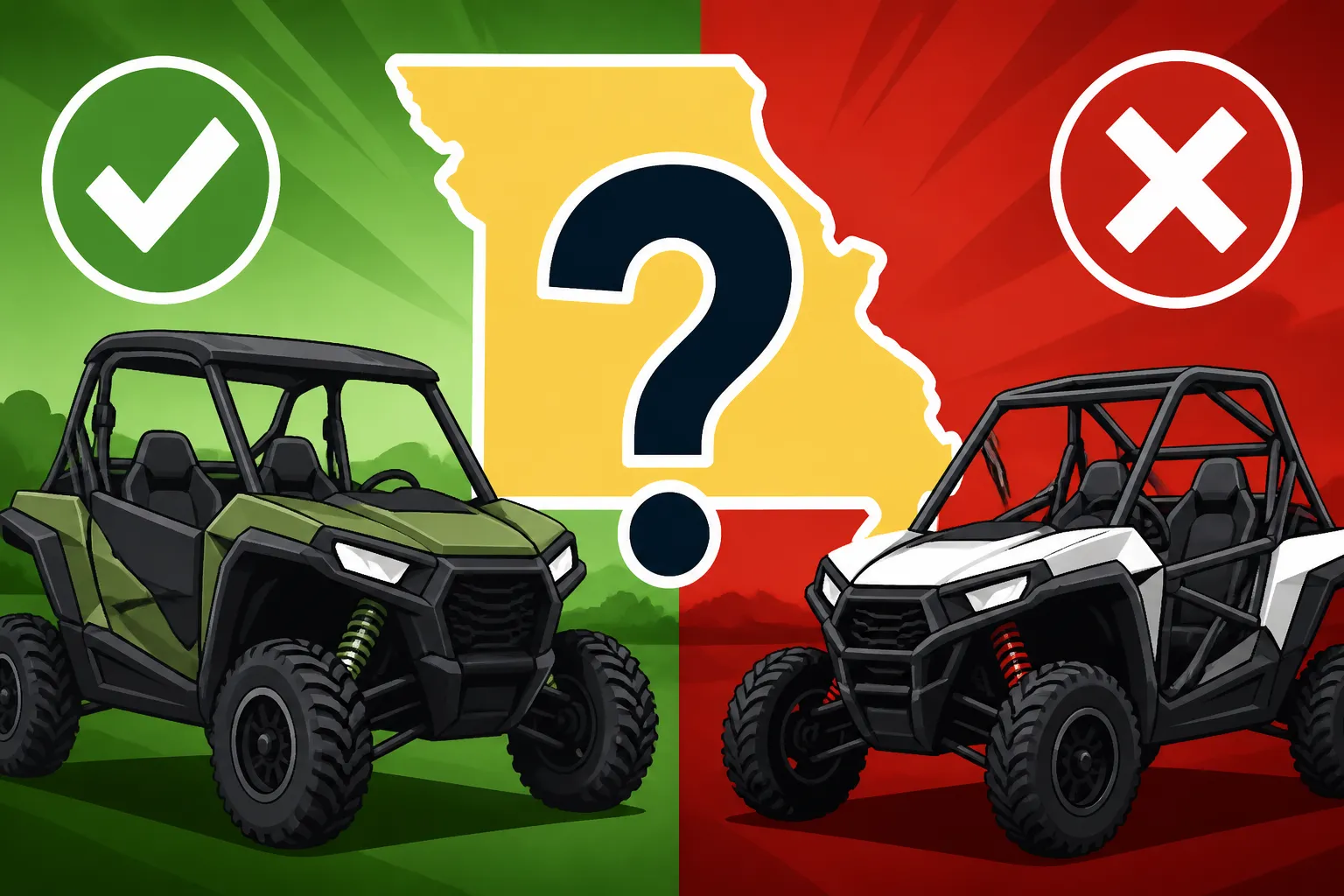
Does a Factory Roll Cage Meet the Rule?
Many UTV and side-by-side owners in Missouri dream of taking their machines on local roads, whether it's for a quick run to the store, connecting trails, or simply to enjoy the scenery. But the regulations, especially around what makes an ROV "street legal," can feel like navigating a dense thicket. One of the biggest questions that constantly crops up, particularly when you're considering applying for a special permit for street use, is whether the factory roll cage that came with your recreational off-highway vehicle (ROV) is truly robust enough to meet the state's safety standards. This guide will help demystify Missouri's expectations for your ROV's roll bar and other crucial safety features when you venture onto permitted roads.
Understanding Missouri's Roll Bar Requirements for ROVs on Public Roads
It’s completely natural to wonder about the integrity of your factory-installed roll cage. After all, it’s one of the primary safety features designed to protect you in the event of a rollover. The good news is that for most modern recreational off-highway vehicles, the manufacturer's integrated roll cage, also known as the roll-over protective structure (ROPS), is generally considered sufficient by Missouri law for operation on public roads where permitted.
When state statutes or local ordinances talk about "roll bars" or "protective frames," they are primarily concerned with the presence and functionality of such a structure. They want to ensure there's something substantial there to mitigate injury during an upset. Manufacturers like Polaris, Can-Am, and Honda invest heavily in engineering and testing their ROPS to meet or exceed industry safety standards set by organizations like the ROV Industry Association (ROVIA). These designs factor in occupant protection, structural integrity, and crashworthiness, which usually means your stock cage is built for purpose.
However, the key here is "factory-installed" and "unmodified." If you've tinkered with your roll cage – perhaps cut sections out, added aftermarket accessories that compromise its structural integrity, or if it's been damaged in an accident – then you might run into issues. A police officer or sheriff's deputy, when checking your machine for a permit or during a roadside stop, will primarily be looking for a visible, intact, and apparently functional roll cage alongside working seat belts. While they generally aren't equipped to perform engineering inspections, obvious modifications or damage could raise red flags and lead to questions about its compliance. For a deep dive into this, you can look at [Roll Bar and Seat Belt Rules for an ROV].
Beyond the Cage: Other Essential Safety Features for Road-Legal ROVs
While a robust roll cage is foundational, Missouri's rules for operating an ROV on public roads go far beyond just that structure. There's a whole suite of other equipment you need to have, many of which aren't necessarily standard factory items, or require specific attention for road use. Failing to meet these can quickly turn a permitted ride into a citation.
Lights, Visibility, and Signaling
First and foremost, you need to be seen and be able to see. This means your ROV must be equipped with functional headlamps that are illuminated when you're operating on the road, taillamps, and brake lamps. These aren't just for night riding; they're crucial for visibility during the day, especially in less-than-ideal weather or when crossing busy intersections. Think of it this way: if a car needs these features to drive on the road, your ROV, sharing that same space, needs them too. You can always check with local ordinances, but generally, having bright, visible lights is a non-negotiable.
Beyond the basic lighting, signaling is also important. While turn signals might not be explicitly mandated by every local ordinance for ROVs, they are certainly a wise addition for safety. However, a functional horn is almost universally required. Imagine needing to warn a distracted driver or a pedestrian; a reliable horn is essential.
The All-Important Safety Flag
One of the most commonly overlooked, yet strictly enforced, requirements for ROVs on Missouri roads is the safety flag. This isn't just a decorative item; it's a critical safety feature designed to make your lower-profile machine visible above obstacles like parked cars, hills, or dense roadside vegetation. Missouri law specifically requires a safety flag that extends at least seven feet above the ground when mounted on the ROV. The flag itself must be made of a day-glow material, typically orange, and needs to be at least 30 square inches in size. This is rarely a factory-installed item, so you'll almost certainly need to purchase and install one. Many aftermarket providers, including brands like SuperATV, offer high-quality safety flags and mounting solutions that meet these specifications, making it easy to comply. For more on this, check out [Missouri Safety Flag Requirements] and [Why a Road Flag Must Fly 7 Feet Up].
Seat Belts and Driver's License
It might seem obvious, but functional seat belts for all occupants are absolutely mandatory. If your ROV has multiple seating positions, each must be equipped with a working seat belt, and all occupants must be properly restrained while the vehicle is in motion on public roads. This goes hand-in-hand with the roll cage – both work together to protect riders. Additionally, the operator of the ROV on a public road must possess a valid operator's or chauffeur's license. This isn't like riding on private land where a license might not be required; you're sharing the road with licensed drivers, and the state expects you to be a licensed driver too. You can learn more about this in [An Operator's or Chauffeur's License in Missouri].
Here's a quick overview of common ROV road requirements in Missouri:
| Feature | Missouri ROV Road Requirement | Common Factory Inclusion? | Aftermarket Consideration (e.g., SuperATV) |
|---|---|---|---|
| Roll Cage / Roll Bar | Present, functional, and intact (typically factory is sufficient) | Yes | Only if damaged, modified, or for specific aesthetic upgrades |
| Seat Belts | Present and functional for all occupants | Yes | Replacement if damaged, racing harnesses |
| Headlights | Functioning, on when operating | Yes | Upgrades for brightness or style |
| Taillights & Brake Lights | Functioning | Yes | Upgrades for brightness or style |
| Safety Flag | Minimum 7 ft high, 30 sq. inches day-glow orange | No | Highly likely needed, SuperATV offers options |
| Mirrors | Rearview and/or side mirrors for clear visibility | Often (check local rules) | Common aftermarket addition (SuperATV) |
| Horn | Functional | Often | Common aftermarket addition (SuperATV) |
| Driver's License | Operator's or Chauffeur's License | N/A | N/A |
Navigating Missouri's Special Permits and Local Ordinances for ROV Road Use
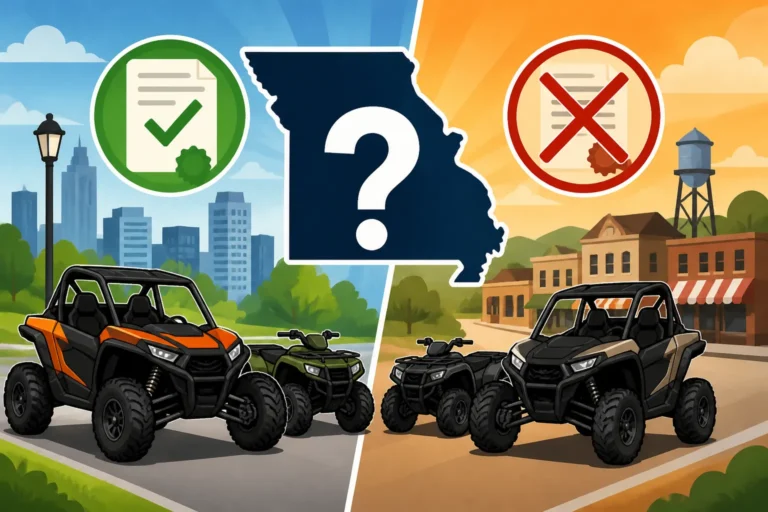
This is where things can get truly localized and, frankly, a bit confusing for many enthusiasts. Missouri does not have a statewide "street legal" designation for all ROVs. Instead, it empowers individual cities and counties to pass their own ordinances allowing and regulating the use of ROVs on their local roads. This means what's permissible in one town might be completely illegal just across the county line.
The Local Permit System and the 3-Mile Rule
Many cities and counties have adopted specific ordinances that permit ROV use on their streets, usually requiring the operator to obtain a special local permit. These permits often come with an application process, a fee, and a list of specific requirements your machine must meet – which will almost certainly include the safety features we just discussed. It's crucial to check with the police department or sheriff's office in the specific jurisdiction where you intend to ride. They will be the ones issuing the permits and enforcing the rules. You might even find specific provisions for getting a [Road Permit From a Police Department].
A notable exception and a point of common confusion is Missouri's "3-mile rule." This rule allows ROVs (but generally not ATVs) to be operated within a three-mile radius of the operator's residence for specific purposes, if the local government has passed an ordinance allowing such use. This isn't a blanket right; it still hinges on local approval. For instance, you might be able to ride your side-by-side three miles from your house to a gas station or a local park in one town, but not in another, even if it's the adjacent community. Understanding [Why the 3-Mile Rule Is ROVs Only] is critical here.
Varying Requirements and Staying Compliant
Because each city and county can set its own rules, the specific requirements can vary. Some might have additional speed limits for ROVs, specific hours of operation, or even unique flag size or mounting instructions. This is why a personal visit or call to the local issuing authority is invaluable. Don't rely solely on what you read online, as ordinances can change. Some towns might even require proof of insurance, which is another crucial component to consider before hitting the road.
Remember that brands like SuperATV are a fantastic resource for many of the compliance accessories you might need. Whether it's the mandatory safety flag, robust mirrors for better visibility, or upgraded lighting kits, their product lines often cater directly to the needs of ROV owners looking to make their machines road-ready in accordance with local regulations. Being proactive and equipping your ROV correctly from the start will save you a lot of potential headaches and fines down the road. You can discover more about local variations by researching [Missouri Cities That Allow UTVs on Streets].
Disclaimer
This article is for general informational purposes only and does not constitute professional advice. Laws, prices and regulations vary by location and change over time. Consult a qualified professional for guidance on your specific situation.