Why a Road Flag Must Fly 7 Feet Up
Trying to understand all the rules for taking your side-by-side or off-highway vehicle (OHV) on Missouri's public roads can feel like navigating a confusing maze, especially when it comes to specific, seemingly odd requirements like that tall, brightly colored safety flag. Many riders are left scratching their heads, wondering why a flag needs to fly so high and what happens if it doesn't. This guide is here to untangle the complexities of Missouri's road use regulations for OHVs, focusing on the critical requirement of the seven-foot safety flag, why it's there, and all the other rules you need to know to stay safe and legal on public roadways.
The Curious Case of the Seven-Foot Safety Flag
When you first hear about a requirement for a safety flag to fly seven feet up for road-legal off-highway vehicles in Missouri, it might sound a bit extreme. After all, you see shorter flags on trails, and many vehicles don't have such a specific vertical requirement. But this isn't an arbitrary rule dreamed up to make your life harder; it's a carefully considered safety measure designed to protect you and other motorists on public roads.
Why the Height is Non-Negotiable
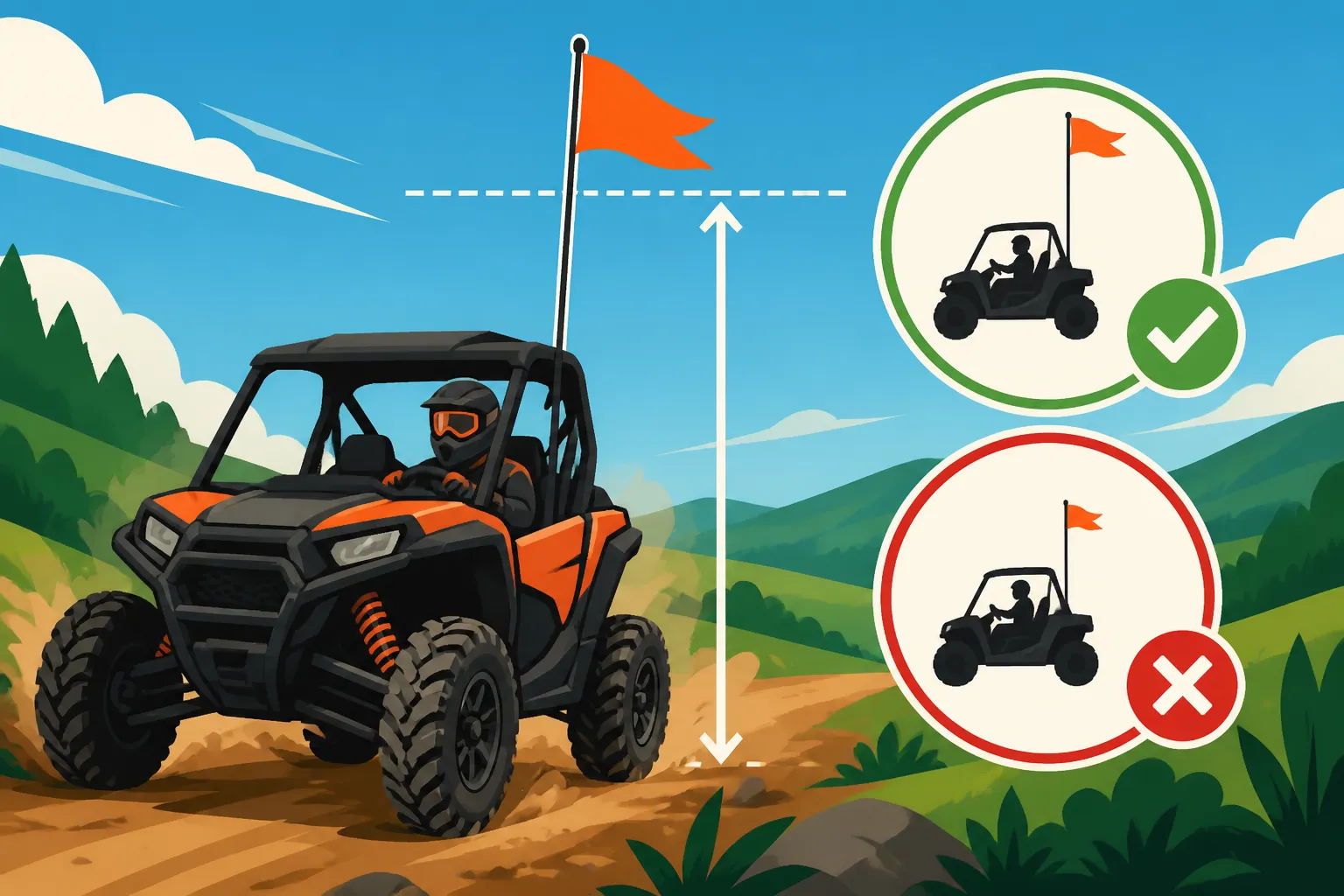
The primary reason for the seven-foot height requirement is simple: visibility. When an off-highway vehicle, like a side-by-side, is traveling on a public road, it often sits much lower than passenger cars, trucks, and especially large commercial vehicles. This low profile can create significant blind spots for other drivers, particularly those in taller vehicles or those approaching from over a hill or around a curve.
Imagine you're driving a pickup truck over a slight rise on a county road. If a smaller side-by-side is coming the other way, and it only has a three or four-foot flag, that flag might not clear the crest of the hill until the vehicle itself is almost fully visible. By that point, reaction time for both drivers could be dangerously short. A flag mounted seven feet high, however, is designed to be visible well before the body of the machine, giving other drivers crucial extra seconds to register its presence and react accordingly. This early warning system is vital in preventing collisions, especially on two-lane roads where passing and oncoming traffic require clear sight lines. It's not just about seeing the machine; it's about seeing a marker for the machine from a distance.
What the Law Specifies for the Flag
Missouri law is quite specific about the safety flag for vehicles operating under a special permit for road use. It's not just about the height; there are other characteristics that ensure maximum visibility. The flag itself must be fluorescent orange or red-orange and needs to be at least 30 square inches in size. This vibrant color and ample surface area are designed to stand out against various backgrounds, whether it's the green of summer foliage, the gray of winter skies, or the blur of traffic.
The flag must be securely mounted on a mast or pole that extends at least seven feet above the ground when the vehicle is on a flat surface. This means you can't just attach it to your roll cage; you often need an extension or a specific flag pole designed to meet this height. Brands like SuperATV offer a range of accessories, including robust flag mounts and tall whip flags, that can help riders comply with these requirements. The flag also needs to remain visible, meaning it shouldn't be obscured by cargo, passengers, or parts of the vehicle itself. A tattered or faded flag might not meet the spirit of the law, even if it's technically seven feet high, as its visibility could be compromised.
Missouri's Road-Legal Exceptions for Off-Highway Vehicles
It's crucial to understand that Missouri generally does not allow ATVs or UTVs on public roads. However, there are very specific exceptions and conditions under which certain off-highway vehicles, primarily side-by-sides (classified as Recreational Off-Highway Vehicles or ROVs), can gain limited access to public roadways. These exceptions are often granted at the local level through city or county ordinances and almost always come with a host of equipment and operational requirements, including the safety flag.
The Role of Local Ordinances and Permits
Unlike many states that have a blanket statewide policy, Missouri leaves much of the decision-making about road access for ROVs to individual cities and counties. This means that what's legal in one town might be completely forbidden just a few miles down the road. Local governments can pass ordinances allowing ROVs on certain streets or within specific zones, usually requiring operators to obtain a special permit from the local police department or sheriff's office. [Missouri Cities That Allow UTVs on Streets] is a great resource if you're trying to figure out where you can legally ride.
These permits are not a free pass to drive anywhere. They typically specify the areas, times, and conditions under which an ROV can be operated. For example, a city might allow ROVs on roads with speed limits of 45 mph or less, but prohibit them on state highways that pass through town. Obtaining one of these permits usually involves paying a fee, providing proof of insurance, and demonstrating that your vehicle meets all the necessary safety equipment requirements, including the seven-foot flag, working headlights, taillights, brake lights, and seat belts.
Vehicle Eligibility and Equipment Rules
Not every off-highway vehicle qualifies for these road-use permits. Missouri law defines specific characteristics for what qualifies as an ROV that might be eligible. Generally, an ROV must be equipped with a steering wheel, non-straddle seating (like bucket seats or a bench seat), and seat belts. Most traditional ATVs, with their handlebars and straddle seats, do not meet these criteria and are therefore almost universally excluded from road access, even in areas with local ordinances. The distinction is key: [Why Missouri Splits ATVs, UTVs and ROVs].
Beyond the seven-foot flag, road-legal ROVs must have:
- Headlamps and Taillamps: Required to be on at all times, not just at night or in low visibility.
- Brake Lights: Functioning brake lights are essential for signaling stops to following traffic.
- Turn Signals: While not always explicitly required by every local ordinance, they are highly recommended for safety and clarity on public roads.
- Roll Bar/Cage: Factory-installed roll-over protective structures are typically a must.
- Seat Belts: All occupants must be properly belted in.
- Proof of Insurance: Liability insurance is almost always a requirement to get a permit and to operate on roads.
- Operator's License: The driver must possess a valid operator's or chauffeur's license.
These requirements ensure that the ROV, while designed for off-road use, has a minimum level of safety equipment comparable to other vehicles sharing the road. Neglecting any of these could lead to fines, a revoked permit, or worse, an accident.
Other Specific Road Use Scenarios
While local ordinances are the most common way ROVs gain road access, Missouri law also carves out a few other, highly specific exceptions for using off-highway vehicles on public roads. These are generally tied to agricultural, industrial, or emergency uses, and they also come with their own set of rules and limitations.
Agricultural Highway Exception
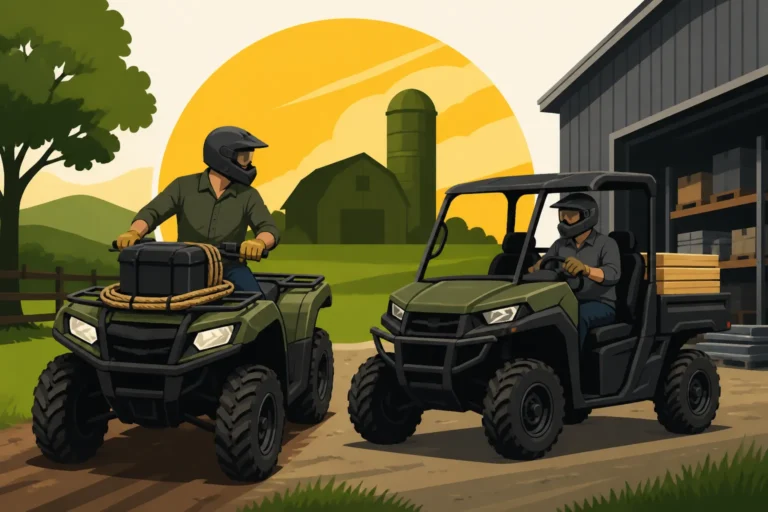
Farmers in Missouri often rely on ATVs and UTVs to move equipment, check fences, or transport supplies between fields that might be separated by a public road. Recognizing this necessity, Missouri law allows for the operation of these machines on public roads for agricultural purposes. This isn't a free-for-all, however. The machine must be operated during daylight hours, from sunrise to sunset, and only for the direct purpose of agricultural work. [Missouri Rules for Agricultural Road Use] goes into more detail.
When operating under this exception, the vehicle must be traveling at a slow speed and typically needs to display a slow-moving vehicle (SMV) triangle on the rear. While a seven-foot flag isn't specifically mandated for this statewide agricultural exception, it's always a good idea to maximize visibility, especially if you're crossing or traveling short distances on a busy road. Some local ordinances that allow agricultural use might also incorporate the flag requirement, so always check local rules. The spirit of the law is to allow farmers to conduct necessary business without imposing an undue burden, but always with safety as a top priority.
Industrial and Utility Use
Similar to agricultural use, off-highway vehicles are often critical tools for industrial operations, such as construction sites, mining operations, or utility maintenance. Missouri law makes provisions for these machines to operate on roads within the confines of the job site or for short distances between operational areas when necessary for industrial or utility business. This exception is usually very tightly defined, applying primarily to private roads within industrial complexes or temporary road crossings, and not for general public road travel.
For example, a utility company might use a UTV to cross a state route to access power lines on the other side. This is generally permitted if it's directly related to their work. As with agricultural use, the focus is on necessary operational travel, not recreational riding. Safety equipment, including the visibility aspects of a tall flag, should always be considered best practice even if not explicitly mandated by state law for these specific, limited scenarios.
Limited Disability Use
Another, less common, exception allows individuals with disabilities to operate off-highway vehicles on public roads for short distances if necessary for their mobility and approved by a special permit. These permits are typically issued by local authorities and are highly individualized, taking into account the specific needs of the rider and the capabilities of the vehicle.
The primary goal of this exception is to enhance accessibility for disabled individuals, allowing them to participate in community life or access services that might otherwise be out of reach. As with other road-use permits, safety is paramount, and the vehicle would likely need to meet general safety standards, including visibility measures like the seven-foot flag, to ensure the rider's safety and the safety of others on the road.
Making Your ROV Road-Ready and Legal
So, you've decided to pursue a road-use permit for your side-by-side. It's not just about bolting on a flag; it's about a comprehensive approach to safety and compliance. Failing to meet even one requirement could invalidate your permit and leave you open to citations.
Acquiring the Right Flag and Mount
The market offers many options for safety flags and mounting solutions. For the seven-foot requirement, you'll likely need a tall, flexible whip flag or a sturdy pole extension. SuperATV and similar aftermarket companies specialize in these types of accessories. When choosing, consider:
| Feature | Description | Importance for Road Use |
|---|---|---|
| Height | Must extend 7 feet from the ground when mounted. | Critical for visibility over other vehicles and terrain. |
| Color | Fluorescent orange or red-orange. | Maximizes contrast against various backgrounds for easier spotting. |
| Size | At least 30 square inches. | Large enough to be easily seen from a distance. |
| Mounting | Secure, often to the roll cage with a clamp or bolt-on bracket. | Prevents flag loss or damage at speed; ensures consistent height. |
| Durability | Weather-resistant material, strong pole. | Withstands wind, sun, and brush, maintaining visibility and integrity. |
| Flexibility | Flexible whips can bend around obstacles or in strong winds, reducing risk of snapping. | Less prone to breaking than rigid poles, especially during off-road excursions. |
| Lighting (Optional) | Some flags come with LED lighting, especially for night use. | Enhances visibility significantly in low-light conditions, though not always required by law. |
Make sure your chosen setup is robust enough to handle highway speeds if your permit allows for it, and that it won't become a distraction or a hazard itself. Installation should be solid; a flag flying off at 45 mph is a danger to everyone.
Driver Licensing and Insurance Essentials
Operating an ROV on public roads under a special permit isn't like riding on private land. You're entering a regulated environment, and that means you need to be properly licensed and insured.
Driver's License: In Missouri, if you're operating an ROV on a public road, even with a local permit, you typically need to possess a valid operator's or chauffeur's license. This isn't a separate "ROV license"; it's your standard driver's license that proves you have passed the tests to operate a motor vehicle. This requirement helps ensure that anyone operating an ROV on a public road understands traffic laws and has demonstrated basic driving competence. The specific type of license needed for [An Operator's or Chauffeur's License in Missouri] is crucial to confirm.
Insurance: Proof of liability insurance is almost universally required when applying for a special road-use permit for an ROV. This coverage protects you and other drivers in case of an accident where you are at fault. Standard ATV/UTV insurance policies might cover off-road use, but you need to verify with your provider that your policy extends to on-road use under a local ordinance. Don't assume; call your insurance agent and explicitly ask about coverage for road-legal operation of your side-by-side. Without proper insurance, you could face hefty fines, legal liabilities, and your permit would likely be invalid.
Knowing Your Local Limits
As mentioned, Missouri's road-legal framework for ROVs is highly localized. This means your permit is usually only valid within the specific city or county that issued it. You cannot obtain a permit in one town and expect it to be valid in a neighboring municipality unless those municipalities have specific reciprocity agreements, which are rare. [Does a City Permit Work in the Next Town?] The key takeaway here is to always check the specific ordinances of any area you plan to ride in, even if it's just passing through.
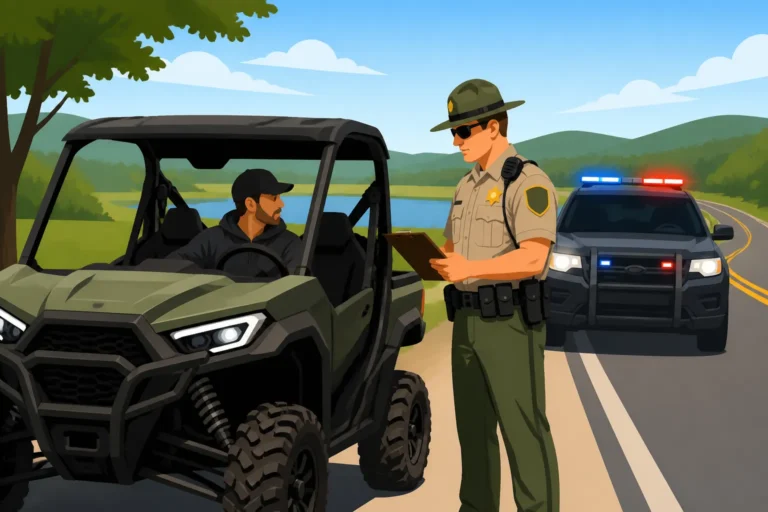
Also, be aware of the specific road types and speed limits allowed by your permit. Some ordinances restrict ROVs to roads with speed limits below a certain threshold (e.g., 45 mph), or they might prohibit travel on state or federal highways. Always carry your permit and proof of insurance with you, along with your driver's license, whenever you're operating your ROV on public roads. A Missouri deputy or local police officer will certainly check for these documents during a roadside stop.
Common Misconceptions and Safety Best Practices
There are many myths and misunderstandings surrounding off-highway vehicle road use in Missouri. Clearing these up and adhering to best safety practices can help ensure a positive and legal experience.
Dispelling the "Street Legal ATV" Myth
Perhaps the biggest misconception is that ATVs can be made "street legal" in the same way ROVs can. For the most part, this is simply not true in Missouri. As outlined, the state's definitions and local ordinances focus on ROVs (side-by-sides) due to their design features like non-straddle seating, seat belts, and steering wheels, which lend themselves more readily to road safety. Traditional ATVs, with their straddle seating and handlebars, are generally excluded from road-use permits. [Street Legal ATVs in Missouri: The Short Answer] is a good read on this.
While there might be very niche, isolated exceptions for specific agricultural or industrial scenarios, the idea of a recreational ATV being "street legal" for general road use in Missouri is largely a myth. Riders attempting to operate ATVs on public roads typically do so illegally and risk fines, impoundment, and serious accidents.
Beyond the Flag: Full Safety Awareness
While the seven-foot flag is a critical component of road-legal ROV operation, it's just one piece of the safety puzzle. Responsible road use demands full attention to your surroundings and adherence to all traffic laws.
- Traffic Laws: When on a public road, your ROV is treated as a motor vehicle. This means you must obey all traffic signals, stop signs, speed limits, and yielding rules. Don't treat a public road like a trail.
- Awareness: Be extra vigilant. Other drivers may not be accustomed to seeing ROVs on the road and might not anticipate your presence or movements. Drive defensively.
- Passenger Rules: Always adhere to the passenger limits of your ROV, and ensure all passengers are properly seated and belted. For ATVs, generally, [Passengers Barred on a Missouri ATV] unless it's a machine specifically designed for two riders and engaged in farm work.
- Helmet Use: While Missouri does not require adults to wear helmets on motorcycles or ROVs on public roads, it's always a smart safety choice. For riders under 18, helmets are often required for off-road use, and local ordinances might extend this to road use as well. [Missouri Helmet Law for Riders Under 18] outlines these rules.
- Lighting and Signals: Ensure all your lights are clean and functioning, and use your turn signals (if equipped) well in advance of turns or lane changes. Consider adding auxiliary lighting for increased visibility, especially at dawn, dusk, or in inclement weather.
- Vehicle Condition: Regularly inspect your tires, brakes, and steering components. Road conditions can be much harsher on these parts than typical trail riding, and safety depends on your machine being in top mechanical shape.
Operating an ROV on public roads, even with a permit, comes with increased risks compared to off-road trails. The combination of faster-moving traffic, heavier vehicles, and unexpected road hazards requires heightened awareness and strict adherence to safety protocols. The seven-foot flag is your visual ambassador, a beacon telling other drivers, "Hey, I'm here!" – but it's up to you to drive responsibly and ensure that message is backed up by safe operating practices.
Disclaimer
This article is for general informational purposes only and does not constitute professional advice. Laws, prices and regulations vary by location and change over time. Consult a qualified professional for guidance on your specific situation.