30 Square Inches of Day-Glow
It can be incredibly frustrating to feel like you're navigating a maze when all you want to do is get your ATV or UTV from point A to point B in Missouri. The rules surrounding off-road vehicles on public roads are notoriously complex, with different regulations for ATVs and UTVs, and varying local ordinances that can leave your head spinning. This comprehensive guide is here to untangle that web, explaining exactly what you need to know about making your machine street-legal in Missouri, focusing on the essential safety gear like the highly specific flag requirement.
Understanding Missouri's Stance on ATVs on Public Roads
Let's get straight to it: for most of us who own a traditional ATV, the dream of casually cruising down a paved road to the trailhead or the gas station is largely just that – a dream. Missouri's laws are pretty clear, and generally quite restrictive, when it comes to riding standard ATVs on public roads. It's a common source of confusion and disappointment for riders, especially those who come from states with more relaxed rules. The state views ATVs as off-road machines, designed for dirt, mud, and trails, not for sharing asphalt with cars and trucks.
The primary reason for this distinction boils down to safety and design. Traditional ATVs, with their straddle seating and handlebars, are built for agility and off-road capability. They often lack the standard safety features, like turn signals, rearview mirrors, and protective enclosures, that are mandatory for on-road vehicles. This isn't just a Missouri thing; it's a common approach across many states attempting to balance rider freedom with public safety. Understanding this fundamental difference is the first step to making sense of the law, and it often clarifies why your quad might not be welcome on Main Street, even if your neighbor's side-by-side seems to be.
The Core Distinction: ATVs vs. UTVs/ROVs
Missouri law draws a significant line between what it defines as an "all-terrain vehicle" (ATV) and a "recreational off-highway vehicle" (ROV), which most of us call a UTV or a side-by-side. This distinction isn't just legal jargon; it's the very foundation of whether your machine has any hope of legally touching pavement. An ATV is generally described as a motorized vehicle designed to travel on four or more low-pressure tires, having a seat designed to be straddled by the operator, and handlebars for steering. Think of your standard quad. These are usually the machines that are strictly limited when it comes to road use.
On the other hand, ROVs (UTVs) are typically defined as non-highway vehicles with a width of 80 inches or less, a dry weight of 2,000 pounds or less, designed to travel on four or more wheels, and equipped with a roll bar or similar enclosure, a steering wheel, and seating that is not designed to be straddled. This difference in design—steering wheel, bucket seats, roll cage—is what opens up certain limited possibilities for road use for UTVs that are simply not available to ATVs. It's why you see your neighbor with their side-by-side legally driving a short distance to the store, while your ATV must stay off the asphalt.
Why Standard ATVs Face Road Restrictions
The outright prohibition of most ATVs on public roads in Missouri isn't arbitrary. It stems from a combination of vehicle design, safety concerns, and the intention behind their manufacture. ATVs lack the basic safety equipment required for highway travel, such as a full lighting package (headlights, taillights, brake lights, turn signals), rearview mirrors, and often, an enclosed cab or robust roll-over protection that UTVs offer. Their stability characteristics, especially on hard surfaces and at higher speeds, also differ significantly from on-road vehicles, making them more prone to rollovers if handled incorrectly on pavement.
Beyond the physical limitations, the very purpose of an ATV, as defined by statute, is off-road recreation or utility. They are not manufactured to meet federal motor vehicle safety standards for highway use, which are extensive and rigorous. This means that even if you tried to add aftermarket turn signals or mirrors, the fundamental design and testing of the vehicle don't align with road safety requirements. While it might seem unfair when you just need to cross a short stretch of road, these laws are in place to prevent accidents involving vehicles not suited for the environment, protecting both ATV riders and other motorists. It's a tough pill to swallow for many, but the law in Missouri draws a very hard line here.
The Elusive "Street Legal" Status for UTVs and ROVs in Missouri
Now, for those of you with UTVs or side-by-sides, there's a glimmer of hope, though it's still far from a free-for-all on Missouri roads. Missouri's statutes do provide some specific, albeit limited, avenues for ROVs (Recreational Off-Highway Vehicles, i.e., UTVs) to be driven on public roads. This isn't about making your UTV a full-fledged road warrior, but rather about allowing it for short distances, specific purposes, or within certain local jurisdictions that have chosen to embrace them. It’s a nuanced area, and understanding these exceptions is crucial for avoiding a hefty fine or, worse, an accident. This is where you might start looking into accessories from places like SuperATV to ensure your machine meets the necessary safety requirements for these specific road-use scenarios.
The critical thing to remember is that these exceptions almost always come with strict conditions regarding where you can drive, for how long, and what safety equipment your UTV must have. It's not a blanket allowance, and simply owning a UTV doesn't automatically grant you access to public roads. You need to be diligent in checking your local county and city ordinances, as they often hold the key to whether you can legally take your side-by-side out for even a short spin.
The 3-Mile Rule: A Local Option
One of the most talked-about provisions for UTVs on Missouri roads is often referred to as the "3-mile rule." This rule allows a city or county to pass an ordinance that permits the operation of ROVs on roads and highways within their jurisdiction, provided the vehicle is operated on the most direct route from the owner’s property to a state highway and does not exceed a distance of three miles. This isn't a state-mandated rule that applies everywhere; it's an option that local governments can adopt. So, if you live in a rural county or a small town, your local government might have enacted such an ordinance, allowing you to use your UTV for quick trips, like going to the local store or accessing a nearby trail. This is a vital distinction – if your city or county hasn't passed this specific ordinance, the 3-mile rule does not apply to you.
It's also important to note the specifics: "the most direct route" and "does not exceed a distance of three miles." This isn't an invitation for joyrides around town. It’s intended for practical, short-distance travel from your property. Before you even think about engaging this rule, you absolutely must verify that your specific city or county has an active ordinance in place allowing it. Many communities have done so, recognizing the utility of UTVs for their residents, but many have not. Without that local ordinance, trying to use the 3-mile rule will land you in trouble. [Missouri 3-Mile Rule Explained] goes into further detail about how this specific rule functions on the ground.
Missouri's Special Road Use Permit
Beyond the 3-mile rule, Missouri offers another path for some limited UTV road use: the special permit. Cities and counties in Missouri have the authority to issue special permits for the operation of ROVs on their roads. This is different from the 3-mile rule because it's a permit you actively apply for and carry, rather than a general allowance tied to an ordinance. These permits often come with their own set of conditions, including specific routes, times of day, and safety equipment requirements. The goal here is usually to facilitate specific uses, like getting to a hunting lease, working on property that spans public roads, or participating in local events.
The cost and availability of these permits vary significantly from one jurisdiction to another, as each city or county sets its own program. You might find that your local police department or county sheriff's office is the issuing authority. When considering this option, be prepared to demonstrate that your UTV meets all safety requirements, which will almost certainly include the proper flag, lighting, and other items. This is also where things like proof of insurance become critical, as many local permits mandate it. Always check with your specific local authorities about their permit process, fees, and any unique stipulations. [Missouri Special Permit Cost for ATVs] provides a general overview, though prices vary by locality.
Agricultural and Industrial Exemptions
Missouri law also carves out specific exemptions for ROVs used in agricultural or industrial operations. If you're using your UTV strictly for farm business or for industrial purposes on the premises, these rules can provide significant flexibility. For instance, a farmer might be able to drive their UTV on a county road for a short distance to move between fields or transport equipment, provided it's during daylight hours and directly related to the agricultural operation. Similarly, a UTV used on a construction site or within a private industrial complex might be exempt from certain road-use restrictions, even if it briefly crosses a public thoroughfare to access different parts of the property.
These exemptions are not for recreational use; they are strictly tied to the nature of the work being performed. The vehicle must be identifiable as being used for agriculture or industry, and the operator must be engaged in that specific work. While these exemptions can be incredibly helpful for rural landowners and businesses, they still require operators to exercise due caution and often imply that the vehicle is equipped with basic safety features appropriate for its low-speed, utilitarian purpose. Always understand that "agricultural use" doesn't mean you can just drive it to town for groceries, even if you live on a farm. [Missouri Rules for Agricultural Road Use] offers more specific details on these exemptions.
Mandatory Safety Gear for Road-Legal Side-by-Sides in Missouri
Alright, so you’ve checked your local ordinances, and your city or county has embraced the idea of UTVs on their roads, or you're riding under an agricultural exemption. That's fantastic! But don't just jump in and go. There's a crucial layer of safety equipment your side-by-side must have to be legal on the asphalt, even for short trips. This isn't optional; these are requirements designed to make your UTV visible and safe to other motorists. Skimping on these can lead to fines, citations, and, more importantly, put you and others at risk. Many of these items are easily available from aftermarket providers, like SuperATV, who specialize in off-road accessories.
Missouri is quite specific about what needs to be on your machine, and it's essential to get these details right. We're talking about more than just headlights here; it's a comprehensive package of visibility and protection that mirrors what you'd expect from other low-speed vehicles sharing the road. This section is where we dive into the nitty-gritty of what your UTV needs to wear before it can legally hit the pavement.
The Critical Safety Flag Requirement
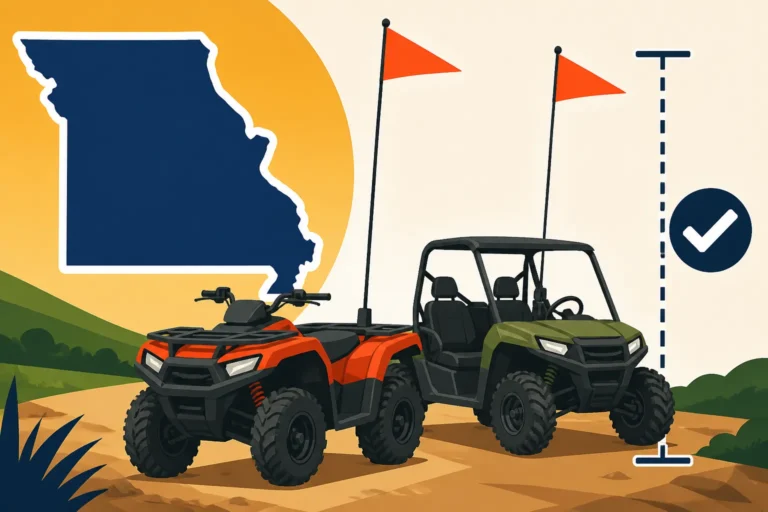
This is where "30 Square Inches of Day-Glow" truly comes into play, and it's one of the most distinctive requirements for road-legal ROVs in Missouri. To be legally operated on public roads under the aforementioned local ordinances or permits, your ROV must display an orange or red safety flag. This flag isn't just any old flag; it has very specific requirements. It must be a minimum of 30 square inches in size – that's a pretty substantial piece of day-glow fabric – and it needs to be mounted on a mast that extends at least seven feet above the ground. The idea here is simple: visibility. A UTV, while larger than an ATV, can still be lower than many trucks and SUVs on the road, especially when cresting hills or navigating uneven terrain. That tall, brightly colored flag acts as an early warning signal to other drivers, making your presence known well in advance.
Think about riding through a dip in the road or coming around a blind curve. That seven-foot mast with its vibrant, 30-square-inch flag waving proudly is often the first thing another driver sees. This is a non-negotiable item, and deputies will certainly be looking for it. Investing in a good quality flag and a sturdy, flexible mast, perhaps even one from a brand like SuperATV, is an absolute must. Don't cheap out on this critical safety feature; your visibility, and potentially your life, could depend on it. [Missouri Safety Flag Requirements] covers this in more detail.
Lighting and Reflectors: Being Seen
Beyond the distinctive safety flag, proper lighting is paramount for any UTV venturing onto a public road in Missouri, even during daylight hours. Your ROV must be equipped with at least one headlight that emits a white light visible from a distance of at least 500 feet to the front. This isn't just for seeing where you're going, but for being seen by oncoming traffic. In addition to a headlight, your UTV needs at least one taillight that emits a red light visible from at least 500 feet to the rear. This dual lighting system ensures that whether you're approaching or being approached, other drivers have ample warning of your presence.
But it doesn't stop there. Reflectors also play a crucial role in passive visibility. Your UTV should have red reflectors on the rear and amber reflectors on the front and sides. These catch the light from other vehicles, providing an additional layer of visibility, especially at dusk, dawn, or in inclement weather. And, if the local ordinance allows for night-time operation (which is less common but possible), turn signals and brake lights become even more critical. Always ensure your lighting system is fully functional and well-maintained. Aftermarket kits, like those offered by SuperATV, can provide comprehensive lighting solutions that often exceed minimum requirements, giving you extra peace of mind. [Missouri Lighting Requirements for ROVs] is a great resource for specific details.
Seat Belts and Roll Bars: Occupant Protection
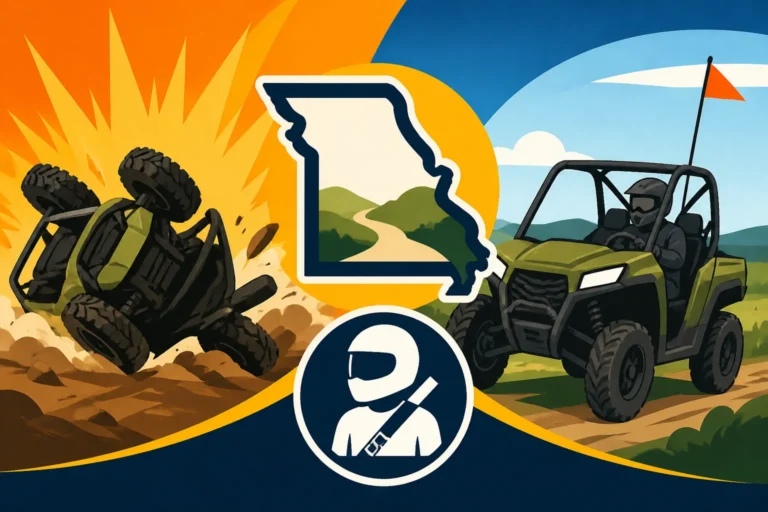
When it comes to occupant safety for ROVs on public roads in Missouri, the law explicitly requires features that are often standard on these machines but are crucial to verify. Your UTV must be equipped with a roll bar or similar protective enclosure. This isn't just about looking tough; it's a fundamental safety component designed to provide protection in the event of a rollover, which, despite best efforts, can happen on any terrain, including paved roads. The roll bar acts as a survival cage, helping to keep occupants from being crushed.
Coupled with the roll bar, your UTV must also have seat belts for every occupant. These aren't just for comfort; they are integral to the protection offered by the roll bar. In the event of an impact or rollover, a properly worn seat belt keeps you contained within the protective zone of the roll cage. Without a seat belt, you could be ejected from the vehicle, negating the safety benefits of the roll bar entirely. Always ensure that all seat belts are in good working order and that everyone in your UTV is properly buckled in before you even start the engine. These are basic safety principles that extend from the trail to the street.
Helmet Requirements and Age Restrictions
While many adults in Missouri can legally ride motorcycles without a helmet, the rules for ROV operators and passengers, particularly minors, are different when operating on public roads under a local ordinance. In Missouri, if you are operating an ROV on a public road, any operator or passenger under the age of 18 is required to wear a safety helmet. This is a critical rule to remember, especially if you have teenagers or younger children riding with you. The helmet must be approved by the Department of Transportation (DOT) and properly fitted. It's not just a suggestion; it's a legal requirement designed to protect younger, more vulnerable riders.
For operators and passengers aged 18 and older, Missouri law currently does not mandate helmet use when operating an ROV on public roads under these specific ordinances. However, this is a point where personal safety should absolutely override legal minimums. The risks of head injury in an ROV accident are significant, regardless of age. Many experienced riders choose to wear helmets even when not legally required, simply for their own protection. It’s always a good idea to consider wearing appropriate safety gear, including a helmet, whenever you're operating an off-road vehicle, whether on the trail or making a quick dash down a paved road. [Missouri Helmet Law for Riders Under 18] provides more context.
Operator Licensing and Insurance for Road Use in Missouri
So, your UTV is decked out with all the necessary safety gear, and you’ve confirmed a local ordinance or secured a special permit. Great! But before you hit the road, there’s one more layer of legalities to consider: who can actually drive the machine, and what about insurance? Just because your UTV can legally touch the asphalt doesn't mean anyone can hop behind the wheel. Missouri has specific requirements for operators, focusing on proper licensing, and depending on the local rules, you might also need to prove financial responsibility through insurance. These are often overlooked details that can lead to unexpected trouble, so let's make sure you're fully prepared.
It’s easy to assume that if you can drive a car, you can drive a UTV on the road. While there's some overlap, the legal specifics for ROVs can be a bit different, especially concerning the type of license required. And while Missouri doesn't universally mandate ATV/UTV insurance, many local ordinances will require it if you want to use public roads.
What Kind of Driver's License Do You Need?
When operating an ROV on a public road in Missouri under an approved local ordinance or special permit, the operator must possess a valid driver's license. This isn't a special "UTV license" or an off-road permit; it's the same Class F (operator's) or Class E (chauffeur's) license you would use to drive a car or truck. The rationale is straightforward: if you're going to share the road with other licensed drivers and highway traffic, you need to demonstrate that you've passed the state's requirements for safe operation of a motor vehicle. This includes knowing the rules of the road, understanding traffic signs, and demonstrating basic driving competence.
This requirement applies to anyone operating the ROV, regardless of whether they are making a short hop or cruising a designated route. Don't let a friend or family member who doesn't have a valid driver's license take the wheel on a public road, even for a few yards. This can lead to serious legal consequences for both the unlicensed driver and potentially the owner of the vehicle. Ensure that anyone who operates your road-legal UTV on public property holds the appropriate state-issued license. [Missouri Driver's License Rules for ROVs] clarifies these points.
Insurance: A Local Ordinance Prerequisite
Unlike some other states that mandate liability insurance for all off-road vehicles, Missouri generally does not require insurance for ATVs or UTVs used strictly off-road. However, this changes dramatically when you bring your ROV onto public roads. Many, if not most, cities and counties that have enacted ordinances allowing UTVs on their streets will also require proof of financial responsibility, typically in the form of liability insurance. This is a common-sense measure: if you're involved in an accident with your UTV on a public road, you need to be able to cover potential damages and injuries to others.
The specific coverage amounts might mirror standard auto insurance requirements, but you'll need to confirm with your local jurisdiction. Your regular auto insurance policy usually won't cover your UTV, so you'll likely need a separate policy or an endorsement to an existing one. It's vital to check with your insurance provider to ensure you have adequate coverage for on-road use of your ROV, especially if you're taking advantage of local ordinances or special permits. Carrying proof of insurance with you, alongside your driver's license and any permits, is highly advisable. Failure to have the required insurance could result in fines, the revocation of your permit, or even civil liability in an accident.
Navigating Local Ordinances: City and County Variations
This is perhaps the trickiest part of making your UTV road-legal in Missouri: the patchwork of local rules. While state law lays out the framework, it largely grants cities and counties the power to decide if and how ROVs can be used on their local roads. This means that what's perfectly legal for your side-by-side in one town might get you a ticket just across the county line. It's a source of constant frustration for riders, but it's the reality we have to work within. Understanding this local control is absolutely vital, as it dictates whether any of the state's exemptions actually apply to your specific riding area.
The implication here is clear: you can't just assume. You have to do your homework for every community you plan to ride in. This requires proactive research and sometimes a bit of detective work, reaching out to local government offices or police departments. Ignoring this step is akin to driving blindfolded – you simply won't know the rules until it's too late.
How Local Governments Open Up Roads
Cities and counties in Missouri exercise their authority to allow ROVs on public roads by passing specific ordinances or resolutions. These legislative acts are what officially "open up" the streets to UTVs within their defined boundaries. Without such an ordinance in place, the general state prohibition on off-road vehicles on public roads remains in effect. These local laws will often specify the parameters of permitted use, which might include speed limits (often lower than the posted limit for cars), designated routes (e.g., secondary roads but not state highways), hours of operation (often daylight hours only), and specific safety equipment requirements (like the 30-square-inch flag we discussed).
The process for a local government to enact such an ordinance usually involves public hearings and votes by the city council or county commission. These decisions are often influenced by local sentiment, traffic patterns, and the practical needs of the community. For example, a rural county might see the benefit of allowing farmers to use UTVs for short road trips between fields, while a densely populated urban area might be more reluctant due to traffic concerns. If you're hoping to ride your UTV on local roads, your first step should always be to check the ordinances of your specific city and county. [Missouri Cities That Allow UTVs on Streets] provides some examples, but local rules change, so always verify.
The Specifics of Local Permits and Fees
When a city or county decides to allow ROVs on its roads, they often implement a permit system as part of their ordinance. This permit serves as official authorization for your specific UTV to operate on those local roads, assuming it meets all the safety and operational criteria. These permits are typically issued for a specific period, such as annually, and come with an associated fee. The fees collected often help to cover the administrative costs of the permit program and may also contribute to local road maintenance or safety initiatives.
The application process for these local permits can vary. You might need to visit the local police department, sheriff's office, or city hall. They will likely require proof of ownership, your driver's license, and potentially proof of insurance. An inspection of your UTV to ensure it has all the required safety equipment (headlights, taillights, reflectors, seat belts, roll bar, and of course, that high-visibility flag) might also be part of the process. It's not uncommon for these local permits to explicitly state the rules and restrictions on the permit itself, acting as a handy reminder of where and how you can ride. Always keep your permit on hand while operating your UTV on public roads, as deputies will certainly ask for it during a stop.
Consequences of Illegal Road Use and What to Expect
Ignoring Missouri's complex laws regarding ATVs and UTVs on public roads is not a trivial matter. It's easy to think, "Oh, it's just a quick hop," or "Nobody ever patrols this road," but those assumptions can lead to real-world headaches, including significant fines, legal trouble, and even impoundment of your machine. The authorities take these regulations seriously, not just to enforce the law, but fundamentally to protect public safety. An off-road vehicle operated illegally on a public road poses a risk to both its operator and other motorists, and the consequences reflect that gravity.
It's a frustrating situation when you see others doing it, but understanding the potential penalties can help you make informed decisions and avoid costly mistakes. This isn't just about a slap on the wrist; depending on the severity and frequency, you could be looking at escalating fines and legal actions that quickly diminish the fun of your off-road machine.
Understanding the Penalties
Operating an ATV or UTV illegally on a public road in Missouri can lead to a variety of penalties, typically starting with a citation and a fine. The specific amount of the fine can vary depending on the jurisdiction and the specific offense (e.g., no permit, no flag, operating an ATV where only UTVs are allowed). These fines can range from moderate sums to several hundred dollars, and they often increase for repeat offenders. In addition to monetary penalties, you could also face court appearances, which means lost time and potentially additional court costs.
Beyond the immediate financial hit, there are other potential consequences. Your UTV might be impounded, especially if it's being operated without a required permit or if the operator is unlicensed. The cost of impoundment, including towing and storage fees, can quickly add up, easily exceeding the initial fine. Furthermore, if you are involved in an accident while operating illegally, you could face enhanced civil liability, as your insurance (if you even have it) might deny coverage due to the illegal operation. This could leave you personally responsible for significant damages and medical bills. [Missouri Fines for Illegal ATV Road Use] details some of the potential financial repercussions.
Getting Pulled Over: What a Deputy Checks
If a law enforcement officer pulls you over while you're operating your ATV or UTV on a public road in Missouri, they will be looking for several key things to determine if you are in compliance with the law. First and foremost, they will want to verify your identity and driver's license. If you're operating an ROV, they'll check for the required local permit or evidence of an agricultural/industrial exemption. For ATVs, simply being on the road in most areas is likely the primary offense.
Next, the officer will meticulously check your machine for all the mandatory safety equipment. This includes ensuring your UTV has functional headlights and taillights, appropriate reflectors, and properly working seat belts. Crucially, they will be looking for that seven-foot mast proudly flying a 30-square-inch day-glow safety flag. If any of these are missing or not up to code, it will compound your troubles. They may also check to ensure all passengers, especially those under 18, are wearing helmets. Be prepared to calmly present your license, permit, and any proof of insurance, and be cooperative during the inspection process. It's far better to be prepared and compliant than to face the penalties of illegal operation.
Table of Missouri Off-Road Vehicle Road Use
| Feature/Requirement | Traditional ATV (Quad) | ROV (UTV/Side-by-Side) |
|---|---|---|
| General Road Access | Generally NOT permitted on public roads | Limited access under specific conditions |
| 3-Mile Rule | NO | YES, if local ordinance enacted |
| Special Permits | NO | YES, if local permit program available |
| Agricultural/Industrial Use | Very limited, often restricted to private land or crossing | YES, under specific daylight operation conditions |
| Driver's License | Not applicable for road use | Required (valid Class F or E) for road use |
| Liability Insurance | Not applicable for road use | Often required by local ordinances for road use |
| Safety Flag | Not applicable for road use | YES (30 sq. inches, 7ft mast) required for road use |
| Head/Taillights | Not applicable for road use | YES (visible 500 ft) required for road use |
| Reflectors | Not applicable for road use | YES (red rear, amber front/side) required for road use |
| Seat Belts | Not applicable for road use | YES (for all occupants) required for road use |
| Roll Bar/Enclosure | Not applicable for road use | YES required for road use |
| Helmet Requirement | Not applicable for road use | YES for operators/passengers under 18 for road use |
This article is for general informational purposes only and does not constitute professional advice. Laws, prices and regulations vary by location and change over time. Consult a qualified professional for guidance on your specific situation.