Why Missouri’s Flag Rule Differs at a State Park
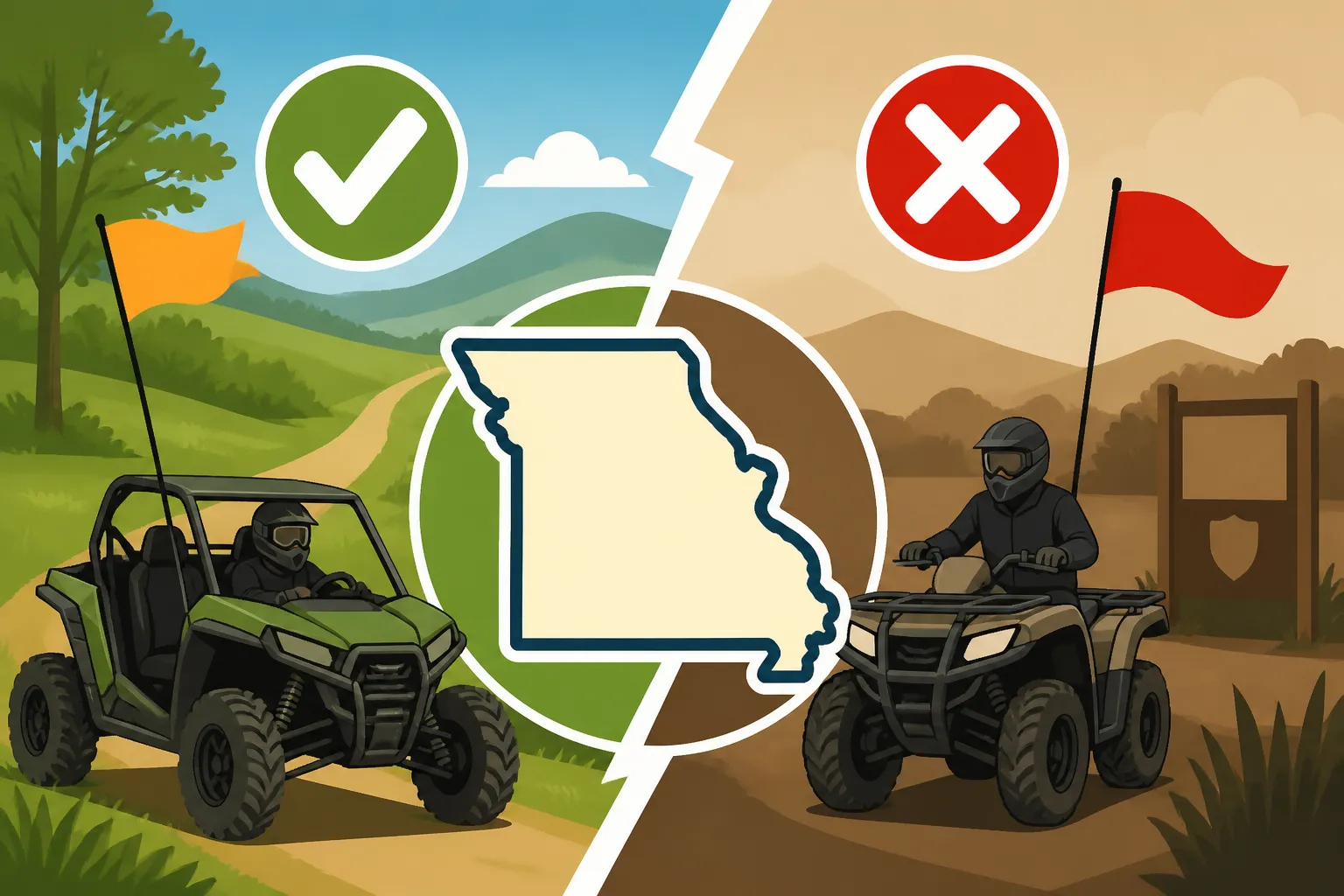
It’s a common frustration when you think you’ve done everything right to make your ATV or UTV legal for road use, only to find out that the rules change the moment you pull up to a state park entrance. Navigating Missouri's ATV and UTV regulations can feel like a maze, especially when it comes to something as seemingly simple as a safety flag. This guide will help you understand precisely why the safety flag requirements differ between Missouri’s public roads and its state park trail systems, saving you from a disappointing turn-away at the gate.
The Mandate for Highway Use: Seeing and Being Seen
When you’re considering taking your side-by-side or ATV on a public road in Missouri, even for a short hop under a city or county ordinance, one of the most critical safety features you need to consider is a highly visible safety flag. This isn't just a suggestion; it's a specific requirement designed to protect you and other motorists on the road.
The Seven-Foot Rule and What It Means on the Road
Missouri law is pretty clear when it comes to operating certain off-highway vehicles on public roads where allowed: you need a flag. Specifically, this flag must be mounted on a mast that extends at least seven feet above the ground. Think about it from the perspective of a driver in a pickup truck or an SUV. Your ATV or UTV, while mighty, is still a relatively low-profile vehicle compared to most traffic. A flag waving high above your machine dramatically increases your visibility, especially when you’re coming over a blind hill or around a curve. It acts as an early warning system for other drivers, letting them know there’s an off-highway vehicle ahead that they might not see otherwise.
This seven-foot height isn't arbitrary. It's calculated to clear most cars and trucks, ensuring the flag is visible above their roofs. This is crucial for preventing collisions, as it gives drivers more time to react and adjust their speed. Many riders source these taller flag poles from aftermarket suppliers, making sure they’re sturdy enough to handle road speeds without snapping or bending excessively.
The 30 Square Inches of Day-Glow Requirement for Highways
Beyond the height, the flag itself has a distinct specification for highway use. It must be made of "day-glow" orange material and be at least 30 square inches in size. Day-glow orange isn't just a fun color; it's chosen for its exceptional luminosity, making it stand out even on a cloudy day or against complex backgrounds. This isn't the same as a typical hunting orange or a faded safety vest. It's a specific, vibrant shade designed for maximum visual impact.
The 30 square inches ensures that the flag is large enough to be easily seen from a distance, but not so large that it becomes an aerodynamic sail, causing instability at road speeds. Think about the geometry: a common flag size might be 6×5 inches, or 4×7.5 inches, to hit that 30 square inch minimum. The goal here is distinctness and undeniable presence. When you're driving your machine on a county road, having a bright, appropriately sized flag on a tall mast is your best friend for safety. It’s part of a suite of requirements, alongside things like [Missouri's 3-Mile Rule for Side-by-Sides] for UTVs, that aim to make limited road travel as safe as possible for everyone.
Why State Parks Operate on Different Rules
It can be baffling to have a perfectly compliant setup for the road, only to be told it's not quite right for the trails at your favorite state park. But the truth is, the environment of an off-road trail system is fundamentally different from a public road, and these differences necessitate a distinct set of safety rules, including those for flags.
Different Environments, Different Risks, Different Rules
State parks like St. Joe State Park or Finger Lakes State Park offer varied terrain: sandy flats, rocky climbs, wooded trails, and open fields. Unlike public roads, which are designed for consistent traffic flow and visibility, off-road trails are often winding, narrow, and can have limited sightlines due to trees, brush, and elevation changes. The speeds are generally lower, and the primary "traffic" you're encountering is other off-road vehicles, not sedans and tractor-trailers. This distinct environment means the hazards are different.
For instance, on a tight, wooded trail, a seven-foot rigid flag pole designed for highway speeds might constantly snag on low-hanging branches or overhead obstacles, becoming a liability rather than a safety device. The chance of it breaking and falling, or even injuring a rider, increases. Furthermore, the way park rangers monitor riders and maintain safety within their trail systems also differs from how law enforcement operates on public roads. They need flags that are effective in a dense, varied landscape, not just for high-speed visibility. This is why [Missouri State Park ORV Permit Prices] often include information about these specific safety requirements – they're part of the overall cost of maintaining a safe riding environment.
The Importance of Park-Specific Regulations
State parks are managed by the Missouri Department of Natural Resources, an entity with a different mandate than the Department of Revenue or local law enforcement. Their focus is on resource conservation, public recreation, and ensuring the safety of visitors within natural areas. To achieve this, they develop regulations that are tailored to the unique conditions and activities present in their parks. This often means a one-size-fits-all approach to safety equipment simply doesn't work.
These park-specific regulations are crucial for managing diverse user groups, maintaining the trails, and responding to emergencies. They aim to reduce rider conflict, minimize environmental impact, and prevent accidents specific to off-road riding. When a park sets a specific flag height or material requirement, it's not to be arbitrary; it's based on an assessment of the most effective safety measure for that particular environment. It reflects a detailed understanding of trail conditions, rider behavior, and the need for rangers to easily identify and monitor machines on the trail. Just as there are rules for [Missouri Helmet Law for Riders Under 18] or noise limits, the flag rule serves a specific purpose for park safety.
Missouri State Park Flag Requirements Detailed
Now that we understand why the rules differ, let's dive into the specifics of what Missouri's state parks generally require for your safety flag. It's not just a minor tweak; these are distinct specifications that are important to follow.
The 72-Inch Mast and Larger Flag Area
Unlike the seven-foot (84-inch) requirement for highway use, state parks typically specify a flag mast that extends 72 inches (six feet) above the ground. This slightly shorter height is a practical concession to the reality of trail riding. It allows the flag to clear most riders' heads and provide good visibility within the trail system, but it's less prone to snagging on low branches or other overhead obstacles that are common in wooded areas. This balance ensures visibility without creating an additional hazard for the rider or the machine.
Furthermore, state parks often require a larger flag area than the highway minimum. While the highway specifies 30 square inches, park regulations frequently call for 64 square inches of fluorescent orange material. This larger surface area makes the flag even more conspicuous in a busy park environment, against varying backdrops of trees, sky, and other riders. A common size that meets this might be 8×8 inches, or even 10×6.4 inches. The key is "fluorescent orange," which is often synonymous with "day-glow" for maximum visibility. This greater visibility helps park staff and other riders spot you, especially important in high-traffic areas or when navigating shared-use trails. [Missouri Rules for Riding a State Park Road] will always include these specifics to ensure everyone's safety.
Why a Flexible Mast is Often Preferred for Trails
Another significant difference, though sometimes unwritten or strongly recommended rather than strictly mandated, is the preference for a flexible flag mast within state parks. While a rigid pole might be perfectly acceptable and even preferred for highway stability, it can be a problem on a technical trail. Imagine navigating a tight section with overhanging limbs – a rigid pole could snap, or worse, get caught and throw you off balance.
Flexible masts, often made of fiberglass or similar materials, are designed to bend and absorb impacts from branches or other trailside elements without breaking. This allows the flag to do its job – remaining visible – while also accommodating the dynamic nature of off-road riding. Brands like SuperATV offer a range of flexible flag mounts and poles that are popular among riders for their durability and adaptability to varying terrain. These types of masts can also absorb vibrations better, which is a nice bonus on a long, bumpy ride. When you're out there tackling the varied terrain of places like Chadwick Motorcycle and ATV Use Area, you’ll appreciate gear that can handle the unexpected.
Practical Implications for Riders
Understanding the rules is one thing; actually applying them to your riding life is another. The differences in flag rules between roads and state parks can present some logistical challenges for riders who want to do both.
Carrying Two Flags? Or Just One Adjustable Option?
The core question for many riders is: do I need two different flag setups? If your riding often takes you from a permitted road section to a state park trail, the answer could indeed be yes, you might need two distinct flags or a highly adaptable system. One option is to have a dedicated, taller, perhaps more rigid flag for road use, and a separate, slightly shorter, flexible flag with a larger surface area for park trails. This means swapping them out or carrying both, which can be an inconvenience.
Alternatively, some riders seek out solutions that can meet both demands. This might involve a telescoping flag pole that can be adjusted from 72 inches to seven feet, or a flexible mast with a large enough flag that satisfies both the 30 and 64 square inch requirements. However, finding one product that perfectly nails both the height and flexibility for both scenarios (highway speed stability vs. trail snag resistance) can be tricky. It often means a compromise in one area or the other. It's important to check with both local ordinances for road use and the specific state park regulations for their trails. Making sure your machine also meets other park requirements, like the [Missouri's 86-Decibel Limit at a Park Gate], is equally important for a smooth entry.
Getting Checked at the Gate
One of the most common places riders encounter these differing rules is at the entrance gate of a Missouri state park ORV area. Park rangers and staff are trained to look for specific compliance items, and your safety flag is usually high on that list. If your flag doesn't meet their specifications for height, material, or size, you could be denied entry, even if you just legally rode your machine on a county road to get there. It’s a frustrating experience to be turned away after trailering all the way to a park, especially when you feel you’ve already invested in safety gear.
To avoid this, it's always best to check the specific park's website or call ahead before you go. For example, St. Joe State Park or Finger Lakes State Park will have their specific ORV regulations listed. Having a clear, fluorescent orange flag on a mast that meets the 72-inch requirement, often with the 64 square inch flag, will help ensure a seamless entry. Don't forget that other items like a spark arrester on your exhaust are also typically checked. Being prepared for this inspection is key to maximizing your riding time and minimizing hassle.
Common Misconceptions and Additional Safety Tips
It's easy to get confused with the myriad of rules and regulations surrounding ATV and UTV use in Missouri. Let's clear up some common misunderstandings about flags and then broaden our scope to overall park safety.
The "One Flag Fits All" Myth
One of the biggest misconceptions riders often carry is the idea that "a flag is a flag," and if it's good enough for the road, it's good enough for the trail. As we've seen, this simply isn't the case in Missouri. The purpose, environment, and specific legal requirements for a flag on a public highway versus a state park trail are distinct. Thinking a single flag setup will suffice for all situations is a surefire way to run into problems.
For example, a flag on a rigid, seven-foot pole might technically meet the height requirement for a state park's 72-inch rule (since 84 inches is taller than 72), but its rigidity could be a significant disadvantage on wooded trails where flexibility is safer. Conversely, a highly flexible, shorter flag perfectly suited for technical trails might not provide the necessary stability or visibility for higher-speed road travel. Always remember that the rules are in place for safety in specific contexts. Understanding [Why Missouri's Flag Rule Differs at a State Park] is crucial to avoid disappointment and ensure you're compliant wherever you ride.
Beyond the Flag: Other Park Safety Rules to Remember
While the flag is an important component of park safety, it's far from the only one. When you're planning a trip to a Missouri state park ORV area, there's a whole host of other rules and best practices to keep in mind.
Helmets: While adults might skip a helmet on a public road where not specifically mandated, most state parks have strict helmet rules, often requiring all riders, regardless of age, to wear an approved helmet. For minors, the rules are even more stringent, with [Missouri Helmet Law for Riders Under 18] being clear on the matter.
Passengers: Most state parks prohibit passengers on ATVs, unless the machine is specifically designed by the manufacturer for two riders. Even then, there are rules about how [How the Passenger Rule Treats a Two-Seat Machine]. Side-by-sides, which are built for multiple passengers, usually have different rules regarding seatbelts and roll cages.
Age Restrictions and Supervision: State parks have specific age requirements for riders, often with designated youth riding areas and strict supervision rules for younger riders. For example, [Missouri Park Access for Riders Under 16] outlines specific guidelines that parents and guardians must adhere to.
Spark Arresters and Sound Limits: To prevent wildfires and minimize noise pollution, state parks typically require spark arresters on all machines and enforce strict sound limits. Exceeding the [Missouri's 86-Decibel Limit at a Park Gate] can lead to denial of entry.
Staying on Marked Trails: This is paramount for safety and environmental protection. Riding off designated trails can damage ecosystems, create erosion, and pose dangers to yourself and others. Always respect trail closures and signs.
Trail Conditions: Pay attention to trail conditions. Heavy rains can lead to closures, slippery surfaces, and unexpected obstacles. Always check park websites or call ahead for the latest updates, as [Missouri Trails Closed After Rain] is a common occurrence to protect both riders and the environment.
Gear and Preparedness: Even with a perfect flag and compliant machine, you need appropriate riding gear, water, first-aid supplies, and the knowledge to handle minor breakdowns. Brands like SuperATV offer a variety of accessories, from storage solutions to recovery gear, that can be invaluable on the trails. Being prepared, even for something as simple as a flat tire, can make the difference between a great day and a stranded one.
Here’s a quick overview of how the flag rules generally differ:
| Feature | Missouri Public Road Use (where permitted) | Missouri State Park ORV Trails |
|---|---|---|
| Mast Height | Minimum 7 feet (84 inches) above ground | Typically 72 inches (6 feet) above ground |
| Flag Material | Day-glow orange | Fluorescent orange (similar to day-glow) |
| Flag Minimum Size | 30 square inches | Typically 64 square inches |
| Mast Flexibility | Often rigid for stability at higher speeds | Often flexible, to absorb impacts from brush |
| Primary Purpose | High-speed visibility to other motor vehicles | Visibility within varied trail environments & park staff |
| Authority Enforcing | Local law enforcement (Sheriff, Police) | Missouri Department of Natural Resources (Park Rangers) |
This article is for general informational purposes only and does not constitute professional advice. Laws, prices and regulations vary by location and change over time. Consult a qualified professional for guidance on your specific situation.