3 Miles Measured From Home
Trying to figure out where you can legally ride your side-by-side or UTV on the actual roads in Missouri can feel like deciphering ancient scrolls. There's a lot of chatter about a "3-mile rule," but what does it really mean, and does it even apply to your machine? This guide will cut through the confusion, explaining Missouri's specific regulations for UTVs on public roads, especially focusing on that often-misunderstood three-mile radius from your home.
Understanding Missouri's Approach to Off-Highway Vehicle Road Use
Missouri has a unique, sometimes confusing, way of categorizing off-highway vehicles (OHVs) and regulating their use on public roads. Unlike some states that have a blanket "street legal" option for all ATVs and UTVs with certain modifications, Missouri takes a much more nuanced, and often restrictive, stance. It’s a common frustration for riders who just want to take their machine a short distance down a county road or into town for a quick errand. The state legislature has enacted specific laws that differentiate between all-terrain vehicles (ATVs) and utility vehicles (UTVs) or recreational off-highway vehicles (ROVs), which impacts where and how you can ride them.
The key distinction lies in the vehicle's design and intended purpose. ATVs, generally designed for a single rider to straddle a seat, are largely excluded from public road use except for very narrow exceptions. Side-by-sides, on the other hand, which typically have bench or bucket seating and a steering wheel, fall under the UTV or ROV designation and have a few more allowances. It's not about engine size or how fast it goes; it's about the fundamental design. This is precisely [Why Missouri Splits ATVs, UTVs and ROVs] when it comes to road use, creating distinct pathways for legality. Many riders buy a side-by-side thinking it offers more versatility for road use than an ATV, only to discover the rules are still quite tight without local intervention.
Why ATVs Are Generally Not Road Legal
For most traditional ATVs, the idea of "street legal" in Missouri is, unfortunately, a pipe dream. The state statutes are quite clear that ATVs are primarily for off-road use. They lack many of the safety features required for highway travel, such as turn signals, rearview mirrors, and robust braking systems designed for asphalt. Even if you've added some of these accessories, Missouri law doesn't provide a pathway to title or register an ATV for general public road use. This means that, outside of specific agricultural or industrial exemptions, or crossing a road at a ninety-degree angle, your quad isn't meant for cruising down Main Street. This can be particularly frustrating if you live in a rural area and just need to get to the mailbox or a neighbor's house a short distance away.
The design of an ATV – with its handlebars, straddle seat, and open-wheel design – is considered inherently less stable and safe for paved roads with other traffic. Missouri's focus is on public safety, and while ATVs are fantastic for trails and property work, they simply don't fit the state's definition of a road-worthy vehicle for general travel. This is why you won't find a registration system for street-legal ATVs in Missouri like you might for motorcycles or cars.
The Role of UTVs and ROVs in Missouri Road Laws
When we talk about utility vehicles (UTVs) and recreational off-highway vehicles (ROVs) – essentially what most people call side-by-sides – the picture becomes slightly less bleak, but still far from wide open. Missouri law does carve out specific exceptions for these machines, recognizing their utility for work and, to a limited extent, recreational access. These exceptions are critical for understanding how the "3-mile rule" and other road-use provisions apply.
A UTV or ROV, as defined by Missouri statutes, is generally a motorized vehicle designed for off-highway use with a width of 65 inches or less, a dry weight of 1,800 pounds or less, and not less than four wheels. Critically, it features non-straddle seating and a steering wheel. This is [What the Law Calls a Recreational Off-Highway Vehicle]. Because of these design differences, which include things like seatbelts and roll cages, the legislature has given UTVs/ROVs a different set of rules compared to ATVs. This distinction is the foundation for any conversation about taking your side-by-side onto Missouri's public roads.
The "3-Mile Rule": What It Means for Side-by-Sides
Ah, the infamous "3-mile rule." This is probably one of the most talked-about and frequently misunderstood aspects of Missouri's OHV laws. Let's be crystal clear: this rule applies specifically to recreational off-highway vehicles (ROVs), which are your side-by-sides. It does NOT apply to traditional ATVs. If you own a quad, this particular rule won't grant you any special road access. For side-by-side owners, it offers a very narrow, specific allowance, but it's not a carte blanche to cruise down the highway.
The intent of the 3-mile rule is to provide a practical way for rural residents to use their UTVs for short, necessary trips from their homes without having to load them onto a trailer. Think about those quick dashes to grab mail, check on livestock, or assist a neighbor just down the road. It acknowledges that for many in rural Missouri, a UTV is a legitimate tool, not just a toy. However, it comes with strict conditions that many riders overlook, leading to potential citations. Understanding these conditions is paramount to staying on the right side of the law.
Conditions for Using the 3-Mile Rule
This rule isn't just about distance; it's about purpose and location. Here are the key conditions:
- ROVs Only: As mentioned, this is exclusively for side-by-sides. [Why the 3-Mile Rule Is ROVs Only] is because of their enhanced safety features compared to ATVs.
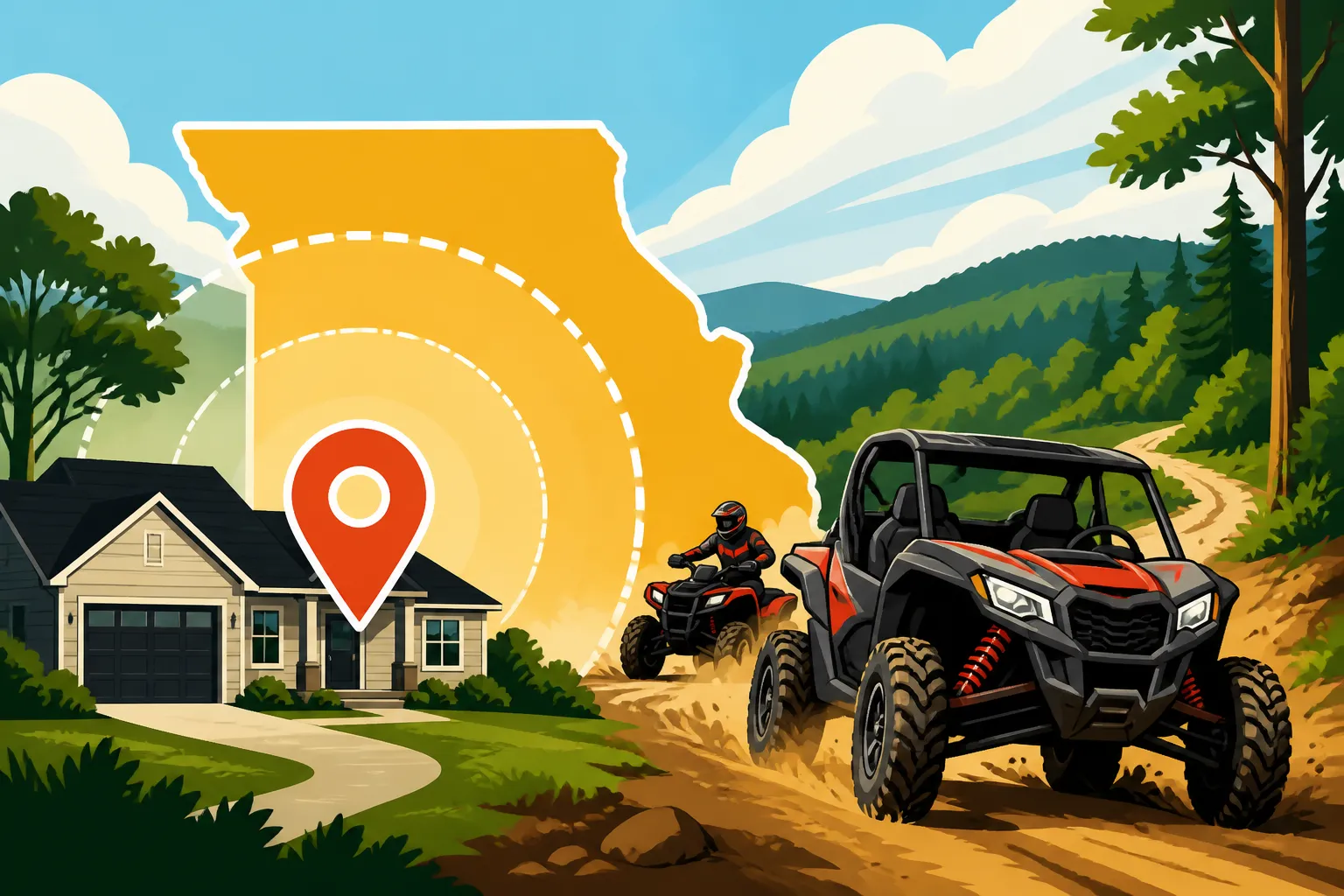
- From Your Primary Residence: The three-mile radius starts and ends at your actual home. You can't haul your UTV to a friend's house and then use their driveway as the starting point for your 3-mile excursion. It has to be from the address where you officially reside.
- Specific Purposes: The law allows this travel for agricultural purposes, industrial purposes, or maintenance purposes directly related to your primary residence. It also permits travel to access goods or services. This means you can drive to the feed store, the small-town hardware shop, or even the local gas station to fill up your machine, if it’s within that 3-mile radius and you are indeed obtaining goods or services. What it doesn't allow is simply joyriding, going to visit a friend (unless you're performing maintenance for them related to your residence, which is a stretch), or cruising aimlessly.
- No Highway Use: This rule typically applies to county roads and, in some cases, state-maintained routes where the speed limit is low. It absolutely does not permit travel on federal interstates or major state highways designed for high-speed traffic. Always be aware of the type of road you're on.
Here’s a practical example: You live on a gravel county road, and the local general store, where you buy feed for your chickens, is 2.5 miles away. Under the 3-mile rule, you could legally drive your side-by-side to that store and back. However, if your friend lives 4 miles away, or you just want to take a leisurely ride through the countryside beyond that 3-mile mark, you are no longer covered by this specific allowance. It's a very targeted exemption for specific needs.
Measuring 3 Miles From Home
The "3 miles" isn't measured as the crow flies; it's the actual driving distance along the public road network. So, if your property line is directly across the street from a neighbor, but the nearest public access point to their farm is a winding 2.9 miles down the road, you're still within the rule. However, if that same neighbor lives just a mile away, but the only public road route takes you 3.5 miles, you're outside the limit.
It's a good idea to actually measure these distances if you plan to regularly utilize this rule. Use a mapping app, or even your vehicle's odometer, to plot out your common destinations from your primary residence. This proactive step can save you a lot of headache if you ever encounter law enforcement. Remember, "3 Miles Measured From Home" is a strict limit, not a suggestion. It means physically leaving your property and traveling up to three miles.
Beyond the 3 Miles: Other Road Use Options for UTVs in Missouri
While the 3-mile rule is specific and limited, it's not the only way a side-by-side can legally touch a public road in Missouri. There are other avenues, some of which require local government action, and others that are tied to very specific types of work. Understanding these other options is crucial for maximizing the utility of your machine without risking a citation. It's really about knowing the patchwork of regulations that Missouri has in place.
Local Ordinances and Special Permits
This is perhaps the most significant pathway for broader UTV road access in Missouri. Many cities and counties across the state have recognized the growing popularity and utility of side-by-sides and have enacted local ordinances to permit their use on specific public roads within their jurisdiction. These ordinances vary widely from place to place, so what's legal in one town might get you a ticket in the next.
For example, a town like Harrisonville might have a permit system managed by its police department, while another county might issue permits through the sheriff's office. These permits usually come with specific requirements:
- Operator's License: You'll almost always need a valid [An Operator's or Chauffeur's License in Missouri].
- Insurance: Proof of liability insurance is a common requirement.
- Safety Equipment: This can include headlights, taillights, brake lights, turn signals, mirrors, a horn, and often a visible safety flag (which must be 7 feet off the ground and have 30 square inches of day-glow orange, per state law for these permits). Many side-by-side owners turn to companies like SuperATV for aftermarket kits that include turn signals, horns, and mirrors to meet these requirements.
- Designated Roads: The ordinance will specify which roads are open to UTVs. Major state highways or federal routes are usually excluded.
- Permit Fees: There's almost always a fee involved, and these fees typically stay local to help cover administration and enforcement. [Missouri Special Permit Cost for ATVs] might vary depending on whether it's a city or county permit.
The beauty of these local permits is that they often allow for more general recreational or transportation use, not just the limited purposes of the 3-mile rule. However, the onus is entirely on the rider to know the specific rules for every city or county they plan to ride in. You cannot assume a permit from one town works in another, nor can you assume any town has an ordinance at all. Always check with the local city hall or county clerk's office before you ride. Many riders get caught because they didn't realize the next town over hadn't passed such an ordinance. This is why it’s so important to know [Missouri Cities That Allow UTVs on Streets] and which ones don't.
Agricultural and Industrial Exceptions
Separate from the 3-mile rule and local ordinances, Missouri law provides specific allowances for UTVs (and sometimes ATVs) used strictly for agricultural or industrial purposes. These are typically tied to the operation of a farm or a commercial enterprise and have their own set of conditions.
- Agricultural Highway Exception: If you're using your UTV for bona fide agricultural purposes, you can operate it on public roads from sunrise to sunset. This is to facilitate farm operations, such as moving equipment between fields, hauling feed, or checking fences. The machine must be operated in a safe manner, and you might need to display a slow-moving vehicle emblem. This exception can extend beyond the 3-mile radius and even onto state routes, but the purpose must be explicitly agricultural. This is a vital rule for many Missouri farmers who rely on their UTVs daily, and it's outlined in [Missouri Agricultural Highway Exception].
- Industrial Use: Similar to agricultural use, UTVs can be operated on roads for industrial purposes, but usually only on the premises of the industrial site or for very short distances directly adjacent to it. This is more about moving materials or personnel within a controlled industrial environment.
- Specific Crossing Rules: Both ATVs and UTVs are generally allowed to cross a public highway at a ninety-degree angle when moving from one piece of private property to another, provided it's done safely and doesn't impede traffic. This isn't for travel along the road, but across it.
These exceptions are narrowly defined and are not meant for recreational riding. If you're using your side-by-side to haul equipment to a job site, for example, ensure you can clearly demonstrate the industrial purpose if stopped by law enforcement. The key takeaway here is that purpose dictates legality.
Important Considerations for Operating a UTV on Missouri Roads
Even when you're operating your UTV under one of the legal exceptions – whether it's the 3-mile rule, a local ordinance, or an agricultural exemption – you're still expected to adhere to certain safety and equipment standards. These aren't just suggestions; they are often codified in state or local law, and failing to meet them can lead to tickets and fines. It's not enough to simply be "allowed" on the road; you need to be prepared for the road.
Required Safety Equipment
When operating an ROV on public roads under any of Missouri's exceptions or local ordinances, specific safety equipment is usually mandatory. This is designed to make your vehicle more visible and safer for both you and other road users.
- Lighting: Your UTV must have at least two headlamps and two taillamps that are visible from appropriate distances. Brake lights are also typically required. For those older machines or base models, upgrading to a brighter, more reliable lighting system, perhaps from SuperATV, can significantly improve your visibility, especially around dawn or dusk or during inclement weather.
- Reflectors: Rear-facing red reflectors are often required.
- Mirrors: At least one rearview mirror is usually necessary to allow the operator to see traffic approaching from the rear.
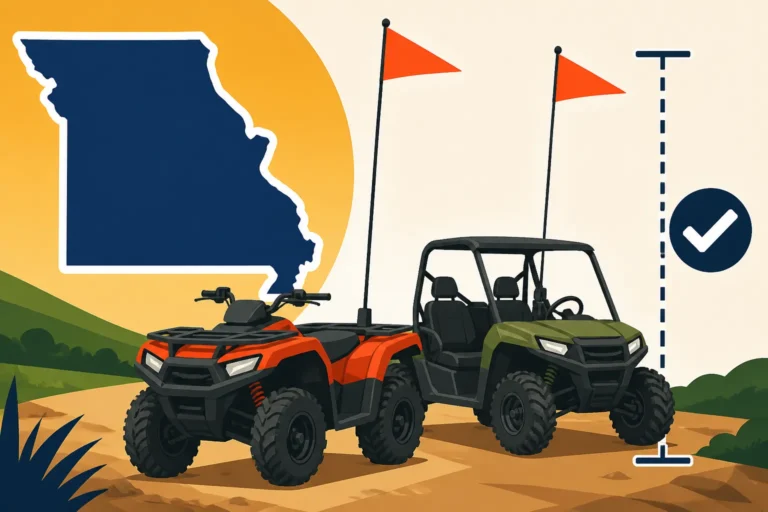
- Safety Flag: This is a big one for any authorized road use. Missouri law states that a UTV on public roads (under a permit or exception) must display a fluorescent orange flag that is at least 30 square inches in size and mounted at least seven feet above the ground. This makes your relatively small vehicle much more visible to larger traffic. You can learn more about [Missouri's 7-Foot Safety Flag] to ensure compliance.
- Seatbelts and Roll Bar: Since ROVs are designed with non-straddle seating, they are expected to have factory-installed seatbelts and a roll bar or cage. Operators and passengers must utilize these safety features. This is a core part of [Roll Bar and Seat Belt Rules for an ROV].
Always check the specific local ordinance or state statute you are operating under, as some may have additional requirements. For instance, some cities might also require turn signals or a horn.
Driver's License and Insurance Requirements
Just like driving a car, operating a UTV on public roads in Missouri (even under the aforementioned exceptions) generally requires you to hold a valid driver's license. You can't just hand the keys to an unlicensed teenager, even if they're supervising a youth machine on private land. The state considers a UTV on a public road to be a vehicle requiring a licensed operator. [An Operator's or Chauffeur's License in Missouri] is typically what you'll need.
Furthermore, if you're operating under a local permit, liability insurance is almost universally required. This protects you and others in the event of an accident. Even if not explicitly required by the 3-mile rule or agricultural exemptions, having insurance is a smart decision for any vehicle you operate on public roadways. It's worth checking with your insurance provider to ensure your existing ATV/UTV policy covers road use under these specific circumstances, as many off-road policies do not extend to public highways.
Penalties for Non-Compliance
Ignoring these rules and requirements can lead to more than just a stern talking-to. Operating an ATV or UTV illegally on Missouri roads can result in significant fines, points on your driver's license, and even impoundment of your machine. The exact penalties can vary depending on the specific violation and the jurisdiction, but they are not trivial.
Getting caught without the proper permit, or operating an ATV where only a UTV is allowed, or failing to have the required safety equipment can all result in citations. [Missouri Fines for Illegal ATV Road Use] can range from tens to hundreds of dollars for a single offense. Repeated offenses, or those involving reckless operation, can lead to more severe consequences, including class C misdemeanors. It's simply not worth the risk. A quick trip to the store might turn into a costly legal headache if you haven't done your homework on local ordinances and state statutes. Always prioritize compliance to ensure your riding experience remains enjoyable and hassle-free.
| Criteria | 3-Mile Rule (ROVs Only) | Local Ordinance (UTVs/ROVs) | Agricultural/Industrial Exception (UTVs/ATVs) |
|---|---|---|---|
| Applies To | Recreational Off-Highway Vehicles (ROVs/Side-by-Sides) | UTVs/ROVs (check specific ordinance) | UTVs/ROVs (and ATVs for specific tasks) |
| Origin Point | From Primary Residence | As defined by local permit/ordinance | From agricultural/industrial property |
| Distance Limit | 3 miles | As defined by local permit/ordinance | 50 miles for agricultural, usually no limit for industrial site |
| Purpose | Ag, industrial, maintenance, access goods/services for residence | General transportation, recreation (as permitted) | Strict agricultural or industrial purposes |
| Driver's License | Required | Required | Required |
| Insurance | Recommended, often not state-mandated | Often required by local ordinance | Recommended, often not state-mandated |
| Safety Flag | Required (7ft mast, 30 sq.in. orange) | Required by state law for permit use | Often required |
| Head/Taillights | Required | Required | Required |
| Turn Signals | Not explicitly required by state | Often required by local ordinance | Not explicitly required |
| Mirrors | Not explicitly required by state | Often required by local ordinance | Not explicitly required |
| Permit Required | No (it's a state statute allowance) | Yes, from city/county | No (it's a state statute allowance) |
Disclaimer
This article is for general informational purposes only and does not constitute professional advice. Laws, prices and regulations vary by location and change over time. Consult a qualified professional for guidance on your specific situation.