Where to Get a Missouri ATV Road Permit
Navigating the rules for taking your off-highway vehicle (OHV) on Missouri’s public roads can feel like trying to solve a complicated puzzle, often leaving riders scratching their heads and worried about inadvertently breaking the law. It’s a common frustration, especially when you just want to get from point A to point B without trailering. This guide will cut through the confusion and explain exactly where you might be able to get a permit to operate your machine on the pavement, and what kind of machine Missouri really allows.
Understanding Missouri’s Road Rules for Off-Highway Vehicles
Before we even talk about permits, it’s absolutely crucial to understand Missouri’s fundamental approach to off-highway vehicles on public roads. This isn't like registering a car; the rules are far more restrictive and nuanced, often leading to a lot of disappointment for riders who just want to take their quad to the gas station. Many riders mistakenly believe that if they just get a permit, their ATV can legally cruise down Main Street. Unfortunately, the reality is far more complex and, for traditional ATVs, much more limiting.
The Big Distinction: ATVs Versus UTVs/ROVs
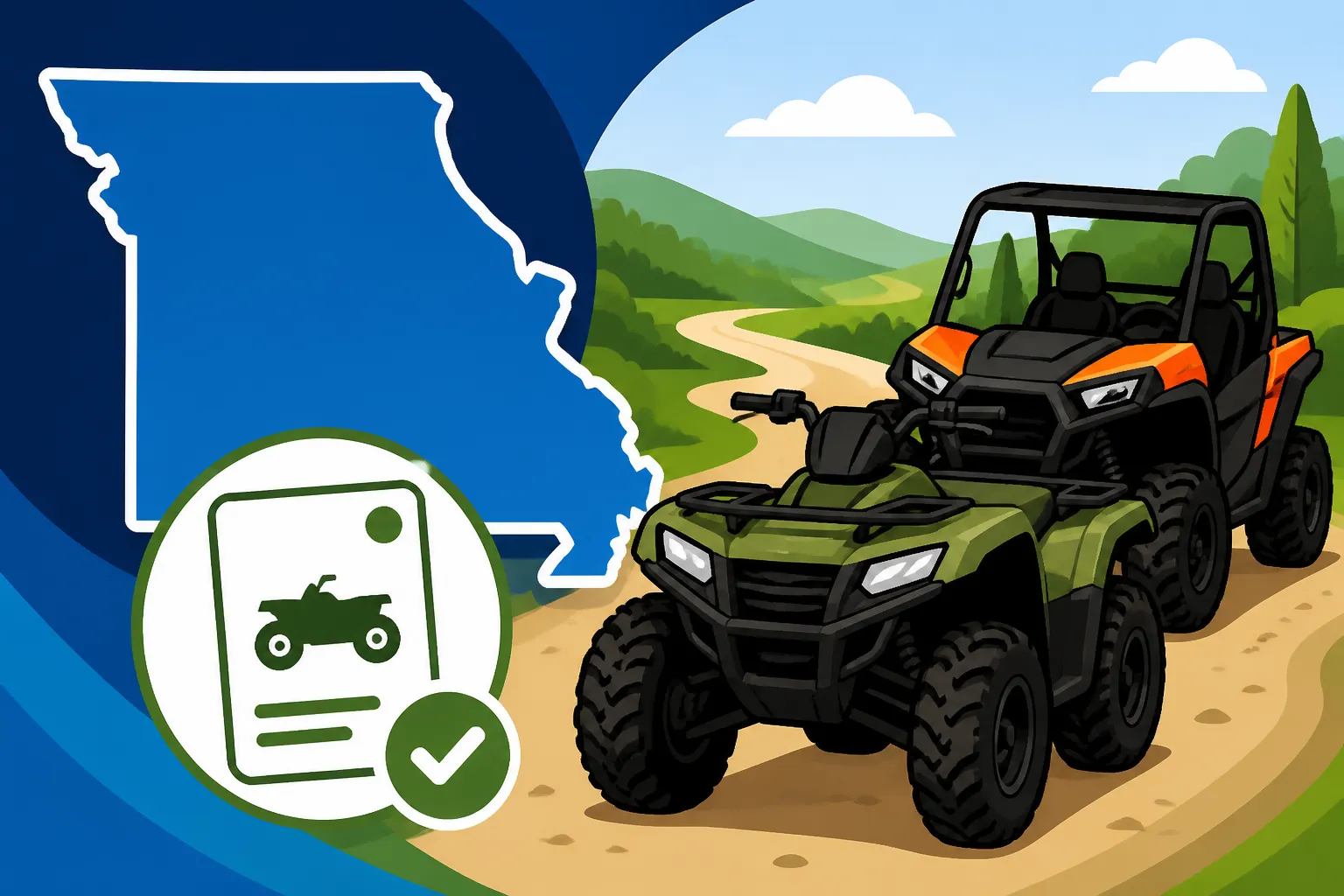
Here’s the first, and perhaps most important, piece of information you need to internalize: Missouri law generally treats traditional ATVs (those with a straddle seat and handlebars, often called quads) differently from UTVs and Recreational Off-Highway Vehicles (ROVs), which typically have side-by-side seating and a steering wheel. This distinction is the bedrock of understanding road legality in Missouri. While there are a few very narrow exceptions for ATVs to cross roads or operate for agricultural purposes, getting a general "street legal ATV permit" for a traditional quad is largely not an option in our state. This is a huge point of frustration for many quad owners, who see side-by-sides on city streets and wonder why their machine can't do the same.
For the most part, when people talk about getting a permit for road use in Missouri, they are referring to UTVs or ROVs, not traditional ATVs. This is because state statutes have specific provisions that allow local jurisdictions (cities and counties) to create ordinances permitting UTV/ROV use on their roads, under strict conditions. These local ordinances are the gateway to road permits for many side-by-side owners, but they almost never extend to ATVs. It’s a bitter pill to swallow for ATV riders, but it's the reality of the law here.
Statewide Limitations and the Few Exceptions
Even with UTVs and ROVs, there's no single statewide permit that makes your machine street legal everywhere in Missouri. That's a myth we need to bust right away. Instead, road legality is almost entirely dependent on local city or county ordinances. So, a permit you get in one town likely won't apply in the next county over. It's a patchwork of rules, which can be incredibly confusing and requires riders to do their homework for every locale they plan to ride in.
However, there are a few statewide exceptions where you might find an ATV or UTV on a public road without a specific local permit:
- Agricultural Use: Farmers can often operate ATVs or UTVs on public roads for agricultural purposes, primarily during daylight hours and for short distances between fields or to market. This isn't a free pass for joyriding, but a functional necessity for farming operations.
- Crossing a Highway: You might cross a highway at an angle to get from one piece of property to another, but this is a brief, direct movement, not extended road travel.
- Disabled Riders: There are limited provisions for disabled individuals to use OHVs on roads for specific, short distances.
Beyond these very specific scenarios, if you're looking to ride your machine down a city street or county road for general transportation or recreation, you're almost certainly looking at a local ordinance, and that ordinance will predominantly be for UTVs and ROVs. We dive into more detail about the statewide limitations in [Are ATVs Street Legal in Missouri?].
Where to Get a City or County Road Permit
Given Missouri's system, the answer to "where to get a Missouri ATV road permit" (which, again, primarily applies to UTVs and ROVs) is: your local city hall or county sheriff's office. It all hinges on whether your specific city or county has passed an ordinance allowing such use. Without that local law, no permit can be issued, and no legal road riding can occur.
Checking Your Local Ordinances: The First Step
Before you even think about permit applications, your absolute first step is to contact your city clerk's office or county commission/sheriff's department. You need to ask them directly:
- "Does our city/county have an ordinance that permits the operation of UTVs or ROVs on public roads?"
- If yes, "Can you provide me with a copy of that ordinance, or direct me to where I can find it online?"
This is crucial because the ordinance itself will lay out all the rules, requirements, fees, and restrictions specific to that locality. What one town allows, another may strictly forbid. You might find that your city, like Lake Ozark or Harrisonville, has a well-defined permit process, while a neighboring rural county might have no such provisions at all. Many communities across the state have tackled this issue, with some like Union, St. James, Lebanon, and Grain Valley having established ordinances. It’s worth checking your specific municipality.
The Application Process: Typically Through Local Law Enforcement
If your city or county does have an ordinance, the permit application process will usually be handled by a department of your local government, most often the police department (for cities) or the sheriff's department (for counties). They are the ones who will enforce the rules, so they are naturally the gatekeepers for issuing permits.
Here's what the general process often looks like, though it varies significantly by locality:
- Obtain the Application: You'll visit the police or sheriff's department (or their website, if available) to get the official application form.
- Gather Required Documents: Expect to need proof of ownership (your vehicle title), proof of insurance, and your valid driver's license. Some localities might also require proof that your machine meets specific safety requirements (like proper lighting, seatbelts, etc.).
- Vehicle Inspection: Many ordinances require your UTV or ROV to pass a safety inspection by local law enforcement or a designated mechanic to ensure it meets the standards outlined in the ordinance. This could include checking [Missouri Lighting Requirements for ROVs], [Missouri Roll Bar Requirements], and [Missouri Seat Belt Rules in a Side-by-Side].
- Pay the Fee: There will almost certainly be a fee associated with the permit. This fee is set by the local government and is usually a set annual or biennial amount, often designed to cover the administrative costs of the program. For more on this, check out [Missouri Special Permit Cost for ATVs].
- Receive Your Permit/Decal: Once approved and all requirements are met, you'll be issued a permit, which might be a physical card or a decal to display on your machine. This permit will specify the terms of your road use, such as the allowed streets, hours of operation, and any other local restrictions.
It's vital to remember that these permits are for UTVs/ROVs and almost universally do not cover ATVs. If you own a quad, you’ll likely find that your local options for road permits are non-existent outside of the agricultural or crossing exceptions. This is a common point of confusion that needs careful clarification. If you're wondering [Can You Drive a UTV on a Missouri Road?], the answer often lies within these local ordinances.
What You Need for a Missouri ATV/UTV Road Permit
When seeking a permit for your side-by-side or UTV (remembering ATVs generally don't qualify), you'll need to demonstrate that both you and your machine meet specific requirements. These requirements are usually dictated by the local ordinance, but they often mirror general safety standards.
Driver and Operator Requirements
First, let's talk about who can operate these machines on local roads. Generally, the operator must:
- Hold a Valid Driver's License: This isn't just a learner's permit. Most ordinances require you to have a valid operator's or chauffeur's license, just like you would for driving a car. This ensures you understand road rules and are a competent driver. [Missouri Driver's License Rules for ROVs] delves into this further.
- Be of Legal Age: Typically, this means at least 16 years old, the same age required for a standard driver's license. The age requirements are in place to ensure maturity and understanding of traffic laws.
- Proof of Insurance: You will almost certainly need to provide proof of liability insurance for your UTV or ROV. This is critical for protecting yourself and others in case of an accident on public roads. Without it, you won't get a permit.
It’s about making sure that anyone operating these machines on public roads has the same basic qualifications as someone driving a car, emphasizing safety and accountability.
Machine Requirements and Safety Features
The machine itself will also need to meet a laundry list of safety and equipment standards, as outlined in the local ordinance. These are designed to make your UTV or ROV as visible and safe as possible when sharing the road with cars and trucks.
Here's a common checklist of what many localities require:
- Headlights and Taillights: Absolutely essential for visibility, especially during dawn, dusk, or adverse weather. They must be operational and clearly visible.
- Brake Lights: To signal when you're slowing down or stopping.
- Turn Signals: For indicating turns, just like a regular vehicle.
- Horn: To alert others to your presence.
- Mirrors: At least one rearview mirror, and often side mirrors, to give the operator a full view of traffic behind and beside them.
- Windshield: Some ordinances may require a windshield to protect the operator and passengers from debris.
- Seatbelts: If your UTV/ROV has side-by-side seating, functional seatbelts for all occupants are typically mandatory. This aligns with the vehicle's design for safety in a rollover.
- Roll Bar/Roll-Over Protective Structure (ROPS): The factory-installed roll cage usually suffices, but it must be intact and properly maintained to protect occupants in a rollover event.
- Safety Flag: Many ordinances specify a brightly colored, often orange, safety flag mounted to fly at a certain height (often 7 feet) above the ground. This is especially important for visibility over hills or around blind corners. You can often find these at shops like SuperATV. For more details, see [Missouri Safety Flag Requirements].
- Spark Arrestor: While not always a road requirement, it's often a requirement for off-road trails and a good idea for any machine operating near dry vegetation.
It's important to note that these requirements are in addition to any standard equipment your machine might have. You might need to add aftermarket accessories to meet the local ordinance standards. For example, your machine might have come with headlights, but if it lacks turn signals or a horn, you'll need to install them. Reputable brands like SuperATV offer a wide range of accessories, from mirrors and turn signal kits to full windshields, that can help bring your machine up to spec for road legality.
Example Table of Common Permit Requirements
To give you a clearer picture, here's a table summarizing typical requirements you might encounter when applying for a local UTV/ROV road permit in Missouri. Remember, always check your specific city or county ordinance, as these are general examples.
| Category | Common Requirement | Notes & Clarifications |
|---|---|---|
| Operator | Valid Driver's License (Operator/Chauffeur) | No learner's permits; must be a full, valid license. |
| Minimum Age (e.g., 16 years old) | Consistent with Missouri's driver's license age. | |
| Vehicle Type | Utility Vehicle (UTV) or Recreational Off-Highway Vehicle (ROV) | Traditional ATVs (quads) are generally not eligible for these local permits. |
| Documentation | Proof of Ownership (Title) | Must be the registered owner of the vehicle. |
| Proof of Liability Insurance | Minimum coverage as required by Missouri law for motor vehicles. | |
| Permit Application Form | Obtained from local police/sheriff's department. | |
| Equipment | Headlights & Taillights | Must be functional, visible from specified distances. |
| Brake Lights | Must activate when brakes applied. | |
| Turn Signals (Front & Rear) | Required for indicating lane changes and turns. | |
| Horn | Audible warning device. | |
| Rearview Mirror(s) | Typically at least one, often two (side mirrors). | |
| Seatbelts for All Occupants | If multi-passenger seating, all must have working belts. | |
| Roll-Over Protective Structure (ROPS) | Factory roll cage usually sufficient; must be maintained. | |
| Safety Flag | Brightly colored (e.g., orange), mounted to achieve a minimum height (e.g., 7 feet above ground). | |
| Windshield (Optional in some areas) | May be required for protection from debris. | |
| Other | Vehicle Inspection | May be required by local law enforcement to verify equipment. |
| Permit Fee | Set by local ordinance, typically annual or biennial. | |
| Decal Display | Issued decal must be displayed as directed by the local authority. | |
| Adherence to Local Restrictions | Strict limits on specific roads, speed limits, hours of operation, or 3-mile rule application. |
Key Considerations and Best Practices for Road Use
Once you've navigated the permit process and have your UTV or ROV ready for limited road use, there are still critical considerations to keep in mind. Getting the permit is only part of the equation; operating safely and legally is the other.
The 3-Mile Rule and Other Local Restrictions
One of the most common local allowances you'll hear about in Missouri for UTVs/ROVs is the "3-mile rule." This rule, if adopted by a local ordinance, typically allows operators to drive their UTV or ROV on municipal roads for a maximum of three miles from their residence for specific purposes, such as accessing a business, medical facility, or a gas station, or simply connecting to a trail. [Missouri's 3-Mile Rule for Side-by-Sides] explains this in detail. It’s not an open invitation to cruise indefinitely, but rather a functional allowance for short trips.
Beyond the 3-mile rule, local ordinances will often specify:
- Designated Roads: Some cities might only allow UTVs/ROVs on specific streets or within certain zones, prohibiting them from state highways or major thoroughfares.
- Hours of Operation: Restrictions on night-time use are common, even with proper lighting. You might only be allowed to operate from sunrise to sunset. [Missouri Rules for Riding at Night]
- Speed Limits: You’ll likely be restricted to lower speed limits than other vehicles, often not exceeding 30-45 mph, even on roads with higher posted limits.
- Passenger Restrictions: While UTVs and ROVs are designed for multiple passengers, the ordinance might still impose limits on how many can ride or require all passengers to be seated and belted. [Missouri Rules for a Passenger in a UTV]
Always carry your permit and proof of insurance with you while operating on public roads. If a law enforcement officer pulls you over, being able to readily present these documents will make the stop much smoother.
Safety First: Beyond the Legal Requirements
Meeting the legal requirements is the bare minimum. True safety on public roads goes beyond just what’s mandated by law.
- Defensive Driving: Assume no one sees you. OHVs are smaller and less visible than cars. Drive defensively, anticipate traffic, and be prepared for drivers who might not be looking for an OHV.
- Helmet Use: While Missouri only requires helmets for ATV/UTV riders under 18 (see [Missouri Helmet Law for Riders Under 18]), wearing a helmet is always a good idea, regardless of age, when operating on public roads. An unexpected impact can happen to anyone.
- Visibility: Even with required lighting and a safety flag, consider adding additional visibility aids like brighter reflective tape, or choosing gear in high-visibility colors. Products from companies like SuperATV often include reflective elements or options for enhanced lighting.
- Pre-Ride Checks: Before every road trip, no matter how short, do a quick check of your lights, brakes, tires, and horn. Make sure everything is in perfect working order.
- Weather Conditions: Don't operate your machine on roads in conditions where visibility is severely hampered, such as heavy fog, rain, or snow, unless absolutely necessary and permitted.
Remember, the goal is not just to avoid a ticket, but to avoid an accident. These machines behave differently than cars, and their smaller size means you are more vulnerable in a collision.
The Consequence of Operating Without a Permit
The penalties for operating a UTV or ROV on public roads without a proper permit (or for operating an ATV where it's not allowed) can be significant. You could face fines, your machine could be impounded, and you might even face civil liability in the event of an accident where you were operating illegally. [Missouri Fines for Illegal ATV Road Use] outlines some of these consequences. It's simply not worth the risk to yourself, your machine, or your wallet.
The frustration of limited road access for ATVs and UTVs in Missouri is real, but understanding the specific rules and acting within the confines of local ordinances is the only way to enjoy your machine responsibly on public roads. Do your homework, get the right permit for the right machine in the right place, and always prioritize safety.
Disclaimer
This article is for general informational purposes only and does not constitute professional advice. Laws, prices and regulations vary by location and change over time. Consult a qualified professional for guidance on your specific situation.