Which Permit You Need to Ride a County Road
It’s a common scenario: you’ve got your ATV or UTV, you love hitting the trails, but sometimes you just want to take a shortcut on a gravel county road to get to the next section of your property, or maybe even run into town for a quick errand. The problem is, Missouri's rules for riding off-road vehicles on public roads, especially county roads, are anything but straightforward, leading to a lot of confusion and potential headaches. This guide is here to untangle the often-complicated web of Missouri laws regarding off-road vehicles on county roads, helping you understand exactly which permits (if any) you need to ride legally and safely.
The Frustration of County Road Riding Rules in Missouri
Let's be honest, figuring out where you can and cannot ride your ATV or UTV in Missouri can feel like trying to solve a riddle without all the clues. You hear stories from friends, read snippets online, and then you talk to a local deputy who gives you a completely different answer. It's enough to make you just want to stick to private land and avoid the hassle altogether. But for many of us, those county roads are a vital link, whether it's for farm work, accessing hunting land, or just enjoying the freedom of the open country. The core issue is that there isn't one universal state-level permit that suddenly makes all county roads open season for every off-road vehicle. Instead, Missouri’s approach is layered, often leaving the decision-making (and the permitting) to local jurisdictions.
This local control creates a patchwork of rules across the state. What's perfectly legal for a side-by-side in one county might get you a hefty fine in the next, even if the roads look identical. This variability is incredibly frustrating for riders who just want clear, consistent guidelines. You might live in a rural area where the sheriff's department is fairly lenient, but venture into a more populated county and suddenly you're facing strict enforcement. It’s not about avoiding rules; it’s about having a clear path to follow them.
Many people also confuse the rules for different types of off-road vehicles, assuming an "ATV" and a "UTV" are treated the same way. In Missouri, that's simply not the case when it comes to road use, and this distinction is absolutely crucial for understanding what kind of permit you might need.
Understanding Missouri's ATV vs. UTV Distinction for Roads
One of the biggest hurdles to understanding road-legal riding in Missouri is the fundamental difference in how the state defines and regulates All-Terrain Vehicles (ATVs) and Utility Vehicles (UTVs) or Recreational Off-Highway Vehicles (ROVs). While we often use "quad" or "side-by-side" interchangeably in casual conversation, the law sees them quite differently, especially when public roads are involved.
Why ATVs Have Limited Road Access
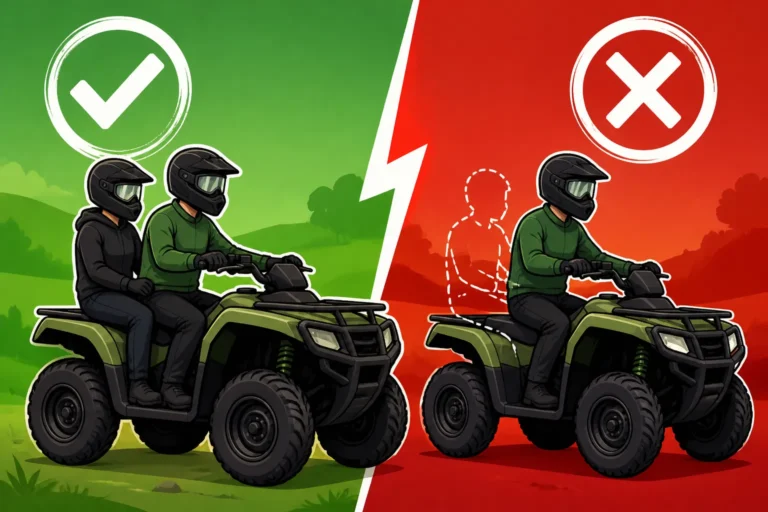
In Missouri, an ATV is generally defined as a motorized vehicle manufactured and designed exclusively for off-highway use, 50 inches or less in width, with an unladen dry weight of 1,500 pounds or less, traveling on three or more low-pressure tires, with a seat designed to be straddled by the operator, and handlebars for steering control. Because of this definition, which focuses on their off-highway design, traditional ATVs (quads) are, with very few exceptions, not allowed on county roads for general recreational or transportation purposes, even with a special permit.
The state doesn't offer a blanket permit for ATVs to use county roads. If you're riding a standard quad with a straddle seat and handlebars, your options for legal road use are extremely limited. You might be able to cross a highway at a right angle if it's safe to do so, and there's a specific "agricultural highway exception" that allows farmers to use their ATVs on roads for short distances between fields during daylight hours. However, this is a very narrow exemption tied directly to agricultural work, not general recreational riding or commuting. It's vital to understand [Why Missouri Splits ATVs, UTVs and ROVs] because this distinction dictates almost everything about road access.
UTVs and ROVs: Where Road Permits Become Possible
This is where the conversation about permits for county roads really begins. Missouri statutes define "recreational off-highway vehicles" (ROVs), which are essentially what most of us call UTVs or side-by-sides. These machines typically feature a steering wheel, non-straddle seating (like bucket seats or a bench), and often come with seatbelts and roll-over protection. They are usually wider and heavier than traditional ATVs. The state's framework for road use is far more accommodating for ROVs, but it's still contingent on local action.
While Missouri does not have a statewide permit that makes all county roads open to UTVs, it does provide the legal framework for cities and counties to create their own ordinances to permit ROVs on certain public roads. This means that if you own a side-by-side, your ability to ride on a specific county road depends entirely on whether that particular county or a city within it has passed a local ordinance allowing it. Without such an ordinance, even your UTV is generally restricted from public roads.
The Local Ordinance: Your Key to County Road Access
Unlike passenger cars, ATVs and UTVs don't get a universal "road-legal" status just by having a title and registration decal. For county roads, it almost always comes down to what the local county government has decided. This means your research starts at the local level.
Why Local Ordinances Are Necessary
Missouri law empowers local municipalities and county governments to make decisions about ROV use on their roads. This approach allows local officials to consider factors specific to their community, such as road safety, traffic volume, and the general needs of their residents. What works for a sprawling rural county with miles of gravel roads might not be suitable for a densely populated suburban area. Because of this, you won't find a single, state-issued "county road permit" that applies everywhere. Instead, you're looking for a permit issued by the county sheriff's department (for county roads) or a city police department (for city streets), all based on a local ordinance. Understanding [How a City Ordinance Opens a Street to UTVs] is crucial, and the same principles often apply to county-level ordinances.
It's common for these ordinances to specify particular roads or areas where ROVs are allowed, rather than opening up every single street. They also almost always come with specific requirements that your UTV must meet, and conditions that you, as the operator, must follow. This is where your machine's setup, and your own licensing, become very important.
Common Requirements for Local UTV Road Permits
If a county has passed an ordinance allowing UTVs on its roads, expect to encounter several requirements before you can get a permit. These are designed to enhance safety and ensure your machine is reasonably equipped for shared road use.
Here's a breakdown of what you'll typically need to consider:
- A Special Permit from Local Law Enforcement: This is the core of it. You'll need to apply for and obtain a specific permit from the county sheriff's office. This isn't just a piece of paper; it’s an official authorization to operate your UTV on designated roads within that jurisdiction. The cost of these permits can vary, so it's good to be prepared. For more on what to expect, you might look into articles like [Missouri Special Permit Cost for ATVs] (keeping in mind it's typically UTVs that qualify for these permits).
- Proof of Insurance: Just like driving a car, you’ll almost certainly need to show proof of liability insurance for your UTV. This protects you and others in case of an accident.
- Safety Equipment: Most ordinances require UTVs to have certain safety features. These commonly include:
- Headlights and Taillights: Operational lights are essential for visibility, especially during dawn, dusk, or adverse weather. [Missouri Lighting Requirements for ROVs] are often quite specific.
- Brake Lights: So traffic behind you knows when you're slowing down.
- Turn Signals: While not always explicitly required, these are often a good idea and some ordinances may mandate them.
- Reflectors: Additional visibility aids.
- Horn: For signaling to other motorists or pedestrians.
- Rearview Mirror(s): To see traffic approaching from behind.
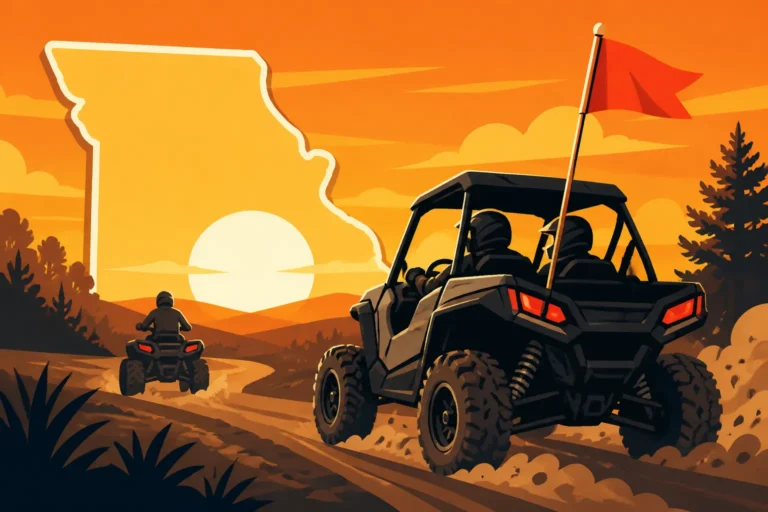
- Safety Flag: Often required to be mounted at a specific height (e.g., 7 feet from the ground) and typically blaze orange for maximum visibility. Companies like SuperATV offer a range of accessories, including durable flags and mounts, that can help you meet these requirements. Make sure you understand [Missouri Safety Flag Requirements] as they can sometimes differ slightly for road use versus state parks.
- Roll Bar and Seatbelts: These are usually standard on UTVs/ROVs, but ensure they are in good working condition.
- Operator's License: The person operating the UTV on the road will usually need a valid driver's license (an operator's or chauffeur's license). This means minors, or those without a valid license, typically cannot operate a UTV on public roads, even with a permit. For more details, check out [Missouri Driver's License Rules for ROVs].
- Specific Road Restrictions: The ordinance might limit UTV use to certain types of roads (e.g., only gravel county roads, not state highways), specific hours of the day (e.g., sunrise to sunset), or even impose speed limits lower than the posted limit for other vehicles. It's critical to obtain a copy of the actual ordinance or permit details from your local authority.
Finding out if your county or a specific city has such an ordinance usually involves checking their official websites, visiting the county clerk's office, or, most effectively, contacting your local county sheriff's department. They are the ones who will issue the permit and can provide the most accurate, up-to-date information for their jurisdiction.
Getting the Right Permit: Steps and What to Expect
Once you've confirmed that your county or a local municipality does have an ordinance allowing UTVs on certain roads, the next step is to actually obtain that permit. This process typically involves a direct interaction with local law enforcement and ensuring your machine is up to snuff.
Navigating the Application Process
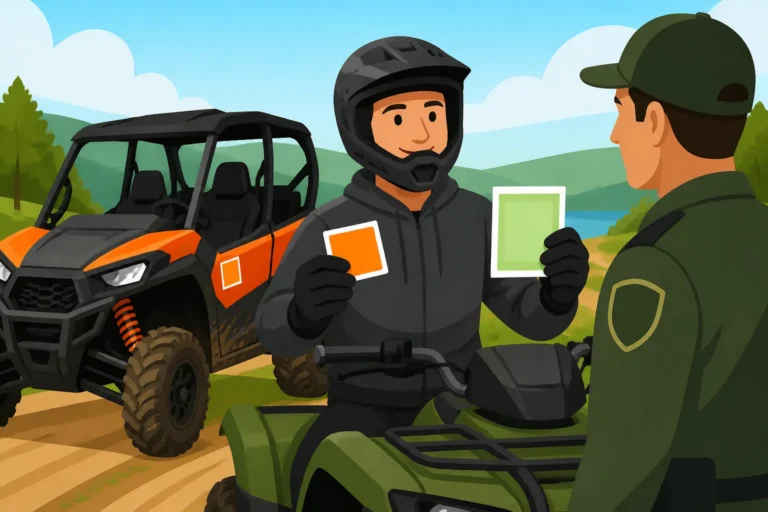
The first and most important step is to contact the issuing authority. For county roads, this will almost always be your local County Sheriff's Office. For city streets, it would be the City Police Department. Don't assume you can just print a form online; many times, they'll want you to come in person or they'll have specific procedures you need to follow.
When you contact them, ask for a copy of the specific ordinance if you haven't already reviewed it. This document is your rulebook. Then, inquire about the application process for an ROV (or UTV) road permit. They'll tell you what documents to bring, such as:
- Proof of Ownership: Your UTV's title or registration.
- Proof of Insurance: Your current liability insurance card or policy.
- Your Driver's License: To verify you meet the operator requirements.
- The UTV Itself: Often, an officer will need to inspect your UTV to ensure it has all the required safety equipment before they issue the permit. This might involve checking your lights, horn, mirrors, and safety flag. You'll want to have all your aftermarket accessories, like those from SuperATV, properly installed and functioning before this inspection.
Be prepared for a fee when you apply for the permit. These fees are usually modest, but they are an essential part of the process.
Understanding Permit Limitations
It's critical to understand that even with a permit, there are almost always limitations. A county road permit doesn't grant you free rein on all roads.
- Geographic Restrictions: Your permit is only valid for the specific jurisdiction that issued it. A permit from County A will generally not be valid for riding in County B or on streets in a city that hasn't passed its own ordinance. This is why [Does a City Permit Work in the Next Town?] is a common and important question – and the answer is usually no.
- Road Types: The permit might specify that you can only ride on county-maintained gravel roads, explicitly prohibiting state highways or paved routes.
- Time and Speed Restrictions: Some permits will only allow daylight operation, or impose specific speed limits for UTVs that are lower than the posted speed for cars.
- The 3-Mile Rule: While primarily associated with city ordinances, some county permits might incorporate aspects of Missouri's 3-mile rule, which allows ROVs to operate on certain roads within three miles of the operator's home or property for specific purposes. Always verify if this applies to your specific permit.
Always keep your permit, proof of insurance, and driver's license with you while riding. If an officer stops you, being able to readily present these documents will make the interaction much smoother. Understanding the specific definition of your machine, whether it's an ATV or what [What the Law Calls a Recreational Off-Highway Vehicle], will clarify your eligibility.
To help you visualize the different scenarios, here’s a quick overview:
| Feature/Requirement | Traditional ATV (Quad) | UTV / ROV (Side-by-Side) |
|---|---|---|
| Statewide Road Permit | No general state permit for county roads. | No general state permit for all county roads. |
| County Road Access | Generally NOT permitted for general use. | POSSIBLE with a local county/city ordinance & permit. |
| Agricultural Exemption | Yes, for short distances related to farm work. | Yes, if the UTV is used for agricultural purposes. |
| Local Permit Required | N/A (as general access is not permitted) | Yes, from county sheriff or city police. |
| Insurance Required | N/A for road use, but smart for off-road. | Yes, for permit application and road use. |
| Safety Equipment | N/A (for general road use) | Lights, horn, mirrors, flag (as per ordinance). |
| Driver's License | N/A (for general road use) | Yes, valid operator's or chauffeur's license. |
| Governing Authority | State statutes (largely prohibitive). | Local county/city ordinances & state statutes. |
By doing your homework and working with your local authorities, you can ensure your county road adventures are not only enjoyable but also completely legal.
Disclaimer
This article is for general informational purposes only and does not constitute professional advice. Laws, prices and regulations vary by location and change over time. Consult a qualified professional for guidance on your specific situation.