Riding Home With a Flag Still Up
A flag can look like a small detail when you leave a Missouri trail, but it raises a practical question on the ride home: should it stay mounted, and does having it up make your ATV or UTV legal on the road? This guide explains how to think about the flag, road-use rules, trail requirements, and the checks to make before heading back.
What a flag means on a Missouri road
A flag does not make every ATV or UTV street legal
A safety flag is only one part of road-use requirements. It does not turn an ATV into a road-legal vehicle, replace a permit, or give you permission to use any road you choose. Missouri’s rules distinguish among ATVs, utility vehicles, and recreational off-highway vehicles, and the rules that apply depend on the machine and the road-use situation.
That distinction matters when you are riding home from a trail or property. A side-by-side may be an ROV for purposes of a particular road-use provision, while a quad may not qualify for that same provision. Before relying on a flag, check which category your machine falls into and whether the route is allowed. [Why Missouri Splits ATVs, UTVs and ROVs] explains why the labels matter.
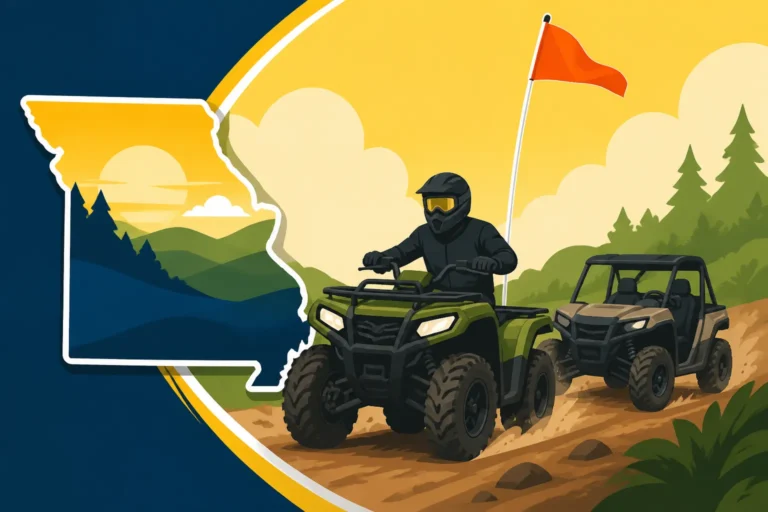
For a qualifying ROV, Missouri’s road-use provisions may require a flag on the vehicle. The flag is not a substitute for meeting other applicable conditions, such as having the right permit, staying within the allowed area, carrying required equipment, or following local rules. Start with [Missouri Special Permit for Road Use] and the specific rules for your route rather than assuming the flag alone is enough.
Height and visibility are the key flag questions
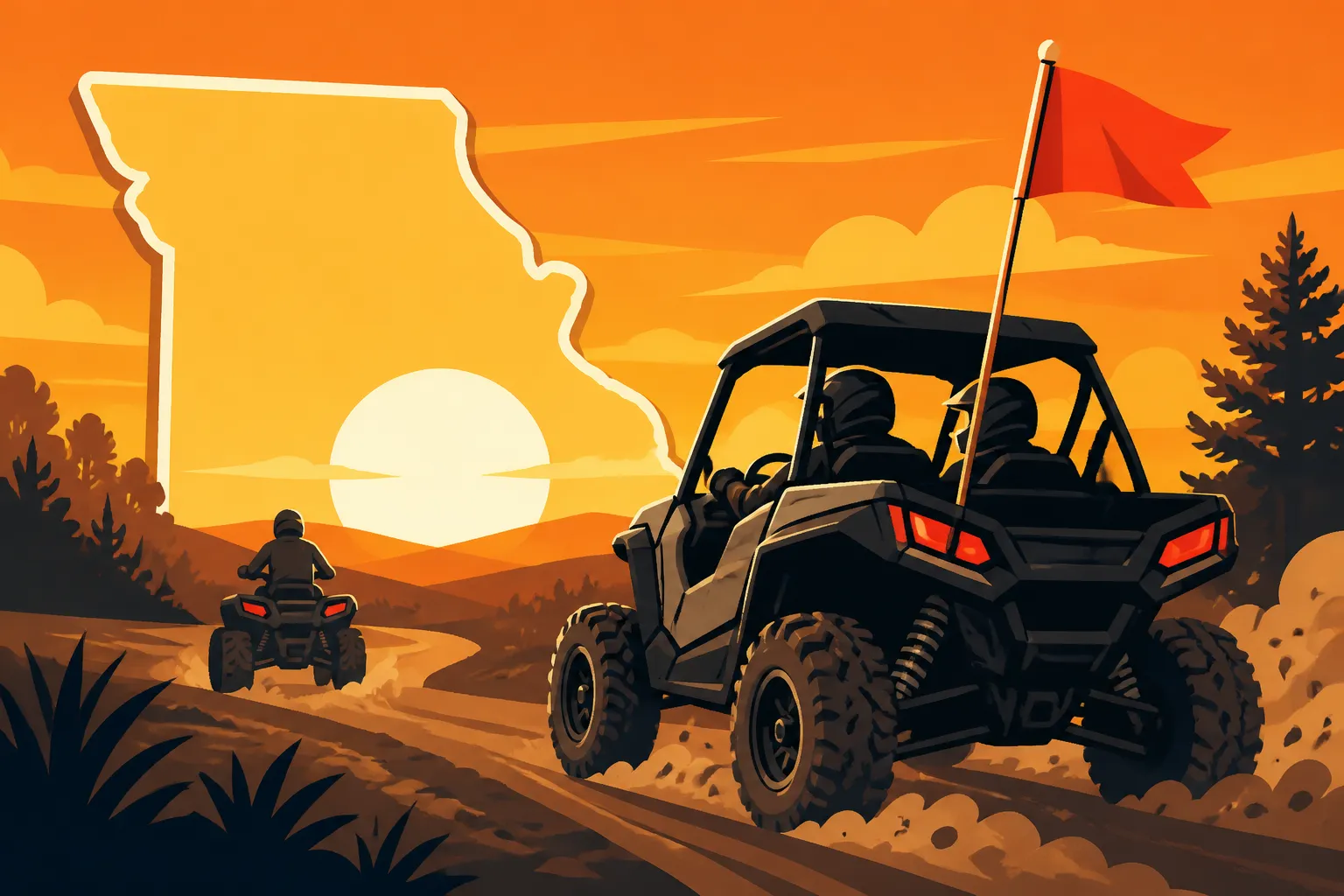
Missouri’s road-use flag rule is commonly described as requiring the flag to fly seven feet above the ground, with a day-glow flag of at least 30 square inches. That is a practical visibility standard: other drivers need a clear visual cue that a small off-highway machine is ahead or approaching.
The flag’s apparent height can be misleading. A mast that looks tall beside the UTV may not reach the required height when measured from the ground. Check the full setup while the vehicle is on level ground, including how the mast sits in its mount and whether the flag can fold or sag. [Missouri's 7-Foot Safety Flag] and [30 Square Inches of Day-Glow] cover the measurements to confirm.
Also check that the flag is easy to see from the rear and sides. A flag that is folded around the mast, tangled in cargo, or hidden behind a roof accessory may not provide the visibility you expect. If you use an aftermarket mount or flag system, including equipment from brands such as SuperATV, verify that the parts fit your machine and keep the flag upright and unobstructed. The brand or accessory itself does not determine whether the setup meets the rule.
Should you leave the flag up on the ride home
Keep it mounted only when the route and vehicle allow road use
If you are legally using a road where the flag is required, leaving it up during that segment can help maintain the required setup. But first confirm that your machine is permitted to travel there. The flag does not authorize travel beyond the limits of a road-use exception or local permit, and a route that begins on an allowed street may lead quickly to a road where the rules differ.
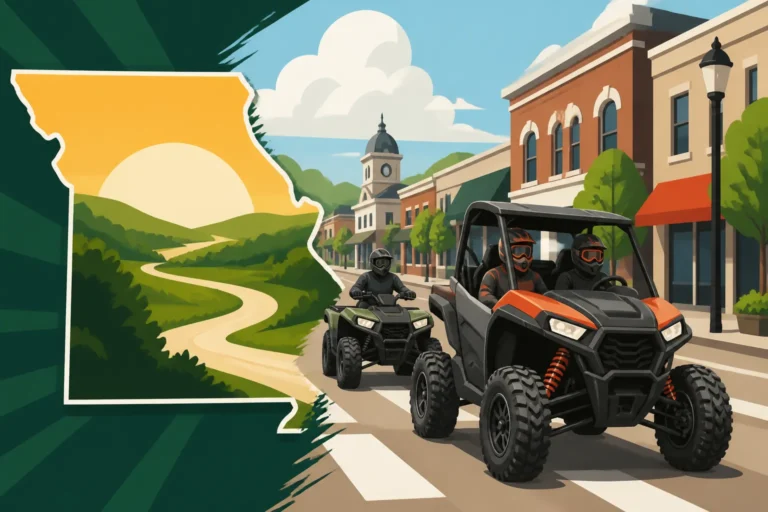
For example, a rider leaving a private riding area near Lake Ozark might need to distinguish between a road opened by a local ordinance, a state highway, and a route that is not permitted for that machine. A permit or local authorization may apply only within a defined area or under specific conditions. Check the exact route before setting off; do not rely on a general impression that “UTVs are allowed around here.”
Some Missouri road-use rules are limited by distance from the operator’s home, and the provisions may not apply to every vehicle type. Do not assume that a short ride from a trailhead qualifies. See [3 Miles From Your Own Front Door] and [Missouri's 3-Mile Rule for Side-by-Sides] for the scope of that rule.
A flag is not a reason to use a road that is otherwise off-limits
The temptation to use a quiet back road for the last stretch home is understandable, especially when a trailer is parked farther away or the riding area is close. Still, “it’s only a short distance” does not change whether the road is open to your machine. A flag cannot fix an unauthorized route, and being visible does not replace permission.
Check whether a city or county has adopted a rule allowing the machine on particular streets, and whether a permit is required. A permit issued in one town may not automatically carry over into another. If the route involves crossing a highway, review the rules for crossing rather than treating the crossing as ordinary road travel. [Missouri Rules for Crossing a Highway] is a useful place to start.
Before you ride, confirm the road, the machine category, and any permit conditions. If those details are uncertain, the safer choice is to use a trailer or another approved way to transport the machine rather than guessing from the presence of a flag.
Trail flags and road flags are not always interchangeable
A park’s flag standard can differ from the road standard
A flag used on public trails may need to meet a different standard from one used under a road-use rule. That difference can catch riders off guard: a flag that looks substantial on a county road may still fail a park’s entrance check, while a flag that meets a park’s requirements should not automatically be treated as proof that road-use requirements are met.
Missouri State Park ORV areas have their own operating requirements. The park’s flag size and mast setup may differ from the road standard, and staff may check equipment at the entrance. Read the rules for the specific riding area before you unload. [Missouri Flag Rules at a State Park] and [Why a Road Flag Fails at a Park Gate] explain why it is risky to assume one setup covers both situations.
A quick comparison can help you remember what to verify:
| Where you are riding | What to check | Common mistake |
|---|---|---|
| A road where a road-use provision applies | Vehicle eligibility, route permission, permit conditions, flag height and visibility | Assuming a flag makes an otherwise restricted road legal |
| A state park ORV area | Park-specific flag, helmet, sound, spark-arrester, and other entrance requirements | Assuming a road flag automatically meets park rules |
| Private property | Landowner permission and any rules attached to the property | Assuming private land rules carry over to public roads |
| A road opened by a local ordinance | The ordinance’s boundaries, permit requirements, and equipment conditions | Assuming one town’s permission applies in the next town |
If you ride both roads and trails, keep the requirements separate in your planning. A flag system that can be adjusted or replaced may be convenient, but convenience is not a substitute for checking the current rules at each location.
Inspect the mount before driving back
A flag that has taken a day of vibration, brush contact, and trail bumps may not be in the same condition it was when you left home. Before heading out, look for a loose base, cracked hardware, a bent mast, torn fabric, or a mount that has shifted. Give the flag a clear path above racks, spare tires, and other accessories.
Pay particular attention after riding narrow or overgrown trails. Branches can catch a flag and pull the mount sideways without making the damage obvious. If the flag leans, swings freely, or drops below its intended height, stop and fix the setup before using a road where the flag is required. A replacement mount or other accessory from a supplier such as SuperATV may be an option, but check compatibility and installation instructions for your specific machine.
If the flag is damaged and you cannot restore a compliant setup, do not assume that driving slowly or using hazard lights is an equivalent replacement. Choose a route or transport method that does not depend on the missing equipment, and check the applicable requirements before riding again.
A practical check before riding home
Use a short pre-ride checklist
A few minutes of checking can prevent a frustrating roadside stop or an avoidable trip back to the trailer. Before leaving the trailhead or property, work through these questions:
- What kind of machine am I riding? Confirm whether it is treated as an ATV, utility vehicle, or ROV under the rule you intend to use.
- Is this specific road open to my machine? Check state rules and any city or county ordinance that applies to the route.
- Do I need a permit? Confirm where it applies and whether it remains valid for the roads you plan to use.
- Does the flag meet the relevant requirement? Check its height, size, visibility, and condition for that road or riding area.
- Are the other conditions met? Look at any requirements for lighting, seat belts, roll bars, insurance, driver qualifications, and passengers.
- Is the whole route allowed? A permitted stretch does not necessarily make the next road legal.
A roadside check may involve more than the flag. An officer could ask about the machine, the permit, or the reason you are using that road. [What a Missouri Deputy Checks on a Road-Legal ROV] gives a broader sense of what to have in order. Keep relevant paperwork accessible, but do not treat a phone photo or a visible flag as a guarantee that every requirement has been satisfied.
If the route or rule is unclear, pause and verify it before starting. That is much easier than discovering the problem at a town boundary, a highway crossing, or a roadside stop.
Make the flag part of a bigger transport plan
If you regularly ride in Missouri, it helps to plan transportation before the day of the ride. Map the route between your home, trailer, campsite, and riding area. Check whether road access is allowed for your machine, and note any local boundaries that could affect the return trip. This is especially useful when an outing crosses multiple jurisdictions or when trail access is several miles from the nearest permitted road.
Think about the conditions at the end of the ride, too. A muddy flag can be hard to see, and a loose mount may be more likely after a day on rocky or wooded trails. Carry basic tools that fit the flag mount and inspect it before leaving. If you use a SuperATV accessory or another aftermarket setup, keep its installation and fit details with your maintenance notes so you can tell whether a loose connection needs tightening or replacement.
Most importantly, separate the equipment question from the legal-access question. The flag may be required and still not make your route permissible. Confirm both before you ride. That simple distinction helps avoid the common mistake of seeing a flag on the machine and assuming it is cleared for the road.
Disclaimer
This article is for general informational purposes only and does not constitute professional advice. Laws, prices and regulations vary by location and change over time. Consult a qualified professional for guidance on your specific situation.