Missouri Rules for Riding at Night
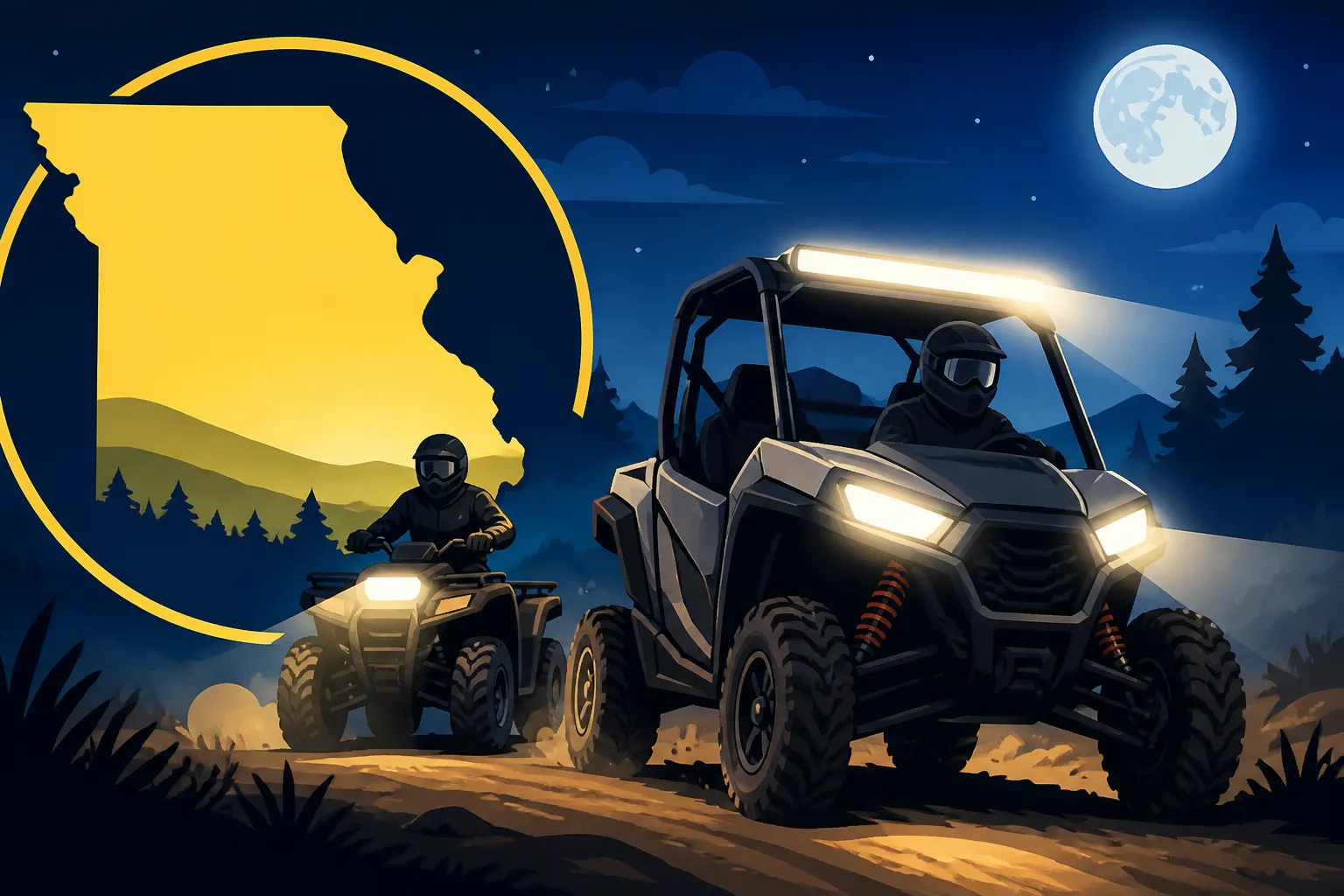
There’s nothing quite like the thrill and serenity of hitting the trails or open fields on your ATV or UTV after the sun dips below the horizon. That crisp, cool air, the stars overhead, and the hum of your machine can make for an unforgettable experience. However, if you're like many riders in Missouri, you've probably pondered the big question: what exactly are the rules for riding an ATV or UTV at night in the Show-Me State? It's a question that often comes with more confusion than clear answers, leaving many wondering if they're even allowed to turn on their headlights. This guide aims to clear up that confusion, providing you with the definitive lowdown on Missouri's night riding regulations so you can enjoy your evening adventures safely and legally.
The Unique Challenges of Night Riding in Missouri
Riding an ATV or UTV during daylight hours presents its own set of considerations, from navigating tricky terrain to staying aware of other riders. Add darkness into the mix, and those considerations amplify significantly. In Missouri, the rules for operating these machines can feel like a patchwork quilt, varying wildly depending on whether you're on public land, private property, or even a local road. This inconsistency is precisely what makes night riding such a head-scratcher for many enthusiasts.
The biggest frustration often stems from the simple fact that what's perfectly legal on your own back forty might land you a citation if you venture onto a state park trail after hours, or worse, a public road without proper authorization. Without adequate lighting, reduced visibility isn't just an inconvenience; it's a major safety hazard, not only for you but for anyone else who might be out there. Plus, the quiet of the night can make sound travel further, leading to potential noise complaints if you're not mindful of local ordinances. It’s a delicate balance between enjoying your machine and respecting the regulations and your surroundings.
Public Land Versus Private Property: Where Darkness Falls Differently
Understanding where you can and cannot ride your ATV or UTV after dark in Missouri really boils down to the type of land you're on. The rules here are distinct, and mistaking one for the other can lead to unwanted trouble.
Riding After Dark on Private Land
When it comes to private property, things are generally much more straightforward. If you own the land, or have explicit permission from the landowner, you usually have the freedom to ride your ATV or UTV at night. This is where most Missouri riders get to fully enjoy their machines after sundown.
Think about it: you're on your own farm, or perhaps at a friend's hunting camp in the Ozarks. As long as you're not creating a public nuisance (like excessively loud exhaust late at night near neighbors) and you're operating safely, the state generally doesn't impose specific time restrictions for private land use. However, even on private land, common sense and safety should always be your top priority. You should still have adequate lighting to see obstacles and be seen by anyone else who might be on the property, especially if there are other vehicles, people, or livestock around. Many riders will equip their machines with additional LED light bars or auxiliary floodlights, which can be easily found from reputable aftermarket suppliers like SuperATV, to turn night into day for tasks like checking fences, moving equipment, or just enjoying a casual ride. This freedom on private land is often the main draw for many to own these versatile machines. [Missouri Rules for Riding Private Land] explains more about the general permissions needed for private property.
Night Riding on Public Lands and ORV Parks
This is where the waters get a bit murkier. Public lands in Missouri, including state parks and national forests, typically have very clear operating hours for their ATV/UTV trails, and these almost always restrict riding to daylight hours. The specific times can vary by park or forest area, often aligning with sunrise and sunset, or having set gates opening and closing times.
For example, popular spots like St. Joe State Park or Finger Lakes State Park have defined ORV park hours. You'll find gates locked and patrols enforcing these times to ensure rider safety, prevent damage to trails, and minimize disturbance to wildlife and other park users. Trying to ride after these hours can result in fines or other penalties. It's crucial to always check the specific rules and operating hours for any public land before planning a night ride. You might find some exceptions for specific events or designated camping areas, but these are usually rare and well-advertised. In national forests, like sections of the Mark Twain National Forest that allow ATV use, the same principle applies: stick to designated trails during designated hours. [Missouri ORV Park Hours] is an excellent resource to check before you load up your machine.
Essential Lighting and Safety Gear for Night Operation
Whether you're on private land or lucky enough to find a public area with extended hours, proper lighting and safety gear are non-negotiable for night riding. The darkness isn't just about what you can see; it's also about being seen.
Minimum Lighting Requirements
Missouri's general statutes regarding off-road vehicles usually focus on daylight operation or specific road-use exceptions. However, when it comes to basic machine operation, the expectation is that if you're riding in conditions of limited visibility, you need lights. For an ATV or UTV, this typically means at least one headlight (white or amber) visible from the front and at least one taillight (red) visible from the rear.
While many stock machines come with adequate lighting for basic use, the reality of night riding often demands more. Navigating uneven terrain, spotting obstacles like fallen branches or deep ruts, or seeing approaching wildlife requires superior illumination. This is where upgrades become essential. Beyond the basic head and tail lights, consider adding:
- LED Light Bars: These provide incredible forward illumination, turning night into a much brighter experience. Brands like SuperATV offer a range of sizes and beam patterns to suit different needs, from spot beams for long-distance visibility to flood beams for wider area illumination.
- Auxiliary Pod Lights: Smaller and versatile, these can be mounted to illuminate specific areas, such as sides, rear, or even interior for UTVs.
- Whip Lights or Safety Flags with Lights: Especially if you're riding in a group or an area where dust can be an issue, lighted whip flags (like the [Missouri Safety Flag Requirements] outlines for some road use, but adapted for visibility) can significantly increase your vertical visibility to other riders. They make it much easier for others to spot you over rises or through dense foliage.
- Brake Lights and Turn Signals: While not always mandated for off-road use, having these functions, especially if your machine might see any limited road use, greatly enhances safety and communication with other riders.
- Backup Lights: In a UTV, having bright rear-facing lights can be a lifesaver when backing up in unfamiliar territory at night.
Here's a quick look at typical lighting considerations:
| Lighting Component | Minimum Requirement (Generally) | Recommended for Night Riding | Purpose |
|---|---|---|---|
| Headlight(s) | 1 white/amber visible front | 2+ bright LEDs/light bar | See forward, illuminate terrain |
| Taillight(s) | 1 red visible rear | 2 red, often integrated | Be seen from behind |
| Brake Light(s) | Often integrated with taillight | Separate, brighter | Signal stopping to others |
| Auxiliary Lights | None | Light bars, pod lights, rock lights | Enhance visibility in all directions, specific tasks |
| Whip Light | None (unless mandated by park) | LED illuminated whip | Increase vertical visibility, group riding |
Other Crucial Safety Gear
Beyond lights, your personal safety gear remains paramount.
- Helmet: Always wear a properly fitted helmet. The [Missouri Helmet Law for Riders Under 18] requires it for minors, but for adults, it's just plain smart, day or night. A clear visor is essential for night riding, or goggles with clear lenses.
- Eye Protection: Goggles or glasses are critical to protect against dust, bugs, and branches, which are even harder to spot at night.
- Protective Clothing: Long sleeves, pants, gloves, and sturdy boots protect against scrapes, impacts, and the elements.
- First-Aid Kit: Always carry one, and know how to use it.
- Navigation: A GPS device or a fully charged phone with trail maps can prevent you from getting lost, which is significantly more dangerous in the dark.
- Communication: A two-way radio or cell phone (with awareness of cell dead zones in some rural parts of Missouri) is vital in case of an emergency.
- Tools & Repair Kit: A basic tool kit, tire repair kit, and possibly a winch (if you're riding alone or in challenging terrain) can get you out of a bind.
Road Use and Special Permits at Night
This is arguably the most complex area for ATV and UTV riders in Missouri, and night riding adds another layer of scrutiny. Generally, ATVs and UTVs are not street legal in Missouri. There are very specific exceptions, and these exceptions come with their own set of rules, which are even stricter at night.
The 3-Mile Rule and Special Permits for UTVs
Missouri law does have specific provisions that can allow UTVs (but generally not ATVs) to operate on certain public roads. The most common of these is the "3-Mile Rule for Side-by-Sides" which permits a UTV owner to ride up to three miles from their residence for specific purposes, usually only on county roads or city streets where an ordinance permits. There's also the option of obtaining a [Missouri Special Permit for Road Use] from a local jurisdiction (city or county).
If you are operating a UTV on a road under one of these exceptions, especially at night, you must adhere to all applicable motor vehicle laws for that road. This includes:
- Proper Headlights and Taillights: These must be functional and meet visibility standards, just like a car.
- Brake Lights: Essential for signaling stops.
- Turn Signals: Required for indicating turns.
- Reflectors: Additional reflective material can enhance visibility.
- Rearview Mirrors: Required on public roads.
- Safety Flag: While [Missouri Safety Flag Requirements] usually apply to daylight hours and specific contexts, ensuring your UTV is highly visible in all conditions is key.
- Driver's License: You must possess a valid operator's or chauffeur's license.
- Insurance: Proof of financial responsibility (insurance) is often required. [Missouri ATV Insurance Requirement] would typically apply to street-legal usage of any vehicle.
The key takeaway here is that driving a UTV on a public road, even under a special permit, means you are effectively operating a low-speed vehicle and must meet a higher standard of safety and equipment, especially after dark. Always check with your local county or city police department for their specific ordinances and requirements, as they vary widely. Some cities have opened their streets to UTVs with permits, like Harrisonville, but these rules usually involve explicit stipulations for night operation.
Agricultural and Industrial Use
Missouri also has exceptions for ATVs and UTVs used for agricultural purposes or industrial purposes on private property. For agricultural use, a machine may be operated on public roads for limited distances between sunrise and sunset for the sole purpose of farm business. This means night use on public roads for agricultural purposes is generally restricted.
For industrial use on private property, the rules are typically set by the property owner, but again, safety and appropriate lighting are expected for night operation. This is less about state law and more about workplace safety and liability.
Planning Your Night Riding Adventure
Since night riding isn't a free-for-all, careful planning is your best friend.
- Know Your Location:
- Private Land: Confirm permission and ensure it's safe for night operation.
- Public Land: Always check current operating hours. Do not assume you can ride after dark. [Where to Ride an ATV in Missouri] can help you find suitable locations, but then you must check their specific rules.
- Roads: Understand the very limited circumstances where road use is allowed, and confirm local permits and ordinances.
- Inspect Your Machine: Before every night ride, thoroughly check all lights (headlights, taillights, brake lights, auxiliary lights), ensuring they are clean, functional, and properly aimed. Check your tires, brakes, and fluid levels.
- Charge Your Devices: Ensure your phone, GPS, and any communication devices are fully charged.
- Tell Someone Your Plan: Let a friend or family member know where you're going and when you expect to return. This is critical for any off-road adventure, but especially so at night.
- Ride Within Your Limits: Night riding reduces visibility, so slow down, be extra cautious, and avoid taking unnecessary risks. What might be an easy trail during the day can become a major challenge when you can't see beyond your lights.
By understanding these regulations and prioritizing safety, you can make the most of those magical night rides on your Missouri ATV or UTV.
Disclaimer
This article is for general informational purposes only and does not constitute professional advice. Laws, prices and regulations vary by location and change over time. Consult a qualified professional for guidance on your specific situation.