Missouri Rules for Crossing a Highway
It’s a scenario many Missouri ATV owners have faced: you're out enjoying the trails, maybe heading to a friend's property, or even just working on your own land, and suddenly, there's a paved highway standing between you and where you need to go. That moment of hesitation, the quick glance left and right, the debate in your head about whether it’s even allowed – it's a real and common frustration. This guide is here to clarify Missouri's rules for crossing highways on your ATV, helping you understand when it's permissible, how to do it safely, and what limitations you absolutely need to respect.
The General Rule: ATVs Are Not Road Vehicles in Missouri
Let's just get this out of the way upfront: in Missouri, your ATV is generally considered an off-road vehicle, not something meant for regular street or highway travel. This isn't just an arbitrary rule; it's rooted in how these machines are designed and the significant safety differences they have compared to vehicles built for pavement. Trying to treat your ATV like a car on a state highway can lead to dangerous situations and, unfortunately, costly legal trouble. It’s a bitter pill to swallow for riders who just want to get from Point A to Point B, but understanding this fundamental distinction is the first step to staying safe and legal.
Why ATVs Aren't Designed for Highways
When you look at your ATV, you see a powerful, agile machine built to conquer dirt, mud, rocks, and uneven terrain. Its knobby tires, high ground clearance, responsive steering, and often stiff suspension are all optimized for off-road performance. These very features, however, become serious liabilities on paved roads and highways. Think about it: those aggressive tires that claw through mud offer very little grip on asphalt, especially when wet, and they wear down incredibly fast. The suspension designed to absorb huge bumps can make the machine feel unstable at higher speeds on smooth surfaces, and the brakes, which are fantastic for quickly scrubbing speed off-road, can cause skidding and control loss on pavement. Even the general lack of occupant protection, turn signals, and robust lighting that are standard on road vehicles highlights the core difference. It's a bit like trying to use a racehorse to pull a plow – technically possible, but it’s not what it was bred for, and it’s not going to be efficient or safe.
The Legal Framework for ATVs vs. Other Vehicles
Missouri law makes a clear distinction between various types of off-road machines, and this is crucial when discussing highway use. An ATV, or All-Terrain Vehicle, is defined by certain characteristics like having a straddle seat, handlebars, and typically being under 1,500 pounds dry weight, with some specific width limitations for state park use. These machines are treated differently than, say, a UTV (Utility Terrain Vehicle) or an ROV (Recreational Off-Highway Vehicle), which often have side-by-side seating, steering wheels, and roll bars. Because of these differences, UTVs and ROVs have a few more specific exceptions for road use, often requiring things like special local permits, a driver's license, and additional safety equipment like seatbelts and turn signals. ATVs generally don't have these options for widespread road-legality. It's a nuanced area of law, and understanding [Why Missouri Splits ATVs, UTVs and ROVs] can help clarify why your quad might not have the same road privileges as your friend's side-by-side. For an ATV, the default position is firmly off-road, with only very specific, limited exceptions for any kind of interaction with a public highway.
Permitted Highway Crossings for ATVs
While driving your ATV along a highway is almost universally prohibited in Missouri, there are specific, narrow circumstances where you are legally allowed to cross a state-maintained highway. These exceptions are designed to accommodate practical needs, not to open the door for joyriding on public roads. It's vital to remember that these are exceptions to a strict rule, and they come with their own set of requirements and expectations for rider behavior. Thinking of these as mere loopholes is a dangerous mindset; they are conditional permissions that demand utmost caution and adherence to the spirit of the law, which is about minimal, safe interaction with highway traffic.
Crossing at Right Angles
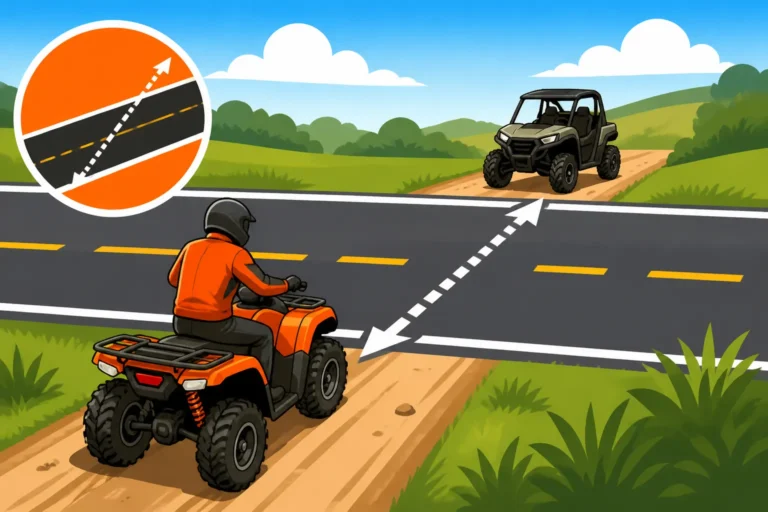
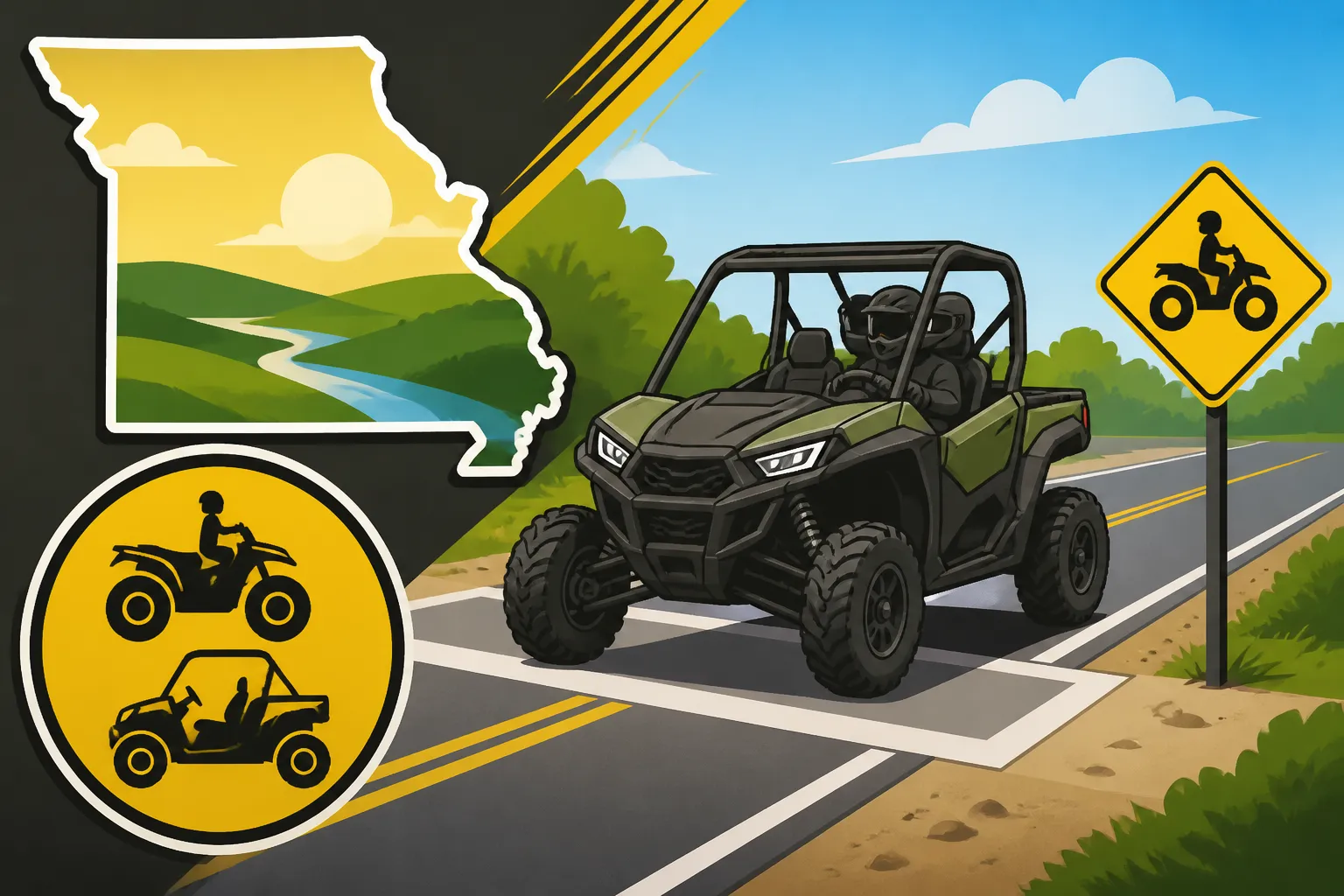
This is perhaps the most common and often misunderstood exception. Missouri law generally permits an ATV to cross a highway, but only under very specific conditions. You must cross at a right angle, meaning you go straight across, not diagonally, and certainly not turn and drive down the shoulder. The crossing needs to be done safely, which implies good visibility in both directions, no impeding of traffic, and at a speed appropriate for the crossing. The intent is to get from one side of the road to the other as quickly and directly as possible, minimizing the time you are exposed to highway traffic. Imagine you’re moving between two sections of your property, or connecting two trails that are bisected by a road; this is the kind of situation this rule addresses. You should come to a complete stop, look both ways multiple times, and only proceed when it is absolutely clear and safe to do so, without forcing any oncoming traffic to slow down or swerve. It’s a very quick dash across the pavement, not a leisurely roll.
Agricultural Exemptions for ATVs
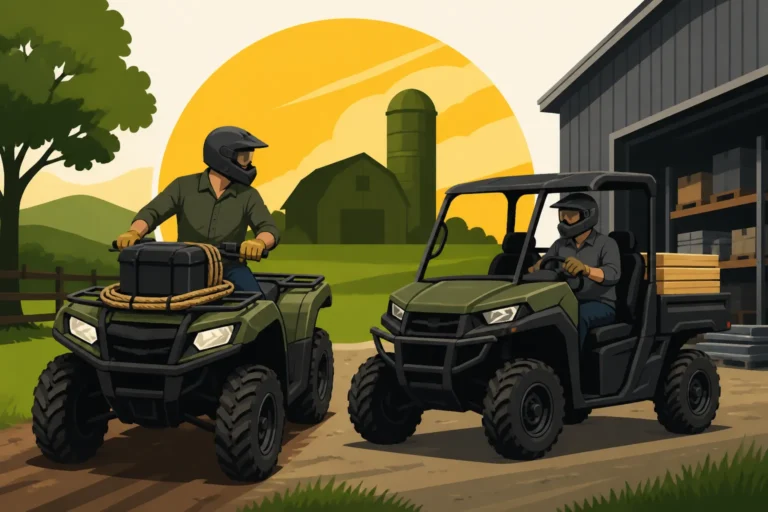
Missouri offers specific allowances for ATVs used for agricultural purposes, and this can include some limited road interactions. If your ATV is being used exclusively for agricultural purposes, you might be allowed to operate it on a public road or highway for short distances, or to cross them, but only between the hours of sunrise and sunset. This exemption is typically for farmers moving between fields, checking livestock, or transporting small equipment, and it's strictly tied to the nature of the work. You can't just slap a bale of hay on your rack and call it "agricultural use" if you're actually heading to the gas station for a soda. This isn't a blanket pass to use the roads; it's a very specific carve-out for genuine farm work. It’s also important to note that this doesn't waive general safety requirements. Even under this exemption, you're expected to operate your ATV as safely as possible, maintain visibility, and yield to all other traffic. Knowing [Missouri Agricultural Use From Sunrise to Sunset] in detail is crucial if you plan to utilize this provision.
Crossing for Business/Industrial Use
Beyond agriculture, there's a similar, though perhaps even more narrowly defined, exception for ATVs used for industrial or business purposes. This generally applies to machines operated "on the premises" of a business or industry, or for a "short distance" for these purposes. Think about utility workers inspecting lines, survey crews moving equipment, or construction workers on a large site that might be bisected by a road. The key here is the direct link to bona fide industrial or business operations and the very short duration or specific location of the road use. Like the agricultural exemption, this is not a general permission. It requires the ATV use to be directly incidental to the work being performed, and again, only with the utmost safety and minimal interference with regular traffic. You're not going to see an ATV delivering pizzas on the highway under this rule!
Special Considerations and Safety for Crossings
Even when you're legally permitted to cross a highway, safety should always be your absolute top priority. These are powerful machines that lack the protective features of cars, and highway speeds are unforgiving. Taking every possible precaution isn't just a good idea; it's an essential part of responsible ATV ownership in Missouri. Preparing your machine and yourself for these brief interactions with faster traffic can make all the difference in avoiding an accident or a ticket.
Visibility and Safety Gear
When you're making a quick dash across a highway, you need to be seen. Period. Your ATV is small compared to cars and trucks, and its lights might not be as bright or as easily distinguishable as a road vehicle's. This means you need to go above and beyond to make yourself visible. Wearing bright, even fluorescent, clothing is a must. If your ATV allows for it, consider adding additional lighting or reflective tape. While typically discussed for side-by-sides, the concept of a safety flag is incredibly important for any off-road vehicle briefly interacting with roads. A tall, brightly colored flag, especially one with a reflective stripe, can significantly increase your visibility to oncoming traffic, particularly over hills or around curves. Think about products from companies like SuperATV that offer a wide range of lighting upgrades, whips, and safety flags designed for off-road use; some of these can be incredibly beneficial for these quick, critical moments of highway crossing. Even if it's not strictly required for a fleeting crossing, making yourself impossible to miss is smart. And, of course, always wear a helmet – it's the law for riders under 18 in Missouri and a wise choice for everyone. For more on specific flag requirements for other machines, you might read about [Missouri's 7-Foot Safety Flag].
Understanding Local Ordinances and Their Limits
This is where things can get confusing. Many cities and counties in Missouri have passed ordinances that allow UTVs and sometimes even ATVs to be ridden on local streets, often with specific speed limits, hours, and permit requirements. This is fantastic for local access, but it's critically important to understand that a city or county ordinance does not override state law regarding state highways. Just because you have a permit to ride your UTV on the streets of Lake Ozark doesn't mean you can drive it on Highway 54. The jurisdiction changes, and so do the rules. If you're using your ATV for agricultural purposes and need to cross a state highway, that specific state exemption applies, but you can't piggyback on a local ordinance for general road use. Always check the specific wording of any local permit or ordinance, and understand its geographic and jurisdictional limits. This is a common pitfall that can lead to unexpected fines and citations. Trying to understand [Does a City Permit Work in the Next Town?] will highlight how localized these rules can be, and how they don't extend to state roads.
The Consequences of Improper Highway Use
Ignoring the rules for highway crossings, or attempting to use your ATV as a street-legal vehicle when it isn't, can have serious repercussions. The most immediate consequence is typically a citation or fine. Missouri deputies and highway patrol officers are well-versed in the distinction between off-road vehicles and road-legal ones. They know the rules, and they're generally not going to let a blatant violation slide, especially if it creates a safety hazard. Fines for illegal road use can range significantly, and they can add up quickly. Beyond the financial penalty, there's the risk of having your ATV impounded, which means even more fees to retrieve it. More importantly, using your ATV improperly on a highway puts you and others at extreme risk of an accident. ATVs are simply not built for those speeds or traffic volumes. If an accident occurs while you're illegally operating your ATV on a highway, your insurance might not cover the damages, leaving you personally liable for potentially massive costs, injuries, or worse. The thrill of a quick, illicit spin on the pavement is simply not worth the potential fines, damage, or danger. Always err on the side of caution and adhere to the strict letter of the law when it comes to highway crossings. Understanding [Missouri Fines for Illegal ATV Road Use] can provide a stark look at the financial consequences.
Here's a quick reference table to help clarify permitted vs. generally prohibited ATV road use in Missouri:
| Type of Road Use | ATV (All-Terrain Vehicle) | UTV/ROV (Utility/Recreational Off-Highway Vehicle) | Key Considerations |
|---|---|---|---|
| Driving on a Highway | Generally Prohibited. No driving along for extended distances. | Generally Prohibited. Exceptions may apply with local permits (see below). | Dangerous due to speed differences, lack of protection, and design. |
| Crossing a Highway | Permitted at Right Angles, Safely. Must yield to all traffic, minimize time on pavement. | Permitted at Right Angles, Safely. Same rules as ATVs for direct crossing. | Always stop, look both ways, cross quickly and directly. |
| Agricultural Use on Roads | Permitted for Short Distances, Sunrise-Sunset. Must be for bona fide farm purposes. | Permitted for Short Distances, Sunrise-Sunset. Same rules as ATVs for farm work. | Requires actual agricultural activity. |
| Business/Industrial Use | Permitted for Short Distances/On Premises. Must be directly related to business operations. | Permitted for Short Distances/On Premises. Same rules as ATVs for work. | Must be essential for work; very limited scope. |
| Local City/County Streets | Generally Prohibited. Some very rare local ordinances might include ATVs, but it's uncommon. | Often Permitted with Local Permit. Requires permit, driver's license, specific safety gear. | Check local ordinances carefully; does not apply to state highways. |
| State Park Roads | Prohibited outside designated ORV areas. | Prohibited outside designated ORV areas. | Check park-specific rules; often limited to staging areas or specific trails. |
Remember, this table provides a general overview. Always consult the specific Missouri statutes and local ordinances that apply to your situation, and when in doubt, keep your ATV off public paved roads.
Disclaimer
This article is for general informational purposes only and does not constitute professional advice. Laws, prices and regulations vary by location and change over time. Consult a qualified professional for guidance on your specific situation.