Crossing a State Route at an Angle
It can feel like a real headache when you're out enjoying the trails or working on your property, and suddenly, a state route stands between you and where you need to be. Whether you're heading to another section of your land, accessing a different trail system, or just trying to get to a local gas station, the thought of crossing a busy highway on your ATV or UTV can be daunting and confusing. The laws aren't always crystal clear, and the fear of getting a ticket or, worse, being involved in an accident, is a legitimate concern. This guide is here to untangle the complexities of Missouri law regarding crossing state routes with your off-road machine, helping you understand when, how, and if you can do it safely and legally.
Understanding Missouri's General Road Rules for ATVs and UTVs
Missouri's approach to off-road vehicles on public roads, especially state routes, can be a bit of a maze. It’s not a one-size-fits-all situation, and the rules really depend on what kind of machine you're riding and for what purpose. Before we even talk about crossing, it's crucial to understand the foundational differences in how the state sees ATVs versus UTVs or Recreational Off-Highway Vehicles (ROVs). These distinctions are the key to unlocking whether you have any legal standing on a state route at all.
The Core Distinction: ATVs vs. UTVs on Roads
In Missouri, an All-Terrain Vehicle (ATV) is generally defined as any motorized vehicle manufactured and used exclusively for off-highway use, 50 inches or less in width, with a dry weight of 1,500 pounds or less, traveling on three or more low-pressure tires, and having a seat designed to be straddled by the operator. Now, for the most part, ATVs are explicitly restricted from operating on public streets, roads, or highways in Missouri. There are very few exceptions that allow an ATV to touch pavement, and those exceptions are usually tied to specific agricultural use or local ordinances that explicitly permit them on certain roads, which is rare for state routes.
On the other hand, Utility Vehicles (UTVs) and Recreational Off-Highway Vehicles (ROVs) are a bit different. While they are also primarily designed for off-highway use, Missouri law has carved out some very specific allowances for them on public roads that ATVs don't share. These machines are typically wider, heavier, and often have side-by-side seating, steering wheels, and seatbelts. Because of these design differences, the state views their potential for limited road use differently. This distinction is paramount, as many of the allowances you hear about, like the famous 3-mile rule, apply only to UTVs and ROVs, not traditional ATVs. You can learn more about [What the Law Calls a Recreational Off-Highway Vehicle] to better understand this classification.
The Scarcity of ATV Road Access
It's a frustrating reality for many ATV riders in Missouri: access to state routes is incredibly limited. Unlike UTVs, which have a few more defined pathways to public road use, ATVs are largely confined to private land, designated trails, or very specific agricultural operations. The state highway patrol and local law enforcement are generally quite strict on this. If you’re riding a traditional ATV, the default assumption should always be that you cannot be on a state route, even for a quick crossing. This can make connecting trails or getting from one part of your property to another, if separated by a highway, feel impossible.
However, there is a very important exception that applies to both ATVs and UTVs when used for agricultural purposes, which we'll dive into shortly. But for purely recreational ATV riding, you typically won't find a legal way to cross a state route unless it's part of a very specific, limited local ordinance for certain city or county roads, which almost never extends to state highways. This is why many riders trailer their ATVs to different locations rather than attempting to ride them across major thoroughfares. The best general answer to [Are ATVs Street Legal in Missouri?] is almost always "no" for state routes.
Specific Rules for Crossing a State Route at an Angle
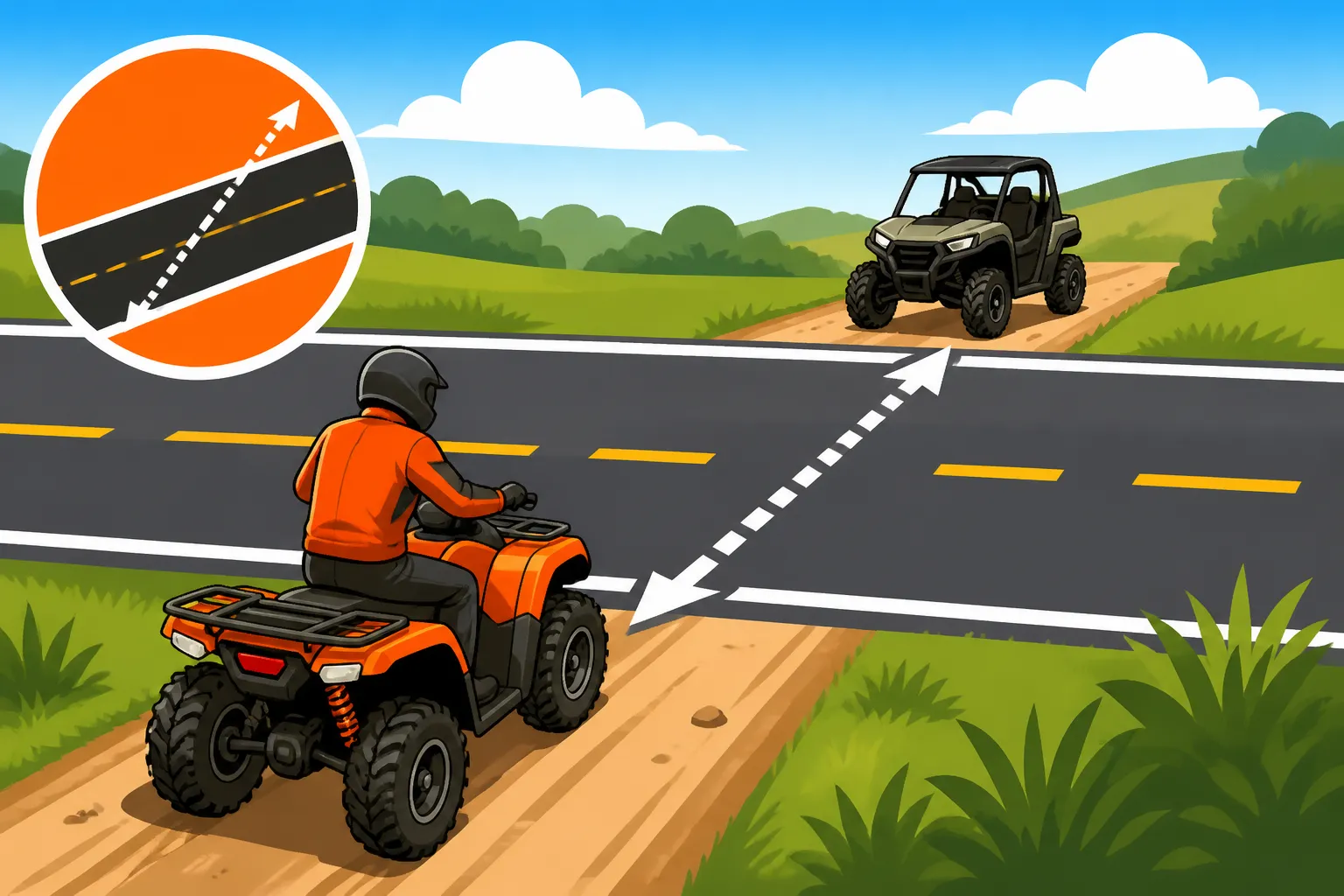
The question of crossing a state route "at an angle" is interesting because it implies a less direct, perhaps longer path across the road than a straight, perpendicular crossing. Legally, the angle of your crossing isn't usually the primary factor; rather, it's whether you are permitted to be on that road at all that matters most. However, safety considerations certainly play into how you execute any crossing.
When a UTV Might Cross (The 3-Mile Rule and Local Ordinances)
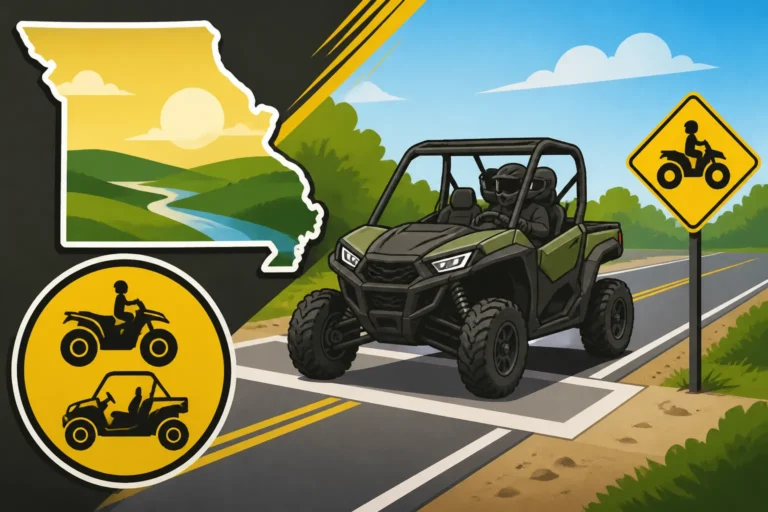
For those of you with a UTV or ROV, there's a bit more wiggle room when it comes to road access, which can include crossing a state route. The most widely known allowance is Missouri's "3-Mile Rule." This statute permits a UTV or ROV to be driven on state highways for a distance not to exceed three miles from the operator's home or a farm, for purposes directly related to agricultural or commercial operations, or for accessing recreational areas. However, this is a very specific rule, and it comes with conditions: the UTV must be equipped with lights, brakes, a horn, and [Missouri Safety Flag Requirements] (a flag at least 7 feet above the ground, 30 square inches of day-glow orange). This rule is crucial for those who live near trails or have property split by a state route. It's important to understand [Missouri's 3-Mile Rule for Side-by-Sides] thoroughly.
Beyond the state's 3-mile rule, many cities and counties in Missouri have taken the initiative to pass local ordinances that allow UTVs (and sometimes even ATVs, though less commonly for state routes) on their public streets within their jurisdiction. If you're fortunate enough to be in one of [Missouri Towns That Opened Their Streets] or a county with such an ordinance, and that ordinance specifically includes the state route segments within its boundaries, then crossing might be permitted as part of your authorized road use. However, these permits often come with their own fees and equipment requirements. You might need a [Missouri Special Permit Cost for ATVs] (which applies to ROVs as well) to legally operate on these roads. Always check with the local city hall or county sheriff's office to understand the specific rules for your area.
The Agricultural Highway Exception
This is arguably the most significant exception that allows both ATVs and UTVs onto state routes, even for crossing. Missouri law explicitly states that off-road vehicles can be operated on public roads and highways for agricultural purposes. This includes activities directly related to farming, such as moving between fields, accessing farm equipment, hauling supplies, or checking livestock. The key here is that the operation must be "for agricultural purposes," and it must generally be conducted between [Missouri Agricultural Use From Sunrise to Sunset].
If you're using your ATV or UTV, perhaps even a heavily accessorized one from a brand like SuperATV that can handle tough farm tasks, to move fence posts or check on cattle across a state highway, this exception likely applies. This is not a free pass to joyride; the intent and activity must be clearly agricultural. For instance, if you're taking your quad to pick up groceries, that's generally not considered an agricultural purpose, even if you live on a farm. This specific allowance is what often permits farmers to safely [Crossing a Missouri Highway on a Quad] or side-by-side for necessary farm work.
Safety Considerations and Best Practices
Regardless of whether you are legally permitted to cross a state route, safety must be your absolute top priority. State routes are high-speed, high-traffic corridors, and your off-road machine is not designed for highway speeds or heavy vehicle interaction. If you must cross, approach it with extreme caution. Always choose the shortest, most direct route across the highway if possible, even if the query mentions "at an angle." An angled crossing generally means you are on the pavement longer and potentially obstructing traffic flow for a greater duration. If an angled crossing is unavoidable due to terrain or access points, exercise even greater vigilance.
Before you even think about putting tires on the pavement, make sure your machine is as visible as possible. This means working headlamps and taillamps, and the required [Missouri Safety Flag Requirements] if you're operating under the 3-mile rule or a local ordinance. Brightly colored riding gear, helmets (especially if you're under 18, as required by Missouri law), and signaling your intentions are also critical. Slow down, look both ways multiple times, listen for approaching vehicles, and wait for a clear gap in traffic. Never assume drivers see you. Even if you're riding a rugged SuperATV machine, it's still small compared to a semi-truck at 60 mph.
Practical Steps and What to Expect from Law Enforcement
Navigating the complexities of Missouri's ATV and UTV road laws can feel like a guessing game. It's not just about knowing the rules; it's about applying them correctly and being prepared for interactions with law enforcement. Understanding the practical steps you need to take before and during a crossing, as well as the potential consequences of missteps, can save you a lot of grief.
Before You Even Think About Crossing
The preparation phase is critical. First, accurately identify your machine. Is it truly an ATV (straddle seat, handlebars, 50 inches wide or less, 1,500 lbs dry weight or less) or is it a UTV/ROV (side-by-side seating, steering wheel, often wider/heavier)? This distinction, as discussed, is paramount, as many of the limited road access provisions apply only to UTVs/ROVs. You might also want to consult [Do You Need to Register a UTV in Missouri?] to understand any other associated requirements, even if it's not a registration that affects road use directly.
Next, research the specific local ordinances for the county or city where you plan to cross. Do not assume. What's legal in one town like Lake Ozark might not be in the next, even if they're close. [Does a City Permit Work in the Next Town?] The answer is often "no," meaning you need to know the rules for each jurisdiction. If a local permit is required, ensure you've obtained it and have proof with you. For UTVs operating under the state's 3-mile rule or a local ordinance, confirm your machine meets all equipment requirements: functioning headlights, taillights, brake lights, a horn, and the critical 7-foot tall [Missouri Safety Flag Requirements]. Brands like SuperATV offer a variety of aftermarket lighting and safety accessories that can help ensure your UTV meets these crucial requirements.
Finally, have all your paperwork in order. This includes your machine's title, proof of insurance if required by a local permit or [An Operator's or Chauffeur's License in Missouri] if operating a road-legal UTV. While Missouri doesn't have a state-level ATV/UTV registration in the same way it does for cars, you might have a decal if you've titled your ATV, and local road permits are a separate piece of paper entirely.
Performing the Crossing Safely
When it's time to actually cross, treat it with the same seriousness as crossing railroad tracks. Come to a complete stop before the roadway. Look left, then right, then left again. Listen for approaching traffic. Your off-road machine is quieter than a car, but cars are much faster. Wait for a clear, safe gap in traffic – one that gives you ample time to cross without having to rush or cause oncoming vehicles to brake or swerve. If you have turn signals, use them. If not, clear hand signals indicating your direction of travel or intent to cross are a good idea.
Execute the crossing as directly and efficiently as possible. While the query asks about "at an angle," remember that a more perpendicular crossing generally minimizes the time you are exposed to traffic and lessens the potential for impeding traffic flow. If an angled crossing is absolutely unavoidable due to terrain or access, then proceed with even greater caution and be hyper-aware of traffic from all directions for a longer period. Get across the travel lanes and onto the shoulder or into the next off-road area as quickly and safely as you can.
Potential Consequences of Illegal Crossing
Ignoring Missouri's road rules for ATVs and UTVs, especially on state routes, carries significant risks. The immediate concern is the possibility of an accident. Off-road tires, limited suspension travel, and slower acceleration make ATVs and UTVs ill-suited for highway conditions. Collisions with full-size vehicles at highway speeds can be devastating, resulting in serious injury or fatality for the off-road vehicle operator, and damage to all vehicles involved.
Beyond safety, law enforcement officers are tasked with enforcing these statutes. If you're caught illegally operating an ATV or UTV on a state route, even for a quick crossing, you could face [Missouri Fines for Illegal ATV Road Use]. These fines can be substantial and, depending on the specifics, might even constitute a Class C Misdemeanor. This could mean not just a monetary penalty but also points on your driver's license, if you have one, or other legal repercussions. For example, some jurisdictions might have fines upward of a few hundred dollars. In some cases, your machine could even be impounded. The cost and hassle of dealing with a citation far outweigh the momentary convenience of an illegal crossing. Always prioritize legality and safety over speed or perceived convenience.
| Aspect | All-Terrain Vehicle (ATV) | Utility Vehicle (UTV)/Recreational Off-Highway Vehicle (ROV) |
|---|---|---|
| Definition | Straddle seat, handlebars, typically 50" wide or less, 1,500 lbs dry weight or less, three or more low-pressure tires. | Side-by-side seating, steering wheel, often wider/heavier than ATVs, equipped with roll bars/seatbelts. |
| General Road Use | Generally not permitted on public roads/highways (including state routes). Very limited exceptions. | Limited permission on public roads/highways, primarily through the 3-mile rule or local ordinances. |
| Crossing State Route | Highly restricted. Only legally permissible under the [Missouri's Agricultural Highway Exception] or rare, explicit local ordinance that covers state routes. | Permissible under specific conditions. This includes the 3-mile rule (for agricultural/commercial/recreational access) or if authorized by local ordinances (e.g., [Missouri Towns That Opened Their Streets]) that explicitly cover segments of state routes. |
| Agricultural Exception | Yes, can be operated on roads for direct agricultural purposes from sunrise to sunset. | Yes, can be operated on roads for direct agricultural purposes from sunrise to sunset. |
| Required Equipment for Road Use (if permitted) | Minimal, but often requires a slow-moving vehicle sign or specific lighting for agricultural use. | Must meet equipment standards if using the 3-mile rule or local permit: working head/taillights, brake lights, horn, [Missouri Safety Flag Requirements] (7 ft high, 30 sq. in. day-glow orange), and potentially seatbelts/roll bars depending on local rules. |
| Permits/Decals | Missouri issues a [Missouri's Three-Year ATV Decal] for off-road use, but this does not authorize road operation. | No state-level "registration" for road use, but local permits (from cities/counties) are often required for authorized road access. |
| Penalties for Illegal Use | [Missouri Fines for Illegal ATV Road Use] (Class C Misdemeanor possible), potential impoundment, accident risk. | [Missouri Fines for Illegal ATV Road Use] (Class C Misdemeanor possible), potential impoundment, accident risk. |
Disclaimer
This article is for general informational purposes only and does not constitute professional advice. Laws, prices and regulations vary by location and change over time. Consult a qualified professional for guidance on your specific situation.