Proof of Insurance Under a Missouri Ordinance
Riding your ATV or UTV on local roads in Missouri can feel like navigating a maze of ever-changing rules, and one of the most common stumbling blocks is figuring out exactly what kind of insurance you need, and how to prove you have it. It's incredibly frustrating when you just want to connect a few trails or run to the local store, only to realize the state's hands-off approach leaves you deciphering city or county ordinances. This guide aims to demystify the proof of insurance requirements under these local Missouri ordinances, helping you understand what's expected to keep your ride legal and worry-free.
The Shifting Landscape of Missouri's Local ATV and UTV Ordinances
For years, the general rule in Missouri has been pretty straightforward: ATVs and UTVs aren't street legal. This often left riders feeling stuck, unable to legally access gas stations, connect between trail systems, or even drive from their property to a nearby field without risking a ticket. But over time, a groundswell of local communities, recognizing the economic and recreational benefits, began to carve out exceptions. This is where the complexity comes in, as each city or county can set its own specific rules.
Why Local Rules Emerge
Missouri's state statutes largely categorize ATVs and UTVs as off-road vehicles. This means they're not designed or permitted for general use on public highways, unlike cars or trucks. However, the state also provides a mechanism for local municipalities to create their own ordinances that allow for limited street use within their jurisdiction. This local control is why you might find one town embraces UTVs on its streets, while the next town over strictly forbids it. It's a patchwork quilt, and you have to check the threads in each community.
Riders in many areas simply want to be able to enjoy their machines without the hassle of constantly trailering them short distances. Maybe you live just a mile down a gravel road from a gas station, or your favorite trails are bisected by a county road. The desire for practical, convenient access has pushed many local governments to explore these ordinances, hoping to strike a balance between allowing recreational and utility use and ensuring public safety.
The Core Requirement: Local Permit and State License
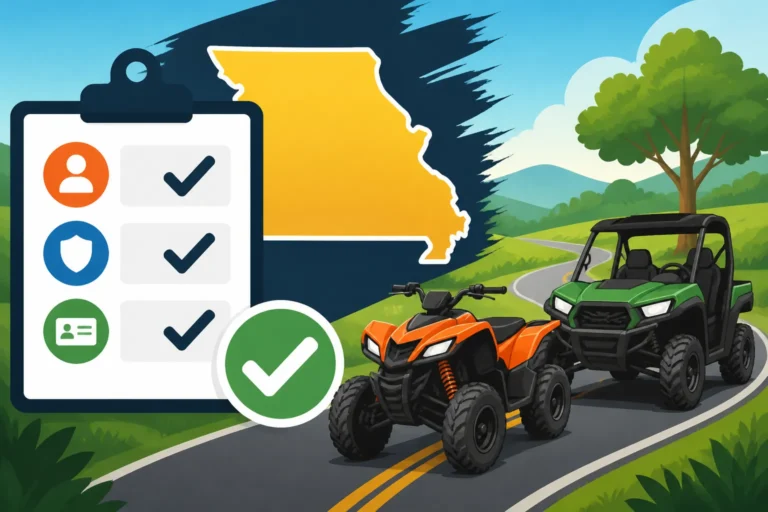
Almost universally, if a Missouri city or county opens its roads to ATVs or UTVs, it will require you to obtain a specific local permit. This isn't the same as the state's off-road decal for ATVs, which is solely for identification and trail access on public lands. Instead, it's a separate document issued by the local government – often the city hall, police department, or county sheriff's office – that grants you permission to operate your machine on their specific roads. This permit signifies you've acknowledged and agreed to abide by their rules. [Missouri Special Permit for Road Use] details more about how these permits function.
Beyond the local permit, you'll also invariably need a valid Missouri driver's license, or an equivalent from another state. The logic here is simple: if you're operating a vehicle on public roads, even an ATV or UTV, you need to demonstrate that you possess the basic skills and legal authorization to drive. This ensures a minimum standard of competence for anyone sharing the road with other motorists. [Missouri Driver's License Rules for ROVs] further explains the specific license requirements for these types of vehicles when driven on public thoroughfares.
Unpacking the "Proof of Insurance" Mandate
Once a city or county decides to allow ATVs or UTVs on its roads, it immediately introduces a new layer of risk and liability that wasn't present when these machines were strictly confined to private land or dedicated trails. To mitigate this, a critical component of nearly every local ordinance is the requirement for "proof of insurance." This isn't just about ticking a box; it's about safeguarding everyone on the road.
Why Insurance Becomes a Must for Road Use
Think about it: when you drive your car, you're required to have insurance. The moment you take an ATV or UTV off the dirt and onto a paved road, it's subject to the same potential hazards and legal responsibilities as any other motorized vehicle. If you're involved in an accident – even if it's not your fault – there's the potential for property damage, personal injury, and significant financial liability. Without insurance, you, as the operator, would be personally responsible for covering these costs, which can quickly spiral into the tens or even hundreds of thousands of dollars.
Local governments mandate insurance not to be punitive, but to ensure that if an incident occurs, the innocent parties involved have a means of recovery. It’s about being a responsible road user and protecting yourself, your passengers, and anyone else you might encounter. Nobody wants to be the person who causes an accident and then realizes they have no way to pay for the damages, facing lawsuits that could wipe out their savings.
What Kind of Insurance Do Local Ordinances Expect?
Typically, when a Missouri ordinance requires proof of insurance for an ATV or UTV on public roads, it's referring to liability insurance. This is the most basic form of coverage and is designed to protect other people and their property if you are at fault in an accident. It covers things like medical bills for injuries to others, and repairs to their vehicle or property. It doesn't cover damage to your own ATV or UTV, or your own medical expenses.
The specific minimum coverage amounts, just like with car insurance, are usually set by state law for automobiles. However, a local ordinance might specify that your off-road vehicle policy must meet or exceed those state minimums, treating your ATV or UTV like any other vehicle on their streets. It's absolutely crucial to consult the exact wording of the ordinance in the city or county where you plan to ride. While we can't give specific dollar amounts here, understand that these minimums are often expressed as a series of numbers (e.g., "$X for bodily injury per person, $Y for bodily injury per accident, and $Z for property damage"). Your insurance provider will understand these figures. For a broader overview of coverage options, you might find information on [Missouri ATV Insurance Requirement] helpful, but remember to always verify with your local municipality.
Navigating the Insurance Provider Landscape
Finding the right insurance for your ATV or UTV, especially when you plan to use it on public roads under a local ordinance, isn't always as simple as calling your existing auto insurance provider. These machines have unique risk profiles, and standard policies often have gaps that could leave you exposed.
Standard Auto Policies Rarely Cut It
It’s a common misconception that your regular car insurance policy might automatically extend to cover your ATV or UTV, especially if it’s briefly on a road. Unfortunately, this is almost never the case. Most standard auto insurance policies are designed specifically for vehicles registered and intended for highway use, like cars, trucks, and motorcycles. ATVs and UTVs, by their very definition, are generally classified as off-road vehicles. Your auto policy typically has explicit exclusions for damage or liability arising from the operation of such vehicles.
Even if your auto insurer does offer some form of off-road vehicle coverage, it often comes as a separate policy or a highly specialized endorsement, and even then, it might specifically exclude public road use. This is why simply carrying your car insurance card won't suffice when a deputy pulls you over for riding your UTV on a town street. The policy language matters immensely, and assuming coverage without confirmation is a recipe for trouble.
Dedicated Off-Road Vehicle Insurance
The best and most reliable solution for covering your ATV or UTV, particularly for authorized road use, is a dedicated off-road vehicle (ORV) insurance policy. These policies are specifically tailored to the unique risks associated with ATVs, UTVs, side-by-sides, and other powersports vehicles. They understand that these machines will be subjected to different terrains, speeds, and usage patterns than a typical car.
A comprehensive ORV policy can offer a range of protections, much like auto insurance:
- Liability Coverage: As discussed, this is the most critical for road legality, covering bodily injury and property damage you cause to others.
- Collision Coverage: This pays for damage to your own ATV or UTV resulting from a collision with another vehicle or object.
- Comprehensive Coverage: This protects your machine from non-collision incidents, such as theft, vandalism, fire, or damage from natural disasters.
- Medical Payments: This can cover medical expenses for you and your passengers, regardless of fault.
- Uninsured/Underinsured Motorist Coverage: This protects you if you're involved in an accident with another driver who doesn't have enough (or any) insurance.
When seeking an ORV policy, it's paramount to inform your insurance agent about your intention to ride on roads where allowed by local ordinance. Some policies are more flexible than others regarding limited public road use, and you'll want to ensure your specific policy doesn't contain an exclusion that would invalidate your coverage the moment your tires hit pavement. To find a policy that fits your needs, exploring providers mentioned in resources like [Cheapest ATV Insurance in Missouri] can be a good starting point, but always verify road-use specifics directly with the agent.
Getting Your Provider to Cover Road-Legal Use
This is where open and honest communication with your insurance agent becomes absolutely vital. When you’re discussing an ORV policy, don’t just say you ride off-road. Explicitly state that you intend to operate your ATV or UTV on public roads in specific cities or counties that have local ordinances permitting such use. Explain that you will be obtaining the necessary local permits and adhering to all local rules.
This transparency allows your agent to find a policy that truly covers your intended usage. They can then verify if the specific policy under consideration includes coverage for accidents occurring on public roads, assuming you are in compliance with local laws. Some insurance carriers may have specific endorsements or riders for "street-legal" ORV use, even if it's limited to local ordinances. If your current insurer can't or won't provide this specific coverage, you might need to shop around for specialty providers who are more accustomed to insuring powersports vehicles for unique scenarios like Missouri's local ordinances. Remember, ensuring your machine is compliant with the ordinance's safety requirements, like having proper lighting, mirrors, and a safety flag (many of which you might source from aftermarket retailers like SuperATV), can also be a factor in your overall insurability and might even contribute to lower premiums due to reduced risk.
How to Prove You're Covered: Documentation and Best Practices
Having the right insurance is one thing; being able to prove it on the spot is another. Just like with your car, a Missouri law enforcement officer will expect to see certain documents if they pull you over while you're operating your ATV or UTV on a public road under a local ordinance. Being prepared is key to avoiding unnecessary hassles or citations.
What to Carry With You
The most important document to carry for proof of insurance is your insurance card or a digital equivalent. This card typically provides essential information: your policy number, the effective dates of your coverage, and the name of your insurance carrier. Many insurance companies now offer digital insurance cards through their mobile apps, which are generally accepted by law enforcement. Just make sure your phone is charged and accessible! It’s also wise to keep a physical copy, perhaps laminated, tucked away in a waterproof bag on your machine. [Keeping Paperwork in a Dry Bag] is excellent advice for protecting any important documents you carry while riding.
In addition to your proof of insurance, you should also have:
- Your valid driver's license: As discussed earlier, this is a universal requirement for operating any motorized vehicle on public roads.
- Your local ordinance permit: This is the specific document issued by the city or county that grants you permission to ride on their streets.
- Your Missouri ATV decal (if applicable): While not for road use specifically, having your state-issued ATV decal means your machine is properly identified for off-road purposes, which can sometimes be a secondary check for officers.
Being able to produce these documents quickly and clearly demonstrates your compliance with the law and can make a roadside stop much smoother.
Checking Your Local Ordinance for Specifics
While the general requirement is "proof of insurance," some local ordinances might have nuances. For instance, they might specify a higher minimum liability limit than the state's minimum for automobiles, or they might have specific wording about what constitutes acceptable proof. You might even find that some ordinances have additional requirements, such as requiring specific safety equipment like a mounted safety flag or certain types of lighting, which you can often find from accessory providers like SuperATV. [Missouri Safety Flag Requirements] outlines what the state typically expects on public lands, but local ordinances might have their own twist for street use.
It's your responsibility as the rider to actively seek out and read the full text of the local ordinance for any city or county where you plan to ride. Don't rely on hearsay or what a friend told you. Visit the city hall's website, call the police department, or even stop by in person. The specific rules for riding in places like [Missouri Cities That Allow UTVs on Streets] can vary wildly, so assume nothing and verify everything. Knowing the exact requirements ensures you meet them, protecting you from potential fines or legal issues. What a Missouri Deputy Checks on a Road-Legal ROV is a great resource to understand their perspective.
Here’s a helpful table summarizing the key documents you should consider carrying:
| Document | Purpose | Where to Get It / Source |
|---|---|---|
| Local Ordinance Permit | Proof of permission to ride on specific local streets | City Hall / Police Department / County Sheriff (depending on locality) |
| Driver's License | Proof of legal driving ability and identification | State Department of Motor Vehicles (DMV) |
| Insurance Card/Proof | Proof of financial responsibility for potential accidents | Your Insurance Provider (physical card or digital via app) |
| ATV Decal (if applicable) | Proof of state registration for off-road use (for ATVs only) | Missouri Department of Revenue (MO DOR) |
| Safety Flag (if required) | Enhanced visibility for other motorists (as per local ordinance) | Off-road accessory retailers (e.g., SuperATV, local powersports dealer) |
| Bill of Sale / Title Copy | Proof of ownership (less common for stops, but good for verification) | Original seller / MO DOR |
The Consequences of Riding Uninsured on Local Roads
The repercussions of riding your ATV or UTV on a public road under a local ordinance without the required insurance can be severe. It’s not just a minor infraction; it can have significant legal and financial consequences.
Firstly, you’re likely to face a fine. This can vary depending on the municipality and the severity of the offense, but it’s often comparable to operating a car without insurance, which can be hundreds of dollars. Beyond the fine, your machine could potentially be impounded. This means extra fees for towing and storage, plus the headache of arranging to get your vehicle back, which often requires proving you've since obtained valid insurance.
Secondly, and far more critically, is the financial risk you expose yourself to. If you cause an accident while uninsured, you are personally liable for all damages and injuries. This could mean paying out-of-pocket for someone else's medical bills, property repairs, lost wages, and even pain and suffering. These costs can quickly deplete your savings, put your assets at risk, and lead to protracted legal battles. This is why many ordinances also carry escalating penalties for repeat offenses. Understanding [Missouri Fines for Illegal ATV Road Use] will give you a clearer picture of the financial penalties involved.
Beyond the Ordinance: Why Insurance is Just Smart Riding
While local ordinances might be the legal impetus for getting insurance, thinking of it as merely a compliance step misses the bigger picture. Insurance, especially comprehensive off-road vehicle coverage, is a fundamental aspect of responsible riding that provides invaluable peace of mind and financial protection far beyond what any local law can mandate.
Peace of Mind for the Unexpected
No matter how skilled or careful you are, accidents happen. A deer could jump out, another driver could make an unpredictable move, or even a lapse in judgment on your part could lead to a collision. When you're out riding, especially on a public road where cars and trucks are also present, the variables multiply. Knowing you have insurance coverage means that if the unexpected occurs, you're not left to face the financial fallout alone.
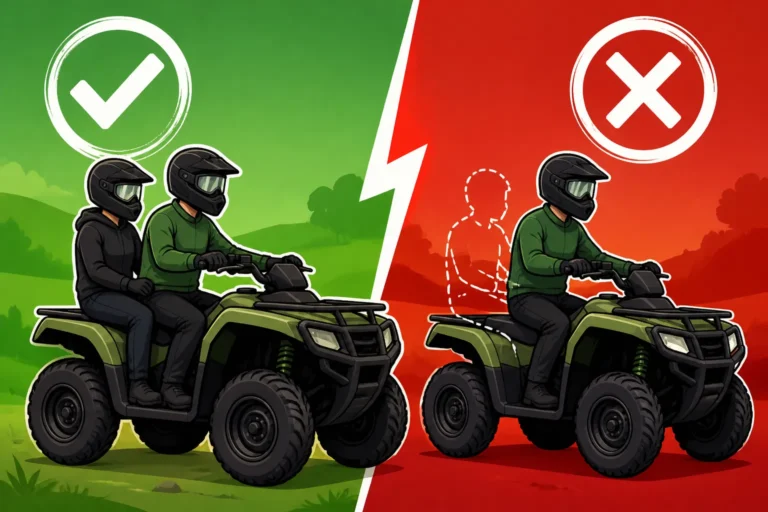
This peace of mind extends to your passengers, too. Many UTVs are designed for multiple occupants, and if you're riding with friends or family, their safety and well-being are in your hands. A good insurance policy can cover medical payments for them, alleviating the immense burden and guilt if someone you care about is injured. [Missouri Rules for a Passenger in a UTV] highlights some of the regulations around carrying passengers, further underscoring the importance of comprehensive coverage.
Protecting Your Investment
For many enthusiasts, an ATV or UTV represents a significant financial investment. Whether you've purchased a brand-new machine or a well-maintained used one, you've put a lot of hard-earned money into it. Collision and comprehensive coverage, typically included in a dedicated ORV policy, protect that investment. If your machine is damaged in an accident, stolen, vandalized, or suffers damage from a natural event like a storm, these coverages can help pay for repairs or replacement.
Imagine your prized side-by-side, equipped with all the accessories you've carefully chosen, including quality components from brands like SuperATV, being stolen from your garage or damaged in a rollover. Without collision or comprehensive insurance, you'd be looking at the entire cost of replacing or repairing it yourself. This can easily be thousands of dollars, a blow no rider wants to face. Resources like [Missouri ATV Theft and Insurance] underscore the reality of such risks, and understanding [Missouri ATV Value After Five Years] can help you appreciate how much you stand to lose without proper protection. Insurance isn't just about covering others; it's about safeguarding your own enjoyment and the hard-earned money you've put into your passion.
Disclaimer
This article is for general informational purposes only and does not constitute professional advice. Laws, prices and regulations vary by location and change over time. Consult a qualified professional for guidance on your specific situation.