Telling a Utility Vehicle From an ROV in Missouri
It's incredibly common for side-by-side owners in Missouri to feel a bit lost when it comes to understanding the rules of the road. You see what looks like similar machines on different county roads or city streets, and it can be downright confusing trying to figure out why some are allowed and others aren't. This guide is here to untangle that knot, specifically by explaining the crucial difference Missouri law makes between a "Utility Vehicle" (UTV) and a "Recreational Off-Highway Vehicle" (ROV), and why that distinction is absolutely essential if you ever want to legally drive your machine on public roads.
The Core Confusion: Why the Distinction Matters for Missouri Roads
Let's face it, when you talk about "side-by-sides" in casual conversation, most people picture the same thing: two or more seats side-by-side, a steering wheel, and a roll cage. But what looks similar to the untrained eye can be worlds apart in the eyes of Missouri law, especially when it comes to putting tires on pavement. This isn't just bureaucratic jargon; it directly impacts whether you can legally ride your machine to the corner store or across town.
Not All Side-by-Sides Are Treated Equally
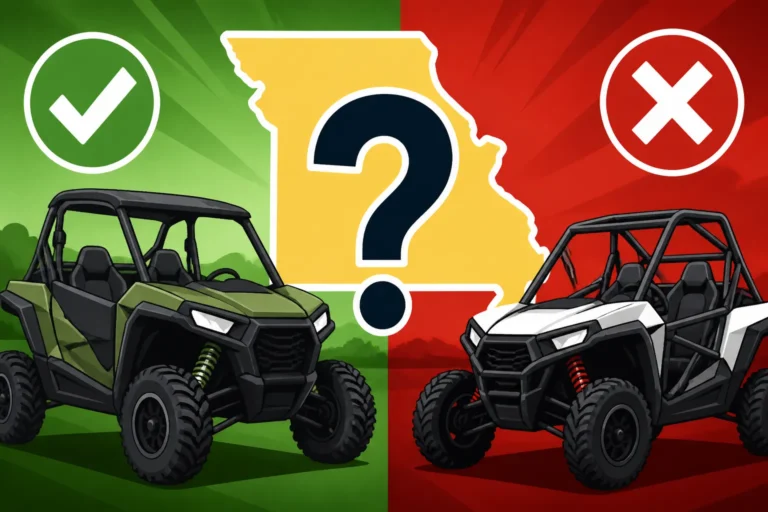
This is where the frustration really sets in for many owners. You might have a beefy Polaris Ranger that looks a lot like a Polaris RZR, but legally, in Missouri, they are often treated quite differently. One might be classified as a Utility Vehicle (UTV) and the other as a Recreational Off-Highway Vehicle (ROV). These aren't just fancy names; they dictate everything from what kind of permits you might need to what equipment your machine must have to be allowed on a public road, even for a short distance. It’s like owning two different types of trucks that look similar but one is only legally allowed on a farm, and the other can drive on city streets under certain conditions. The visual similarity can be deceiving and can lead to honest mistakes if you're not aware of the legal definitions. This distinction is the bedrock of understanding Missouri's road-use laws for these machines, and without it, you're constantly guessing.
The Impact on Permits, Gear, and Local Ordinances
The legal classification of your side-by-side directly funnels you into one set of rules or another. If your machine is considered an ROV, then certain avenues for street legality open up, primarily through local city or county ordinances that issue special permits. This is where you might encounter the [Missouri's 3-Mile Rule for Side-by-Sides], which only applies to ROVs under specific local permits. This rule, for instance, allows you to operate your ROV up to three miles from your residence, if your local government has adopted an ordinance allowing it and you meet all the other requirements.
On the other hand, if your machine is legally a UTV, those local city and county permits for recreational street use generally aren't an option. The exceptions for UTVs are much more limited and typically tied to specific purposes like agriculture or industrial work. This means your machine might need different safety equipment, or might not be eligible for a permit at all. A law enforcement officer pulling you over will be checking not just for a permit, but for the fundamental classification of your vehicle first. They'll also be looking for things like [Missouri's 7-Foot Safety Flag], proper lighting, seatbelts, and a valid driver's license—all requirements that hinge on whether your machine is considered an ROV, not just any side-by-side.
Unpacking the "Utility Vehicle" Definition in Missouri
So, what exactly does Missouri consider a "Utility Vehicle" (UTV)? It’s not just about what it looks like, but fundamentally, what it’s built for and how it's equipped. These are the workhorses of the side-by-side world, designed with a specific purpose in mind that doesn't usually involve tearing up recreational trails or cruising through town on a Saturday night.
Characteristics of a Utility Vehicle (UTV)
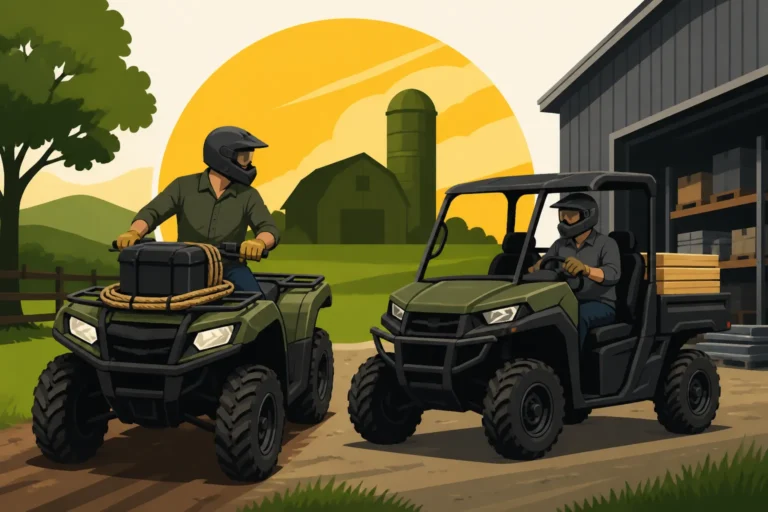
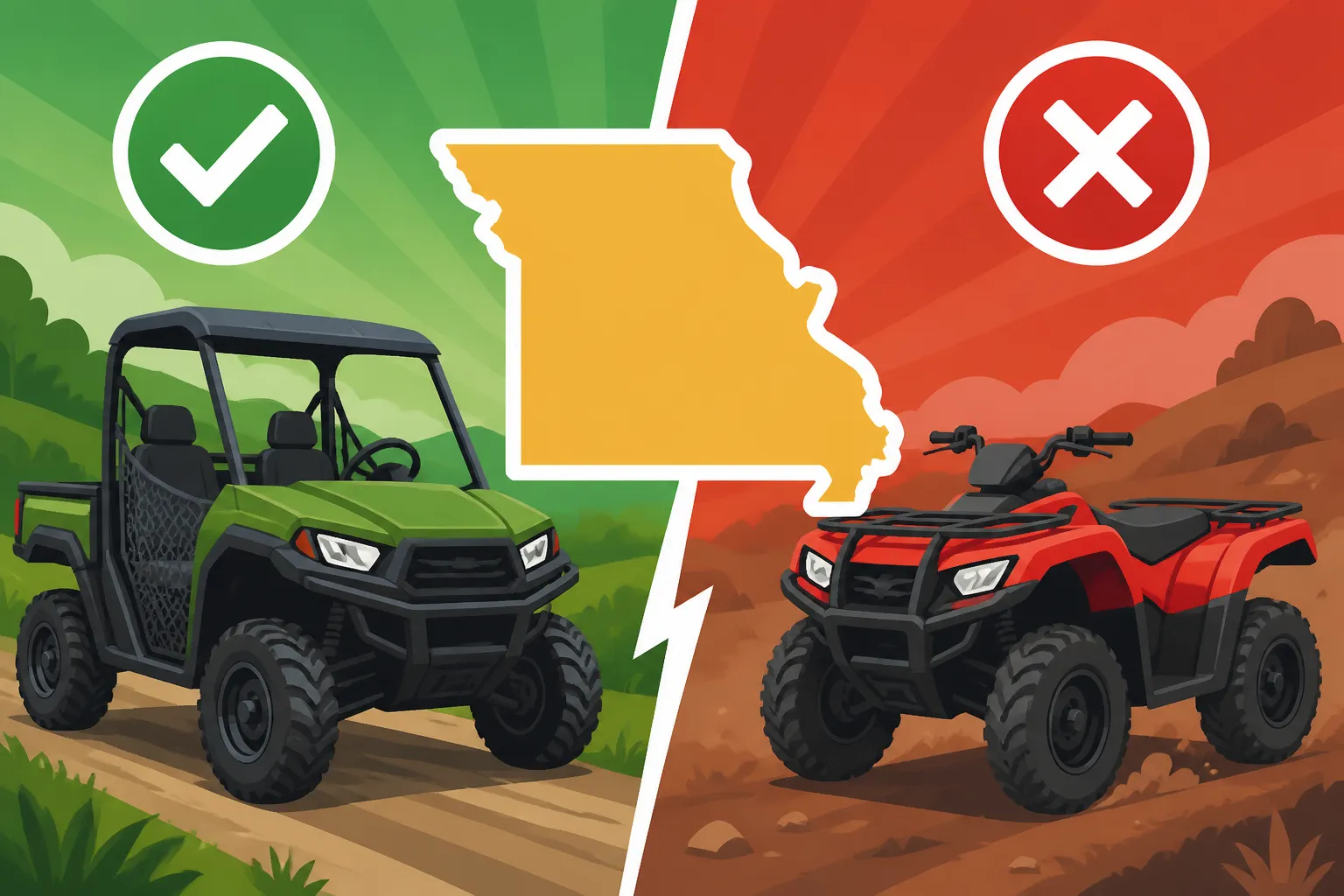
In Missouri, a Utility Vehicle is generally defined by its design and primary intended use. Think of machines that are built for hauling, towing, or performing tasks around a farm, construction site, or large property. These vehicles typically feature a cargo bed that's integral to their design, often with a higher payload capacity than a recreational model. They usually have a lower top speed, designed more for torque and utility tasks than for high-speed thrills. While they have side-by-side seating, a steering wheel, and often a roll-over protective structure, their overall aesthetic leans towards robust functionality rather than sporty performance.
The legal definition often looks at the core purpose for which the machine was manufactured. Is it designed to perform work? Does it have features like an integrated dump bed, power take-off (PTO) capabilities, or a heavy-duty hitch that points clearly to a work-oriented role? For example, a farming operation might use a John Deere Gator or a specific model of Kawasaki Mule primarily for moving feed, equipment, or managing livestock. These machines are essential tools, not recreational toys. Because their primary intent isn't for off-highway recreation in the way an ROV is, [Utility Vehicles Outside the Missouri System] typically don't fall under the same permit structures for street use. The state recognizes their utility but places them in a different category with very limited road access.
Road Use Exceptions for UTVs
For UTVs, general road use is highly restricted, but there are crucial exceptions that recognize their role in specific industries. The most common and widely utilized exception is for agricultural purposes. Missouri law allows UTVs to be operated on public roads and highways for agricultural use during the period from sunrise to sunset. This is a lifeline for farmers who need to get from one field to another, or transport tools and supplies short distances along a county road. However, this is not a blanket permit; it is strictly for agricultural use. You can't just drive your UTV to town to pick up groceries under the guise of "agricultural use" unless it's genuinely part of a farm operation.
Beyond agriculture, UTVs might be allowed for industrial use on private premises that might require crossing a public road, or for specific government or utility company work. There are also provisions for crossing a highway at an angle to get from one private property to another, provided you yield to all traffic and make the crossing safely. These are very narrow, specific circumstances. It's critical to understand that these are exceptions to a general prohibition, not an open invitation. If you're relying on [Missouri's Agricultural Highway Exception], be prepared to clearly demonstrate that your use falls within those legal parameters. For example, carrying hay bales or farm tools would clearly indicate agricultural use, whereas joyriding would not.
Defining the "Recreational Off-Highway Vehicle" (ROV) in Missouri
When most folks talk about "side-by-sides" and think about hitting trails or getting a permit to ride around their small town, they're usually thinking about what Missouri law calls a Recreational Off-Highway Vehicle, or ROV. This category is distinct from UTVs and comes with its own set of rules and possibilities for road use.
Key Features of an ROV
A Recreational Off-Highway Vehicle is specifically designed for off-road recreation. These machines are characterized by their sporty appearance, higher performance capabilities, and usually higher top speeds compared to their utility counterparts. They invariably feature side-by-side seating, a steering wheel, and, critically, a roll-over protective structure (ROPS) or roll cage, along with seatbelts, all designed for occupant protection during recreational activities. Think of models like Polaris RZRs, Can-Am Mavericks, or Kawasaki Teryx models that are built to tackle challenging terrain, not necessarily to haul a ton of feed.
The defining characteristic isn't just power, but intent of design. These vehicles are engineered for fun, adventure, and exhilarating off-road experiences. This recreational focus is what sets them apart legally. While they can still perform some utility tasks, their primary design is for leisure. Many ROV owners love customizing their machines with aftermarket parts from companies like SuperATV, enhancing their off-road performance, suspension, or adding specialized lighting for night rides. These modifications are geared towards improving the recreational experience, further solidifying their classification as an ROV. It's this specific classification that unlocks the potential for limited road access in Missouri.
The Path to Street Legality for ROVs
Unlike UTVs, ROVs actually have a defined, albeit limited, pathway to street legality in Missouri. This path is almost exclusively through city or county ordinances that specifically permit their use on certain roads. These local permits typically come with a host of requirements that the ROV must meet to ensure public safety. These often include functional headlights and taillights, brake lights, a horn, mirrors, seatbelts for all occupants, a roll bar, and often [Missouri's 7-Foot Safety Flag] flying above the machine to increase visibility.
Furthermore, the operator of a street-legal ROV in Missouri typically needs to possess a valid driver's license—an operator's or chauffeur's license—just as they would for any other motor vehicle on the road. This is a critical point: [An Operator's or Chauffeur's License in Missouri] is a non-negotiable requirement. If you're looking to add accessories to meet road-legal requirements, checking out reputable brands like SuperATV for lighting kits, mirrors, or even durable roll cage extensions can be a smart move, but always ensure they comply with any local ordinance specifics. It's crucial to remember that simply having the right equipment isn't enough; you must have a permit from the specific city or county where you intend to ride, and that city or county must have an ordinance in place allowing ROVs on their roads. Without that local ordinance and permit, even a fully equipped ROV isn't street legal for general recreational use.
Why the Legislature Made Two Categories (and Not Just One)
It might seem like an unnecessary complication to have two distinct categories for what many people just call "side-by-sides." Why not just one set of rules? The truth is, the legislative process that led to these separate definitions reflects a thoughtful, albeit sometimes confusing, effort to address different types of vehicles and their uses while balancing public safety, recreational interests, and economic impacts.
Historical Context and Intent
The distinction between UTVs and ROVs didn't just appear overnight; it evolved as the market for these vehicles grew and diversified. Early side-by-sides were primarily utilitarian, resembling golf carts designed for work rather than high-speed recreation. As technology advanced, manufacturers started producing more powerful, sport-oriented machines explicitly for off-road adventures, which we now recognize as ROVs. The legislature had to grapple with how to regulate these increasingly popular, yet inherently different, machines. They recognized that a machine designed to move hay bales at 15 mph on a farm field posed different safety considerations and had different operational needs than a sport-tuned machine designed to tackle challenging trails at much higher speeds.
The intent was to create a regulatory framework that reflected these differences. By categorizing them separately, lawmakers could apply specific rules that made sense for each type of vehicle. This approach allows for limited agricultural road access for UTVs, acknowledging their role in farm operations, while also providing a pathway for ROVs to gain limited street access through local permits, recognizing the public's desire for recreational riding. This is part of the broader reason [Why Missouri Splits ATVs, UTVs and ROVs] into different categories with distinct laws, rather than lumping all off-highway vehicles together. It's about tailoring regulations to the specific vehicle type and its most common use.
Practical Implications for Riders and Law Enforcement
For riders, understanding these distinct categories is not just academic; it has direct, practical consequences. If you mistakenly assume your ROV is a UTV, you might find yourself on roads where it's not permitted, leading to fines or other legal trouble. Conversely, if you don't realize your UTV qualifies for agricultural road use, you might be unnecessarily trailering it when a short drive would suffice. This is why it's so important to consult your machine's manufacturer specifications and the Missouri Revised Statutes (specifically Chapter 304 and 300) to confirm its classification.
For law enforcement, these clear definitions provide a framework for consistent enforcement. A deputy stopping a side-by-side can quickly determine which set of rules applies based on the machine's design and features. For example, the presence of an integrated dump bed and a slow top speed would strongly indicate a UTV, while a high-performance engine and sport suspension would point to an ROV. This clarity helps deputies make informed decisions about whether a vehicle is in compliance with the law, preventing arbitrary enforcement and ensuring that riders understand their obligations. It streamlines the process of checking [What a Missouri Deputy Checks on a Road-Legal ROV], ensuring they know which rules apply to which type of machine.
What a Missouri Deputy Checks on a Road-Legal Side-by-Side
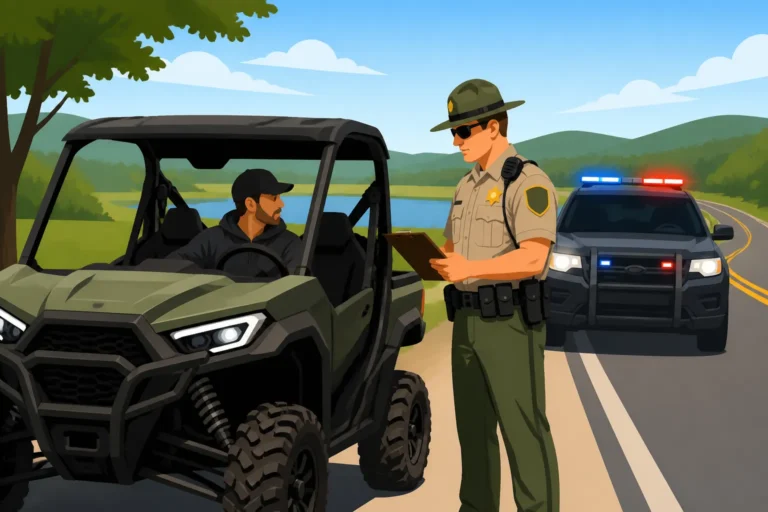
If you've got your side-by-side out on a public road in Missouri, whether for agricultural work or under a local ROV permit, there's a good chance you might encounter a law enforcement officer. It's vital to know what they're looking for, as their inspection will be thorough and directly tied to the legal classification of your machine. This isn't just about avoiding a ticket; it's about ensuring safety for everyone on the road.
Verification of Proper Classification
The very first thing a Missouri deputy will do when they stop a side-by-side on a public road is determine its legal classification. Is it truly an ATV (a straddle-seat machine, which has entirely different rules for road use), a UTV, or an ROV? This is the foundational step because, as we've discussed, the rules for each are distinct. The deputy will look at the physical characteristics of your machine: does it have a cargo bed that defines it as a utility vehicle, or is it clearly designed for recreation with a more aggressive stance and performance-oriented features? They might check your vehicle identification number (VIN) against definitions in state statutes or manufacturer classifications if there's any ambiguity.
This initial classification step is critical because it tells the officer which set of laws to apply to your situation. If your ROV is being operated where only UTVs with agricultural exemptions are allowed, or vice-versa, that's an immediate issue. Many times, the visual cues help, but knowing the specific legal definition, perhaps carrying documentation of your machine's type, can really smooth over this initial verification. The officer isn't just taking your word for it; they're looking for tangible evidence that your machine fits the category you're claiming to operate under.
Permit, Equipment, and Operator Compliance
Once the classification is established, the deputy will move on to a checklist of compliance points. If you're operating an ROV under a city or county ordinance, the very next thing they'll ask for is your valid permit for that specific jurisdiction. No permit, no matter how well-equipped your machine is, means you're operating illegally. They'll also verify your driver's license—remember, for an ROV on the road, an operator's or chauffeur's license is mandatory.
Then comes the equipment check. A deputy will look for visible safety equipment required by state law and any local ordinances. Are your headlights and taillights working? Do you have functional brake lights? Is there a horn, and does it work? Do you have mirrors (usually at least one rearview mirror)? Are your seatbelts in good condition and being used by all occupants? And, critically, do you have [Missouri's 7-Foot Safety Flag] flying at the required height and displaying the proper blaze orange square? If you've upgraded these components, perhaps with robust options from SuperATV, ensure they meet local standards and are fully functional. Any deficiency here, from a burned-out bulb to a missing flag, can lead to a citation. Be prepared to show all your documentation and demonstrate that your machine meets all the required safety standards. Ignoring these details can quickly lead to [Missouri Fines for Illegal ATV Road Use] and a ruined day of riding.
Comparing UTVs and ROVs in Missouri
To help clarify the differences, here's a quick comparison of how Missouri generally views and regulates Utility Vehicles (UTVs) and Recreational Off-Highway Vehicles (ROVs) when it comes to road use:
| Feature | Utility Vehicle (UTV) | Recreational Off-Highway Vehicle (ROV) |
|---|---|---|
| Primary Design Use | Work, hauling, towing, industrial, agricultural tasks | Off-road recreation, sport, adventure, trail riding |
| Typical Features | Integrated cargo bed, lower top speed, functional aesthetic | Sporty design, higher performance, aggressive suspension, roll cage |
| Road Use Purpose | Limited exceptions: Agricultural, industrial, crossing highways | Local permits possible: Recreational use on specific city/county roads |
| Road Use Permits | Generally not eligible for recreational road permits | Eligible for city/county special road-use permits |
| Operator License | Often requires a valid driver's license for road exceptions | Requires a valid operator's or chauffeur's license |
| Required Equipment | Varies by exception; often includes lights, mirrors | Headlights, taillights, brake lights, horn, mirrors, seatbelts, roll bar, 7-foot safety flag |
| 3-Mile Rule | Does not apply | Can apply if adopted by local ordinance |
| Example Models | John Deere Gator, Kawasaki Mule, Polaris Ranger (some models) | Polaris RZR, Can-Am Maverick, Honda Talon, Yamaha YXZ |
This table provides a general overview, but it's crucial to consult the specific Missouri Revised Statutes and your local city or county ordinances for the exact, up-to-date details pertaining to your machine and intended area of operation.
Disclaimer
This article is for general informational purposes only and does not constitute professional advice. Laws, prices and regulations vary by location and change over time. Consult a qualified professional for guidance on your specific situation.