Crossing a Missouri Highway on a Quad
Ah, the age-old dilemma of getting your quad from Point A to Point B when Point B is just across that pesky highway! It's a common frustration for so many of us who love to ride the backroads and trails here in Missouri. You're out enjoying a beautiful day, maybe heading to a friend's property or accessing another section of your own land, and suddenly, there's a paved state road in your way. You know you can't just cruise down the highway, but what about just crossing it? The rules can feel like a tangled mess of gravel and blacktop, leaving you scratching your head. This guide is here to untangle that mess, clarifying Missouri's laws for legally crossing a highway with your ATV or UTV.
The Harsh Reality: Why Most ATVs Can't Just Cross
Let's get straight to it: for the vast majority of us who own traditional ATVs – the kind you straddle with handlebars – simply crossing a state highway isn't permitted in Missouri without very specific exemptions. It's a tough pill to swallow, especially when you can see your destination just on the other side. This isn't about being difficult; it's rooted in how the state defines and regulates these machines for safety on public roadways.
Missouri's Strict Definition of an ATV on Roads
Missouri law primarily classifies ATVs as "off-road vehicles." This designation means they are built for trails, fields, and rough terrain, not for the pavement and higher speeds of public roads. Unlike cars, trucks, or even motorcycles, ATVs lack many of the safety features required for street use, such as proper lighting, signaling, mirrors, and crash protection. Because of this, the general rule is that ATVs are not allowed on highways, paved county roads, or even the shoulders of these roads. Trying to use one like a street-legal vehicle is simply not how the system is set up here. If you're wondering about the broader topic, you might want to check out [Street Legal ATVs in Missouri: The Short Answer]. The state is quite clear about this distinction, and it's something every rider needs to understand to stay safe and legal.
This strict definition can be particularly frustrating for landowners whose property is bisected by a road, or for those who need to access multiple hunting spots separated by a state route. It means a quick trip across the pavement, which might seem harmless and take only a few seconds, is still technically illegal. The law doesn't make exceptions for convenience or short distances in these general cases. It's designed to keep off-road machines off of roadways where they are not equipped to interact safely with other traffic.
Understanding the Consequences of Illegal Road Use
Ignoring Missouri's road rules for ATVs can lead to more than just a stern talking-to. The consequences can range from fines to more severe legal troubles, not to mention the very real safety hazards. A sheriff's deputy or a Missouri State Highway Patrol trooper encountering an ATV on a highway is likely to issue a citation, and those can certainly sting your wallet. The fines can add up, and if you're found operating your machine in a manner deemed reckless or dangerous, there could be even more significant penalties.
Beyond the legal ramifications, the safety aspect is paramount. ATVs are designed for off-road performance, not for high-speed highway traffic. Their suspension, tires, and steering are not built for pavement, especially at speeds where you're sharing the road with cars and trucks traveling 55 MPH or more. A sudden swerve, a loss of traction, or simply not being seen by an oncoming vehicle can lead to devastating accidents. The risk to yourself and others is simply too high, which is why the laws are in place. If you're curious about what you might face, we have more details in [Missouri Fines for Illegal ATV Road Use]. It's always better to know the rules and adhere to them, even when it feels inconvenient, to ensure everyone's safety.
Specific Exceptions for Crossing Highways
While the general rule is "no ATVs on highways," Missouri does recognize a few specific situations where crossing or limited road use might be permissible. These exceptions are narrow and come with their own set of rules, often pertaining more to UTVs and ROVs than traditional ATVs, but it's crucial to understand them. These aren't blanket permissions but rather very defined allowances for particular circumstances.
The Agricultural Exemption
One of the most widely known exceptions involves agricultural use. If you're actively engaged in farming or ranching, Missouri law allows the operation of ATVs, UTVs, and ROVs on public roads for agricultural purposes. This isn't for joyriding; it's for getting essential work done. Think of it as moving between fields, checking livestock on adjacent properties, or hauling equipment for short distances. This exemption is incredibly helpful for Missouri's many farmers who rely on these machines daily.
However, this isn't a free pass to cruise all day. The agricultural use must occur between sunrise and sunset, and it’s typically for short distances. You can't just take your machine for a leisurely ride to town under the guise of "agricultural use." You need to be actively involved in agricultural operations, and the machine's use must be directly related to that work. This means carrying feed, tools, or checking fences, not heading to the gas station for snacks. It's a practical allowance for a specific, necessary function. To learn more about the specifics, you can read [Missouri's Agricultural Highway Exception] and [Missouri Agricultural Use From Sunrise to Sunset]. This exception acknowledges the vital role these machines play in rural communities.
Industrial or Construction Use
Similar to agricultural use, there's an exception for machines used for industrial or construction purposes, particularly when crossing roads or operating on rights-of-way directly related to the work being done. This typically applies to UTVs or ROVs being used by utility companies, construction crews, or survey teams. For instance, a crew working on power lines might need to cross a highway to access equipment on the other side, or a construction site might spill over onto a roadside for a short stretch.
The key here is that the machine must be directly involved in the industrial or construction activity and generally operating "on the premises" or within the immediate work zone. This isn't for personal use; it's for commercial, job-site operations. These machines often have specialized equipment, lighting, and safety measures that differentiate them from recreational vehicles, further emphasizing their purpose-driven use in these specific scenarios. A general recreational ATV owned by an individual would rarely fall under this exemption.
Disabled Rider Provisions
Missouri also makes allowances for individuals with disabilities to operate ATVs, UTVs, or ROVs for short distances on the shoulder of public roads, or to cross roads, to access fishing, hunting, or trapping areas. This is a compassionate provision recognizing that these machines can provide invaluable mobility and access for disabled individuals who might otherwise be unable to enjoy these outdoor activities.
To qualify, the individual must have a physical disability that impairs their ability to walk or move, and they must carry proof of their disability, such as a disabled parking placard or medical documentation. This isn't about simply having a minor ailment; it's for significant mobility impairments where the machine is truly an assistive device. The use is strictly limited to accessing specific recreational areas and for "short distances," not for general travel. It’s about enabling access, not general road use. For further clarification on this, you can refer to [Short Distances for a Disabled Missouri Rider]. These provisions ensure that outdoor recreation remains accessible to everyone who wants to experience Missouri's natural beauty.
The UTV/ROV Advantage: Local Ordinances and Permits
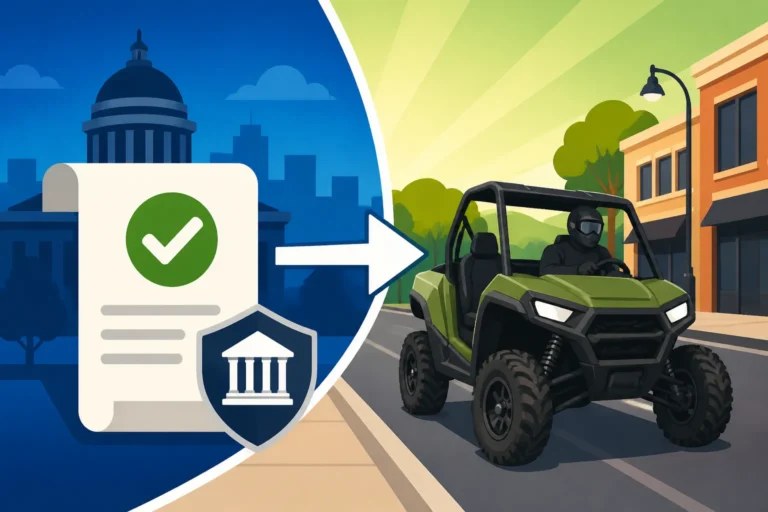
Here's where the conversation really shifts, especially if you own a UTV or Recreational Off-Highway Vehicle (ROV). While traditional ATVs have very limited options for road use, many Missouri cities and counties have taken matters into their own hands, creating pathways for UTVs and ROVs to legally operate on or cross certain public roads. This has been a huge game-changer for side-by-side owners, making their machines far more versatile for navigating local communities.
City and County Permits for UTVs/ROVs
The state of Missouri allows local governments – cities and counties – to enact ordinances that permit the operation of UTVs and ROVs on roads within their jurisdiction. This is a crucial distinction: it's not a statewide free-for-all, but rather a patchwork of local rules. What's legal in Lake Ozark might not be in your hometown, and vice-versa. These ordinances often come with specific requirements, such as obtaining a local permit, adhering to speed limits, and ensuring your machine has certain safety features.
These local permits are a lifeline for many UTV owners, allowing them to legally drive to the store, visit neighbors, or simply connect trails that are separated by a street. It has fostered a more integrated use of these vehicles in communities that embrace them. If you're a UTV owner, it's absolutely essential to check with your specific city or county government to understand their local ordinance, if one exists. Many communities have recognized the utility and recreational value of these machines and have worked to create safe and legal frameworks for their use. You can find out more about which areas have adopted these rules by looking at [Missouri Cities That Allow UTVs on Streets] and [Missouri Counties That Allow ATVs on Roads] (note that while the title says ATVs, these ordinances almost exclusively apply to UTVs/ROVs).
The 3-Mile Rule for ROVs
Another important provision that specifically benefits Recreational Off-Highway Vehicles (ROVs) – typically your side-by-sides – is what's commonly known as the "3-mile rule." This rule allows ROV owners to operate their machine on any two-lane highway (meaning, not an interstate or divided highway) for a distance not to exceed three miles from the point of origin, meaning your home or property. This is a fantastic option for those quick trips that might otherwise be illegal, like heading to a nearby fishing spot, a local gas station, or a friend's house.
However, and this is a big "however," this rule does not apply to ATVs. It's explicitly for ROVs. So, if you're on a traditional quad, this exemption won't help you. Additionally, the ROV must be equipped with specific safety features to qualify for this rule, and the operator must possess a valid driver's license. It's designed to provide limited, convenient access for ROVs within a small radius of their base. Understanding this distinction is key for ROV owners. We cover this in more detail in [Missouri's 3-Mile Rule for Side-by-Sides] and emphasize the ATV exclusion in [Why the 3-Mile Rule Is ROVs Only]. This provision offers a lot more flexibility for side-by-side owners than traditional ATV riders.
Requirements for Road-Legal ROVs Under Local Ordinances
When a city or county opens its roads to UTVs or ROVs, it's not without conditions. These machines need to meet certain safety equipment standards to ensure they are as visible and safe as possible for road use. These requirements are usually detailed in the local ordinance and often include:
- Headlamps and Taillamps: Your machine must have functional headlamps and taillamps that are on when operating on public roads, especially from sunset to sunrise.
- Brake Lights: Just like a car, working brake lights are essential for signaling to traffic behind you.
- Horn: A functional horn is needed to alert others to your presence.
- Mirrors: At least one rearview mirror is typically required, often two.
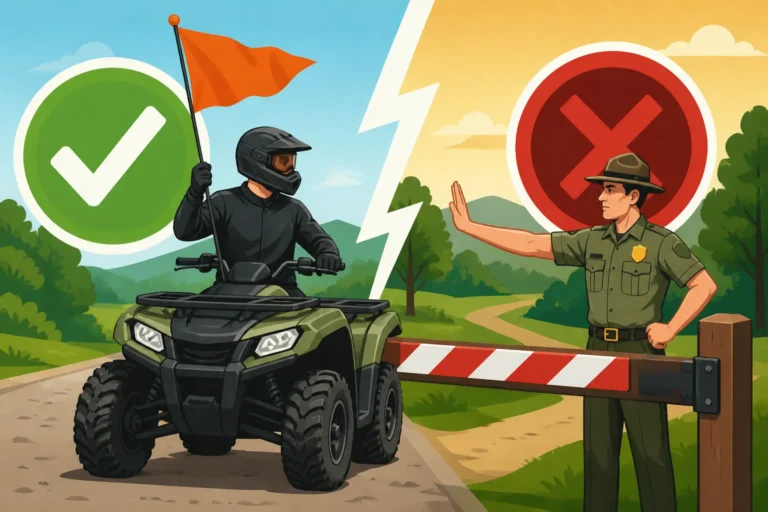
- Safety Flag: Many ordinances require a bright orange or red flag, often mounted on a pole, to make the ROV more visible to other drivers. This flag usually needs to be a certain height, like seven feet, to be visible over other vehicles. You can read up on the specifics in [Missouri's 7-Foot Safety Flag] and [Missouri Safety Flag Height].
- Roll Bar and Seat Belts: Given the nature of side-by-sides, a factory-installed roll bar and functional seat belts for all occupants are almost always mandatory.
- Driver's License: The operator must hold a valid, unexpired driver's license (Class F operator's license or a chauffeur's license).
- Insurance: Proof of financial responsibility, typically in the form of liability insurance, is usually required.
These are not trivial requirements; they are about bringing your machine up to a standard where it can interact with street traffic more safely. Many riders turn to aftermarket suppliers like SuperATV for these crucial safety upgrades. From durable roll cages to comprehensive lighting kits and robust safety flags, companies like SuperATV provide the parts and accessories you need to ensure your UTV or ROV meets the demands of local street-legal ordinances. Always check the specific wording of your local ordinance for the exact requirements.
Here's a quick comparison of general road rules for ATVs versus UTVs/ROVs in Missouri:
| Feature/Condition | Traditional ATV (Quad) | UTV/ROV (Side-by-Side) |
|---|---|---|
| General Road Use | Generally NOT permitted | Generally NOT permitted, but more exceptions |
| Highway Crossing | Permitted ONLY under specific exemptions (Ag, Ind, Disabled) | Permitted under Ag, Ind, Disabled, OR local ordinances, OR 3-Mile Rule |
| Agricultural Exemption | Yes, for bona fide farm work, sunrise-sunset | Yes, for bona fide farm work, sunrise-sunset |
| Industrial/Const. Use | Limited | Yes, for job-site work |
| Disabled Rider | Yes, short distances to access areas | Yes, short distances to access areas |
| Local City/County Perm. | No, typically only for UTVs/ROVs | Yes, if local ordinance exists, requires permit & equipment |
| 3-Mile Rule | NO, does NOT apply to ATVs | Yes, for ROVs only, within 3 miles of origin, specific equipment |
| Required Equipment | None specified for legal road use (as not allowed) | Head/Tail lights, brake lights, horn, mirrors, safety flag (often 7 ft), seat belts, roll bar (for permit/3-mile rule) |
| Operator License | Not applicable for road use | Valid driver's license (for permit/3-mile rule) |
| Insurance | Not applicable for road use | Required for permit/3-mile rule |
Practical Considerations and Safety When Crossing
Even when you have a legal right to cross a highway, whether under an agricultural exemption or a local UTV ordinance, safety should always be your absolute top priority. These machines are not cars, and approaching a paved roadway requires a heightened sense of caution and a clear understanding of your vehicle's limitations.
Crossing Legally and Safely
If you find yourself in a situation where crossing a highway is legally permitted, make it as safe as possible. Here are some critical steps to take:
- Stop Completely: Before even thinking about entering the pavement, come to a complete stop. Do not roll onto the shoulder or roadway.
- Look Both Ways, Multiple Times: Scan traffic in both directions thoroughly. Remember that ATVs and UTVs are smaller and less conspicuous than full-sized vehicles. You need ample time and space to cross safely. Look, wait, look again.
- Cross Perpendicularly: Drive straight across the road, at a 90-degree angle if possible, to minimize the amount of time you spend in the traffic lane. Do not drive down the shoulder or angle across the road unless absolutely necessary and permitted by law (e.g., to access a specific field entrance).
- Signal Your Intentions: If your UTV has turn signals, use them. If not, use clear hand signals to indicate your intention to cross. Make eye contact with any approaching drivers if you can safely do so.
- Go Directly Across: Don't hesitate or linger on the road. Once you've committed to crossing, do so quickly and efficiently.
- Wear Safety Gear: Always wear a helmet, even if you're an adult and the specific rule you're operating under doesn't explicitly require it for adults on roads. It's just plain smart. For anyone under 18, helmets are mandatory in Missouri when operating an ATV. You can brush up on the rules in [Helmet Rules for Missouri Riders]. Beyond a helmet, sturdy boots, gloves, and eye protection are highly recommended.
Remember, even a short crossing can be dangerous if you're not fully attentive and prepared. The speed and weight difference between your off-road machine and highway traffic is substantial.
Understanding the Machine's Limitations
It's vital to remember that ATVs and UTVs are purpose-built for off-road environments. They don't handle like a car on pavement, and they certainly don't stop like one.
- Tires: Knobby off-road tires have less contact patch and grip on smooth pavement, especially when wet, compared to street tires. This affects braking and cornering.
- Suspension: Off-road suspensions are designed to absorb bumps and uneven terrain, not provide stable, flat cornering at speed on hard surfaces.
- Braking: While powerful, your brakes are designed to lock up off-road and might feel grabby or less effective on pavement.
- Visibility: Your machine is smaller and lower to the ground, making you harder for oncoming traffic to spot, especially in adverse weather or at dusk/dawn. The seven-foot safety flag, often available from brands like SuperATV, is a crucial addition to improve your visibility significantly when operating on or near roads.
Never push the limits of your machine on the pavement. Treat any road crossing or limited road use with the utmost respect for your machine's design and its capabilities.
What to Carry With You
Whenever you're operating an ATV or UTV near or on public roads, even for a brief crossing, it's a good idea to have your essential paperwork easily accessible. This includes:
- Proof of Ownership/Title: While not always required for a quick stop, it's good to have it handy.
- Any Applicable Permits: If you have a city, county, or special agricultural permit, carry it. This is your proof of legal operation.
- Proof of Insurance: If required by a local ordinance or the 3-mile rule, keep your insurance card with you.
- Identification: Always have your driver's license (if required for operation) and other identification.
Consider keeping these documents in a waterproof, sealed bag or container. Off-road riding can be dusty, muddy, and wet, and you don't want your important papers to be unreadable if a law enforcement officer asks to see them. For tips on keeping your documents safe, check out [Keeping Paperwork in a Dry Bag]. Being prepared with your paperwork can save you a lot of hassle and quickly resolve any questions about your legal right to be on the road.
Disclaimer
This article is for general informational purposes only and does not constitute professional advice. Laws, prices and regulations vary by location and change over time. Consult a qualified professional for guidance on your specific situation.