Why a Road-Legal Flag Fails at a Park Gate
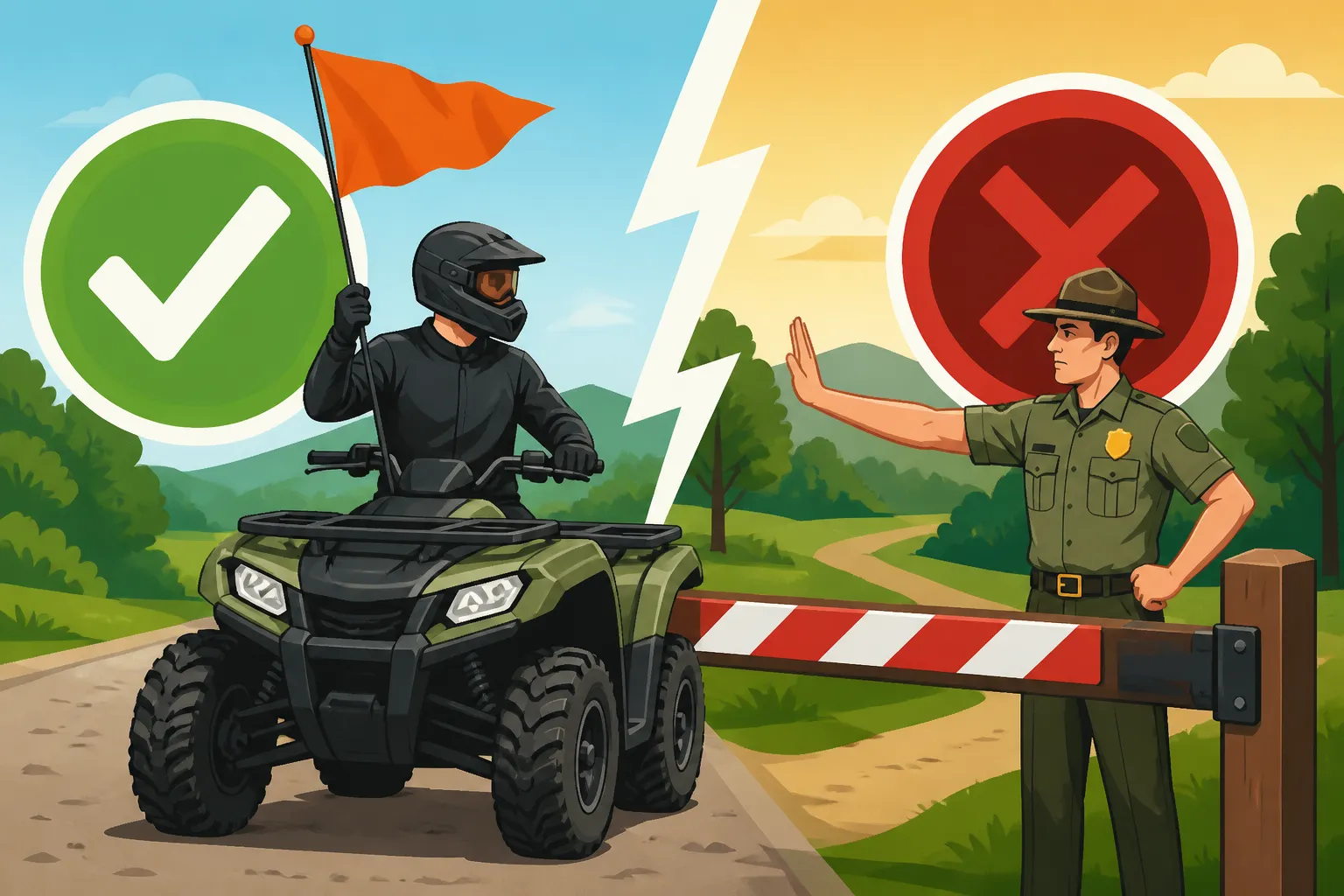
It’s a scenario many of us have faced: you’ve gone through the trouble of making sure your ATV or UTV is completely legal for those short jaunts on Missouri’s county roads, perhaps to get to the store or a friend’s house, complete with the required safety flag. You feel prepared, confident even. Then, you head to a state park ORV area, proudly display your machine, and are met with a polite but firm shake of the head at the gate. “Sorry, your flag isn’t compliant for park use.” The frustration is real, and it often leaves riders scratching their heads, wondering why a flag that’s perfectly legitimate on one stretch of public land isn’t on another. This guide is here to unravel that mystery, explaining the crucial distinctions between road-legal and park-compliant safety flags in Missouri, so you can avoid that specific brand of disappointment at the trailhead.
The Tale of Two Rulebooks: Why Road and Trail Rules Diverge in Missouri
It might seem illogical at first glance: a flag is a flag, right? It’s meant to make you more visible. But in Missouri, the rules governing your ATV or UTV, and specifically its safety flag, depend heavily on where you’re riding. The state doesn't have one overarching "off-road vehicle" rulebook that covers every possible scenario. Instead, there are different sets of regulations, each crafted by different authorities for very specific environments and safety concerns. This fundamental difference is the reason your road-legal flag might not cut it at a park gate.
State Law vs. Park Regulations: Different Masters, Different Rules
When we talk about the rules for driving an ORV on public roads in Missouri, we’re typically referring to state statutes enacted by the Missouri General Assembly. These laws are broad, designed to apply across the state, and often focus on integrating these vehicles safely into existing traffic patterns. They dictate things like lighting requirements, basic operation, and yes, specific safety equipment like flags for certain uses. These rules are about ensuring visibility and preventing collisions with other vehicles on shared public roadways. If you’ve ever wondered [Are ATVs Street Legal in Missouri?], you know it's a complicated answer largely defined by these state statutes.
On the other hand, Missouri State Parks operate under the Missouri Department of Natural Resources (DNR). The DNR has its own authority to establish regulations specific to the operation of Off-Road Vehicles (ORVs) within state park boundaries, like St. Joe State Park or Finger Lakes State Park. These regulations are tailored to the unique environment of recreational trails, which are vastly different from public roads. Park rules consider factors like natural obstacles (trees, rocks), specific trail layouts (tight turns, steep grades), shared use with other recreationalists (hikers, mountain bikers, though not usually on motorized trails), and the overall goal of preserving natural resources while providing a safe riding experience. The distinction isn't arbitrary; it's a reflection of differing priorities and hazards in each domain.
This dual system is the root cause of much of the confusion. You’re not dealing with a single, unified set of guidelines. Instead, you're navigating two distinct legal and regulatory frameworks, each with its own specific requirements for safety flags.
Safety Priorities: Road Visibility vs. Trail Hazard Mitigation
The core difference in flag requirements boils down to distinct safety priorities for each environment. When you're driving an ORV on a public road, even if it's just a short distance or a low-speed county lane, the primary concern is making sure you're visible to other motorists. Think about cresting a hill on a gravel road, or making a turn where a larger vehicle might not immediately see a smaller side-by-side. The flag needs to be tall enough to clear most passenger vehicles and stand out against the backdrop of traffic and roadside scenery. Its purpose is to announce your presence clearly and unmistakably to drivers of cars and trucks, whose sightlines are typically higher and whose speeds are generally greater. This is why Missouri has a specific [Missouri's 7-Foot Safety Flag] rule for certain road uses.
Conversely, on a dedicated ORV trail within a state park, the safety priorities shift dramatically. While visibility to other riders is still important, especially on blind turns or in areas with heavy dust, the greater concern often revolves around environmental hazards. Trails are frequently narrow, winding through wooded areas, and might have low-hanging branches, power lines, or other overhead obstacles. In such an environment, a flag mast that is too rigid or too tall can become a liability. It could snag on branches, pulling a rider off their machine, or snap off, potentially injuring someone. The park’s rules are designed to mitigate these specific trail hazards, ensuring that the flag provides necessary visibility without creating new dangers for the rider or the environment.
This difference in focus—general traffic visibility versus specific trail hazard avoidance—directly dictates the varied specifications for flag height, material, and even the type of flag itself.
Decoding Missouri's Road-Legal Flag Requirements for ORVs
For those moments when you need to take your ORV on a public road in Missouri, specific rules kick in to ensure your safety and the safety of others. These requirements are rooted in state law and are designed to make your machine visible in a conventional traffic environment. It’s important to understand these details, especially if you’re utilizing any of Missouri’s limited street-legal provisions for side-by-sides.
The Seven-Foot Mast and 30 Square Inches of Day-Glow
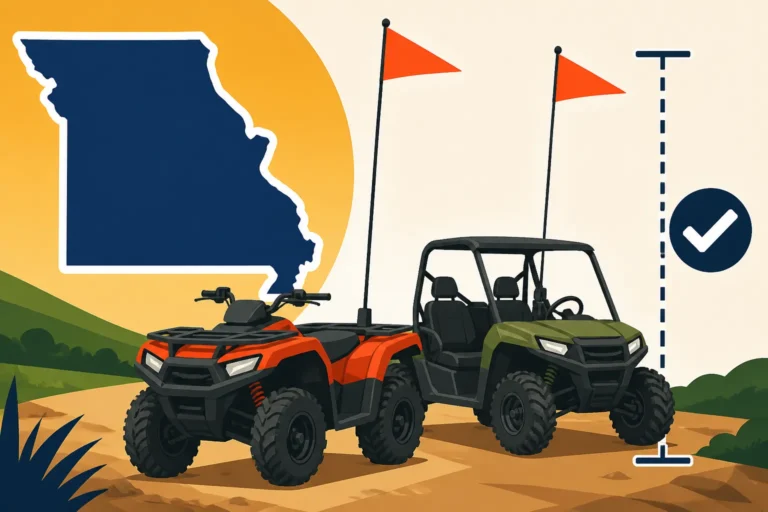
If you're operating a Recreational Off-Highway Vehicle (ROV), which includes most side-by-sides, on certain public roads in Missouri, state law mandates a specific safety flag setup. The flag must be mounted so that its highest point is at least seven feet (84 inches) from the ground. This height is critical because it ensures the flag is visible over the tops of most passenger cars and even some light trucks, giving other drivers a clear indication of your presence, especially on roads with varying terrain or limited sightlines.
The flag itself also has specifications. It must be at least 30 square inches in area and made of a bright, highly visible material, often described as "day-glow" fluorescent orange or red. This color choice isn't just aesthetic; it's specifically chosen for its ability to stand out against natural backgrounds and other vehicles during daylight hours. The mast holding this flag is typically rigid to maintain its mandated height and ensure the flag flies freely, preventing it from drooping or becoming entangled. This combination of height, size, and vibrant color is all about maximizing your visibility to prevent road accidents. You also need to meet other criteria, like having the right [Missouri Driver's License Rules for ROVs] to operate on public roads.
Who Needs a Road Flag and Where It Applies
The requirement for this specific road flag primarily applies to ROVs when they are operating under one of Missouri's limited road-use exemptions. The most common scenario is the "3-mile rule," which allows ROVs to operate on county roads within three miles of the owner's residence for specific purposes, provided certain conditions are met. This rule is very specific and generally does not extend to ATVs, which have even more restricted road access. [Missouri's 3-Mile Rule for Side-by-Sides] is a prime example of where this flag rule comes into play.
Beyond the 3-mile rule, some cities or counties in Missouri have enacted ordinances that allow ROVs (and sometimes even ATVs) on their specific public roads, usually requiring a special permit. In these instances, the state's safety flag requirement is almost always part of the permit conditions. It's crucial to understand that these road flag rules are strictly for road travel. They are about ensuring your vehicle, which is not typically designed for highway speeds, can be seen when sharing pavement or gravel with conventional traffic. They are not designed for the unique challenges of off-road trails. Understanding the specific [Missouri Rules for Riding a County Road] is key to staying compliant.
Navigating Missouri State Park ORV Flag Rules
Stepping onto a designated ORV trail in a Missouri State Park, you enter a different world with a different set of rules – and that includes your safety flag. While the core idea of visibility remains, the specifics are adapted to the unique environment and inherent hazards of off-road trails. What might be perfectly acceptable on a country road will likely not pass inspection at the state park gate.
The 72-Inch Mast and 64 Square Inches of Orange
When you arrive at a Missouri State Park ORV area, such as the expansive St. Joe State Park or the winding trails of Finger Lakes State Park, you'll find that the flag requirements have a distinct shift from road regulations. Here, your flag must be mounted to achieve a minimum height of 72 inches (six feet) from the ground. Notice this is slightly shorter than the seven-foot mandate for road use.
But while the height is a bit less, the flag itself is actually larger. Park regulations typically require the flag to be at least 64 square inches in area, and it must be blaze orange or red. This is more than double the size of the 30-square-inch road flag! The larger surface area is designed to provide maximum visibility to other riders on the trail, especially when cresting rises, navigating blind corners, or dealing with dusty conditions where a smaller flag might disappear.
Perhaps the most significant difference, and often the sticking point for riders, is the requirement for the flag mast itself. Many park rules explicitly prefer, or even mandate, that the flag mast be flexible. Unlike the rigid poles often used for road-legal flags, a flexible mast—commonly made of fiberglass or similar composite materials—can bend and absorb impacts from low-hanging branches, tight squeezes between trees, or even rollovers. This flexibility is a critical safety feature that directly addresses the unique challenges of off-road environments. Understanding these details is crucial for a smooth entry, so always check the [Missouri State Park ORV Permit Prices] and rules before you go.
Why Park Flags are Different: Trail Safety and Entanglement Risks
The reasons behind these distinct park flag specifications are entirely driven by trail safety and the prevention of common off-road hazards. The slightly reduced height of 72 inches (compared to 84 inches for road use) is a direct response to the reality of trail riding: overhead obstacles. Picture a dense canopy of trees, low-hanging limbs, or even utility lines that might cross over trails. A rigid, extra-tall flag pole could easily snag on these, potentially snapping off, damaging your machine, or worse, pulling you off the ORV and causing serious injury. The six-foot height balances visibility with practical navigation through challenging terrain.
The larger flag size (64 square inches) ensures that despite the potentially dense surroundings, your machine remains highly visible to other riders, park staff, and emergency personnel. On a trail, riders aren't typically traveling at high speeds in straight lines; they're often maneuvering, stopping, and turning, and a larger flag helps compensate for these dynamic movements and varied sightlines.
The most critical difference, however, is the flexible mast. On a trail, a rigid flag pole can become an incredibly dangerous projectile or a point of entanglement. In the event of a rollover, a flexible whip can bend and absorb impact, minimizing injury and damage, whereas a rigid pole could break and create sharp edges or become lodged in the ground. When choosing gear, brands like SuperATV offer a range of flexible flag whips and mounts specifically designed for aggressive trail riding, providing both durability and the essential safety features required by parks. These considerations are part of a broader safety emphasis, which also includes rules around noise—did you know there are [Missouri's 86-Decibel Limit at a Park Gate]? It’s all about creating a safe environment for everyone.
Making Your Machine Park- and Road-Ready: Practical Tips
So, you enjoy both the limited road-legal opportunities for your side-by-side and hitting the fantastic trails at Missouri's state parks. How do you manage the differing flag requirements without constantly installing and uninstalling equipment? It might seem like a hassle, but with a little planning, you can make your machine adaptable for both environments, ensuring you're always compliant and ready for your adventure.
Two Flags or an Adaptable Setup?
For many riders who regularly switch between road and park use, the most straightforward and often least stressful solution is to have two distinct flag setups. This means having one flag system designed specifically for road compliance—with its rigid 7-foot mast and 30-square-inch flag—and another system tailored for state park use—featuring a flexible 6-foot mast and a larger 64-square-inch flag. You could have quick-release mounts for each, allowing you to easily swap them out depending on your destination for the day. While it's an upfront investment, it saves time and frustration at the gate.
Another viable option is an adaptable system. Some flag masts are designed to be telescopic, allowing for quick height adjustments, or they might have modular components where you can easily swap out the flag itself or add/remove an extension to meet different height requirements. For instance, a quality flexible whip from a reputable brand like SuperATV might be able to accommodate different flag sizes, and if you mount it strategically, you might be able to use a quick-release pin to adjust its effective height or swap flags. When browsing options from SuperATV or other reputable manufacturers, look for features like quick-disconnect bases or adjustable height poles to see if a single system could meet both needs. It’s always wise to remember that [Missouri Park Access for Riders Under 16] might have additional supervision rules, so ensuring all safety gear is correct is paramount.
Pre-Ride Checks and Avoiding Frustration at the Gate
The best defense against being turned away at a park gate or cited on a public road is a thorough pre-ride check. Before you even load your machine onto the trailer or head out, make it a habit to confirm your flag setup. Ask yourself:
- Where am I going today? Road or trail?
- Is my flag the correct height for that destination? 7 feet for roads, 6 feet for parks.
- Is the flag itself the right size and color? 30 sq. inches for roads, 64 sq. inches for parks, both bright orange/red.
- Is the mast flexible if I’m heading to a state park? This is crucial for trail safety.
It’s a good idea to keep a spare flag (or even both types) and any necessary mounting hardware or tools in your gear bag. There's nothing quite as deflating as driving all the way to St. Joe State Park, anticipating a day of thrilling rides, only to be told your flag isn't compliant. Knowing [Where to Buy a Missouri ORV Permit] in advance is a good first step, but having the right gear is just as important. Park rangers and gate attendants aren't trying to be difficult; they are simply enforcing safety rules put in place to protect every rider and preserve the trails. Approaching the situation with an understanding of these different regulations and a compliant setup will make your entry smooth and enjoyable, especially when those [Missouri Trails That Fill Up on Weekends] mean quick entries are appreciated!
| Requirement | Missouri Road-Legal Flag (ROV) | Missouri State Park ORV Flag |
|---|---|---|
| Minimum Height | 7 feet (84 inches) from the ground | 6 feet (72 inches) from the ground |
| Minimum Flag Size | 30 square inches | 64 square inches |
| Color | Fluorescent orange or red (often "day-glow") | Blaze orange or red |
| Mast Type | Typically rigid, to maintain consistent height | Often flexible, to absorb impacts and prevent snagging |
| Primary Purpose | Visibility to other motorists on shared roadways | Visibility to other riders/staff on trails, obstacle avoidance |
| Governing Authority | Missouri State Statutes | Missouri Department of Natural Resources (DNR) |
| Example Use Case | Driving under the 3-mile rule or city permit | Riding designated ORV trails at St. Joe State Park or Finger Lakes State Park |
Disclaimer
This article is for general informational purposes only and does not constitute professional advice. Laws, prices and regulations vary by location and change over time. Consult a qualified professional for guidance on your specific situation.