Civil Penalties Up to a Thousand a Day
It's incredibly frustrating trying to figure out what you can and can't do with your ATV or UTV on Missouri's roads. The rules can feel like a tangled mess, leading to genuine anxiety about accidentally breaking the law. This guide is here to untangle that knot, diving deep into the civil penalties you could face for illegal road use and, more importantly, how to navigate Missouri's specific regulations to keep you and your machine on the right side of the law.
Missouri's Treacherous Terrain of ATV and UTV Road Laws
Navigating the legal landscape for off-road vehicles (ORVs) in Missouri can feel like traversing a rock garden in a two-wheel drive machine – confusing, bumpy, and full of hidden obstacles. Many folks buy an ATV or UTV with the assumption that it's just for trails or their private land, but then find themselves needing to cross a county road to get to another field, or wanting to drive through a small town that seems to welcome them. This is where the confusion, and the potential for hefty penalties, often begins.
The state of Missouri has distinct classifications for various types of off-road machines, and these classifications dictate entirely different sets of rules for road use. What might be perfectly acceptable for a Recreational Off-Highway Vehicle (ROV) like a side-by-side often isn't for a traditional ATV. This distinction isn't just bureaucratic red tape; it's the foundation upon which all road-use regulations are built, and misunderstanding it can lead directly to trouble.
The core problem stems from the fact that ATVs, by their very design, are generally not intended for public road travel. They lack many of the safety features required of on-road vehicles, like sealed cabins, airbags, or even basic turn signals in many cases. State lawmakers, recognizing the inherent dangers of mixing these vehicles with traditional street traffic, have crafted laws to mitigate risk, resulting in a patchwork of prohibitions and very narrow exceptions. It's a system designed to keep roads safe, but it often leaves riders feeling bewildered and unfairly targeted if they don't know the intricate details.
Why Missouri Splits ATVs, UTVs, and ROVs
One of the biggest hurdles to understanding road legality in Missouri is grasping the state's very specific definitions for different off-road machines. It's not as simple as "if it has four wheels and goes off-road, it's an ATV." Missouri law makes crucial distinctions that directly impact whether your machine can ever see pavement. For instance, the legal definition of an "all-terrain vehicle" or ATV in Missouri centers around a machine designed for off-road use, having a width of 50 inches or less, dry weight of 1,500 pounds or less, and a seat designed to be straddled by the operator. If your machine fits that description, it falls under strict limitations for road use.
Then you have "utility vehicles" (UTVs) and "recreational off-highway vehicles" (ROVs), which often get lumped together as "side-by-sides" by the public. Missouri law usually treats these wider, often multi-passenger machines differently. Generally, UTVs are classified as having a dry weight of more than 1,500 pounds or a width exceeding 50 inches, and a non-straddle seat. ROVs are typically defined similarly, often designed for recreation rather than utility. This might seem like splitting hairs, but these definitions are critical because they open up different avenues for legal road use, such as the famous "3-mile rule" that applies to ROVs but not traditional ATVs. This is why you'll hear about specific permits for these types of machines. [Why Missouri Splits ATVs, UTVs and ROVs] helps explain these distinctions in more detail.
ATV Road Limitations and Exceptions
For most traditional ATVs, the general rule in Missouri is straightforward: they are not street legal. Period. You cannot just hop on your quad and ride down the highway to the gas station or visit a buddy in the next subdivision. This blanket prohibition is in place to protect riders and other motorists from accidents, given the ATV's design limitations for asphalt. The penalties for violating this can be severe, so it's vital to understand this fundamental truth.
However, like many laws, there are very specific, narrow exceptions. These exceptions typically revolve around agricultural purposes or crossing a public road. For example, if you're actively engaged in farming or ranching operations, you might be allowed to operate your ATV on a public road for short distances, often from sunrise to sunset, but only for legitimate agricultural business. This isn't a free pass to joyride; it's strictly for practical, work-related needs. Similarly, crossing a state highway at an angle to get from one field to another might be permissible, but riding down the highway itself is usually not. These limited allowances are often misunderstood, leading riders to believe their machine is "road legal" when it's only legal under very precise conditions. This is a common pitfall that lands many riders in hot water.
The Harsh Reality: Understanding Missouri's Civil Penalties for Illegal Road Use
Let's get straight to the heart of the matter: operating an ATV or UTV illegally on Missouri's public roads carries serious consequences, and they are not just minor infractions. The state takes the safety of its roadways very seriously, and violations can escalate from a simple warning to significant financial penalties, and even criminal charges. It's not a scare tactic; it's the law, and deputies and state troopers are trained to enforce it for everyone's safety.
The penalties are designed to deter unauthorized road use, reflecting the state's concern about the potential for accidents involving off-road vehicles and cars or trucks. When you’re caught, it’s not just an inconvenience; it can truly hit your wallet hard and create lasting legal headaches. Ignoring these rules puts you at risk, and puts the financial burden squarely on your shoulders. It's crucial for every rider in Missouri to fully grasp the weight of these potential penalties before even considering taking their machine onto public asphalt or gravel.
What Constitutes Illegal Road Operation
Defining "illegal road operation" might seem obvious, but it's often where the subtle complexities of Missouri law trip up riders. Simply put, if your ATV or UTV doesn't meet specific legal requirements, isn't being operated under one of the narrow exceptions, or lacks the necessary local permits, any use on a public road or highway is illegal. This includes county roads, state routes, and city streets. It's not limited to high-speed highways; even cruising down a quiet gravel lane without proper authorization can be a violation.
Think about common scenarios: taking your ATV down a county road to your hunting blind, riding your side-by-side through town to grab lunch, or even just driving a short distance to a neighbor's property because it's easier than trailering. If you don't have the correct city or county permit, if your machine isn't an ROV adhering to the [Missouri's 3-Mile Rule for Side-by-Sides], or if you're not explicitly engaged in agricultural work, you're breaking the law. Even seemingly innocent actions, like riding on the shoulder of a road, are typically prohibited. These are the situations where law enforcement officers commonly intervene, and ignorance of the law is rarely an acceptable defense.
The "$1,000 a Day" Penalty Explained
This is where the financial sting can become incredibly painful. Missouri Revised Statute 304.032 outlines the civil penalties for operating an off-road vehicle illegally on a public street or highway. The statute states that any person who violates these provisions is guilty of a "Class C misdemeanor," and shall be subject to a "civil penalty of not more than one thousand dollars for each day of violation." This "thousand dollars a day" isn't just a theoretical maximum; it's a real and significant threat.
Let's break that down. First, a Class C misdemeanor in Missouri can carry a fine of up to $750 and/or up to 15 days in county jail. That's already a serious consequence. But then, on top of that, the civil penalty of up to $1,000 per day of violation is where things can truly escalate. Imagine if you're routinely using your unpermitted side-by-side to commute a few miles down a county road over the course of a week, and a deputy has observed this pattern. That could be seven days of violation, potentially accumulating a civil penalty of $7,000 on top of the misdemeanor fine. It's a severe financial disincentive, clearly designed to make people think twice before disregarding the rules. The court has discretion in determining the daily penalty, but the potential is there, and it's substantial. This is a very different animal than a simple traffic ticket.
Beyond Fines: The Broader Repercussions of Non-Compliance
While the direct civil penalties and misdemeanor charges are daunting enough, the consequences of illegal ATV or UTV road use don't stop there. There's a ripple effect that can impact your insurance, your legal record, and even your ability to continue enjoying your machine. Many riders only focus on the immediate fine, but failing to consider the broader implications can lead to even bigger headaches down the line. It's like only patching a flat tire without checking if the wheel alignment is off; you're fixing one problem while ignoring others that will inevitably resurface.
These additional repercussions are often overlooked until it's too late. An illegal operation citation can be a gateway to other problems that can drain your resources, time, and peace of mind. Understanding these secondary impacts is just as important as knowing the direct fines, as they can significantly complicate your life and your recreational activities. It's about recognizing that a simple choice to ride illegally has a compounding effect far beyond the initial interaction with law enforcement.
Insurance: A Non-Negotiable Necessity
Let's talk about insurance, because this is a huge one. If you're involved in an accident while operating your ATV or UTV illegally on a public road, your personal vehicle insurance policy almost certainly won't cover the damages, injuries, or liabilities. Even if you have a dedicated off-road vehicle insurance policy, it might specifically exclude coverage for incidents occurring on public roads if the vehicle was not legally permitted or registered for such use. You might think, "I'm a safe rider, I won't get into an accident," but unexpected things happen, especially when mixing off-road machines with cars and trucks.
Imagine a scenario: you're riding your unpermitted side-by-side down a gravel county road, and you swerve to avoid a deer, accidentally hitting a mailbox or even another vehicle. Without appropriate insurance, you'd be personally responsible for all damages, medical bills, and any legal fees resulting from a lawsuit. This could easily amount to tens or even hundreds of thousands of dollars, completely bankrupting an individual. For anyone considering taking their machine on a public road, understanding that [Missouri ATV Insurance Requirement] is critical, and making sure your policy covers road use, even under a local permit, is paramount. Many riders learn this lesson the hard way, wishing they had taken the time to secure proper coverage.
Potential for Vehicle Impoundment and Forfeiture
In some severe cases, or with repeat offenses, law enforcement has the authority to impound your off-road vehicle. This means your machine is towed away and stored at an impound lot, incurring daily storage fees that quickly add up. To get it back, you'll likely have to pay all the outstanding fines, impound fees, and potentially other administrative costs. This can be a significant financial burden, and for some, the cost of retrieving their machine might even exceed its value.
Beyond impoundment, there's the even more serious possibility of vehicle forfeiture. While less common for a first offense of illegal road use, repeated violations or involvement in more serious criminal activity could lead to your ATV or UTV being seized by the state and permanently forfeited. This means you lose ownership of your valuable asset with no compensation. It's a stark reminder that illegal road use isn't just a minor slap on the wrist; it can lead to the permanent loss of your prized possession. The financial hit here is total, and it's a consequence no rider wants to face.
Navigating the Nuances: When Can Your Machine Legally Touch Missouri Roads?
Alright, we've covered the stick, so let's talk about the carrot – or rather, the narrow, carefully defined pathways that do allow some off-road vehicles onto Missouri's public roads. It's not all doom and gloom; there are legitimate ways to use your machine on certain public thoroughfares, but these methods require careful adherence to specific laws, obtaining the right permits, and understanding the distinct rules for different vehicle types. It's not a free-for-all, but it's also not an absolute ban.
The key is distinguishing between state statutes that govern statewide exceptions and local ordinances that allow for more localized use. Many riders get confused because they hear about a friend riding in one town, only to find out it's illegal in another. This section aims to clarify those differences and give you the actionable information you need to stay compliant. There's a lot of misinformation out there, so let's focus on the facts to ensure you can enjoy your machine without worry.
The City or County Special Permit Process
One of the most common ways to legally operate a UTV or ROV on public roads in Missouri is through a local city or county special permit. This is where the local control comes into play. Missouri state law allows cities and counties to pass ordinances permitting the operation of UTVs and ROVs on their public roads. It's crucial to understand that this is not a statewide permit; it's specific to the city or county that issues it. So, a permit from Harrisonville doesn't give you free rein in Lake Ozark, for example. [Missouri Special Permit Cost for ATVs] typically reflects a small fee set by the local municipality to cover administrative costs.
To obtain one of these permits, you'll usually need to visit the local city hall, police department, or county sheriff's office. They will likely require proof of ownership, valid insurance, a valid driver's license, and that your machine meets certain safety equipment requirements (which we'll cover next). The permit process is designed to ensure that permitted vehicles are reasonably safe for shared road use and that operators are accountable. While it requires an extra step, it's the legitimate way to enjoy riding your UTV or ROV on designated local roads. This system allows communities to balance the recreational desires of their residents with public safety concerns, creating specific zones where these machines can legally operate. [Where to Get a Missouri ATV Road Permit] provides more detail on finding the right office.
Missouri's 3-Mile Rule for Side-by-Sides
There's a specific exception in Missouri law, often referred to as the "3-mile rule," but it's vital to clarify that this rule only applies to Recreational Off-Highway Vehicles (ROVs), which are typically side-by-sides. It does not apply to traditional ATVs. This rule allows an ROV to be operated on a street or highway for a distance of not more than three miles, between the hours of sunrise and sunset, and only for the purpose of traveling between the operator's private property and another piece of private property. This means you can't use it to run to the grocery store or just cruise for fun.
To qualify for this 3-mile rule, your ROV must also meet specific equipment requirements, including headlamps, tail lamps, a "slow-moving vehicle" emblem or a safety flag (7 feet high with an orange flag), seat belts, and a roll bar. The operator must also possess a valid operator's or chauffeur's license. The intent behind this rule is to provide a very limited, practical means for landowners to connect properties without having to trailer their machine for short distances. It's a very narrow exception, not a broad license for road use, and it's one of the most misunderstood aspects of Missouri's ATV/UTV laws. Many riders falsely believe this applies to all off-road vehicles, which can lead to tickets.
Agricultural and Industrial Use Exceptions
Beyond local permits and the 3-mile rule, Missouri law provides specific exceptions for ATVs, UTVs, and ROVs when used for legitimate agricultural or industrial purposes. This is where practicality for rural communities comes into play. For agricultural use, machines can often be operated on public roads during daylight hours (sunrise to sunset) for the purpose of "farming, agricultural, or horticultural purposes." This might include moving equipment between fields, checking livestock, or hauling feed. The key here is purpose – it must be directly related to agricultural work. [Missouri Rules for Agricultural Road Use] goes into more depth on this topic.
Similarly, "industrial use" generally refers to operating these machines on roads within an industrial complex or facility, or for specific tasks related to industrial operations, again, typically for short distances and specific purposes. For both agricultural and industrial use, the vehicles typically need to display a slow-moving vehicle emblem. These exceptions are critical for farmers and industrial workers, allowing them to perform their jobs efficiently without having to trailer their equipment for every short hop. However, these are not general use exceptions; they are tied to the specific function of the machine at that moment.
Gearing Up for Legal Road Use: Essential Requirements and Preparations
So, you've decided to pursue a local permit or you're confident you fall under one of Missouri's specific road-use exceptions. That's a great start! But simply having the theoretical right isn't enough. Your machine, and you as the operator, must meet a set of specific requirements to ensure safety and compliance. These aren't just suggestions; they are legal mandates designed to protect everyone on the road. Skipping any of these steps could still lead to fines, even if you technically have a permit.
Thinking of your off-road machine as a regular street vehicle for these specific instances is a helpful mindset. You wouldn't drive your car without working lights or proper identification, and the same principle applies when you're taking your ATV or UTV onto public roads. Many aftermarket parts, like those from SuperATV, can help ensure your machine meets these requirements, from durable safety flags to brighter lighting systems. Being proactive in preparing your machine is key to avoiding penalties and ensuring a safe ride.
Required Safety Equipment for Permitted Machines
When a city or county issues a special permit for UTVs or ROVs, they almost always stipulate specific safety equipment that your machine must have. This typically includes:
- Headlamps and Tail Lamps: Your machine must have functional headlamps and tail lamps, which must be illuminated during operation on public roads. This ensures visibility to other motorists, especially at dawn or dusk.
- Turn Signals: While not always explicitly required by state law for all exceptions, many local ordinances will demand working turn signals, just like a regular car, to clearly indicate your intentions to other drivers.
- Brake Lights: Essential for safety, working brake lights must illuminate when you apply the brakes.
- Rearview Mirror: A rearview mirror is generally required to allow the operator to see traffic approaching from behind.
- Horn: A functional horn is a basic safety device, allowing you to alert others to your presence if needed.
- Safety Flag: For many types of legal road use, especially under the 3-mile rule or in specific parks, a brightly colored orange or red flag, mounted on a mast at least 7 feet high, is required. This increases your visibility, particularly over hills or around blind corners. [Missouri Safety Flag Requirements] are very specific. You might find robust flag mounts and flags from manufacturers like SuperATV that stand up to the rigors of off-road use and road travel.
- Seat Belts and Roll Bar: For ROVs and UTVs designed with them, functional seat belts and a factory-installed roll bar or protective enclosure are mandatory for road use. Passengers must also be properly belted in.
Ensuring your machine is equipped with all these items, and that they are in good working order, is a prerequisite for legal road travel under a permit. Don't assume; check your local ordinance and state statutes carefully.
Driver's License and Age Requirements
Just like driving a car, operating an ATV, UTV, or ROV on public roads, even under a permit or exception, requires the operator to be properly licensed. For most legal road-use scenarios in Missouri, you will need a valid operator's (Class F) or chauffeur's (Class E) driver's license. This means a standard car driver's license is generally sufficient, but you cannot operate these vehicles on roads with just a learner's permit or without any license at all.
Age also plays a significant role. Generally, a person must be at least 16 years old to possess a valid driver's license in Missouri. This effectively sets a minimum age for operating off-road vehicles on public roads, even when permitted. The intent is to ensure that anyone operating a vehicle on shared roadways has demonstrated a basic level of driving competency and understands traffic laws. Do not allow unlicensed or underage drivers to operate your permitted machine on public roads, as this can lead to severe penalties and liability issues.
The Paper Trail: Keeping Your Documentation Handy
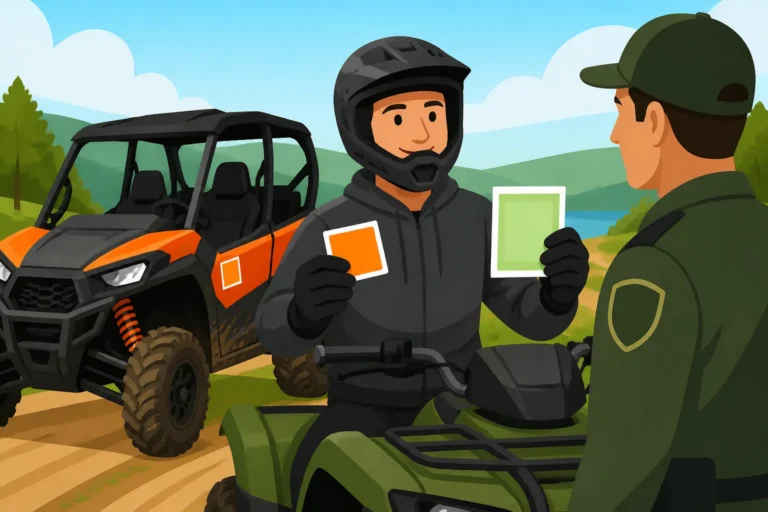
Once you've secured your permit and ensured your machine is properly equipped, your job isn't quite done. You must carry proof of all your compliance efforts with you whenever you're operating your machine on public roads. This includes:
- Your valid driver's license.
- Proof of insurance: This could be an insurance card or declaration page from your policy. It's often best to carry a physical copy and maybe a photo on your phone.
- Your special use permit: The actual permit issued by the city or county.
- Your Missouri ATV decal (if applicable): While not all UTVs/ROVs require a decal for road permits, traditional ATVs always need one for trail use. [Missouri's Three-Year ATV Decal] needs to be current.
When a law enforcement officer stops you, they will ask for these documents. Having them readily available and in order will make the interaction smoother and demonstrate your commitment to compliance. It's a small but critical step that can save you a lot of hassle and potential citations. Keep these documents in a waterproof bag or container on your machine to protect them from the elements.
Summary of Missouri ATV/UTV Road Use Rules
To help clarify the complex landscape of Missouri's off-road vehicle road use laws, here's a quick reference table summarizing the general rules and requirements. Remember, local ordinances and specific exceptions always need to be verified for your exact location and situation.
| Vehicle Type | General Road Legality (Statewide) | Common Exceptions/Permits | Key Requirements (General) | Potential Penalties (Illegal Use) |
|---|---|---|---|---|
| ATV (50" wide or less) | Generally NOT street legal | Agricultural/Industrial use, Road crossings | SLOW-MOVING VEHICLE emblem (for ag/ind), Valid driver's license, Designated crossing points, Sunrise to Sunset (for ag/ind). [Missouri's 3-Mile Rule for Side-by-Sides] does NOT apply. | Class C Misdemeanor, Civil penalty up to $1,000/day, Vehicle impoundment |
| UTV/ROV (Side-by-Side) | Generally NOT street legal | Local City/County Permit, 3-Mile Rule (ROV only), Agricultural/Industrial use, Road crossings | Valid driver's license, Insurance, Headlamps/Tail lamps, Brake lights, Horn, Rearview mirror, Seat belts & roll bar (ROV/UTV), Safety flag/SMV emblem (varies by rule), Specific local permit | Class C Misdemeanor, Civil penalty up to $1,000/day, Vehicle impoundment |
Disclaimer
This article is for general informational purposes only and does not constitute professional advice. Laws, prices and regulations vary by location and change over time. Consult a qualified professional for guidance on your specific situation.