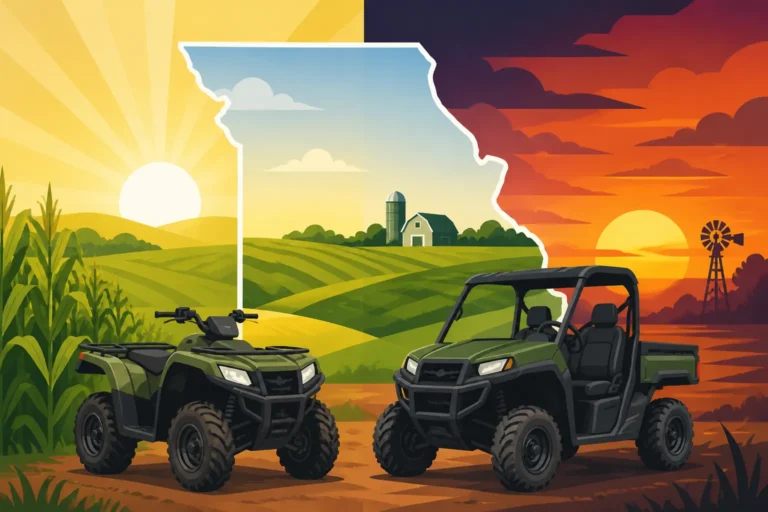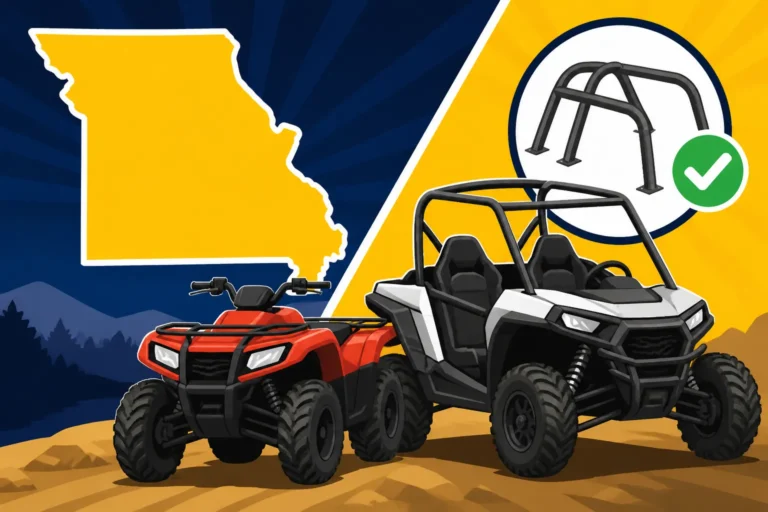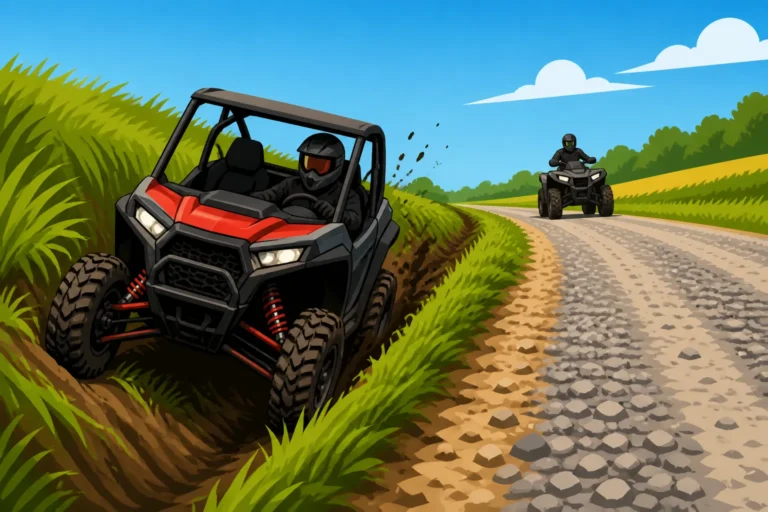
Missouri Fines for Illegal ATV Road Use
You've got that new (or new-to-you) ATV, and the open road, or maybe just a short stretch of gravel leading to your favorite fishing spot, is calling your name. It's a tempting thought to just hop on and go, especially if it feels like "just a minute" or "just down the road." But for ATV owners in Missouri, understanding the rules of the road – or, more accurately, the rules off the road – is crucial to avoid a heap of trouble. This guide is here to walk you through the very real fines and consequences you could face for illegal ATV road use in the Show-Me State, helping you steer clear of legal headaches and keep your machine where it belongs.
The Core Problem: Why Most ATVs Are Barred From Missouri Roads
It's a common misconception, especially for folks new to the ATV world, that if a machine can go fast, it can go anywhere. The reality in Missouri, however, is a bit more nuanced and, frankly, often frustrating for riders who just want to get from point A to point B without loading up a trailer. The simple truth is that most all-terrain vehicles are generally prohibited from operating on public roads and highways in Missouri, and ignoring this rule can lead to significant penalties.
Understanding Missouri's Definition of an ATV
First, let's talk about what Missouri legally considers an "ATV." In the eyes of the law, an ATV is a motorized vehicle manufactured and designed exclusively for off-highway use, with a width of 50 inches or less, traveling on three or more non-highway tires, and having a seat designed to be straddled by the operator. It also typically has handlebars for steering. This definition is pretty specific, and it's what separates your typical quad from a side-by-side or a utility vehicle (UTV). If you're riding something with a straddle seat and handlebars, it's almost certainly an ATV in Missouri's book. Understanding [What Missouri Counts as an ATV] is the first step in knowing where you can and cannot ride.
The temptation to take a quick spin on the road is strong, especially if your destination is just around the corner. Maybe you need to get to a different part of your property that's split by a county road, or you want to visit a neighbor just down the lane. It feels harmless, a quick hop, and you'll be back on private land in no time. However, that brief moment of convenience could turn into a costly encounter with law enforcement, who are often keenly aware of the regulations regarding off-road vehicles on public thoroughfares.
The Legal Framework: Statutes and Restrictions
Missouri state law, specifically through statutes like 304.030, clearly outlines that ATVs are generally not allowed on public roads and highways. This isn't just some obscure rule; it's a fundamental aspect of vehicle classification and road safety. Roads are designed for cars, trucks, and other vehicles that meet specific safety and registration standards, which ATVs typically do not. They lack many of the safety features, like turn signals, rearview mirrors, or even appropriate tires, that make other vehicles "road legal."
While the state generally bars ATVs, there's a significant nuance when it comes to local control. Cities and counties do have the authority to pass ordinances that allow utility vehicles (UTVs) and recreational off-highway vehicles (ROVs), often called side-by-sides, on their specific streets. However, this local discretion almost never extends to traditional ATVs. This is a critical distinction and one that often trips up riders. Just because you see a side-by-side cruising through a small town in Missouri doesn't mean your quad can legally follow suit. You really need to understand [Why Missouri Splits ATVs, UTVs and ROVs] to grasp the core of these differences.
The legal framework is in place to protect everyone on the road, including ATV riders themselves. The speed differences, the lack of visibility for ATVs, and the unexpected maneuvers can create dangerous situations on roads not designed for them. It's not about stifling fun, but about maintaining order and safety for all road users.
Missouri's Penalties for Illegal ATV Road Use
So, you've been caught riding your ATV on a public road where it's not permitted. What happens next? It's not usually just a slap on the wrist. Missouri law takes these violations seriously, and the consequences can range from hefty fines to more severe penalties that impact your wallet and even your driving privileges.
What Constitutes a Class C Misdemeanor
Most illegal ATV road use infractions in Missouri are classified as a Class C Misdemeanor. Now, that might sound intimidating, and it should be taken seriously. A Class C Misdemeanor in Missouri is typically punishable by a fine, and while it doesn't usually carry jail time for a first offense, it can still result in a significant financial burden. Beyond the base fine, you'll also be on the hook for court costs and various administrative fees, which can quickly add up. For more details, you can look into [A Class C Misdemeanor in Missouri].
Let's paint a picture: Imagine you're just trying to get from your deer stand to your cabin, a mile down a quiet county road. You think, "No one's ever out here." A local sheriff's deputy, however, might be on patrol, sees you, and pulls you over. They're not going to just tell you to go home; they're going to issue a citation. This isn't like a parking ticket. This is a court date, a formal charge, and a mark on your record that demonstrates you operated a vehicle illegally.
The Financial Hit: Fines and Court Costs
When you receive a citation for illegal ATV road use, the immediate concern for most people is the fine itself. While specific amounts can vary depending on the county, the judge, and the exact circumstances, you should anticipate a fine that could feel pretty substantial. We're talking hundreds of dollars, potentially up to a certain cap, for a Class C Misdemeanor. But that's just the beginning.
Layered on top of the fine are mandatory court costs. These aren't negotiable and cover the administrative expenses of the court system. Depending on your jurisdiction, these could be another significant chunk of change. Then there are potential surcharges, fees for specific programs, and other assessments that a court might levy. Before you know it, a "quick trip" down the road could easily cost you several hundred dollars, if not more. This financial hit can be a real wake-up call, making you regret that shortcut you took. It's a stark reminder that convenience often comes with a hidden, and expensive, cost.
Vehicle Impoundment and Recovery Fees
One of the most immediate and impactful consequences of being caught riding your ATV illegally on a public road is the risk of vehicle impoundment. Law enforcement has the authority to seize and impound your ATV on the spot. This means your machine is towed away, and you're left stranded, often miles from home. This scenario is incredibly frustrating and costly.
To get your ATV back, you'll first have to deal with the impound lot. This involves paying towing fees, which can be surprisingly high, especially if you're in a rural area and the tow truck has to travel a good distance. Then, there are storage fees, which accrue daily. The longer your ATV sits in impound, the more you pay. These fees can escalate rapidly, sometimes reaching hundreds of dollars within just a few days. You might also need to provide proof of ownership and resolve your court case before the impound lot will release your machine. This adds another layer of hassle and expense to an already difficult situation. Getting hit with [Missouri Fines for an Untitled ATV] is one thing, but having your machine towed and stored is another headache entirely.
Beyond the Fine: Other Consequences and Complications
The initial fine and potential impoundment are just the immediate headaches. There are broader, long-term implications that can arise from illegal ATV road use, affecting your driver's license, insurance, and even your ability to enjoy off-road riding in other legal capacities. It’s a ripple effect that extends far beyond the moment you get pulled over.
Driver's License Implications
While operating an ATV off-road in Missouri typically doesn't require a driver's license, violating road laws with one can still have an impact on your actual driver's license – the one you use to drive your car. A Class C Misdemeanor conviction often means points assessed against your state driver's license. Accumulating too many points can lead to increased insurance premiums, driver improvement classes, or even temporary license suspension.
It's a common misconception that because it's an "ATV," it doesn't count towards your driving record. However, when you're operating any motorized vehicle on a public road and commit an infraction, the state sees it as a driving offense, regardless of whether it's a car, truck, or ATV. This is especially true if the officer records your driver's license number during the stop. You might not need a license to ride your quad in the woods, but you definitely need one to drive on Missouri roads, and illegal ATV use can jeopardize that privilege.
Insurance Headaches and Liability
This is where things can get truly expensive and complicated. Most standard ATV insurance policies are designed for off-road use only and explicitly exclude coverage for accidents that occur on public roads or highways where the vehicle is not legally permitted. If you have an accident while riding your ATV illegally on a road, you could find yourself in a nightmare scenario.
Without proper insurance coverage, you become personally liable for any damages or injuries that result from the accident. Imagine hitting a parked car, colliding with another vehicle, or, even worse, injuring a pedestrian. The costs for vehicle repairs, medical bills, legal fees, and potential lawsuits could be absolutely astronomical, easily reaching tens or hundreds of thousands of dollars. A simple fine would seem like pocket change in comparison. Even if you have comprehensive ATV insurance, it likely won't cover a situation where you were operating the vehicle in a manner explicitly excluded by the policy. It's crucial to understand [Missouri ATV Insurance Requirement] and that this requirement usually pertains to scenarios where a city or county permits road use, not general, unauthorized use. This risk alone should be enough to deter anyone from illegal road riding.
Loss of Riding Privileges in State Parks or Other Areas
While not a direct legal penalty from the courts for road use, a history of legal infractions, especially those involving illegal vehicle operation, can sometimes impact your access to legitimate riding areas. For instance, if you're a repeat offender and have multiple citations, even for off-road violations like riding in closed areas or ignoring safety rules, it could potentially lead to being flagged or banned from specific state parks or managed trail systems.
Agencies that manage public lands, like the Missouri Department of Natural Resources, want responsible riders. If your name is frequently popping up in violation reports, it could signal that you're not adhering to rules designed for safety and environmental protection. While this might be less common for a single road use infraction, it's a point to consider in the broader context of maintaining a good reputation as a responsible rider. Respecting all laws, both on and off-road, helps ensure you continue to have places to ride.
How to Avoid Fines: Legal Alternatives and Best Practices
The good news is that avoiding these fines and complications is entirely within your control. It comes down to understanding the rules, planning your trips, and always prioritizing legal and safe operation. There are plenty of ways to enjoy your ATV in Missouri without risking your wallet, your license, or your machine.
Understanding Local Ordinances for UTVs/ROVs
Here's where a common point of confusion, and opportunity, lies: Many Missouri cities and counties do have ordinances that permit the operation of Utility Vehicles (UTVs) and Recreational Off-Highway Vehicles (ROVs), also known as side-by-sides, on their public streets. However, this permission almost never extends to traditional ATVs. The key difference lies in the definition: UTVs and ROVs typically have side-by-side seating, a steering wheel, and often more car-like features. ATVs, remember, have a straddle seat and handlebars.
If you own a UTV or ROV, it is absolutely essential to check with your local city hall or county commission to see if they have such an ordinance in place. If they do, there will be specific requirements, such as purchasing a special permit, carrying insurance, having proper lighting (headlamps, tail lamps), a safety flag, and sometimes even roll bars and seatbelts. You might even need a valid driver's license. Many communities, like those listed in [Missouri Cities That Allow UTVs on Streets], have opened their roads to these types of machines. Do your homework! Don't assume. Just because your neighbor rides their side-by-side to the gas station doesn't mean your quad can, too. Always confirm the specific local rules for your type of machine. There are also specific rules about [Missouri's 3-Mile Rule for Side-by-Sides] which only apply to ROVs, not ATVs.
Transporting Your ATV Safely and Legally
For your ATV, the safest and almost universally legal way to get it from point A to point B on public roads is to trailer it. This might seem like an extra step, but it's a small price to pay to avoid the fines, impoundment, and potential liability issues we've discussed. Invest in a good quality trailer and appropriate tie-downs. Ensure your trailer is properly registered, has working lights, and that your tow vehicle is capable of handling the weight.
SuperATV, for example, offers a range of accessories like sturdy tie-downs, ramps, and even trailer parts that can help make your ATV transport experience safer and more efficient. Using reliable equipment ensures your machine stays put during transit, protecting your investment and other drivers on the road. Remember, loading your ATV onto a trailer also gives you the freedom to explore all the fantastic, legal riding areas Missouri has to offer, without the worry of breaking the law on the way there.
Exploring Designated Off-Road Trails
Missouri boasts some truly incredible off-road riding opportunities. Instead of risking a fine on an illegal road, channel your energy into exploring the designated public and private trail systems that welcome ATVs. Places like St. Joe State Park, Finger Lakes State Park, and the Chadwick Motorcycle and ATV Use Area in the Mark Twain National Forest offer miles upon miles of challenging and diverse trails. These areas are specifically managed for off-road recreation, meaning you can ride legally and safely.
You'll usually need to purchase a permit for these areas, but the cost is minimal compared to a single road-use fine. Check out [Where to Ride an ATV in Missouri] for a comprehensive list. For specific costs, you can also look up [Missouri ATV Permit Cost]. Riding in these designated areas ensures you're contributing to the maintenance of the trails and supporting the sport you love. It also means you're part of a community of riders who respect the rules and the land. By focusing your riding on these legal and exciting destinations, you can enjoy your ATV to the fullest without the constant worry of a run-in with the law.
Remember, the goal is to have fun and enjoy your machine responsibly. Knowing the rules and adhering to them is the best way to ensure your Missouri ATV adventures are always memorable for the right reasons.
Disclaimer
This article is for general informational purposes only and does not constitute professional advice. Laws, prices and regulations vary by location and change over time. Consult a qualified professional for guidance on your specific situation.