Missouri Rules for Riding to a Trailhead
Oh, the age-old dilemma! You’ve got your quad or your side-by-side all gassed up, your gear is packed, and you can practically smell the pine needles and fresh dirt of your favorite trail. But then you look at that short stretch of county road or even a few blocks of city street between your driveway and the trailhead, and a knot forms in your stomach. Can you really ride there, or are you just asking for a ticket? It’s a frustration many Missouri riders know all too well, and it leaves folks scratching their heads trying to figure out the maze of rules. This guide is here to clear up that confusion, helping you understand when and how you might legally get your off-road machine to the fun.
The Core Challenge: Why Riding to a Trailhead is Tricky in Missouri
Let’s be honest: the idea of just hopping on your ATV or UTV at home and cruising a mile or two down the road to hit the trails sounds like pure freedom, right? Unfortunately, for many Missouri riders, that dream often clashes with the reality of state and local laws. It's not as simple as it seems, and understanding why it's tricky is the first step to avoiding a costly mistake.
The Disconnect Between Trail and Road Rules
One of the biggest sources of confusion for off-road enthusiasts is the stark difference between where your machine is welcome and where it's not. On a designated trail or private property, your ATV or UTV is in its element. It's built for mud, rocks, and rough terrain. But the moment those tires touch a paved or gravel public road, the rules change entirely. Missouri's legal framework for off-highway vehicles (OHVs) primarily categorizes them as recreational vehicles meant for off-road use. This means they generally aren't designed or equipped to meet the same standards as vehicles built for public highways, like cars, trucks, or motorcycles. This fundamental disconnect creates a gap between the desire to easily access trails and the legal means to do so, leaving many riders feeling stuck, wondering if they need a truck and trailer for even the shortest jaunt.
Missouri's General Stance on Off-Highway Vehicles on Public Roads
To put it plainly: Missouri does not consider ATVs or UTVs "street legal" in the same way it does cars or motorcycles. This is the overarching principle that governs almost everything you'll encounter regarding riding on public roads. While other states might have more permissive laws, Missouri's default position is that if it's an off-road machine, it belongs off-road. This is a common point of contention and frustration for riders, especially those who live just a stone's throw from a fantastic riding area. You might see people doing it, but that doesn't make it legal. This general prohibition is why even a short trip to a trailhead can turn into a headache if you're not fully aware of the specific, limited exceptions that exist. Ignoring these rules can lead to tickets, fines, and potentially even impoundment, definitely putting a damper on your riding day before it even begins.
Understanding Missouri's Limited Road Use Options for ATVs and UTVs
So, if the general rule is "no public roads," where does that leave you when your desired trailhead is just down the way? Well, it depends heavily on what kind of machine you’re riding and where you’re trying to ride it. Missouri makes a pretty clear distinction, and understanding that is key.
The ATV Road Prohibition: What it Means for Your Quad
If you're rolling on a traditional ATV—the kind with a straddle seat, handlebars, and typically under 50 inches wide—the news isn't great for road use. Missouri statutes are quite clear that ATVs are generally not permitted on public streets or highways. This means that for the vast majority of ATV owners, riding from your home down a county road, or through a small town to reach a state park or national forest trailhead, is simply not allowed.
There are incredibly narrow exceptions, usually related to specific agricultural tasks or very limited crossing situations, but these are almost never applicable to recreational travel to a trailhead. For example, you might see an ATV crossing a highway at a specific angle to get from one farm field to another, but that's a far cry from cruising a mile down the shoulder. This distinction is vital because a deputy won't care if you're "just going a little ways" to the trail if you're on a machine that isn't legally allowed on that road. This is why many ATV riders are resigned to trailering their machines everywhere, even for what seems like a short hop.
UTVs and ROVs: A Glimmer of Hope (But Still Limited)
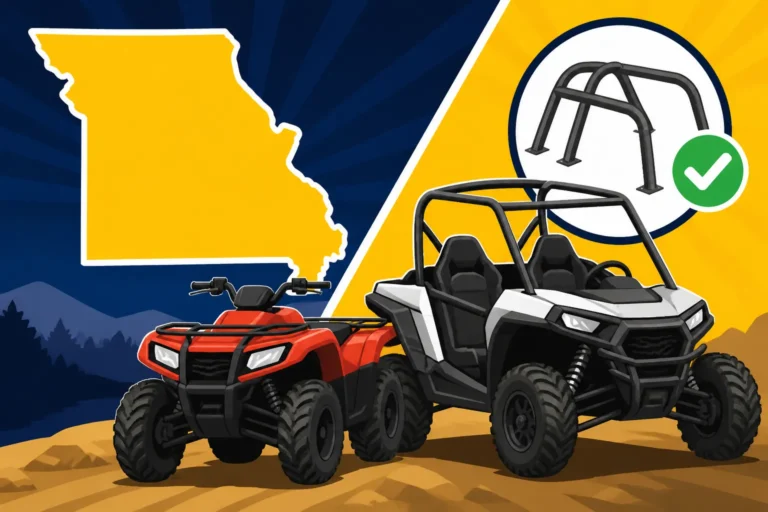
Now, if you're the proud owner of a UTV or Recreational Off-Highway Vehicle (ROV)—think side-by-sides like a Polaris RZR, a Can-Am Maverick, or a Kawasaki Mule—you might have a few more options, but don't get too excited just yet. While still primarily considered off-road vehicles, Missouri statutes grant some leeway for UTVs and ROVs that doesn't apply to ATVs. This is where the crucial distinction comes into play, as outlined in articles like [Why Missouri Splits ATVs, UTVs and ROVs].
The "glimmer of hope" primarily comes from two areas: specific local ordinances adopted by individual cities and counties, and the "3-mile rule" for ROVs. These allowances are not statewide free passes, and they come with their own set of requirements regarding permits, safety equipment, and driver qualifications. It means that while your UTV could potentially be ridden on certain roads to a trailhead, it’s not a given, and you’ll need to do your homework. The law makes a clear differentiation between ATVs (straddle seat, handlebars) and ROVs (non-straddle seat, steering wheel), and this often means different rules for road access.
Agricultural and Industrial Exceptions (Not for Trail Riding)
It's common to see UTVs, and sometimes even ATVs, being operated on rural roads for agricultural or industrial purposes. Perhaps you've spotted a farmer driving their side-by-side from one pasture to another, or a utility worker inspecting lines along a county road. These are legitimate, statutorily defined exceptions to the general "no public road" rule.
However, it’s absolutely critical to understand that these exceptions are tied to the purpose of the travel, not just the machine itself. You can't claim you're on your way to "do farm work" at the trailhead or "inspect something industrial" just to bypass the rules. These exceptions are specific: they apply to machines being used for farm operations, industrial activities on the premises, or by utility companies in the course of their duties. They typically require the machine to be equipped with a slow-moving vehicle sign or a safety flag, and the use is often limited to specific types of roads (like county roads, not state highways) and specific times of day (often sunrise to sunset). Simply put, while these exceptions exist, they offer no legal pathway for recreational riders to get their machines to a trailhead. Don't try to stretch these rules; they won't hold up if you're stopped by law enforcement.
Navigating the Exceptions: When You Can Ride Missouri Roads to a Trailhead
Okay, so we've established that the rules are strict, especially for ATVs. But if you have a UTV or ROV, there are specific, limited scenarios where you might be able to legally travel short distances on public roads to access a trailhead. These aren't blanket permissions; they require careful attention to local laws and specific equipment.
The "3-Mile Rule" for Recreational Off-Highway Vehicles (ROVs)
This is perhaps one of the most talked-about and often misunderstood exceptions in Missouri law for side-by-sides. The "3-mile rule" (Missouri Revised Statute 304.032) allows a Recreational Off-Highway Vehicle (ROV) to be operated on public roads and highways within three miles of the operator's residence, provided the specific city or county has passed an ordinance allowing it. This is a huge "if." It's not a statewide right; it's a local option that a municipality or county must choose to adopt.
If your local jurisdiction has adopted such an ordinance, and you're within that crucial three-mile radius, you're still not simply free to roam. You must possess a valid driver's license, the ROV must have proof of financial responsibility (insurance), and it needs certain safety equipment like headlights, taillights, a slow-moving vehicle sign or a [Missouri's 7-Foot Safety Flag]. This rule is specifically for ROVs, not traditional ATVs, which is why understanding [Why the 3-Mile Rule Is ROVs Only] is so important. For many riders, especially those whose homes are truly close to a trailhead, this rule, when adopted locally, can be a game-changer. Just remember, that "3 miles" is measured from your actual residence, not just any point in the county. Articles like [Missouri 3-Mile Rule Explained] go into much more detail about the nuances.
Local City and County Ordinances for UTV/ROV Road Use
Beyond the "3-mile rule," many individual cities and counties across Missouri have taken it upon themselves to create their own ordinances regarding UTV/ROV use on their local roads. This means that even if the "3-mile rule" doesn't apply to you, or your jurisdiction hasn't adopted it, a local city or county might still have a specific permit program in place.
This is where the patchwork nature of Missouri's laws truly shines. What's legal in Lake Ozark might not be in Harrisonville, and what's allowed in Cass County might be forbidden in Boone County. Many of these ordinances require you to obtain a special permit from the local police department or sheriff's office. You'll likely pay a fee, which often goes back to local road maintenance or safety initiatives, as detailed in [Why the Permit Money Stays Local]. You might also need proof of insurance, a valid driver's license, and specific safety equipment. Knowing [Missouri Cities That Allow UTVs on Streets] and [Missouri Counties That Allow ATVs on Roads] can be a starting point, but always verify directly with the local authorities. Before you even think about riding to a trailhead on local roads, a quick call to the city hall or sheriff's department in that specific jurisdiction is absolutely essential. These permits, when available, are your golden ticket for short road sections.
Essential Requirements for Any Approved Road Use
Whether you're operating under a local "3-mile rule" ordinance or a specific city/county permit, there's a common set of requirements you'll almost certainly need to meet. These aren't optional; they're critical for both legality and safety.
Firstly, you absolutely must have a valid operator's or chauffeur's license. This isn't a leisure activity when you're on a public road, and you're expected to be a licensed driver. Secondly, proof of financial responsibility (insurance) is almost universally required. This protects you and others in case of an accident. While ATVs don't have a statewide insurance mandate, road use often triggers this requirement, as discussed in [Proof of Insurance Under a Missouri Ordinance].
Beyond those, your UTV/ROV will need specific safety equipment. This typically includes:
- Headlights and taillights that are functional and visible from appropriate distances.
- A 7-foot tall safety flag or a slow-moving vehicle (SMV) triangle. The flag should be brightly colored, usually fluorescent orange, and fly at least seven feet above the ground. Companies like SuperATV offer robust flag mounts and flags that meet these requirements, often with quick-release systems for when you hit the trails.
- A rearview mirror and sometimes side mirrors.
- Brakes that meet state standards.
- Seatbelts for all occupants (for UTVs/ROVs).
- Roll bars or a roll cage (for UTVs/ROVs).
It’s crucial to ensure your machine meets all these specifications before venturing onto any public road. These requirements are in place to make your machine visible to other motorists and to ensure a basic level of safety when sharing the road, even for short distances to get to that prime trailhead.
Practical Tips for a Legal and Safe Journey to the Trailhead
So, you've done your homework, found an ordinance that works for your UTV, and you're ready to roll. That's fantastic! But before you hit the ignition, let's talk about some practical advice to ensure your journey to the trailhead is not just legal, but also safe and stress-free.
Researching Local Laws Before You Ride
This cannot be stressed enough: always, always, always verify the local laws before you ride on any public road. The legal landscape for ATVs and UTVs in Missouri is a complex tapestry of state statutes and local ordinances. What one county permits, another might strictly forbid. What’s allowed within city limits might be different on a rural county road. Relying on what "a friend of a friend heard" or "what you saw someone else doing" is a recipe for a ticket.
Your best bet is to call the local sheriff's department or city police department of the specific jurisdiction where you intend to ride. Ask direct questions about their ordinances regarding ROV or UTV use on public roads, especially for access to trailheads. Inquire about permit requirements, fees, and any specific equipment mandates. Many local government websites will also have this information available. Remember, laws can change, so even if you rode there last year, it's wise to double-check. This proactive research is your shield against fines and frustration.
Equipping Your Machine for Road Sections
Even for short stints on public roads, your UTV needs to be properly equipped for safety and visibility, not just legality. While your off-road machine is built for rugged terrain, public roads demand a different set of considerations. Many riders already have some essential gear, but often additional items are needed to meet road-use requirements.
- Lighting: Ensure your headlights and taillights are bright and fully functional. Consider adding turn signals, even if not strictly required by every local ordinance, as they greatly enhance communication with other drivers. LED light bars from a brand like SuperATV can significantly improve visibility, especially if you're riding near dawn or dusk.
- Visibility: A high-mounted, brightly colored safety flag is almost universally required. This flag, as we discussed, needs to be at least seven feet off the ground and prominently visible. Some riders also opt for a slow-moving vehicle (SMV) triangle on the rear.
- Audibility: A horn is often a required piece of equipment for road use. Make sure yours is loud enough to be heard by other drivers.
- Mirrors: A rearview mirror is usually a must-have, and side mirrors can greatly improve your situational awareness on public roads, allowing you to see traffic approaching from behind without twisting around. SuperATV offers various mirror kits designed for easy installation on UTV roll cages.
- Tires: While knobby tires are great for mud, they might not be ideal for pavement. For frequent road use, consider tires that offer a better balance between off-road traction and on-road stability, or simply be aware of how your current tires will handle asphalt.
Making these small adjustments not only helps you comply with local ordinances but significantly boosts your safety by making your machine more visible and maneuverable among conventional road traffic.
| Feature | ATV (Quad) | UTV/ROV (Side-by-Side) |
|---|---|---|
| General Road Legality | Generally not street legal | Generally not street legal |
| Local Ordinance Option | Extremely rare, almost non-existent | Yes, many cities/counties allow with permit/rules |
| "3-Mile Rule" Eligibility | No, not eligible | Yes, if local ordinance adopted |
| Agricultural Use Exception | Yes, for specific farm tasks | Yes, for specific farm/industrial tasks |
| Required Driver's License | N/A (not for recreational road use) | Yes, if operating on public roads under permit/rule |
| Required Insurance | N/A (not for recreational road use) | Yes, for public road use under permit/rule |
| Safety Flag/SMV Sign | Often required for agricultural use | Yes, almost always required for public road use |
The Safest Option: Trailering Your Machine
After all this talk about specific rules, permits, and equipment, you might be thinking, "This is way too complicated!" And honestly, for many riders, it is. That's why, in most cases, the most straightforward, universally legal, and safest way to get your ATV or UTV to a trailhead in Missouri is by trailering it.
This option completely bypasses the complexities of state and local road-use ordinances, eliminating any doubt or potential for fines. You simply load your machine onto a trailer, hook it up to your truck or SUV, and drive it directly to the designated staging area or parking lot at the trailhead. Once there, you unload, gear up, and hit the trails knowing you're fully compliant with all laws.
While it means the added expense and hassle of a trailer and a tow vehicle, it offers peace of mind. For ATVs, which have virtually no legal road-use options for recreational purposes, trailering is almost always the only viable solution. Even for UTV owners who do have local road-use options, trailering might be preferable if the road section is busy, fast, or particularly dangerous, or if you're traveling beyond the reach of a local permit or the "3-mile rule." Sometimes, the easiest path is the one that avoids all the complex legal hurdles and gets you to the fun with zero stress.
Disclaimer
This article is for general informational purposes only and does not constitute professional advice. Laws, prices and regulations vary by location and change over time. Consult a qualified professional for guidance on your specific situation.