When Farm Work Allows a Passenger on an ATV
It can be incredibly frustrating trying to make sense of all the rules when you’re just trying to get work done on the farm, especially when it comes to something as basic as carrying a helper on your ATV. Missouri's laws about passengers on all-terrain vehicles can feel pretty rigid, but there’s a vital exception for agricultural work that many farmers rely on. This guide is here to untangle those rules, explaining exactly when and how you can have a passenger on your ATV while performing farm duties without running afoul of the law or, more importantly, compromising safety.
The General Rule: Why Passengers Are Usually a No-Go on Missouri ATVs
If you’ve spent any time around ATVs or looked into Missouri's regulations, you’ve probably heard the steadfast rule: ATVs are generally designed for one rider only. This isn't just a suggestion; it's a fundamental safety principle baked into the design of most machines and reflected in the state's statutes. It can feel like a nuisance when you just need to get your kid or a helper out to the back forty, but there’s a solid reason behind it.
Understanding Missouri's Single-Rider Philosophy
Most ATVs are engineered with a specific rider experience in mind: one person, straddling the seat, with handlebars for control. The weight distribution, suspension, and steering dynamics are all calibrated for a single operator. Adding a second person, even a small one, immediately throws off this delicate balance. The machine becomes less predictable, harder to steer, and far more prone to tipping, especially when navigating the uneven terrain and obstacles common on a farm. Missouri law broadly reflects this, making it clear that for general recreational use, [Passengers Barred on a Missouri ATV]. It's about minimizing risk for everyone involved. The idea is to keep you as safe as possible on a machine that’s already inherently dynamic and requires active body English to operate properly.
Think about it this way: your ATV isn't a car with a stable center of gravity. It's a nimble, responsive machine that moves with you. When you have an unexpected shift in weight from a passenger, particularly one who isn't experienced in riding, it can turn a routine maneuver into a dangerous situation in a blink. The designers built these machines for the physical interaction of a single rider, and any deviation introduces variables that can quickly escalate into an accident.
The Dangers of Extra Weight and Shifting Balance
The simple act of adding extra weight to an ATV can dramatically alter its performance characteristics. Braking distances increase, acceleration changes, and the suspension might bottom out more easily. But it’s not just about the static weight; it’s about the dynamic weight distribution. When you’re traversing a side slope, turning sharply, or going over a bump, a passenger’s movement can amplify these effects. If they lean the wrong way, or even just shift their weight unexpectedly, it can instantly destabilize the machine.
Imagine trying to navigate a muddy incline with an extra person perched behind you. The ATV, which might normally handle it with ease, could struggle for traction, lose stability, or even flip backward due to the altered center of gravity. This is why the general rule exists – to prevent accidents stemming from the inherent instability introduced by a second person on a machine designed for one. While some aftermarket accessories from places like SuperATV might enhance cargo capacity or machine robustness, they don’t fundamentally alter the ATV’s single-rider design characteristics for safe passenger transport in dynamic riding situations.
Unpacking the Missouri Farm Work Exception
Now, let's talk about the specific exception that’s so important for our farming community. Missouri law isn’t completely blind to the practical needs of agricultural operations. It recognizes that on a farm, an ATV is often a tool, not just a recreational vehicle, and sometimes, that tool needs to carry a helper for efficiency or safety. This is where the farm work exception comes into play, offering a narrow but crucial allowance for carrying passengers.
What the Law Says About Agricultural Use
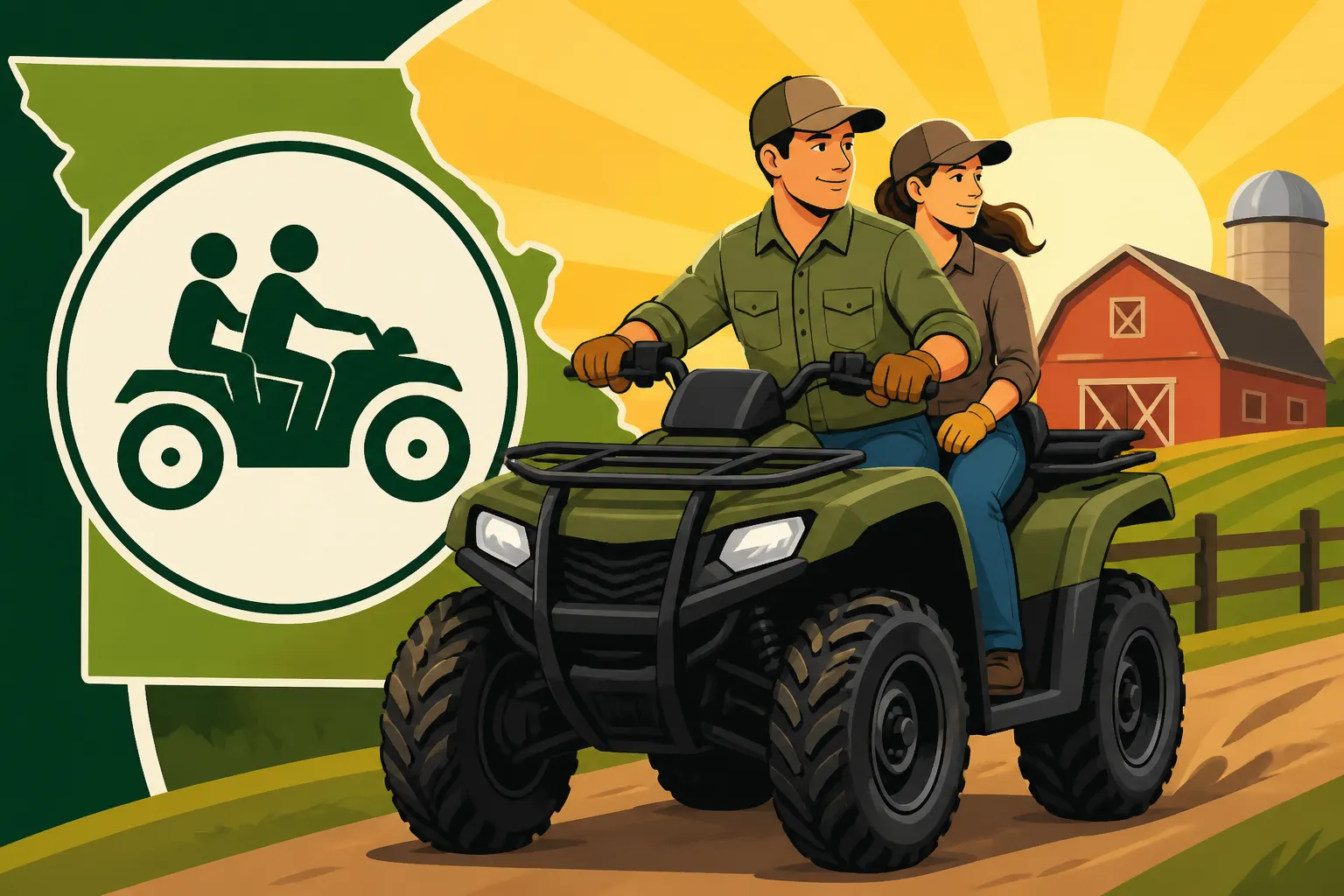
Missouri statutes include provisions that permit carrying a passenger on an ATV if the ATV is being used for agricultural purposes on private land. This isn't a blanket permission to take your family on a joyride through the cornfields; it's specifically tied to the purpose of the ride. The key here is "agricultural purposes." This means the activity must be directly related to the operation of a farm, whether it's livestock, crops, or general farm maintenance. It’s an acknowledgement that sometimes, a farmer needs an extra set of hands or eyes to accomplish a task that would otherwise require multiple trips or more cumbersome methods. The precise language allows for a passenger, but the intent behind that allowance is strictly practical, not recreational. For those looking for the specifics, this is the exception to the usual [When Farm Work Allows a Passenger on an ATV] rule.
This exception is rooted in a pragmatic understanding of farm life. Farmers often work alone in expansive areas, and having a child, another farmhand, or even a spouse along to help open a gate, fix a fence post, or check on a distant herd can save significant time and effort. The law provides this flexibility, but it implicitly expects the operator to exercise common sense and extreme caution, knowing the inherent risks involved. It's not about making ATVs inherently safer for passengers; it's about acknowledging a necessary function within a specific work environment.
Defining "Farm Work" in Practice
So, what exactly counts as "farm work" in the eyes of Missouri law? It’s pretty straightforward: activities directly associated with producing crops, raising livestock, or maintaining the farm's infrastructure. This could include tasks like:
- Inspecting fields or fences: Driving along property lines or through pastures to check for damage, water lines, or animal escapes.
- Hauling small equipment or supplies: Transporting tools, fencing materials, feed samples, or veterinary supplies to a specific location on the farm.
- Moving livestock: Herding cattle, sheep, or other animals from one pasture to another, where a second person can be invaluable for opening gates or guiding the animals.
- Checking irrigation systems: Driving to various points to inspect sprinklers, pumps, or other water delivery components.
- Supervising youth: Taking a younger family member out to teach them about farm operations or have them assist with a task.
The distinction is crucial. Driving your ATV with a passenger to go hunting, fishing, or simply for a leisurely ride around the property, even if it's farm property, would likely not fall under the "agricultural purposes" exception. The intent must be genuinely tied to the business of farming. This is important to remember, as misinterpreting "farm work" could lead to unintended legal consequences, even on your own land.
Practical Considerations for Carrying a Farm Passenger
Even with the farm work exception in place, the act of carrying a passenger on an ATV demands an elevated level of caution and preparation. It's not just about what the law allows; it's about what responsible practice dictates. Safety should always be your top priority, especially when carrying another person on a machine designed for one.
Equipment and Machine Capacity
First and foremost, you need to be realistic about your ATV's capabilities. Most traditional ATVs are designed for a single operator and typically have a single, long seat. While some models might have a slightly extended seat, this doesn’t automatically mean they’re built for two. Always check your ATV's owner's manual for its maximum weight capacity. Exceeding this limit compromises handling, braking, and suspension, making the machine much harder to control. Even if it's "farm work," overloading your ATV is an accident waiting to happen.
If you frequently need to carry a passenger for farm duties, it's worth considering whether your current ATV is truly the best tool for the job. While aftermarket accessories, even robust ones from companies like SuperATV, can enhance utility, they generally don't convert a single-rider ATV into a safe two-person machine. For instance, you might use their cargo boxes or racks to carry tools, but trying to adapt these for passenger seating on a single-rider ATV introduces significant risks. The machine’s fundamental design – its wheelbase, suspension travel, and center of gravity – remains geared for a single occupant.
Safety First: Minimizing Risks
When you do carry a passenger for farm work, every precaution must be taken. This means slowing down considerably, choosing the smoothest and least challenging routes, and avoiding any terrain that could cause instability. Communicate clearly with your passenger before you even start moving:
- Explain how they should hold on (firmly to you or the designated grab handles, if any).
- Instruct them to keep their feet on the footrests at all times.
- Tell them to try and stay centered and avoid sudden movements.
- Emphasize that they should never try to "help" steer or lean unless specifically instructed to do so in an emergency.
Both you and your passenger should wear appropriate safety gear, including helmets, eye protection, long sleeves, long pants, gloves, and sturdy boots. While Missouri's adult helmet law for ATVs is generally lenient on private land, when carrying a passenger, especially a minor, a helmet is non-negotiable for safety. Keep in mind that [Missouri Helmet Law for Riders Under 18] applies regardless of location if they're on a public road or certain public lands, but even on private land, it's just plain smart. Think about it: a slow tip-over on soft grass can still result in a head injury. There's no such thing as "too safe" when a human life is at stake on a machine not designed for two.
The Distinction: ATVs vs. UTVs/ROVs on the Farm
It's absolutely critical to understand that Missouri law, and indeed the entire industry, makes a significant distinction between an ATV (All-Terrain Vehicle) and a UTV (Utility Task Vehicle) or ROV (Recreational Off-Highway Vehicle), often called a side-by-side. While both are off-road machines, their design, intended use, and legal classifications regarding passengers are fundamentally different, especially in a farm context.
Why UTVs and ROVs Are Different for Passengers
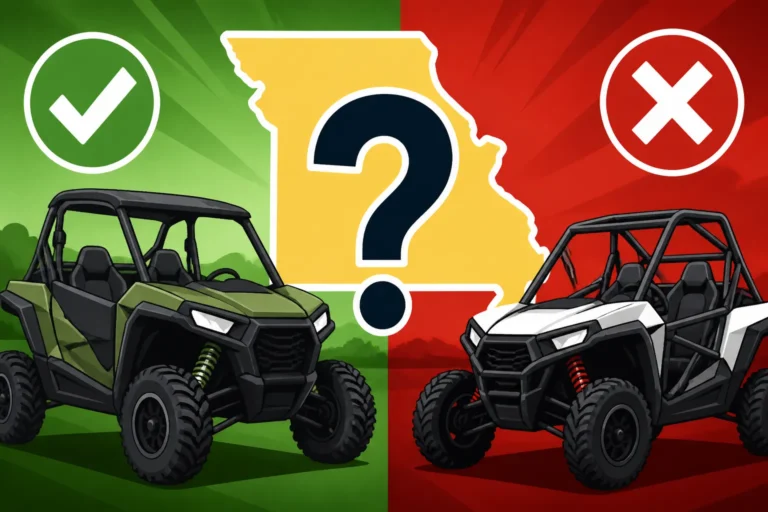
Unlike ATVs, UTVs and ROVs are purpose-built to carry multiple passengers. They feature side-by-side seating (hence the common name), seatbelts, and often a roll cage or occupant protective structure. This design provides a much more stable and secure environment for passengers. Missouri law reflects this difference, classifying UTVs/ROVs as machines capable of carrying more than one person, and thus, the passenger restrictions that apply to ATVs generally do not apply to UTVs/ROVs in the same way. The question of [How the Passenger Rule Treats a Two-Seat Machine] is answered quite differently depending on whether you're talking about an ATV or a UTV.
This fundamental design difference means UTVs are inherently safer for carrying passengers because they mitigate many of the instability issues associated with an ATV. The driver and passengers are seated within the vehicle's frame, rather than astride it, offering greater protection and stability. When you consider the robust chassis and enhanced safety features often available, it’s clear why UTVs are becoming the preferred choice for many multi-person farm tasks.
The Practical Advantages of a Side-by-Side for Farm Tasks
For farm work that regularly involves carrying a passenger, hauling tools, or transporting supplies, a UTV or side-by-side offers significant practical advantages over an ATV.
- Passenger Capacity and Comfort: UTVs are designed from the ground up to safely accommodate two, four, or even six passengers, all seated comfortably with seatbelts. This makes transporting multiple workers or family members across the farm much more efficient and safer.
- Cargo Hauling: With robust cargo beds, UTVs can carry substantial loads of feed, tools, fencing, or harvested crops, often with much greater stability than an ATV with a small rack. You can equip a UTV with all sorts of practical accessories, from gun boots to plow systems, making it an indispensable farm workhorse. Many farmers turn to companies like SuperATV for heavy-duty upgrades and accessories that enhance their UTVs' utility and durability for the demanding conditions of farm life.
- Safety Features: The presence of seatbelts, roll cages, and often doors or nets provides a higher level of occupant protection in the event of a rollover or collision. This is a critical factor when working in potentially hazardous farm environments.
- Ease of Operation: UTVs typically operate more like a car, with a steering wheel and foot pedals, which can be less physically demanding than maneuvering an ATV with handlebars and body English, especially over long workdays.
If your farm operations frequently require a passenger or the transportation of significant gear, investing in a UTV is often a much safer and more efficient choice. It eliminates the ambiguity and inherent risks associated with carrying a passenger on an ATV, allowing you to focus on the work at hand with greater peace of mind.
Navigating Legalities and Avoiding Penalties
Understanding the farm work exception is one thing, but making sure you're always on the right side of the law is another. While the exception provides flexibility, it's not a license to be careless, and misinterpreting the rules can lead to unwanted consequences. It's crucial to distinguish between using an ATV on private farm land versus venturing onto public roadways, even briefly.
Understanding Enforcement on Private Land vs. Public Roads
The agricultural use exception for carrying a passenger on an ATV primarily applies to private farm property. This is where most farm work takes place, and generally, law enforcement has less jurisdiction over private land activities unless a specific law is being flagrantly violated or an accident occurs. However, the moment your ATV, with a passenger, leaves your private farm and enters a public road, even for a short distance, the rules change dramatically.
Missouri has very specific, and often restrictive, laws regarding ATV use on public roads. Even for farm purposes, these typically require specific permits, safety equipment, and restrict passengers on ATVs. For instance, [Missouri Rules for Agricultural Road Use] outlines conditions for using certain machines on roads for farm purposes, but generally, carrying a passenger on an ATV would still be prohibited on a public road, even if you’re just crossing it. A UTV might have more leeway under a city or county ordinance, but an ATV is a different story. It’s a common pitfall for farmers who just need to get from one field to another across a county road. Ignorance of these public road rules is no defense.
Consequences of Misinterpreting the Rules
Ignoring or misinterpreting Missouri's ATV passenger rules, even with good intentions related to farm work, can lead to a range of penalties. If you are caught on a public roadway with a passenger on your ATV in a non-permitted situation, you could face citations and fines. While the exact penalty can vary by jurisdiction and the specific circumstances, such violations can be serious. For example, some ATV-related violations are classified as [A Class C Misdemeanor in Missouri], which can carry fines and potentially other legal repercussions.
Beyond direct legal penalties, there are significant liability concerns. If an accident occurs while you're carrying a passenger on your ATV, and it's determined that you were operating outside the legal allowance or in a negligent manner, you could face severe civil penalties. This could mean [Civil Penalties Up to a Thousand a Day] or more, depending on the severity of injuries and damages. Your insurance might also deny coverage if you were operating the vehicle in a manner explicitly prohibited by law or contrary to your policy's terms. It’s always better to err on the side of caution, especially when another person’s safety is in your hands. Taking the time to understand these rules can save you a world of trouble and expense down the line.
Passenger Rules: ATV vs. UTV/ROV for Farm Work in Missouri
To help clarify the distinctions we’ve discussed, here's a quick overview of how passenger rules generally compare between ATVs and UTVs/ROVs when it comes to agricultural work in Missouri.
| Feature | ATV (All-Terrain Vehicle) | UTV/ROV (Utility/Recreational Off-Highway Vehicle) |
|---|---|---|
| Primary Design | Single rider, straddle seat, handlebars, lean-to-turn | Multi-passenger (side-by-side), bucket/bench seats, steering wheel, car-like operation |
| Standard Passenger | Generally prohibited on- or off-road | Designed for multiple passengers (driver + 1 or more) |
| Farm Work Exception | Allows passenger only for bona fide agricultural tasks on private land | Designed for passengers; often used for farm tasks; no specific "exception" needed for passengers in design |
| Safety Features | Minimal inherent passenger safety (no seatbelts/roll cage) | Seatbelts, roll cage, often doors/nets for passenger safety are standard |
| Public Road Use | Highly restricted, even for farm use; passenger usually prohibited | More flexibility with permits/ordinances; passengers allowed if designed for it and compliant |
| Liability Risk | Higher, due to operating outside design intent for passengers | Lower, as passengers are within design intent and safety features |
| Recommended Use | Single-person tasks, light hauling | Multi-person tasks, heavy hauling, enhanced safety |
This table highlights why, for frequent passenger transport in a farm setting, a UTV or side-by-side is almost always the safer and legally clearer option compared to an ATV.
Final Thoughts on Carrying a Passenger for Farm Work
Navigating the world of ATVs and UTVs for farm work in Missouri can feel like a maze, especially with rules about carrying passengers. The core takeaway is this: while Missouri law does offer a specific exemption for carrying a passenger on an ATV when engaged in legitimate agricultural work on private land, this allowance comes with a heavy responsibility. ATVs are designed for single riders, and adding a passenger fundamentally changes their handling characteristics, increasing the risk of an accident.
For occasional, absolute necessity tasks, this exception can be a lifesaver for efficiency. However, it should always be approached with extreme caution, prioritizing safety above all else. This means ensuring your ATV is within its weight limits, slowing down significantly, choosing the safest routes, and equipping both yourself and your passenger with proper safety gear. If carrying a passenger is a regular part of your farm routine, you might find that a UTV or side-by-side is not only a safer and more comfortable option but also one that aligns more clearly with Missouri's vehicle classifications and design intentions for multi-person transport. Ultimately, being informed and making safety-conscious choices will keep you and your helpers productive and secure on the farm.
Disclaimer
This article is for general informational purposes only and does not constitute professional advice. Laws, prices and regulations vary by location and change over time. Consult a qualified professional for guidance on your specific situation.