Passengers Barred on a Missouri ATV
Riding an ATV in Missouri can be an absolute blast – the Ozark trails beckon with adventure, and the freedom of the open air is something truly special. However, it’s easy to get caught up in the excitement and overlook some pretty crucial safety regulations, especially when it comes to who can ride with you. One of the most common misunderstandings, and a rule that catches many riders off guard, is the strict prohibition against carrying passengers on a single-rider ATV. This guide is going to dive deep into why Missouri takes this stance, what the law actually says, and how it impacts your riding experience, whether you're hitting the trails or just moving machines around the farm.
Understanding Missouri's Stance on ATV Passengers: Why It's a Big Deal
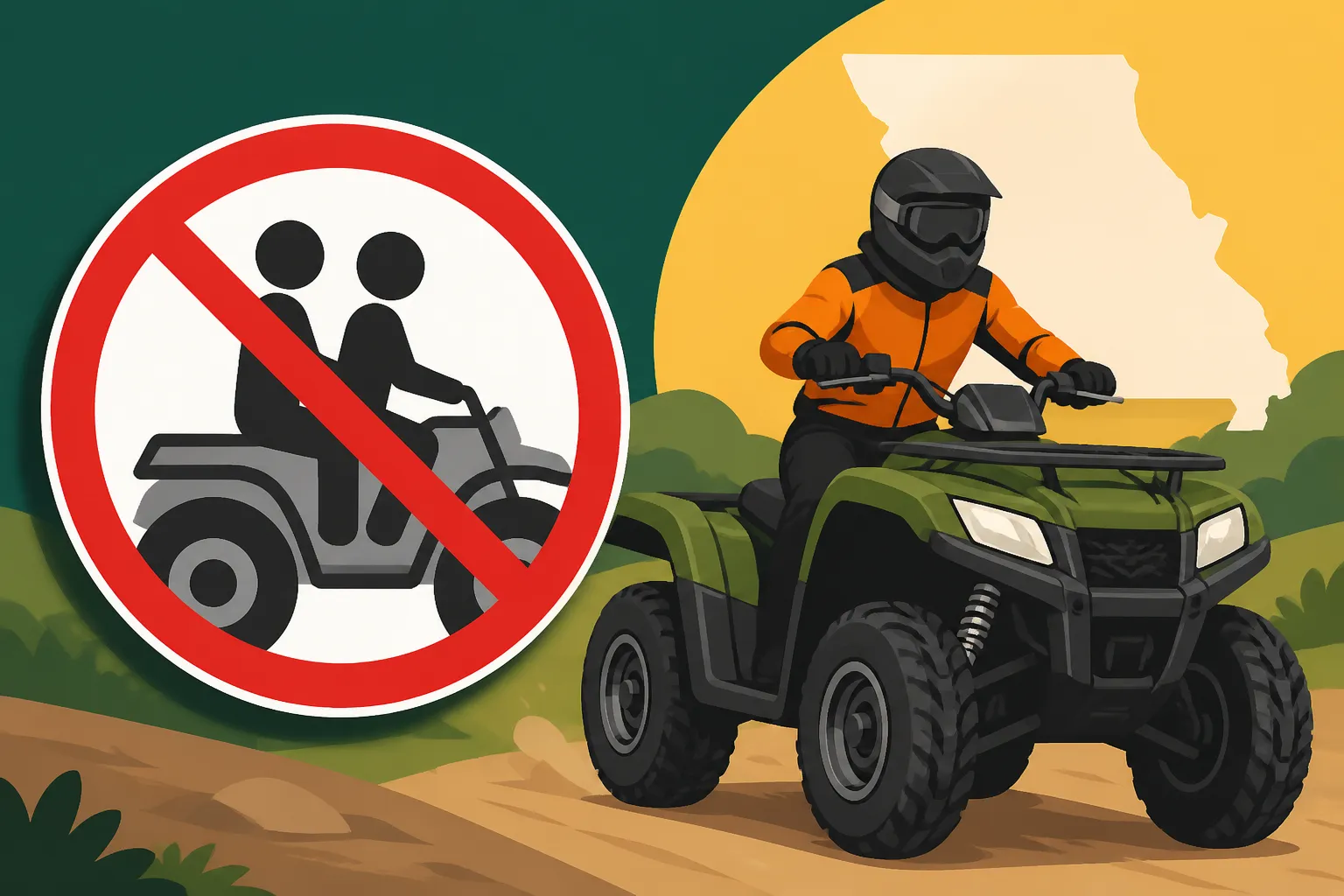
When you picture an ATV, what comes to mind? For many, it's that solo adventure machine, designed for one rider to tackle challenging terrain. And that's precisely how Missouri law tends to view them. The rule against passengers on ATVs isn't just a quirky regulation; it's deeply rooted in the fundamental design and inherent risks associated with these powerful, agile vehicles. These machines are engineered for a single operator to shift their body weight dynamically, influencing steering and stability, especially when navigating turns, hills, or obstacles.
Imagine cresting a steep hill or making a sharp turn on a trail – the rider instinctively shifts their weight, almost becoming one with the machine, to maintain balance and control. Now, introduce a passenger, even a small one. That extra weight, often static and not reacting in sync with the driver, completely throws off the vehicle's center of gravity. It makes the ATV less responsive, harder to control, and significantly increases the risk of a rollover or an uncontrolled maneuver. This isn't just a hypothetical danger; it's a very real one that has led to countless accidents and injuries. The state, in its role of ensuring public safety, has recognized this inherent danger and acted to mitigate it.
Beyond the physical dynamics, there's also the matter of proper seating and footrests. Most ATVs are simply not equipped with a comfortable, secure, or even legal second seating position. A second person trying to perch on the rear rack or squeeze onto the main seat can quickly become unstable, especially on uneven ground. Their feet might dangle precariously, risking entanglement with moving parts or striking obstacles. It’s a recipe for disaster, and the law aims to prevent riders from even getting into such a precarious situation.
The Legal Framework: What Missouri Law Says About ATVs and Passengers
Missouri Revised Statutes are pretty clear when it comes to ATVs and passengers, distinguishing sharply between the various types of off-road vehicles. For all-terrain vehicles, or ATVs as most of us know them, the law generally defines them as motorized vehicles designed for off-highway use, having a width of 50 inches or less, a dry weight of 1,500 pounds or less, and a non-straddle seat with handlebars. This definition is crucial because it sets the stage for many of the operational rules, including the passenger prohibition.
The key phrase to remember for ATVs is that they are built for "operator use only." This isn't just a suggestion; it's a legal directive. The intent behind the design and the subsequent legal classification means that if your machine fits the legal definition of an ATV, you're expected to ride it solo. Carrying another person, whether they're a child, a friend, or even just gear that might resemble a person, could be seen as a violation. This rule applies across the board, whether you're tearing up the trails at St. Joe State Park or simply moving your machine from your garage to a nearby field.
This strict rule also ties into broader safety initiatives. When you consider [Missouri Helmet Law for ATV Riders], you see a consistent thread of promoting rider safety. While adults might skip the helmet on private land, the underlying philosophy is always about reducing injury risk, and barring passengers on single-rider ATVs fits right into that framework. It's about recognizing the limitations of the machine and the potential for severe harm when those limitations are pushed. This isn't about penalizing fun; it's about protecting lives.
What the Statute Specifically Says About Passengers
Missouri statute 300.010.2 (2) specifically addresses the definition of an "all-terrain vehicle," and crucially, it often implies a single operator by its very nature. While it might not always spell out "no passengers" in bold letters for every single instance, the interpretation and enforcement by authorities are consistent: ATVs are one-person machines. The design, the controls, and the inherent stability characteristics are all optimized for a single rider who can actively participate in balancing the vehicle.
Think about it from a common-sense perspective: if an ATV were truly designed for two, it would have two distinct, properly supported seats and separate handholds or footrests for the passenger. The vast majority of ATVs simply don't have this. Even if someone manages to squeeze on behind you, they lack proper support and the ability to brace themselves effectively. A sudden bump, a quick turn, or an unexpected change in terrain can easily unseat a passenger, leading to falls and serious injuries, not just to them but potentially to the driver as well if control is lost.
This legal stance is consistent with manufacturer warnings and safety guidelines. Every ATV manufacturer explicitly advises against carrying passengers on single-seat models. They understand the engineering limitations and the dynamics of their machines. The state's law merely reinforces these critical safety recommendations, translating them into enforceable regulations designed to prevent accidents on both public and private lands, where these machines are commonly used.
Why Passengers Are Barred on Park Trails
When you head to an ORV park like St. Joe State Park or Finger Lakes State Park, you’ll encounter specific rules reinforcing Missouri’s general stance on ATV passengers. At these state-run riding areas, the rules are often even more explicit, not just implied by the vehicle definition. Park rangers and staff are highly trained to enforce these regulations because they witness firsthand the consequences of unsafe riding practices.
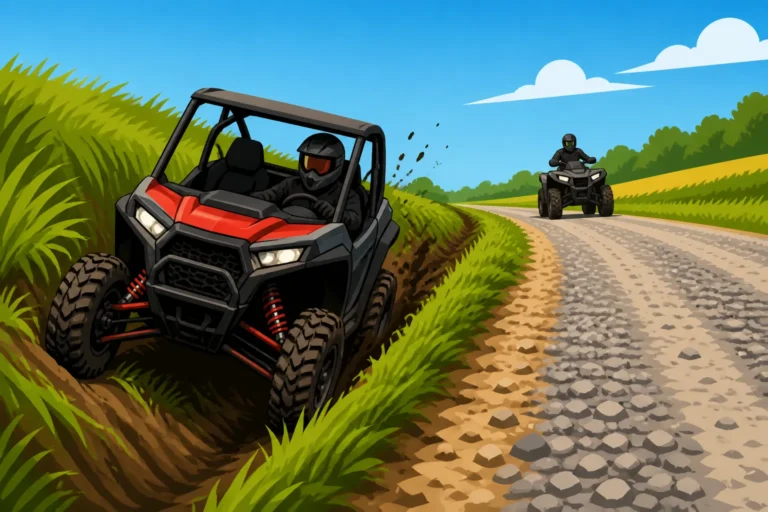
The reasoning here is multifaceted. First, public lands are heavily used, and the volume of riders increases the potential for accidents. Introducing passengers on ATVs, especially with varying skill levels among riders, amplifies this risk significantly. Parks are also often designed with challenging terrain – steep climbs, tight turns, and rocky sections – that demand the full, unencumbered control of the operator. A passenger, no matter how small or seemingly cooperative, compromises this control.
Furthermore, state parks and other public riding areas often have their own specific safety regulations that complement state law. These may include rules about [Missouri Park Access for Riders Under 16] or specific helmet requirements, all aimed at creating a safer environment for everyone. Barring passengers on ATVs is a cornerstone of this safety framework. It's a non-negotiable rule designed to prevent rollovers, ejections, and collisions that could ruin a day of riding not just for those involved, but potentially lead to trail closures or increased restrictions for all riders.
Are There Exceptions? When a Passenger Might Be Allowed (or a Different Machine Is)
Now, I know what you're thinking: "But I've seen people riding two-up on ATVs!" And you're not wrong – sometimes you do see it. But here's where we need to be very precise about what kind of machine is being ridden, and under what specific circumstances. Missouri law makes a crucial distinction between traditional, single-rider ATVs and machines specifically designed and manufactured to carry more than one person. This is where [How the Passenger Rule Treats a Two-Seat Machine] comes into play.
True two-up ATVs are purpose-built for two riders. They feature an extended frame, a longer, contoured seat that clearly accommodates two individuals, and often separate footrests and grab handles for the passenger. These aren't just single-rider machines with a padded extension strapped on the back. They are engineered from the ground up to handle the additional weight and different center of gravity that comes with carrying a passenger. If you own one of these, then yes, carrying a passenger is permissible because the machine itself is designed for it, and it usually falls under a different classification or an explicit exemption within the ATV definition.
However, be very, very wary of aftermarket modifications that claim to convert a single-rider ATV into a two-seater. Unless these modifications are factory-approved and fundamentally alter the vehicle's classification (which is rare for a true ATV), they likely do not make it legal to carry a passenger. The law looks at the original design and intent. If it was sold as a single-rider ATV, it generally remains a single-rider ATV in the eyes of the law, regardless of add-ons.
When Farm Work Allows a Passenger on an ATV
There's another narrow exception that sometimes arises, particularly in rural Missouri: farm use. The state recognizes that ATVs and UTVs are indispensable tools for agricultural operations, and sometimes, for the sake of efficiency or necessity, carrying an extra hand or a child helping with chores might seem unavoidable. While the general rule for ATVs remains "operator only," Missouri statutes do offer some limited flexibility under specific conditions related to agricultural purposes.
Specifically, [When Farm Work Allows a Passenger on an ATV] addresses scenarios where an ATV is being used for legitimate agricultural business. This usually means tasks like checking fences, moving livestock, hauling feed, or inspecting crops. In these very particular situations, and typically only on private land or when crossing roads under specific agricultural exemptions, a passenger might be permissible. However, it's absolutely critical that this is for bona fide farm work and not recreational riding. The intent behind the trip matters immensely.
Even with this agricultural exception, safety should always be paramount. The machine's stability is still compromised by an extra person, especially on rough farm terrain. If a passenger is carried, they should be capable of holding on securely and understanding the risks. This isn't a blanket permission to carry passengers on your ATV if you live on a farm; it's a very specific allowance for certain work-related functions, and it requires sound judgment and caution from the operator. Always err on the side of safety, even if the law offers a small loophole for farm tasks.
The Contrast: How Side-by-Sides and UTVs Handle Passengers Differently
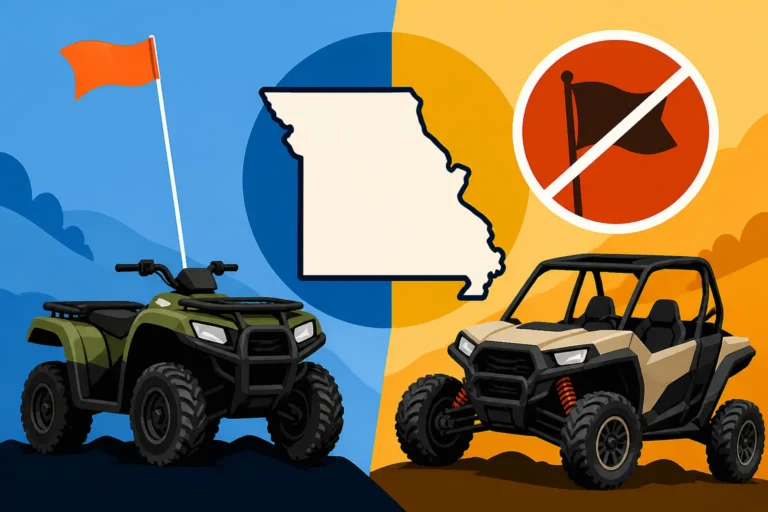
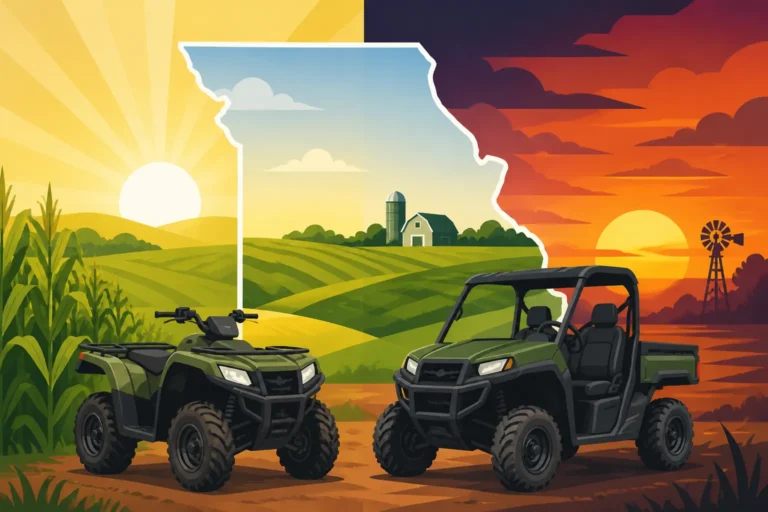
This is where much of the confusion lies, and it's a critical distinction to understand in Missouri. When people talk about "ATVs," they often lump all off-highway vehicles together. But the law, and manufacturers, definitely do not. Missouri statutes draw a very clear line between what they classify as an ATV, a utility vehicle (UTV), and a recreational off-highway vehicle (ROV). And this distinction hugely impacts passenger rules.
Most of what people commonly refer to as a "side-by-side" actually falls under the legal definitions of either a UTV or an ROV in Missouri. [Why Missouri Splits ATVs, UTVs and ROVs] is not just bureaucratic nitpicking; it's fundamental to how these machines are regulated, from titling and registration (or lack thereof) to safety equipment and, yes, passenger capacity.
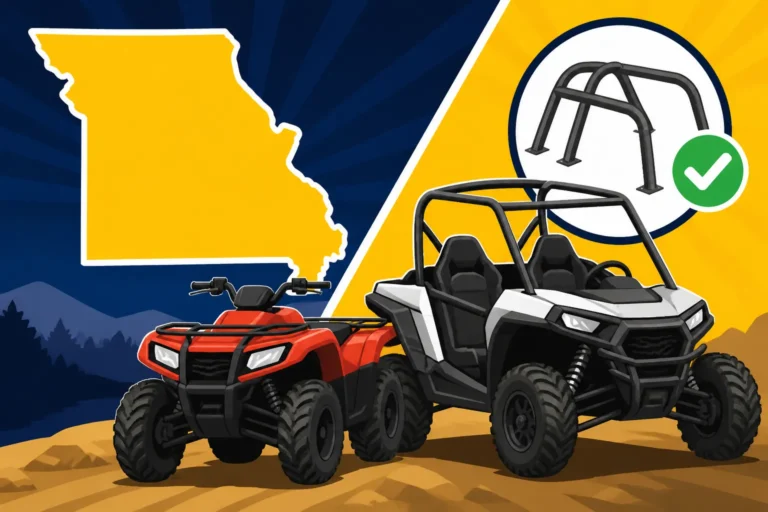
Unlike single-rider ATVs, UTVs and ROVs are designed to carry passengers. They feature multiple side-by-side seats (hence the common name!), seatbelts, and often roll cages or other occupant protection systems. Because of their inherent design with a wider stance, lower center of gravity, and automotive-style controls (steering wheel, foot pedals), they handle the weight of multiple occupants much more safely than a traditional ATV.
Missouri Rules for a Passenger in a UTV
When it comes to [Missouri Rules for a Passenger in a UTV], the picture is much clearer and more accommodating. Utility Vehicles (UTVs) are generally defined by Missouri as motorized vehicles designed for off-highway use, having a width greater than 50 inches but not more than 70 inches, a dry weight of 2,000 pounds or less, and a non-straddle seat with a steering wheel for steering control. Crucially, they are designed to carry multiple passengers.
For UTVs, the rules typically state that you can carry as many passengers as there are designated seating positions with factory-installed seatbelts. If your UTV has two seats with two seatbelts, you can legally carry one passenger. If it's a four-seater with four seatbelts, you can carry three passengers. The key is that the machine is specifically built for these extra occupants, providing them with a secure place to sit, something to hold onto, and a means of restraint. Brands like SuperATV offer a huge range of aftermarket accessories for UTVs, from windshields to suspension kits, acknowledging their multi-passenger, versatile nature. This distinction is vital because it explains why you can often see families or groups riding together in a side-by-side, but not on a traditional ATV.
However, even with UTVs, common sense and safety rules still apply. Passengers should always remain seated and belted in while the vehicle is in motion. Overloading the vehicle beyond its manufacturer-specified capacity is dangerous and illegal. And for any road use, [Missouri Driver's License Rules for ROVs] or UTVs come into play, requiring operators to be licensed.
What the Law Calls a Recreational Off-Highway Vehicle
Beyond UTVs, Missouri also specifically defines [What the Law Calls a Recreational Off-Highway Vehicle], or ROV. These are similar to UTVs in that they are designed for multiple passengers and feature a steering wheel and seatbelts, but they often have a slightly different width or weight classification, or are simply categorized separately for specific road-use provisions. The main takeaway is that, like UTVs, ROVs are built for more than one person.
ROVs also benefit from many of the same allowances as UTVs regarding passenger capacity. If your ROV has three seats and three seatbelts, you can have two passengers. The number of passengers is directly linked to the number of designated, secured seating positions. This clear design intent, coupled with safety features like seatbelts and roll cages, is why ROVs don't face the same "no passenger" restrictions as ATVs. They are fundamentally different vehicles, designed for different types of riding and different occupant numbers.
It's this clear distinction in vehicle design and legal classification that explains why you might see a group of friends cruising down a permitted county road in a [Can You Drive a UTV on a Missouri Road?] but never on a quad. The law isn't arbitrarily picking favorites; it's making a logical differentiation based on vehicle engineering and safety capabilities.
Consequences of Ignoring the Rules: What's at Stake for Riders
Riding your ATV with a passenger when the law explicitly forbids it isn't just a minor infraction; it can have serious repercussions, both legal and personal. When an officer observes you operating a single-rider ATV with a passenger, they are likely to view it as a direct violation of safety regulations, which can lead to citations and penalties.
The immediate consequence is usually a traffic ticket or a citation for an off-highway vehicle violation. This can mean a fine, which might not seem like the end of the world, but it can also add up, especially if you're cited on multiple occasions. More significantly, repeated violations can sometimes lead to more severe actions, though typically the initial penalties are designed to be a deterrent.
Beyond the immediate legal trouble, operating an ATV with an unauthorized passenger significantly increases the risk of an accident. If you're involved in a crash, even a minor one, and an unauthorized passenger is injured, you could face much more serious legal liability. This could involve civil lawsuits for damages, medical expenses, and pain and suffering. Your personal assets could be at risk, and your insurance might even deny coverage if you were operating the vehicle outside of its intended and legal parameters. Insurers often have clauses that exclude coverage for illegal activity or reckless endangerment, and carrying an unauthorized passenger could easily fall into that category.
A Class C Misdemeanor in Missouri
In more severe cases, or for repeat offenders, operating an ATV in violation of certain safety rules, including those concerning passengers, could escalate to a more serious charge. For instance, [A Class C Misdemeanor in Missouri] is a real possibility for certain infractions. While not every ATV violation will land you with a criminal charge, actions that put others at significant risk can be treated very seriously.
A Class C Misdemeanor, while not a felony, still carries substantial penalties in Missouri. This could include significant fines, and in some cases, even jail time, though jail time is generally reserved for the most egregious or repeated offenses. Furthermore, a criminal record, even for a misdemeanor, can have lasting impacts on your life, affecting employment, housing, and other opportunities. It's a far cry from the carefree ride you envisioned and a stark reminder of the importance of adhering to the rules.
The best defense against these penalties is simply prevention: know the rules for your specific machine, and always adhere to them. If your ATV is designed for one, ride it solo. If you need to carry passengers, invest in a UTV or ROV that is purpose-built and legally permitted for multiple occupants. It's a matter of personal responsibility and respect for the safety of yourself and others.
Safety First: Beyond the Law, Why Passenger Rules Exist
Even if the legal penalties weren't a factor, the fundamental reasons for Missouri's ATV passenger rules are rooted deeply in safety. These aren't arbitrary rules created to annoy riders; they are the result of extensive research, accident data, and an understanding of vehicle dynamics. The design of an ATV, as we've touched on, is predicated on the idea of a single, active operator.
When a passenger is added, the entire dynamic changes. The weight distribution is altered, often making the front end lighter and more prone to lifting on inclines, or the rear end heavier, making steering less effective. The passenger’s body can obstruct the driver’s view, impede their ability to shift their weight, or even interfere with controls in a moment of panic or surprise. A sudden bump can cause the passenger to lose their grip, fall off, and potentially be run over by the ATV or another vehicle.
Think about the unique challenges of off-road riding: uneven terrain, sudden drops, tight turns, and unexpected obstacles. These are situations that demand precise control and quick reactions, all of which are severely compromised when a second person is on board, especially one who isn't actively participating in the vehicle's balance and control.
The Dynamics of Riding Solo vs. Riding with an Extra Load
Consider the physics for a moment. An ATV's suspension, braking, and steering systems are all calibrated for a specific load – usually a single adult rider and perhaps some minimal cargo. When you add a second person, you significantly exceed this design load. The suspension will bottom out more easily, leading to a harsher ride and less control over bumps. The brakes will have to work harder, increasing stopping distances and heat buildup, potentially leading to brake fade. The steering will feel heavier and less responsive.
Moreover, the operator's ability to "lean" into turns or shift weight to prevent rollovers on side slopes is severely hampered. A passenger's weight is often a dead weight, resisting the rider's efforts to manipulate the machine's center of gravity. This makes the ATV less stable and far more susceptible to rolling over, especially on steep terrain or during abrupt maneuvers. It's not just about comfort; it's about the fundamental ability to control the machine safely.
This is also why organizations like SuperATV, who produce aftermarket parts and accessories, focus so heavily on enhancing the performance and safety of off-road vehicles for their intended use, be it a single rider ATV or a multi-passenger UTV. They understand the engineering differences and the importance of matching accessories to the vehicle's design. Adding a lift kit or new tires might change your riding experience, but it won't change the fundamental passenger capacity of a single-rider ATV in the eyes of the law or physics.
Why Passengers Are Barred on a Missouri ATV
| Feature | ATV (All-Terrain Vehicle) | UTV (Utility Vehicle) / ROV (Recreational Off-Highway Vehicle) |
|---|---|---|
| Seating | Single straddle seat, designed for one operator. | Side-by-side seating, bench or bucket style, designed for multiple occupants. |
| Controls | Handlebars for steering, hand or thumb throttle. | Steering wheel, foot pedals (accelerator/brake). |
| Passenger Rule | Strictly no passengers (with very limited, specific exceptions for farm work on private land, or factory-designed two-up ATVs). | Passengers allowed up to the number of designated seating positions/seatbelts. |
| Stability | Relies on active rider weight shift for balance, higher center of gravity when overloaded. | Wider stance, lower center of gravity, more stable with multiple occupants. |
| Safety Features | No seatbelts, no roll cage. Rider protection comes from active maneuvering and gear. | Seatbelts (mandatory), often equipped with roll cages or occupant protective structures. |
| Legal Classification | Defined as an "all-terrain vehicle." | Defined as a "utility vehicle" or "recreational off-highway vehicle." |
| Common Use | Recreational riding, hunting, light farm tasks, solo trail exploration. | Farm work, hunting, group recreational riding, hauling, general utility tasks. |
Ultimately, the rule against carrying passengers on a Missouri ATV is a critical safety measure. It's about protecting not just the passenger, but also the operator and anyone else on the trail. While it might sometimes feel inconvenient, especially if you have a child who wants to ride along, the law's intent is to prevent serious injuries and save lives. If you need to bring along a friend or family member, the clear answer in Missouri is to opt for a side-by-side (UTV or ROV) that is legally and safely designed to accommodate them.
Disclaimer
This article is for general informational purposes only and does not constitute professional advice. Laws, prices and regulations vary by location and change over time. Consult a qualified professional for guidance on your specific situation.