Why Missouri’s Flag Rule Is Not the Whole Story
It’s a common sight: you see a side-by-side on a county road, maybe with a bright orange flag waving high above it, and you think, "Okay, that's what makes it street legal in Missouri!" You might even go out and buy a flag, thinking you've got all your bases covered. But here's the tough truth, folks: a safety flag, while absolutely critical in certain situations, is just one small piece of a much larger, often frustratingly complex puzzle when it comes to getting your ATV or UTV legally on Missouri's public roads. This guide is here to untangle those misconceptions, clearly explain the full requirements, and help you understand why just sticking a flag on your machine isn't the whole story.
The Missouri Safety Flag Requirement: Where It Applies (and Doesn't)
Let's talk flags. Many of us see them, we know they're for safety, but the specifics often get blurred. In Missouri, the rules around safety flags are very precise, and they definitely don't apply universally to all off-road vehicles on all roads. It's not a "one size fits all" situation, and understanding these nuances can save you a lot of headache – and potential citations.
The Seven-Foot Rule for Road-Legal ROVs
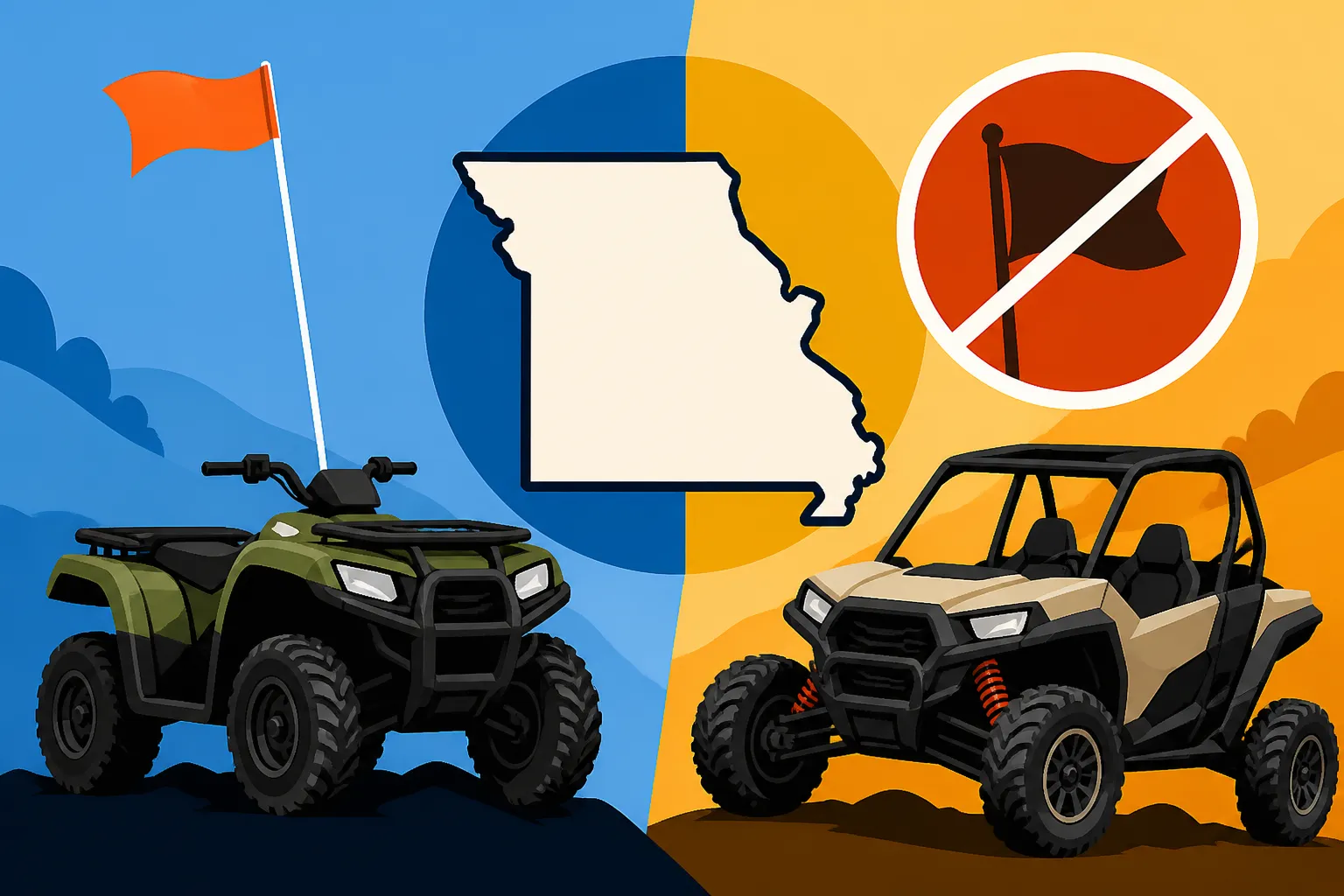
When people talk about a "street-legal flag" in Missouri, they're usually referring to a specific requirement for Recreational Off-Highway Vehicles (ROVs), which most commonly refers to side-by-sides. If a city or county in Missouri has passed an ordinance allowing ROVs on their local roads, that ordinance almost always includes a stipulation for a safety flag.
This rule typically mandates that the flag must extend at least seven feet above the ground when the vehicle is on a flat surface. Beyond the height, there are usually specifications for the flag itself: it needs to be fluorescent orange, red, or another highly visible color, and often must be at least 30 square inches in size. Think of those bright, day-glow pennants you see, not just a small bandana tied to an antenna. The whole point of this requirement is maximum visibility. Side-by-sides, even taller ones, can still be surprisingly hard for other motorists to spot, especially over hills, around curves, or in busy traffic. That tall, brightly colored flag acts as an early warning system, helping car and truck drivers see you long before they see the machine itself. Without that flag flying high, you're not meeting the specific conditions of the local permit, even if you have everything else in order. If you're looking for aftermarket flags and flag poles to meet this height, many riders turn to retailers like SuperATV for their wide selection of accessories.
State Park vs. Highway Flag Rules
Here's where a lot of confusion comes in. Missouri has different rules for off-road vehicles depending on whether you're on public roads or within a designated off-road riding park like St. Joe State Park or Finger Lakes State Park. You see flags at these parks all the time, and for good reason: they're mandatory.
Within Missouri's state park ORV areas, the flag requirements are slightly different from the highway rules. At a state park, your flag typically needs to be 72 inches (six feet) above the ground, and it must be fluorescent orange with a minimum size of 64 square inches. It’s also often required to be on a flexible mast. The purpose is similar – visibility – but tailored to the specific environment of a crowded trail system where riders might pop up unexpectedly from behind dunes or through dense woods.
The critical takeaway here is that a flag that meets state park requirements doesn't automatically meet the public road requirements, and vice-versa. Nor does having a state park flag mean you're cleared for the highway. [Why Missouri's Flag Rule Differs at a State Park] delves deeper into these distinctions. It's a classic example of how Missouri's laws are broken down into very specific contexts, and assuming one set of rules applies everywhere can lead to problems.
Why an ATV Doesn't Get the Same Road Flag Rule
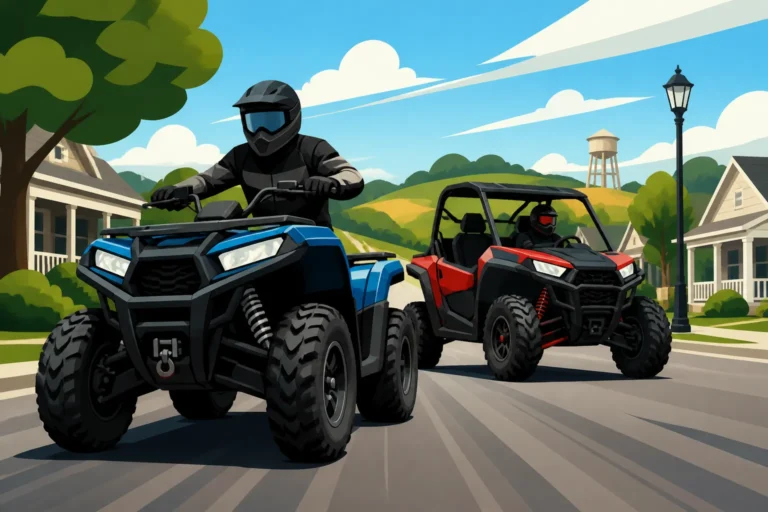
This is a really important point that often gets missed. While side-by-sides (ROVs) might be allowed on some city or county roads with a special permit and a flag, traditional ATVs (quads) generally are not. The seven-foot flag rule we discussed for road-legal use applies almost exclusively to ROVs.
Missouri's laws draw clear lines between different types of off-road vehicles. An "all-terrain vehicle" (ATV) is legally defined by specific characteristics, usually involving a straddle seat, handlebars, and a dry weight under 1,500 pounds. A "recreational off-highway vehicle" (ROV) is distinct, typically having a non-straddle seat, a steering wheel, and roll-over protection. These differences in design lead to different rules regarding road use.
The reality is that ATVs are largely restricted from public roads in Missouri, except for very limited agricultural or industrial purposes, or for crossing a highway at a ninety-degree angle. There's no widespread "ATV street legal permit" system that involves a flag. So, putting a flag on your quad, while a good safety practice on trails, does not enable you to legally ride it on a public road where ROVs might be permitted. It's frustrating, I know, especially if you're just trying to get from your house to a nearby trail, but the law in Missouri makes this distinction quite clear.
Beyond the Flag: Other Critical Requirements for Road Use
Thinking you're good to go with just a flag is like bringing only a spatula to a full barbecue – you're missing a whole lot of other essential tools! For an ROV to be street-legal in Missouri, especially under those local city or county ordinances, you need a full suite of equipment and documentation. The flag is just the most visible part of the package.
The Local Ordinance or Special Permit is Key
Let's get this straight: there is no statewide law in Missouri that automatically makes your ROV street legal. Period. Any legal road use for ROVs on public streets hinges entirely on a local city or county passing an ordinance that permits it. And even then, it's rarely a free-for-all.
Most of these local ordinances require you to obtain a "special permit" from the local police department or sheriff's office. This permit isn't just a formality; it’s proof that you’ve acknowledged and met all the conditions set by that specific jurisdiction. The permit will often specify the allowed hours of operation, the types of roads you can use (e.g., usually not state highways), and all the safety equipment you need. You'll likely pay a small fee, and the permit may need annual renewal. Without that physical permit in hand, even with your flag flying high, you're not compliant. [Missouri's Special Permit for Road Use] details this process, and [Missouri Cities That Allow UTVs on Streets] can give you an idea of where these permits are available. If you move from one town to another, or even just cross a city limit, the rules—and the permit—can change drastically. It’s absolutely vital to check with the specific local authority where you intend to ride.
Essential Safety Equipment Beyond the Flag
Okay, you've got your local permit application in hand, and you're ready to make sure your machine is up to snuff. The flag is one thing, but there’s a whole list of other safety equipment that typically becomes mandatory when you take an ROV onto public roads:
- Headlights and Taillights: These aren't just for night riding on the trails. They must be fully functional and properly aimed, just like on a car, to ensure you can see and be seen at all times of day, especially in low light or inclement weather.
- Brake Lights: Crucial for signaling your intentions to traffic behind you.
- Turn Signals: While not always explicitly required by every ordinance, many jurisdictions will expect you to have functional turn signals, or at least use clear hand signals, to indicate turns. It's just good, safe practice.
- Mirrors: You’ll likely need at least one rearview mirror, if not two, to see approaching traffic. This is a common requirement to meet state vehicle code standards.
- Seatbelts: For side-by-sides, seatbelts are usually factory-installed. When riding on public roads, these are not just a suggestion; they are mandatory for all occupants, and they must be worn.
- Roll Bars/Roll-Over Protection Structure (ROPS): Again, side-by-sides come with these from the factory. The ordinance will expect your ROV to have an intact, unmodified ROPS to provide occupant protection in case of a rollover. Companies like SuperATV offer aftermarket cages and accessories, but ensure they meet any local standards for road use.
- Fenders/Mud Flaps: Some ordinances might require fenders or mud flaps to prevent debris from being thrown up by your tires, which is a common complaint from other drivers sharing the road.
This is a lot more than just a flag, isn't it? It's about bringing your off-road machine up to a standard that resembles a low-speed vehicle or golf cart in terms of basic road safety. [Missouri Lighting Requirements for ROVs] can offer more details on visibility.
Driver Licensing and Insurance Requirements
This is another huge piece of the puzzle that often gets overlooked. Just because you can ride your ROV on a trail doesn't mean you're automatically qualified to drive it on a public road.
- Driver's License: Almost every local ordinance that allows ROVs on public roads will stipulate that the operator must possess a valid, unexpired driver's license. This typically means a Class F (standard operator's license) or Class E (chauffeur's license) from Missouri or a reciprocal state. This requirement alone immediately excludes younger riders who don't have a license, even if they're old enough to operate the machine off-road. The idea is that if you're sharing the road with cars, you need to demonstrate the same basic knowledge and legal qualifications as any other driver. [Missouri Driver's License Rules for ROVs] clarifies this.
- Insurance: This is a big one. Many local ordinances will require you to carry liability insurance on your ROV, similar to how you would for a car. This isn't just a suggestion; it’s a condition of the permit. You'll likely need to provide proof of insurance when applying for your special permit. This protects you (and others) in case of an accident. Not all standard ATV/UTV insurance policies cover road use, so it's critical to talk to your insurance provider to ensure you have the correct coverage for legal road operation under a local ordinance. [Proof of Insurance Under a Missouri Ordinance] is essential reading if you're considering this.
Remember, the goal of these requirements is to integrate ROVs safely into the existing traffic flow, and that means adhering to many of the same responsibilities as driving a regular vehicle.
Here’s a quick summary of key ROV road-use requirements often found in Missouri local ordinances:
| Requirement | Description | Applies To |
|---|---|---|
| Safety Flag | Fluorescent orange/red, 30+ sq. in., 7 feet above ground (when permitted) | ROVs (Side-by-Sides) on permitted local roads |
| Local Permit | Required by city/county ordinance, obtained from local law enforcement | ROVs (Side-by-Sides) on permitted local roads |
| Head/Tail Lights | Fully functional, visible from specified distances | ROVs (Side-by-Sides) on permitted local roads |
| Brake Lights | Functional, illuminates when brakes applied | ROVs (Side-by-Sides) on permitted local roads |
| Mirrors | At least one rearview mirror, often two | ROVs (Side-by-Sides) on permitted local roads |
| Seatbelts | Factory-installed, required to be worn by all occupants | ROVs (Side-by-Sides) on permitted local roads |
| ROPS | Intact, unmodified Roll-Over Protection Structure | ROVs (Side-by-Sides) on permitted local roads |
| Driver's License | Valid Class F or E (standard operator's or chauffeur's) | Operator of ROV on permitted local roads |
| Liability Insurance | Proof of coverage as required by local ordinance | ROV on permitted local roads |
| ATV Road Use | Generally prohibited, very limited exceptions (ag, industrial, crossing) | ATVs (Quads) on any public road |
The Limitations: Where ATVs and UTVs Still Can't Go
Even with all your ducks in a row – the permit, the flag, the lights, the insurance, the driver's license – there are still significant limitations on where you can operate your off-road vehicle in Missouri. Many riders get the impression that a city permit opens up all roads, but that’s rarely the case.
State Highways and the 3-Mile Rule
This is a point of constant frustration for many off-road enthusiasts. Missouri state law is very clear: ATVs and UTVs (which typically includes ROVs for this purpose, though definitions matter) are generally prohibited from operating on state highways. These are roads designated as U.S. routes, state routes, or interstate highways.
However, there's a very specific and often misunderstood exception, sometimes called the "3-mile rule," that applies only to ROVs (side-by-sides). This rule allows an ROV to operate on a state highway for a distance of no more than three miles, only if it's to get from the operator's private property to a public road that is open to ROVs by local ordinance. It’s not for recreational joyrides. It’s meant to connect your property to a network of approved local roads. It's a very narrow exception, requiring specific safety equipment, including the safety flag, and is entirely dependent on the existence of that local ordinance. [Missouri's 3-Mile Rule for Side-by-Sides] explains this in much greater detail, and it’s critical to understand its strict boundaries. You can't just hop on any state road for three miles; the purpose and context are everything.
Beyond this limited exception, don't expect to cruise down a state highway on your ROV, and certainly not on an ATV. If you need to cross a state highway, it must typically be done at a ninety-degree angle, only after yielding to all traffic, and you should cross at the nearest safe intersection. [Missouri Rules for Crossing a Highway] covers these situations.
Understanding Missouri's ATV vs. ROV vs. UTV Definitions
This is where the rubber truly meets the road, legally speaking, and it's perhaps the most confusing aspect of Missouri's off-road vehicle laws. Many people use "ATV," "UTV," and "side-by-side" interchangeably, but Missouri law does not. These distinctions directly impact where and how you can ride:
- All-Terrain Vehicle (ATV): This is typically what we call a "quad." Missouri defines an ATV as a motorized vehicle, 50 inches or less in width, having a dry weight of 1,500 pounds or less, designed to travel on three or more low-pressure tires, and having a seat designed to be straddled by the operator. Handlebars are also characteristic. ATVs, as defined, have very limited road access.
- Recreational Off-Highway Vehicle (ROV): This is usually your typical "side-by-side." Missouri defines an ROV as any motorized vehicle manufactured and used exclusively for off-highway use, weighing not more than 2,000 pounds, traveling on four or more low-pressure tires, 64 inches or less in width, having a non-straddle seat, a steering wheel, and roll-over protection. These are the machines that can get special local permits for road use, often requiring a flag and other equipment.
- Utility Vehicle (UTV): This category is a bit of a catch-all for larger, often work-oriented, off-highway vehicles that don't fit the strict definitions of ATV or ROV. They might be wider than 64 inches, heavier than 2,000 pounds, or have features that push them out of the ROV definition. Generally, UTVs are treated much like ATVs regarding road access – meaning very restricted, primarily for agricultural or industrial use.
The frustration here is real. You might own a machine that looks like a side-by-side, but if it's slightly wider than 64 inches, or if it doesn't have a steering wheel (some older models had joysticks), it might technically fall into the "utility vehicle" category, or simply not qualify as an ROV, which shuts down your options for local road permits. [Why Missouri Splits ATVs, UTVs and ROVs] really highlights these differences. Always check your vehicle's specifications against Missouri's legal definitions, not just common parlance.
Agricultural and Industrial Exemptions (and Their Strict Boundaries)
While recreational road use for ATVs is heavily restricted, Missouri law does make some allowances for these machines when they are being used for legitimate agricultural or industrial purposes. However, these are not a loophole for casual riding.
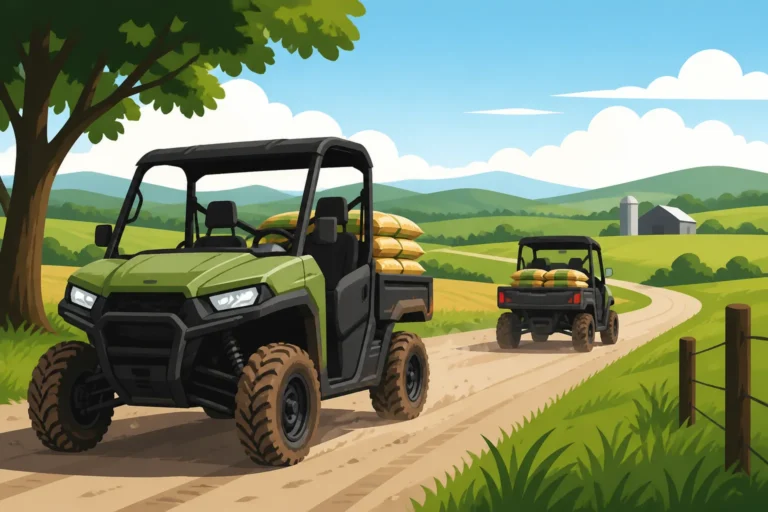
- Agricultural Use: If you're using an ATV or UTV for farming activities, such as hauling feed, checking fences, or moving equipment, you may be allowed to operate it on public roads for short distances between fields or between your farm and a nearby barn. This usually comes with strict conditions: it must be during daylight hours, directly related to farming, and often requires an orange flag or an amber flashing light. This is about legitimate work, not taking your quad out for a spin down the county road on a Sunday afternoon.
- Industrial Use: Similarly, if a machine is being used on an industrial site or for utility work (like maintaining power lines), it might be allowed on adjacent public roads for limited distances to move from one work area to another. Again, this is job-specific, not recreational.
These exemptions are very narrow and intended to support specific economic activities. They require you to demonstrate that you are actively engaged in these tasks. A deputy stopping you on a county road and asking about your activity will expect a clear and truthful answer, with evidence if necessary. Don't try to stretch these exemptions to cover recreational riding, as it will likely result in a citation.
So, there you have it. The safety flag is undeniably important. It's a critical piece of the visibility puzzle and a mandatory item for ROVs operating on city or county roads under local ordinances. But it’s far from being the only thing you need. Think of it as the icing on a very specific, carefully constructed cake. You need the cake (the local ordinance, the permit, the proper vehicle classification), and you need all the other ingredients (lights, license, insurance, seatbelts) before you can even think about adding that bright, waving flag. Understanding this complex mosaic of rules is the only way to truly enjoy your off-road machine in Missouri without running afoul of the law.
Disclaimer
This article is for general informational purposes only and does not constitute professional advice. Laws, prices and regulations vary by location and change over time. Consult a qualified professional for guidance on your specific situation.