Missouri’s Special Permit for Road Use
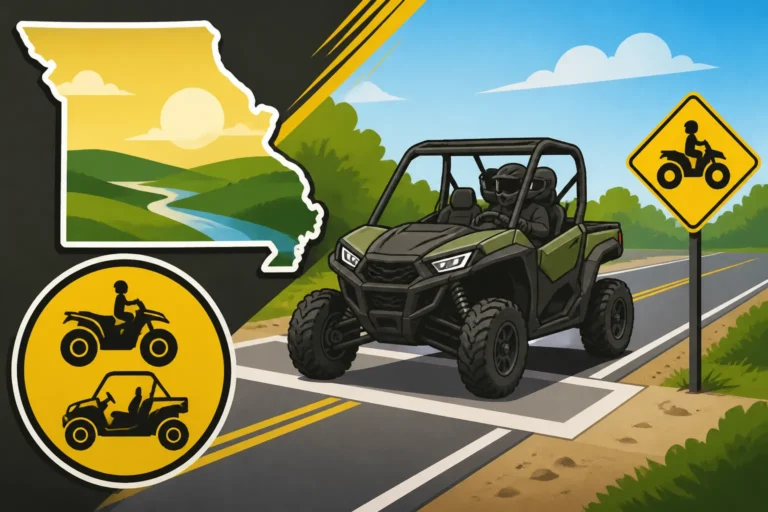
It can be incredibly frustrating to have a capable ATV or UTV sitting in your garage, perfectly suited for running quick errands or traversing short distances to a hunting spot, only to feel handcuffed by Missouri’s road laws. You bought it for utility and recreation, yet navigating the maze of what’s allowed and what’s not on public roads can feel like a full-time job. This guide is here to untangle the confusion surrounding Missouri's special permit for road use, helping you understand if your machine qualifies, what you need to do, and where you can legally ride.
The Missouri Road Conundrum for Off-Road Vehicles
Let’s be honest, the desire to ride your ATV or UTV on a public road is completely understandable. Whether it’s to get to a nearby trail, cross a highway to another section of your property, or just pop down to the corner store, the convenience is undeniable. However, Missouri, like many states, primarily designates these machines for off-highway use. This isn't just about fun; it’s rooted in safety concerns due to their design differences compared to traditional automobiles. They lack many of the safety features, like crumple zones or airbags, that cars are required to have, and their handling characteristics are vastly different, especially on paved surfaces at higher speeds.
Why ATVs and UTVs Face Restrictions on Public Roads
The biggest hurdle for ATV and UTV owners in Missouri is the fundamental legal definition. By default, these machines are classified as "off-road vehicles." This means they're built for dirt, mud, rocks, and trails, not for sharing lanes with cars, trucks, and semi-trailers on asphalt. The state's general stance is that if a vehicle isn't designed, manufactured, and titled for highway use, it shouldn't be there. This blanket rule can be incredibly disappointing for those who see their side-by-side as a practical tool for short-distance travel or even commuting in rural areas. It’s a common source of confusion and tickets, leaving many riders feeling caught between a rock and a hard place.
Picture this: you live just a mile down a county gravel road from your buddy's house, where you plan to meet up for a trail ride. It feels completely illogical to have to load your UTV onto a trailer, drive that single mile, and then unload it, simply because the law prohibits you from driving it directly. This frustration is real, and it’s why understanding the specific exceptions and permits is so vital. It’s not that the state wants to make things difficult; it’s about trying to balance the utility of these machines with the safety of everyone on the road.
The Clear Distinction: ATVs Versus UTVs/ROVs for Road Use
Here's where things get a bit nuanced and where many riders get tripped up. Missouri law makes a pretty clear, and often frustrating, distinction between traditional ATVs and their larger, often more car-like cousins, the Utility Vehicles (UTVs) or Recreational Off-Highway Vehicles (ROVs), often called side-by-sides. When we talk about a "special permit for road use" in Missouri, we are almost exclusively talking about ROVs/UTVs, not standard ATVs.
Traditional ATVs (the kind you straddle with handlebars) generally have very limited, specific exceptions for road use, such as direct crossing of a highway or agricultural purposes on certain roads. They are not typically eligible for the broader special permits that allow for limited travel on certain public roads. This is a critical point that often leaves ATV owners scratching their heads, wondering why their quad can't get the same limited access as a side-by-side. The logic often boils down to stability, width, and passenger capacity, which ROVs usually possess more of, making them slightly more adaptable for limited road situations in the eyes of the law. You can dive deeper into this topic by reading [Why Missouri Splits ATVs, UTVs and ROVs].
Deciphering Missouri's Special Permit for Road Use
So, you have a UTV, and you're wondering, "Can I actually get this thing on the road legally?" The answer, thanks to Missouri's special permit, is often "yes," but with significant caveats and requirements. This isn't a free pass to drive your side-by-side like a car anywhere you please. Instead, it's a carefully crafted set of rules designed to allow limited, controlled road access, primarily for utility and recreational vehicles that meet specific criteria.
What the Special Permit Entails
The special permit, authorized by state statute, allows ROVs (Recreational Off-Highway Vehicles) to operate on certain public roads under very specific conditions. It's essentially an acknowledgment that while these vehicles aren't cars, they can serve a purpose on public roadways in a controlled manner. This permit is not issued by the Department of Revenue like a title or registration for a car. Instead, it's typically issued at the local level – often by a city or county – once they have passed an ordinance allowing it. This is a huge distinction, as it means the rules can vary from one municipality to the next, which can be incredibly frustrating if you frequently travel between towns or counties.
The permit essentially says, "Under these specific circumstances, with this specific equipment, and on these specific roads, your ROV can be on the pavement." It's not a registration that proves ownership or taxes the vehicle; it's a permission slip for road access. For a UTV owner, securing one of these permits can transform the utility of their machine, allowing them to ride from their home to nearby trails, access fishing spots, or visit neighbors without the hassle of trailering.
The "3-Mile Rule" and Its Importance
One of the most talked-about aspects of Missouri's special permit system for ROVs is the "3-mile rule." This rule allows a permit holder to operate their ROV on the shoulder of a state highway, county road, or city street for a distance of up to three miles from the operator's home, farm, or business. This is a game-changer for many rural residents. It means if your house is located on a county road, you could theoretically drive your side-by-side up to three miles in any direction from your driveway.
However, it's crucial to understand the limitations. The three-mile rule is specific to the shoulder of the road, and only on roads where the speed limit is 45 mph or less. You can't just cruise down the middle of a 55 mph highway. Moreover, this rule is explicitly for ROVs. It does not apply to traditional ATVs. This distinction, once again, often leaves ATV owners feeling left out. The intention is to provide limited access for those living in areas where short road trips are common, bridging the gap between private property and local amenities or trailheads. You can get a much deeper understanding of this nuance by looking at [Missouri's 3-Mile Rule for Side-by-Sides].
Eligibility and Equipment for the Special Permit
Before you even think about applying for a special permit, you need to confirm that your machine qualifies and is equipped to meet Missouri's standards for limited road use. This isn't about personal preference; it's about adhering to the letter of the law for safety and legal compliance. Ignoring these requirements isn't just risky; it can lead to fines, citations, and even jeopardize your ability to get a permit in the first place.
Which Vehicles Qualify for a Special Permit?
As we've discussed, the special permit system is primarily designed for Recreational Off-Highway Vehicles (ROVs), which include most side-by-sides. These are generally defined in Missouri law as any motorized, non-highway vehicle 60 inches or less in width, having a dry weight of 1,800 pounds or less, designed to travel on four or more wheels, and having a non-straddle seat and a steering wheel. While there are some exceptions for agricultural use or crossing highways, it's these ROVs that gain the most benefit from the special permit.
If your machine is a traditional ATV where you straddle the seat and use handlebars, it generally won't qualify for the broader special permit that allows for limited road travel under the 3-mile rule. Your ATV's road use will likely be confined to specific agricultural exemptions or crossing a highway at a 90-degree angle. This is a common point of contention for riders, but it's important to understand the legal definitions that guide these distinctions. For a detailed look at what constitutes an ROV versus an ATV, you might want to read [Telling a Utility Vehicle From an ROV in Missouri].
Mandatory Equipment for Road-Legal ROVs
Once you've confirmed your ROV qualifies, the next step is ensuring it's properly equipped. Missouri law isn't messing around when it comes to safety features for road-legal operation. These aren't suggestions; they are mandates designed to make your vehicle as visible and controllable as possible when sharing space with cars. Many aftermarket companies, like SuperATV, offer a wide range of road-legal kits and components that can help you meet these requirements.
Here's a breakdown of the essential equipment:
- Headlamps: Your ROV must have at least one headlamp, visible from 500 feet to the front, and it must be on when operating on a public road. This is not optional, especially if you plan to ride at dusk or dawn.
- Tail Lamps and Brake Lamps: At least one tail lamp, visible from 500 feet to the rear, and at least one brake lamp that illuminates when the brakes are applied. Just like a car, these are crucial for signaling your presence and intentions to other drivers.
- Rear-Facing Red Reflector: In addition to lamps, a passive reflector ensures some visibility even if your lights fail.
- Horn: A working horn is necessary to alert other drivers or pedestrians to your presence.
- Mirror: At least one rear-view mirror is required, allowing you to see traffic approaching from behind.
- Safety Flag: This is a big one. Your ROV must be equipped with a safety flag, at least seven feet above the ground, with a flag that is at least 30 square inches of day-glo orange. This flag is designed to increase your visibility, especially over hills or around blind corners, making your machine stand out. You can learn more about this by checking out [Missouri's 7-Foot Safety Flag].
- Roll Bar and Seat Belts: Given that ROVs are often open-air vehicles, a factory-installed roll bar and seat belts for all occupants are mandatory. These provide crucial protection in the event of an accident. Dive into [Missouri Seat Belt Rules in a Side-by-Side] and [Missouri Roll Bar Requirements] for more information.
- Muffler and Spark Arrester: While not always strictly a road-legal requirement, operating on any public land (including roads in some cases) often mandates a muffler to keep noise levels down and a spark arrester to prevent wildfires. It's good practice to have these in proper working order.
- Operator's License: The operator of the ROV on a public road must possess a valid operator's or chauffeur's license. A learner's permit won't cut it. This ensures that anyone behind the wheel has demonstrated a basic level of driving competency. For more details, see [Missouri Driver's License Rules for ROVs].
Missing any of these components can result in a citation and could prevent you from getting or keeping your special permit. It’s not just about ticking boxes; it’s about making your machine as safe as possible for everyone on the road.
Here's a quick reference table for road-legal equipment for an ROV:
| Equipment Feature | Requirement | Purpose |
|---|---|---|
| Headlamps | At least one, visible from 500 ft, on when operating | Illuminate path, signal presence to oncoming traffic |
| Tail Lamps | At least one, visible from 500 ft to the rear | Signal presence to following traffic |
| Brake Lamps | At least one, illuminates when brakes are applied | Signal deceleration/stopping to following traffic |
| Rear Reflector | One rear-facing red reflector | Passive visibility if lights fail |
| Horn | Functioning, audible horn | Alerting other drivers/pedestrians |
| Mirror | At least one rear-view mirror | Operator awareness of following traffic |
| Safety Flag | 7 feet high, 30 sq. inches day-glo orange | Increased visibility over obstacles, around corners |
| Roll Bar | Factory-installed or equivalent | Occupant protection in rollover |
| Seat Belts | For all occupants | Occupant restraint in sudden stops/collisions |
| Operator's License | Valid operator's or chauffeur's license | Ensures driver competency |
| Muffler | Required for noise reduction | Reduces disturbance to public, meets sound regulations |
| Spark Arrester | Prevents ignition of flammable materials from exhaust | Mitigates wildfire risk |
The Application Process for a Missouri Special Permit
Now that you know if your machine qualifies and what equipment it needs, it's time to understand how to actually get that coveted special permit. This isn't a one-size-fits-all process across Missouri, and that's where some of the frustration lies. Because these permits are often handled at the local level, the exact steps can vary. However, there's a general framework that most cities and counties follow.
Where to Apply: City or County Level
Unlike registering your car or getting a state-issued decal for your ATV, the special permit for ROV road use is typically issued by your local city or county government. This means you won't be heading to a Missouri Department of Revenue office for this. Instead, you'll need to contact your city hall, county clerk's office, or sometimes even the local police or sheriff's department.
This local control is both a blessing and a curse. On one hand, it allows communities to tailor the rules to their specific needs and road conditions. On the other hand, it means there's no single statewide application form or fee structure. What works in rural Cass County might not apply in a bustling Lake Ozark, even though both might allow some form of UTV road use. This variance makes it absolutely critical to confirm the specific requirements with your local jurisdiction. You can find more information about this by looking at [Where to Get a Missouri ATV Road Permit].
The Typical Steps for Obtaining Your Permit
While the specifics might differ, here's a general outline of what you can expect when applying for a special permit:
- Check for Local Ordinances: Before doing anything else, verify that your city or county actually has an ordinance allowing ROV operation on public roads and offers a special permit. If they don't, you're out of luck until they pass one. Many communities have recognized the need and have enacted such ordinances, but it's not universal. You might find it helpful to search online for "[City/County Name] UTV ordinance Missouri" or simply call the local government office.
- Gather Required Documentation: You'll likely need proof of ownership (your vehicle's title or bill of sale), proof of residency, and possibly proof of insurance. Some jurisdictions might also ask for your valid driver's license.
- Vehicle Inspection (Potentially): Some cities or counties may require your ROV to pass a safety inspection to ensure it has all the mandatory equipment (lights, horn, flag, etc.). This inspection might be conducted by local law enforcement or a designated inspection station. Be prepared to show off your SuperATV turn signal kit or horn if they ask!
- Complete the Application Form: Fill out the specific application provided by your local government. These forms will usually ask for your personal information, vehicle details, and an acknowledgment that you understand the rules of operation.
- Pay the Fee: There will almost certainly be a fee associated with the permit. This fee varies widely by jurisdiction. It could be a nominal administrative charge or something slightly more substantial. These funds often go towards local road maintenance or public safety initiatives. For an idea of typical costs, check out [Missouri Special Permit Cost for ATVs] – though remember, actual ROV permit costs will vary locally.
- Receive Your Permit and Decal: Once approved, you'll be issued a permit, often a card or document, and a decal or sticker to display on your ROV. This decal visually confirms to law enforcement that your vehicle has met the local requirements for road use.
What Happens if Your Area Doesn't Have an Ordinance?
This is the frustrating part. If your city or county hasn't passed an ordinance allowing ROVs on public roads with a special permit, then, unfortunately, you cannot legally operate your ROV on their public roads beyond the very limited state-level exceptions (like crossing a highway). You might be able to lobby your local city council or county commission to consider enacting such an ordinance, especially if there's significant community interest. Many towns have done just that, recognizing the value these machines bring to their residents. However, without that local blessing, the special permit system simply isn't an option for you.
Navigating Permitted Roadways and Limitations
Securing a special permit for your ROV is a fantastic first step, but it’s crucial to understand that it’s not an "all-access pass" to every road in Missouri. There are very specific limitations on where and how you can operate your permitted vehicle. Ignoring these limitations can quickly land you in hot water, turning the convenience of your permit into the hassle of a citation.
Where You Can Legally Ride with a Permit
The primary benefit of Missouri's special permit for ROVs is the ability to use state highways, county roads, and city streets within specific parameters. The crucial element here is the local ordinance. Your permit is only valid on the roads explicitly permitted by the city or county that issued it.
- Local Streets and Roads: Many municipalities that issue these permits will designate which of their city streets or county roads are open for ROV use. This often excludes major thoroughfares or high-speed zones but opens up residential streets, gravel roads, and connections to local businesses.
- The 3-Mile Shoulder Rule: As mentioned, the statewide 3-mile rule for ROVs is a significant advantage. This allows you to ride on the shoulder of state highways, county roads, and city streets where the speed limit is 45 mph or less, for a distance of up to three miles from your home, farm, or business. This is immensely helpful for connecting to trails, reaching nearby private property, or making short trips.
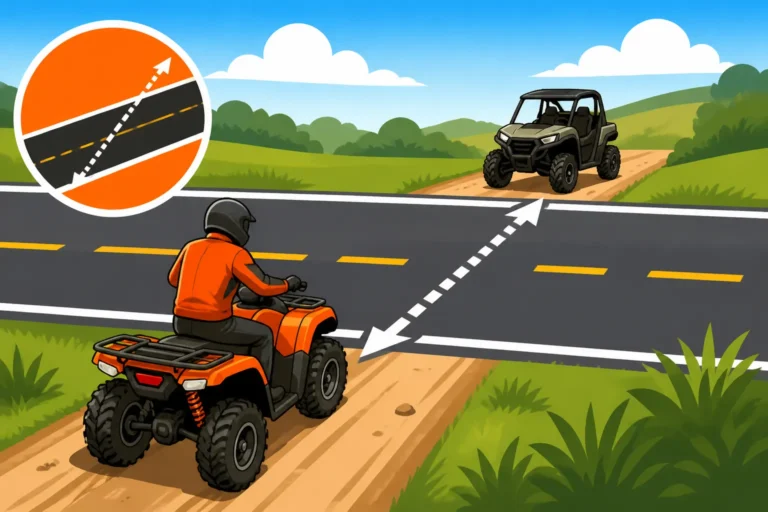
- Crossing State Highways: Even without a special permit for general road use, state law generally allows ATVs and UTVs to cross a state highway at a 90-degree angle if done safely and when traffic permits. However, the special permit system can offer more flexibility.
It's vital to remember that these permissions don't usually extend across jurisdictional lines automatically. A permit from Eldon doesn't necessarily let you ride in Lake Ozark, even if they're neighbors. Always check the specific ordinances for each area you plan to ride in. Many cities and counties have taken the initiative to make this information accessible, often on their official websites. You might find it useful to check out [Missouri Cities That Allow UTVs on Streets] or [Missouri Counties That Allow ATVs on Roads].
Where You Are Still Restricted
Even with a special permit, there are clear boundaries you must respect. Understanding these restrictions is just as important as knowing where you can ride.
- Interstate Highways: Absolutely no ROVs or ATVs are permitted on interstate highways in Missouri, regardless of a special permit. These are high-speed, controlled-access roads, and it’s simply too dangerous for off-road vehicles.
- Roads Over 45 MPH: The 3-mile rule specifically limits ROV use to roads with a speed limit of 45 mph or less. Beyond that, general road use is typically prohibited, even on the shoulder.
- Center of the Roadway: The 3-mile rule allows use of the shoulder. You are not generally permitted to drive in the main traffic lanes unless explicitly allowed by a specific local ordinance for very particular circumstances, usually on low-traffic residential streets.
- Outside Permitted Jurisdictions: As discussed, your permit is geographically limited. You cannot assume that a permit from your hometown will be honored in the next county over unless that county also has an ordinance and possibly an agreement for reciprocity.
- State Parks and Conservation Areas: A road permit does not give you permission to ride your ROV on the roads or trails within Missouri State Parks or Department of Conservation areas unless those specific areas have designated ORV trails or roads, and even then, separate permits or rules often apply.
This patchwork of regulations can be confusing. Imagine you're riding your SuperATV-equipped UTV within your home county, legally on a permitted road, and you cross into the next county that has no such ordinance. Suddenly, you're operating illegally. It's a common scenario that highlights the need for diligent research before venturing out.
Other Vital Considerations for Road-Legal Use
Beyond the permit and equipment, there are several other critical factors that every ROV operator needs to keep in mind when venturing onto Missouri's public roads. These often relate to safety, responsibility, and the nuances of state law that apply to all drivers.
The Importance of Insurance
While Missouri law for off-road vehicles doesn't universally mandate liability insurance for general off-road use, it becomes an absolute necessity when you take your ROV onto public roads. Many cities and counties that issue special permits will require proof of liability insurance as part of the application process. This isn't just a bureaucratic hurdle; it's a layer of protection for you and others.
Operating any vehicle on a public road carries inherent risks. If you're involved in an accident, even a minor one, and you're found to be at fault, the costs of property damage or personal injury can be astronomical. Without insurance, you'd be personally responsible for these expenses. Having a policy that specifically covers your ROV for on-road use gives you peace of mind and fulfills the requirements of many local ordinances. It's always best to check with your insurance provider to ensure your policy specifically covers road use for your UTV.
Driving Safely and Responsibly
Operating an ROV on public roads demands a different mindset than trail riding. You're sharing the road with vehicles that are heavier, faster, and less agile. Your ROV, even with all the required safety equipment, handles differently than a car, especially on pavement.
- Visibility: Always assume other drivers don't see you. Your safety flag and lighting are crucial, but defensive driving is your best friend. Make eye contact if possible, and use hand signals in addition to mechanical signals if needed.
- Speed: Even if the speed limit is 45 mph, driving your ROV at that speed on a paved shoulder can be risky. Drive at a speed that is safe for the conditions and your vehicle. Remember that ROVs are generally not designed for sustained high-speed road travel.
- Awareness: Be extra vigilant for road hazards like potholes, gravel on pavement, or sudden dips. What might be a minor bump on a trail could be a major incident on asphalt.
- Passengers: Adhere strictly to your ROV's manufacturer-specified passenger capacity. Overloading or allowing passengers to ride unsafely is dangerous and illegal. For more specific rules, see [Missouri Passenger Rules for a Passenger in a UTV].
- Alcohol and Drugs: The same laws apply to ROV operators on public roads as they do to car drivers. Operating an ROV under the influence of alcohol or drugs is illegal and carries severe penalties, including DWI charges. For comprehensive information, check out [Missouri DWI Rules for ATV Riders].
Local Ordinances and Their Specificity
We've touched on this repeatedly, but it bears repeating: the devil is in the details of local ordinances. While state law provides the framework for the special permit and the 3-mile rule, cities and counties can add their own layers of regulation.
Some municipalities might have specific hours of operation (e.g., sunrise to sunset), minimum age requirements for operators beyond the state's license requirement, or additional equipment mandates. For instance, some towns might require a slow-moving vehicle sign in addition to the safety flag, or might only allow ROV use on certain days of the week. This variability is why it's critical to obtain a copy of the actual ordinance from the city or county clerk's office and read it thoroughly before you ride. It’s also important to remember that a city permit doesn't automatically work in the next town over, as detailed in [Does a City Permit Work in the Next Town?].
Consequences of Non-Compliance
It's tempting to think that getting caught riding your UTV illegally on a Missouri road will just be a slap on the wrist. Unfortunately, that's not always the case. The consequences of operating an ROV or ATV on public roads without the proper permits, equipment, or in violation of local ordinances can range from irritating fines to serious legal trouble, especially if an accident occurs.
Fines and Citations
The most immediate consequence of illegal road use is receiving a ticket from law enforcement. This could be from a local police officer, a county sheriff's deputy, or even a Missouri State Highway Patrol trooper. The exact fine amount will vary depending on the specific violation and the jurisdiction, but they can quickly add up.
Imagine you're caught riding your ROV on a state road outside the 3-mile radius, without a valid permit, and perhaps missing a safety flag. You could be looking at multiple citations: one for illegal operation on a public roadway, another for no permit, and yet another for missing safety equipment. Each of these carries its own fine, and court costs can be added on top. These aren't just minor inconveniences; they can significantly impact your wallet and sometimes even your driving record. To understand potential costs, you might want to look at [Missouri Fines for Illegal ATV Road Use].
Vehicle Impoundment
In more severe or repeated instances of illegal operation, law enforcement has the authority to impound your ROV. This means your machine could be towed away and stored at an impound lot. Retrieving an impounded vehicle is a costly and time-consuming process. You'll not only have to pay any outstanding fines and fees, but also towing charges, storage fees (which accrue daily), and potentially prove ownership and legal means of transport before it's released. This can easily run into hundreds or even thousands of dollars, far outweighing the cost of a permit or some aftermarket safety equipment from a brand like SuperATV.
Liability in Accidents
This is perhaps the most serious consequence. If you're operating your ROV illegally on a public road and are involved in an accident, your liability exposure can be immense.
- Insurance Voided: If your insurance policy doesn't cover illegal road use, or if you intentionally misrepresented your use, your insurance company could deny your claim. This means you would be personally responsible for all damages, including medical bills for injured parties, vehicle repairs, and potential legal fees.
- Criminal Charges: Depending on the circumstances of the accident, especially if there are serious injuries or fatalities, you could face criminal charges in addition to civil liability. This could include reckless endangerment, assault, or even vehicular manslaughter, with penalties ranging from significant jail time to hefty fines.
- Civil Lawsuits: The injured parties or their families could file a civil lawsuit against you, seeking damages for medical expenses, lost wages, pain and suffering, and more. Without insurance to cover these costs, your personal assets (home, savings, future earnings) could be at risk.
The risks associated with illegal road use far outweigh any perceived convenience. It's a gamble with your finances, your freedom, and your peace of mind. Investing the time and effort into understanding and complying with Missouri's special permit regulations is not just about following the law; it's about protecting yourself and others.
Disclaimer
This article is for general informational purposes only and does not constitute professional advice. Laws, prices and regulations vary by location and change over time. Consult a qualified professional for guidance on your specific situation.