Missouri’s 3-Mile Rule for Side-by-Sides
We've all been there: you've got your side-by-side (SXS) or utility vehicle (UTV) parked, ready for adventure, but the trailhead or even just the local gas station feels like a world away across a paved road. The frustration of wanting to hop on for a quick trip, only to remember the legal limitations, is a common one for off-road enthusiasts in Missouri. This comprehensive guide is here to shed light on Missouri's specific 3-mile rule for side-by-sides, explaining how you might legally navigate those short distances on public roads and what you need to know to stay on the right side of the law.
Understanding Missouri's General Stance on ATVs and UTVs on Roads
Missouri, like many states, has a pretty clear stance when it comes to off-road vehicles on public roads: generally, they're not allowed. This isn't because the state wants to make your life harder, but rather because off-road machines simply aren't designed or built with the same safety features and standards as your typical passenger car or truck. It’s a matter of safety for both the riders and other motorists sharing the asphalt.
Why Most Off-Road Vehicles Aren't Street Legal by Default
Think about it: an ATV or UTV is engineered for rugged terrain, for mud, rocks, and uneven trails. They often lack turn signals, proper mirrors, DOT-approved tires, and the extensive lighting systems that cars have. Their suspension is designed for absorbing bumps, not for smooth, high-speed cornering on pavement. Many also have open cabs, no windshield wipers, and brake systems that aren't optimized for quick stops on asphalt. These differences mean that putting an off-road vehicle directly onto a busy highway creates a significant safety risk, which is why state laws typically restrict their use to off-highway environments.
Moreover, the entire framework of how these machines are titled and registered (or not registered, in some cases) reflects their intended use. Most ATVs get a decal, not a license plate, further solidifying their non-road-legal status. It’s a systemic approach to keeping everyone safe by designating where these powerful, fun machines can and cannot operate. The default is always "off-road only" unless specific exemptions or local ordinances say otherwise.
The Distinction Between ATVs, UTVs, and ROVs in Missouri Law
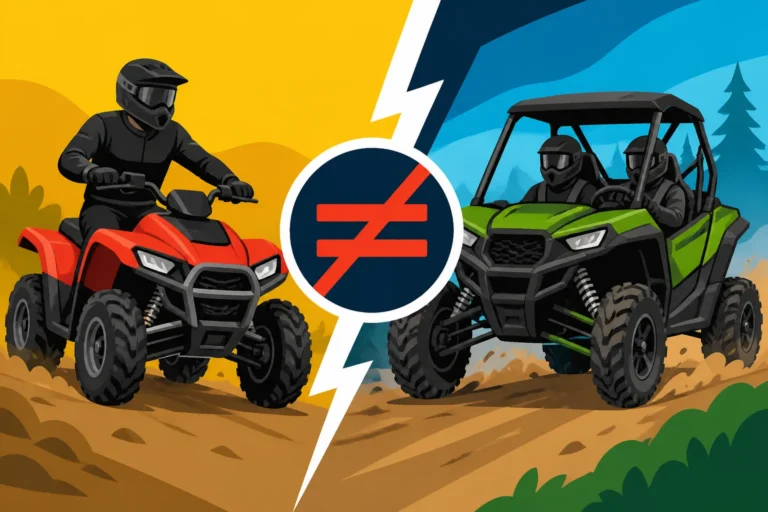
This is where things can get a little confusing because Missouri law makes some critical distinctions. An ATV, or All-Terrain Vehicle, is generally defined as a motorized vehicle manufactured and designed for off-highway use, having three or more wheels, weighing less than 1,500 pounds dry weight, and being 50 inches or less in width, with a non-straddle seat and handlebars. Think of your traditional quad.
A UTV, or Utility Task Vehicle, and an ROV, or Recreational Off-Highway Vehicle, are often used interchangeably in common conversation, but legally, the focus shifts. Missouri law frequently refers to "recreational off-highway vehicles," which are often what we call side-by-sides. These machines typically have four or more wheels, a steering wheel, non-straddle seats (often side-by-side bucket seats), and can exceed 50 inches in width and 1,500 pounds dry weight. [What the Law Calls a Recreational Off-Highway Vehicle] clarifies these definitions further. The key difference for our discussion today is that the 3-mile rule specifically applies to these types of vehicles—the ones with steering wheels and side-by-side seating—not traditional ATVs. This distinction is crucial for understanding who can even consider using this particular road exemption.
The Frustration of Limited Riding Opportunities
For many riders, the inability to legally drive their side-by-side even a short distance on a public road is a constant headache. You might live just a mile from a gas station, or a couple of miles from the next section of a private trail system, but you're forced to load your machine onto a trailer, drive your truck, and then unload it again. This is not only inconvenient but also eats into valuable riding time. It creates a barrier between your home or camp and the places you need to access, even if those places are literally just around the bend.
This limitation can feel particularly unfair when you see agricultural vehicles or even golf carts, in certain areas, zipping along. You've invested in a capable machine, perhaps even added some safety features, and the thought of having to trailer it for every minor crossing or connection point can be genuinely irritating. It's a common complaint among the off-road community, and it's precisely this kind of everyday frustration that leads people to explore rules like Missouri's 3-mile allowance.
Deciphering the 3-Mile Rule for Side-by-Sides
So, what exactly is this mystical 3-mile rule, and how does it actually work in Missouri? It's a specific provision designed to offer a limited, conditional exception for certain off-highway vehicles to briefly operate on public roads. It's not a free pass to make your side-by-side fully street legal, but rather a narrow allowance for specific circumstances. Understanding its boundaries is key to avoiding penalties.
What Exactly the 3-Mile Rule Allows (and Doesn't)
Missouri's 3-mile rule is designed for recreational off-highway vehicles (ROVs), which are your typical side-by-sides. It allows the operator of an ROV to travel on a public road within three miles of their residence to access private property for recreational riding. This means you can't just drive anywhere for three miles; the purpose must be to get to private land for off-roading. It’s about connecting the dots, not cruising.
It explicitly does not allow you to go to the grocery store, visit a friend, or simply joyride for three miles. The intent is critical here. Furthermore, this rule often works in conjunction with local ordinances. While the state sets the framework, many cities and counties in Missouri have specific ordinances that either adopt, expand upon, or reject the allowance of ROVs on their roads. So, while the 3-mile rule exists statewide in concept, its practical application can be heavily influenced by where you live and ride. You're never fully "street legal" with this rule, only granted a very specific and limited access.
Which Vehicles Qualify for This Specific Exemption
As touched upon earlier, this rule is primarily for what Missouri defines as a Recreational Off-Highway Vehicle (ROV) or, more commonly, a side-by-side. This includes machines with a steering wheel, bucket seats, and often a roll cage. Traditional ATVs, which have handlebars and a straddle seat, generally do not qualify under this specific 3-mile rule. The legislative intent behind creating this rule for ROVs likely stems from their slightly more car-like controls and often more robust safety features (like seatbelts and roll cages) compared to ATVs, even if they still fall short of full street-legal standards.
It's important to differentiate: you might see other vehicles, like those used for agricultural purposes, on roads. Those operate under different exemptions. For a strictly recreational side-by-side, the 3-mile rule is one of your few avenues for limited road access. It's not about engine size or horsepower, but the fundamental design and seating configuration that makes a side-by-side eligible.
The Purpose Behind This Limited Road Access
The primary purpose of the 3-mile rule is to provide a practical solution for riders who need to connect segments of private land, access nearby trails that might be just across a road, or reach a property where they store or regularly ride their machine, all within a short distance of their home base. Imagine you have a large property, but it's split by a county road, or you need to cross a short stretch of paved road to get from your driveway to a network of trails. This rule helps bridge those gaps without requiring you to trailer your machine for what amounts to a few hundred yards or a mile.
It acknowledges the reality that many rural and semi-rural residents use these vehicles as part of their daily life or recreational routine, and completely barring them from any road use could be overly burdensome. It's a balance: recognize the practical need, but keep the scope tight to minimize safety risks on public thoroughfares. It’s also often a precursor or a partner to local ordinances that may further open up road access, allowing communities to tailor rules to their specific needs. [Can You Drive a UTV on a Missouri Road?] delves into this broader context of road access.
Essential Equipment for Road-Legal Side-by-Side Use Under the 3-Mile Rule
Just because you're within the 3-mile radius doesn't mean you can just jump in your side-by-side as-is and hit the asphalt. Missouri law, and common sense, dictates certain safety equipment is necessary to make your ROV at least somewhat visible and controllable on public roads. Skimping on these can lead to fines, accidents, or both. Think of it as gearing up your machine for a brief, but critical, encounter with standard traffic.
Required Safety Features Beyond Factory Standard
When you're operating a side-by-side on a public road, even under the 3-mile rule, you need to ensure it has certain safety features. Many of these are often factory-installed on newer models, but it's crucial to verify. These typically include:
- Headlamps: Functional headlights that emit white light and are visible from at least 500 feet. You need to be seen, especially at dawn or dusk.
- Taillamps: Red taillights visible from at least 500 feet to the rear.
- Brake lights: Functional brake lights that illuminate when the brakes are applied.
- Horn: An audible warning device.
- Mirrors: At least one rearview mirror, typically on the driver's side, to see traffic behind you.
- Seat belts: Your ROV must be equipped with and you must be wearing seat belts, corresponding to the factory-installed seating.
- Roll bar or cage: The factory roll-over protection structure must be in place.
- Windshield: Often, a windshield is required to protect the operator. Many riders turn to aftermarket solutions like those from SuperATV for durable, clear windshields that meet these needs.
Some local ordinances might add requirements for turn signals, which are often not standard on ROVs. Always check your specific local regulations in addition to state law. The goal is to make your machine as visible and communicative as possible to other road users, bridging the gap between off-road design and on-road necessity.
The Importance of a Safety Flag and Its Specifications
A crucial, yet often overlooked, safety feature for ROVs on public roads in Missouri is the safety flag. This isn't just a suggestion; it's a requirement under many road-use provisions, including those that might incorporate or expand upon the 3-mile rule. The flag serves a vital purpose: increasing the visibility of your relatively low-profile side-by-side, especially over hills or around blind curves, where a car driver might not see you until it's too late.
Missouri law often specifies that a safety flag must be at least seven feet above the ground when mounted, and the flag itself needs to be orange in color and at least 30 square inches in size. This height ensures it can be seen over parked vehicles, fences, and minor terrain variations. Brands like SuperATV offer a variety of flag mounts and flags that can help you meet these specifications, ensuring your machine is seen and you're compliant. Failing to display a proper flag could result in a citation, not to mention a serious safety hazard. [Missouri's 7-Foot Safety Flag] provides further detail on these requirements.
Other Considerations for Road Readiness
Beyond the mandatory safety equipment, there are other considerations that contribute to both legality and safety when you’re driving your side-by-side on the road, even for a short distance.
- Tires: While knobby off-road tires are great for trails, they wear quickly on pavement and can affect handling. While not always legally mandated for short road use, ensuring your tires are in good condition and properly inflated for road pressure (which might be different from trail pressure) is a smart move.
- Wipers: If your ROV has a windshield, especially an aftermarket one, ensure you have functional wipers if you anticipate any wet weather. Visibility is paramount.
- Documentation: Always carry your proof of ownership, and any applicable permits or insurance documentation. A law enforcement officer will want to see these if you're stopped.
- Cleanliness: While not a legal requirement, a machine caked in mud can obscure lights, mirrors, and even your license plate (if applicable under other rules), potentially leading to issues. Give it a quick rinse before hitting the pavement.
- Noise: Ensure your exhaust system is in good repair and not excessively loud, as some local ordinances have noise limits.
These additional considerations simply add another layer of preparedness and responsibility, showing that you’re taking the privilege of road access seriously.
Navigating Local Ordinances and Permits
The 3-mile rule is a state-level provision, but when it comes to riding side-by-sides on public roads, local ordinances enacted by cities and counties play an enormous role. Many communities in Missouri have taken it upon themselves to expand—or sometimes restrict—the use of ROVs on their streets, adding another layer of complexity for riders. This patchwork of regulations means that what's legal in one town might be illegal just a few miles down the road.
The Role of Cities and Counties in Expanding Road Access
Recognizing the popularity and utility of side-by-sides, many cities and counties in Missouri have passed their own ordinances to allow ROVs on certain public roads. These local laws can go beyond the state's 3-mile rule, sometimes permitting broader use within city limits, on county roads, or even allowing ROVs to connect to specific trail systems. These ordinances are often a response to local demand, aiming to boost tourism, facilitate local commerce, or simply make life easier for residents who use these vehicles for work or recreation.
However, these local ordinances usually come with their own set of requirements. They might stipulate specific hours of operation, designate certain roads as open or closed, and often require additional safety equipment beyond what the state mandates for the 3-mile rule. They almost always require a local permit, which you typically obtain from the city hall, police department, or county sheriff's office. It’s imperative to check with the specific municipality or county you plan to ride in, as "ignorance of the law" is rarely a valid excuse. [Missouri Cities That Allow UTVs on Streets] highlights some examples of communities that have embraced local allowances.
Obtaining a Special Permit for Road Use
If you plan to ride your side-by-side on public roads under a local ordinance, you will almost certainly need to obtain a special permit. The process for getting one varies significantly from one jurisdiction to another, but generally involves:
- Application: Filling out a form with your vehicle's information, your driver's license details, and sometimes proof of residency.
- Inspection: Your ROV may need to undergo a safety inspection to ensure it meets the local ordinance's equipment requirements (lights, horn, mirrors, flag, etc.).
- Proof of Insurance: You will typically need to show proof of liability insurance.
- Fees: There will almost always be an application or permit fee. This fee can vary widely, from a nominal amount to something more substantial. [Missouri Special Permit Cost for ATVs] might give you an idea of the range, even if it refers to ATVs, as the administrative cost for similar permits can be comparable.
- Display: Once issued, the permit usually comes as a sticker or placard that must be visibly displayed on your ROV.
It's important to remember that these local permits are just that—local. They only grant you permission to operate on roads within that specific city or county's jurisdiction. They do not magically make your ROV street legal statewide, nor do they typically apply across county or city lines unless reciprocal agreements are in place, which is rare.
Understanding the Limitations of Local Permits
While local permits offer increased freedom, they come with significant limitations that riders must always keep in mind. The most important one is geographic: a permit issued by, say, the city of Lake Ozark, only allows you to ride on approved roads within Lake Ozark. It doesn't mean you can then take your side-by-side onto state highways outside the city, or into a neighboring town that hasn't enacted its own ordinance. You can't assume that because one community allows it, all surrounding areas do.
Another limitation is scope. These permits rarely allow for unlimited road use. They might restrict speed, designate specific roads as off-limits (like state highways or major thoroughfares), or set curfews. Some might even specify the purpose of the road travel, similar to the state's 3-mile rule. Furthermore, these local ordinances are subject to change, so what was legal last year might not be this year. Always review the most current regulations for any area you plan to ride. Disregarding these limitations can lead to costly fines and the loss of your permit, or even more severe legal consequences.
| Feature / Rule | State 3-Mile Rule (ROV) | Local Ordinance Permit | Agricultural Use (General) |
|---|---|---|---|
| Vehicle Type | Side-by-Side (ROV) | Varies (often ROV, sometimes ATV) | Farm equipment, sometimes UTVs |
| Distance Limit | 3 miles from residence | Varies by ordinance (often city/county limits) | Varies (often for farm business) |
| Purpose | Access private property for recreation | Varies (recreation, commerce, access) | Farm business (planting, harvesting, tending) |
| Permit Required? | No specific state permit (but need to meet conditions) | Yes (local city/county permit) | No (exemption for farm use) |
| Driver's License | Yes | Yes | Yes (for public road use) |
| Insurance | Recommended, often implied for liability | Required by most ordinances | Recommended |
| Safety Flag | Often required (see H3 3.2) | Often required by ordinance | Often required (SMV sign) |
| Helmet Law | Adults: No, Minors: Yes | Varies by ordinance, state law applies for minors | No |
| Enforcement | State & local law enforcement | Local law enforcement | State & local law enforcement |
Operator Requirements and Responsibilities
Beyond the vehicle itself, the person behind the wheel also has important legal and safety responsibilities when operating a side-by-side on Missouri public roads, even under the limited scope of the 3-mile rule or a local ordinance. These requirements are in place to ensure that anyone operating a motor vehicle on a public road, regardless of its off-road origins, has the basic qualifications and protections.
Driver's License and Age Restrictions
To operate a side-by-side on any public road in Missouri, even for short distances under the 3-mile rule or a local permit, the operator must possess a valid driver's license. This isn't just for ROVs; it applies to any motor vehicle on a public roadway. This means an operator's or chauffeur's license is required. This stipulation ensures that the driver has met the basic requirements for road operation, including passing a driving test and understanding traffic laws. [An Operator's or Chauffeur's License in Missouri] is crucial for understanding this requirement.
Furthermore, age restrictions play a role. While the 3-mile rule doesn't specifically outline an age for ROV operation off-road, the requirement for a valid driver's license effectively sets the minimum age for road use at 16 (or whatever the minimum age is for a graduated driver's license in Missouri). This means minors, even if they are skilled off-road riders, cannot legally operate a side-by-side on a public road, even for a short dash to private property, unless they possess the appropriate driver's license. This is a non-negotiable safety and legal standard.
Insurance Mandates for Road-Used Side-by-Sides
While Missouri does not explicitly require specific ATV or UTV insurance for off-road use on private land, the moment you put your side-by-side on a public road, even under the 3-mile rule or a local ordinance, the situation changes. Many local ordinances explicitly require proof of liability insurance before they will issue a road-use permit. Even if a specific ordinance doesn't mention it, the general principle of operating a motor vehicle on a public road in Missouri implies a need for liability coverage.
Why? Because accidents can happen anywhere. If you cause an accident with another vehicle, pedestrian, or property while operating your side-by-side on a public road, you could be held financially responsible for damages and injuries. Having liability insurance protects you from these potentially devastating costs. It's not just a legal hurdle; it's a responsible choice. You should check with your insurance provider to ensure your current policy covers road use for your side-by-side, or look into specific off-road vehicle policies that offer road-use endorsements. [Missouri ATV Insurance Requirement] provides further context on insurance for these machines.
Helmet Laws and Passenger Rules
Missouri has specific helmet laws that apply to off-road riding, and these can extend to limited road use. For riders under the age of 18, helmets are generally required when operating an ATV or ROV. While adults are not typically mandated to wear helmets when operating ROVs, it is always a wise safety practice, especially when sharing the road with other vehicles. [Missouri Helmet Law for Riders Under 18] details these age-specific requirements.
Regarding passengers, this is another area where ROVs differ significantly from traditional ATVs. Side-by-sides are designed with multiple seats (as the name implies!), and carrying passengers is generally permitted as long as they are within the manufacturer's specified capacity and are properly secured with seatbelts. This contrasts with ATVs, where carrying passengers is often restricted or only allowed if the machine is specifically designed for two riders. When operating on a public road, all passengers must be seated, wear their seatbelts, and adhere to any age restrictions for passengers set by local ordinances or common safety practices. [Missouri Rules for a Passenger in a UTV] clarifies passenger guidelines for these multi-seat vehicles.
Practical Scenarios and Common Pitfalls
Understanding the legal framework is one thing, but applying it to real-life situations is another. The 3-mile rule, and local ordinances that build upon it, are designed for very specific scenarios. Straying from these intended uses or making assumptions can lead you directly into trouble, potentially incurring fines or even more serious legal consequences. Let's explore how this rule plays out and what to watch out for.
Real-World Application of the 3-Mile Rule
Let's imagine a few common scenarios where the 3-mile rule might come into play for a Missouri side-by-side owner:
- Connecting Trail Segments: You live in a rural area, and your property is adjacent to a large tract of private land with extensive riding trails. However, to get from your driveway to the main entrance of these trails, you have to cross a county road for about half a mile. Under the 3-mile rule, and assuming you meet all equipment and operator requirements, you could legally drive your ROV this short distance to access the private trail network.
- Farm Work Access: You're a farmer who uses your side-by-side to check livestock or move equipment between two fields that are separated by a short stretch of public road. While agricultural exemptions exist, the 3-mile rule provides another layer of legality for quickly bridging these gaps from your residence to another part of your property, provided the primary use is related to property access for "recreational riding" or, in many practical applications, other similar access needs that benefit from the limited travel allowance.
- Running to the Gas Station (if allowed by local ordinance): While the state's 3-mile rule is strict about accessing private property for recreational riding, many local ordinances expand this. In a town with such an ordinance, you might be able to drive your ROV a mile down the street to the local gas station to refuel before a long day of riding. This kind of expanded utility is entirely dependent on specific local laws. Always verify the purpose allowed by any local permit.
These examples highlight the "connection" aspect of the rule. It's about bridging small gaps efficiently, not about replacing your truck for daily errands.
What Happens if You Exceed the 3-Mile Limit or Violate Rules
The consequences of misinterpreting or intentionally violating the 3-mile rule or any local ordinance can range from inconvenient to severe. Law enforcement officers, whether state troopers or local deputies, are generally well-versed in these regulations.
- Fines: The most common consequence is a traffic citation, which can carry significant fines. Operating an unregistered (for road purposes) or improperly equipped vehicle on public roads can result in multiple citations. [Missouri Fines for Illegal ATV Road Use] gives you a sense of what these penalties can look like.
- Impoundment: In some cases, especially for repeat offenses or egregious violations, your side-by-side could be impounded, leading to towing and storage fees in addition to fines.
- Accident Liability: If you're involved in an accident while illegally operating your ROV on a public road, your insurance might deny coverage, leaving you personally liable for all damages, injuries, and legal costs. This is where having the proper insurance and adhering to all rules becomes critically important.
- Loss of Privileges: If you're operating under a local permit, violations could lead to the revocation of that permit.
Remember, the moment your wheels touch a public road, you are subject to the same traffic laws as any other motor vehicle. Speed limits, stop signs, yielding rules—they all apply. Violating those, in addition to ROV-specific rules, only compounds the potential penalties.
Best Practices for Safe and Legal Road Riding
To ensure your limited road excursions are both legal and safe, adopt these best practices:
- Know Your Local Laws: Before you even think about hitting the pavement, thoroughly research the state laws (like the 3-mile rule) and any relevant local ordinances in your city and county. Don't rely on hearsay. A quick call to the local sheriff's department or city hall can clear up many questions.
- Equip Your Machine Properly: Ensure your side-by-side meets all state and local equipment requirements. This includes functional lights, horn, mirrors, seatbelts, and especially the safety flag. Consider aftermarket accessories from providers like SuperATV that enhance safety and compliance, such as robust mirrors, turn signal kits, and bright LED lighting.
- Carry All Documentation: Keep your driver's license, proof of insurance, ROV title/decal information, and any local permits readily accessible. A waterproof bag or compartment is ideal.
- Drive Defensively: ROVs handle differently on pavement than cars. They have higher centers of gravity, different braking characteristics, and are less visible. Drive cautiously, anticipate traffic, and maintain extra space. Be aware of your machine's width, especially if it's a wider model designed for aggressive trails.
- Be Visible: Operate with your headlights on, even during the day. Ensure your safety flag is properly mounted and visible. Wear bright clothing if possible.
- Adhere to Speed Limits: Always follow posted speed limits. Even if your ROV can go faster, remember you're sharing the road with vehicles designed for higher speeds.
- Respect the Rule: The 3-mile rule and local ordinances are privileges, not rights. Using them responsibly helps ensure these options remain available for the off-road community.
By taking these steps, you minimize your risks and maximize your enjoyment while navigating Missouri's roads with your side-by-side.
Comparing the 3-Mile Rule to Other Road Use Exemptions
The 3-mile rule for side-by-sides is one specific avenue for limited road access in Missouri, but it's not the only one. It's important to understand how it differs from other exemptions, especially those concerning agricultural use, as these can sometimes be confused. Each exemption has its own set of criteria, vehicle types, and purposes, and misapplying them can lead to legal issues.
Agricultural Use Exemptions
Farmers in Missouri often use utility vehicles, including some types of side-by-sides, as essential tools for their operations. Recognizing this, Missouri law provides specific exemptions for agricultural vehicles to use public roads. Unlike the 3-mile rule, which is largely for recreational access from a residence, the agricultural exemption focuses on travel for the purpose of farm business. This could include moving equipment between fields, transporting feed, or checking fences. [Missouri's Agricultural Highway Exception] goes into detail on these allowances.
Key differences from the 3-mile rule include:
- Purpose: Strictly for agricultural business, not recreational access.
- Distance: Generally not limited to 3 miles, but rather to the necessity of the farm operation.
- Vehicle Type: While UTVs might be used, the exemption covers a broader range of farm machinery.
- Equipment: Often requires a slow-moving vehicle (SMV) sign rather than a specific safety flag, and other equipment might be different.
It's crucial not to try and pass off recreational use as agricultural use to skirt the 3-mile rule. Law enforcement can easily distinguish between a farmer moving hay and someone heading to a hunting camp. If you're riding your side-by-side for anything other than direct farm work, the agricultural exemption likely won't apply.
Special Event Permits and Industrial Use
Beyond the everyday rules, there are other, more niche exceptions for off-road vehicles on roads.
- Special Event Permits: Occasionally, cities or counties may issue special permits for organized parades, charity rides, or other community events that temporarily allow ROVs (and sometimes ATVs) to travel on designated public roads. These are typically one-off events with specific routes, times, and safety requirements.
- Industrial Use: Vehicles used for industrial or commercial purposes, such as maintenance vehicles on construction sites or utility company machines, might also have specific allowances for limited road use within the scope of their work. These are generally highly specialized vehicles and operations, not applicable to the average recreational rider.
These exemptions are very specific and require explicit permission or fall under specialized vehicle classifications. They are not pathways for general recreational road use and should not be confused with the 3-mile rule or local ordinances.
Why the 3-Mile Rule is Unique to ROVs and Local Ordinances
The 3-mile rule stands out because it's one of the few state-level provisions that specifically addresses limited road access for recreational off-highway vehicles (side-by-sides) from a residential perspective. It's not about farm work, industrial tasks, or large-scale events. It's tailored for the individual ROV owner who needs to bridge a short gap to private property for riding.
Moreover, its uniqueness lies in how it interacts with local governance. The state provides the foundation with the 3-mile rule, but then empowers cities and counties to build upon it, expanding access through their own ordinances. This creates a flexible system, albeit a complex one, allowing local communities to determine the best approach for ROV use on their roads, based on their specific infrastructure, traffic patterns, and community needs. This combination of state baseline and local adaptation is what makes navigating road-legal side-by-side use in Missouri such a nuanced endeavor, and why understanding both is crucial.
Disclaimer
This article is for general informational purposes only and does not constitute professional advice. Laws, prices and regulations vary by location and change over time. Consult a qualified professional for guidance on your specific situation.