Why a Quad Cannot Use the Same Rule
It's incredibly frustrating when you see your buddy's side-by-side cruising down a county road, and you're left wondering why your perfectly capable quad can't do the same. This often leads to confusion, and even a ticket, because Missouri's laws treat all-terrain vehicles (ATVs) and utility terrain vehicles (UTVs) — what many call side-by-sides — very differently when it comes to road use. This guide will help you understand the specific distinctions in Missouri law, explaining why your quad often can't simply follow the same rules as a side-by-side on public roads.
Understanding Missouri's Different Definitions for ATVs and UTVs
The fundamental reason why ATVs and UTVs are treated so differently on Missouri roads comes down to how the state legally defines them. While they both fall under the broader umbrella of off-road vehicles, the devil is truly in the details of their construction and intended use, according to the letter of the law. This distinction isn't arbitrary; it's rooted in perceived safety differences and how legislators envision these machines interacting with traditional traffic.
The Core Difference: Straddle Seat vs. Side-by-Side Seating
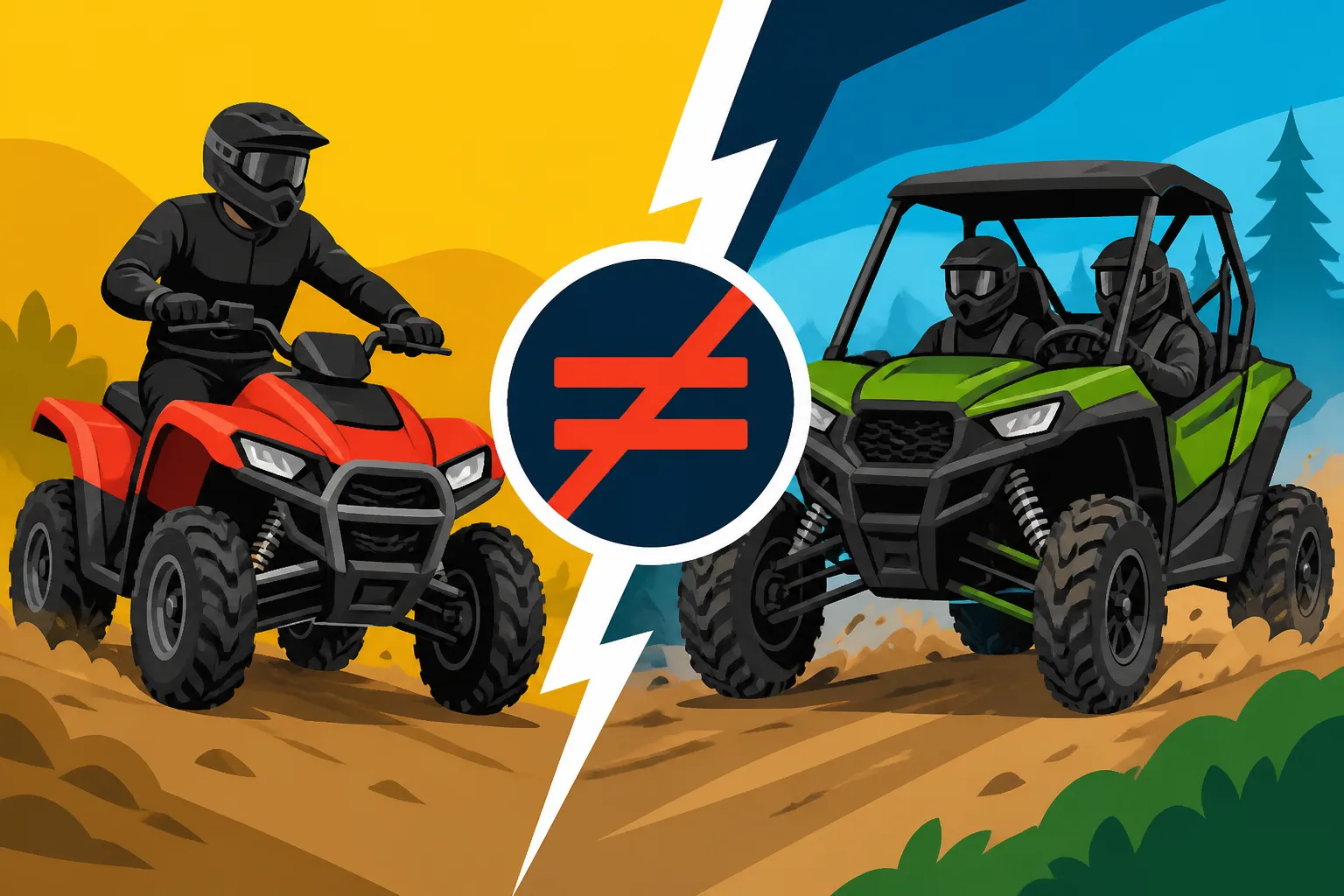
At the heart of Missouri's legal differentiation is the seating arrangement. An "all-terrain vehicle," or ATV, is specifically defined as a motorized vehicle manufactured and used exclusively for off-highway use, which has three or more wheels and handlebars for steering, and is designed to be straddled by the operator. Think of your traditional quad – you throw a leg over it like a motorcycle, with the engine and frame between your knees. This straddle-seat design is a non-negotiable part of the ATV definition in Missouri.
On the other hand, Missouri law often classifies side-by-sides as either "utility vehicles" (UVs) or "recreational off-highway vehicles" (ROVs). While the exact statute might use slightly different terminology, the key characteristic for these machines is that the operator and any passengers sit side-by-side in seats, typically bucket seats, and are usually restrained by seatbelts within a roll cage. They also use a steering wheel, much like a car, rather than handlebars. This seemingly simple difference in seating and controls significantly impacts how they're regulated for road use, largely because a side-by-side is seen as having more car-like safety features already built in. For more on how the state sees these, check out [Why Missouri Splits ATVs, UTVs and ROVs].
Width and Weight: Other Defining Factors
While the seating arrangement is paramount, Missouri's definitions also often consider factors like width and dry weight, especially when trying to distinguish between different types of off-road vehicles. For instance, an ATV typically has a narrower stance, often less than 50 inches wide. Utility vehicles and recreational off-highway vehicles, by their very nature, are designed to be wider, accommodating two or more passengers seated abreast. This extra width contributes to a different stability profile.
Additionally, while less emphasized for road use regulations directly, the dry weight can sometimes be a factor in how a vehicle is classified. ATVs are generally lighter, built for agility and navigating tight trails. Side-by-sides, designed for hauling, passengers, and a more robust off-road experience, tend to be significantly heavier. These physical characteristics, though secondary to the seating, contribute to the overall legal framework that separates your quad from a wider, heavier side-by-side. These differences also influence how they might perform in an accident on pavement, which is why the state applies different rules. Understanding these foundational definitions is the first step in unraveling the mystery of why your quad faces different restrictions than your buddy’s UTV.
The "3-Mile Rule" and Special Permits: Why It Applies Differently
This is where much of the confusion and frustration truly comes to a head. Many riders hear about a "3-mile rule" for off-road vehicles on Missouri roads and automatically assume it applies to all of them. Unfortunately, that's not the case. The specific state statute allowing limited road use within a certain radius, often referred to as the "3-mile rule," was crafted with a particular type of vehicle in mind, and your traditional ATV typically isn't it.
Who Qualifies for the 3-Mile Rule and Why
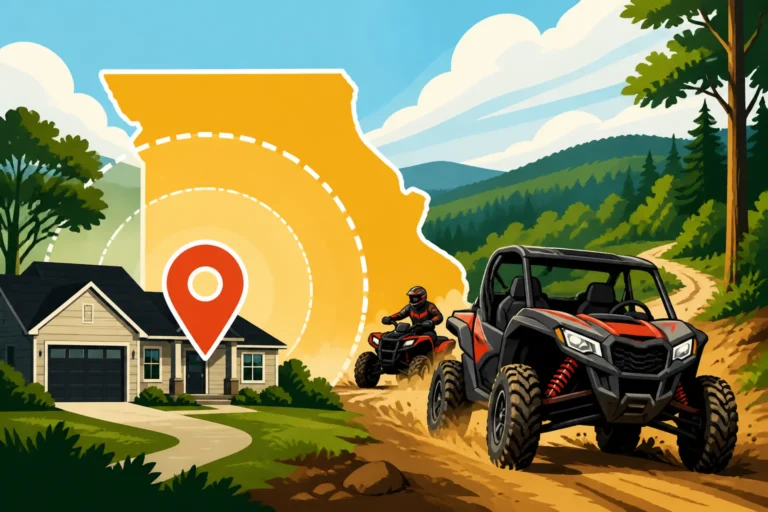
Missouri's state-level "3-mile rule" is primarily designed for Recreational Off-Highway Vehicles (ROVs), which are essentially what most people call side-by-sides. This rule, found in Section 304.038 of Missouri statutes, allows ROV operators to drive on the shoulder or on certain roads within three miles of their residence, primarily for the purpose of getting to a trail, a farm field, or another area where off-road use is permitted. This is a limited exception, not a blanket permission for street use. The rationale often cited for including ROVs in this rule, and excluding ATVs, is the ROV's car-like controls (steering wheel, foot pedals), side-by-side seating, and factory-equipped roll cages and seatbelts, which are seen as offering a higher degree of safety for operation on public roads than a straddle-seat ATV. It’s a very specific allowance, intended to bridge the gap between private property and accessible riding areas.
Therefore, if you're riding a quad, this state-level 3-mile rule, unfortunately, doesn't extend to you. You won't be able to just hop on the road and cruise within three miles of your home simply because your friend with a SuperATV Defender or Polaris RZR can. The legislature simply hasn't granted ATVs the same statewide exception. For more information on this specific provision, you might want to read [Missouri's 3-Mile Rule for Side-by-Sides] or [Why the 3-Mile Rule Is ROVs Only].
Special Local Permits: A Patchwork of Regulations
Since the state-level 3-mile rule largely leaves ATVs out in the cold, road legality for quads in Missouri primarily falls to local jurisdictions – individual cities and counties. This leads to what many riders describe as a frustrating and confusing patchwork of regulations across the state. What's legal in one town might get you a ticket just across the county line. Many cities and counties have taken it upon themselves to enact ordinances that allow some form of ATV and/or UTV use on their local roads, often requiring a special permit.
These local permits often come with their own set of rules, including specific hours of operation, designated roads, safety equipment requirements (beyond state minimums), and sometimes even age restrictions. For example, a town might issue a special permit that allows ATVs on city streets up to 35 mph, while an adjacent county might only allow them on gravel roads. It’s imperative to check with the local police department or county sheriff's office for the specific area you plan to ride. There's no centralized list, which makes planning a multi-county ride a significant challenge. You might find a town like [St. James and Its 2021 Ordinance] allows UTVs, but that doesn't automatically mean ATVs are included, or that a neighboring town has the same rules. This local control means that "Why a Quad Cannot Use the Same Rule" often boils down to the fact that your local officials simply haven't passed an ordinance to allow it.
Safety Equipment and Operator Requirements: A Tale of Two Machines
Beyond the definitions and specific road use rules, Missouri also imposes different safety equipment and operator requirements based on whether you're riding an ATV or a UTV, especially when attempting any form of road use. These differences further illustrate the state's distinct approach to these two types of off-road vehicles, again emphasizing perceived safety and operational characteristics.
Helmet Laws and Passenger Restrictions
One of the most noticeable differences involves helmet laws and passenger rules. For ATVs, Missouri law states that operators and passengers under the age of 18 are required to wear a safety helmet when riding on public land or designated trails. While this doesn't strictly apply to private property, any attempt at road use (where permitted locally) would likely fall under stricter scrutiny, and many local ordinances extend helmet requirements to all ATV operators regardless of age for road use. Moreover, ATVs are generally designed for a single operator. Missouri law explicitly states that no ATV shall be operated with more than one person on it, unless it's specifically designed by the manufacturer to carry a passenger, and even then, passengers are often restricted on public lands.
In contrast, UTVs (ROVs) often have different rules. While helmets might still be recommended, especially for younger riders, they are not universally mandated for adults operating ROVs on roads under the 3-mile rule or local ordinances. The presence of a roll cage and seatbelts is often deemed sufficient. Furthermore, ROVs are designed with multiple seating positions, allowing for passengers. If a local ordinance permits a side-by-side on the road, it typically allows passengers as long as they are properly seated and belted. This fundamental difference in design capacity directly translates to distinct rules for carrying companions, which contributes to [Missouri Passenger Rules on an ATV] being much stricter than for UTVs.
Lights, Flags, and Driver's Licenses for Road Use
When it comes to necessary equipment for road use, the requirements can vary, but generally, side-by-sides attempting road use face a more comprehensive list of car-like requirements. For ROVs operating under the 3-mile rule, they are typically required to have at least one headlamp, one tail lamp, a brake lamp, and a safety flag that extends at least seven feet above the ground. They also generally require the operator to possess a valid operator's or chauffeur's license. [An Operator's or Chauffeur's License in Missouri] is a standard for street-legal vehicles, and ROVs often fall into this category when on public roads. Many aftermarket companies, like SuperATV, offer a wide range of lighting solutions and safety flags to ensure compliance, from LED light bars to sturdy flag mounts.
For ATVs, if a local ordinance does permit road use, it will usually outline specific equipment requirements. These could include turn signals, mirrors, horn, and more robust lighting than what comes standard on many ATVs, in addition to the safety flag. However, because ATVs are not typically granted the same statewide road access as ROVs, these requirements are almost entirely dictated by local rule. The need for a driver's license for an ATV operator on a public road would also be a stipulation of that local ordinance, not a blanket state rule. This distinction means that equipping your ATV for hypothetical road use might involve more extensive modifications and a deeper dive into local laws compared to an ROV.
Here's a quick comparison of the general distinctions for road use:
| Feature/Rule | Traditional ATV (Quad) | UTV/ROV (Side-by-Side) |
|---|---|---|
| Seating | Straddle seat, handlebars | Side-by-side seating, steering wheel |
| State "3-Mile Rule" | Generally Does Not Apply | Applies (within 3 miles of residence, specific conditions) |
| Local Road Permits | Entirely dependent on local city/county ordinances | May be allowed by local ordinances; sometimes overlaps with state 3-mile rule |
| Helmet Law (Adults) | No statewide adult helmet law for off-road, but local road ordinances often require | Not universally mandated for adults on roads (roll cage/seatbelt often suffice) |
| Passenger Rule | Generally No Passengers unless factory-designed for two, strict limits on public land | Passengers allowed if sufficient seating and seatbelts |
| Driver's License | Not required for off-road; local road ordinances may require | Generally Required for road use (operator or chauffeur's license) |
| Safety Flag | Often required by local ordinances for road use, or on public trails | Required for 3-mile rule road use; often by local ordinances |
| Lights (Head/Tail) | Standard for off-road; local ordinances may require specific road-legal lighting | Required for 3-mile rule road use; often by local ordinances |
As you can see, the path to putting a UTV on a Missouri road is clearer, albeit still restricted, than it is for an ATV. While both types of machines offer incredible outdoor fun, understanding these nuanced legal differences is crucial for staying on the right side of the law and ensuring a safe, enjoyable ride.
Disclaimer
This article is for general informational purposes only and does not constitute professional advice. Laws, prices and regulations vary by location and change over time. Consult a qualified professional for guidance on your specific situation.