Why Missouri Adults Skip the Helmet
It's a common sight on Missouri trails and backroads: an adult rider zipping along on their ATV, wind in their hair, no helmet in sight. If you've just moved here from a state with stricter laws, or you're a new rider trying to figure out the rules, this can be incredibly confusing. This guide will untangle the specific legal landscape around helmets for adult ATV and UTV riders in Missouri, explore why these rules are in place, and help you make informed choices about your own safety gear.
The Bare Bones of Missouri's Helmet Law for ATVs
Navigating the rules and regulations for off-road vehicles in Missouri can feel a bit like sifting through a pile of old tax documents—confusing, right? When it comes to helmets, many riders are surprised by what the state doesn't require, especially for adults. But before we get to the adult exemption, it's crucial to understand where the law does draw a firm line: with our younger riders.
Who is Required to Wear a Helmet?
Missouri's law is quite clear when it comes to riders under the age of eighteen. If you're a parent, guardian, or simply an adult supervising a minor on an ATV, this is a rule you absolutely cannot overlook. The law mandates that anyone under 18 years of age operating or riding as a passenger on an ATV must wear a protective helmet. This isn't just a suggestion; it's a legal requirement designed to safeguard those who might not yet have the experience, judgment, or physical development to fully mitigate the risks of off-road riding. It means if your fifteen-year-old is out on a quad, whether it's on your own property or a public trail, that helmet needs to be securely fastened.
This age cutoff isn't arbitrary; it reflects a common legislative approach to protecting minors, who are generally considered more vulnerable to serious injury in an accident. The intent here is purely about safety, acknowledging that younger riders might be more prone to making mistakes, have slower reaction times, or simply lack the physical strength to control a machine in unexpected situations. For more details, you can look into [Missouri Helmet Law for Riders Under 18] and [Missouri Rules for Riders Under 16]. It's a heavy responsibility for supervising adults, and ensuring compliance is the least we can do to keep our kids safe while they enjoy the thrill of riding.
The Adult Exemption: What the Law Says (and Doesn't Say)
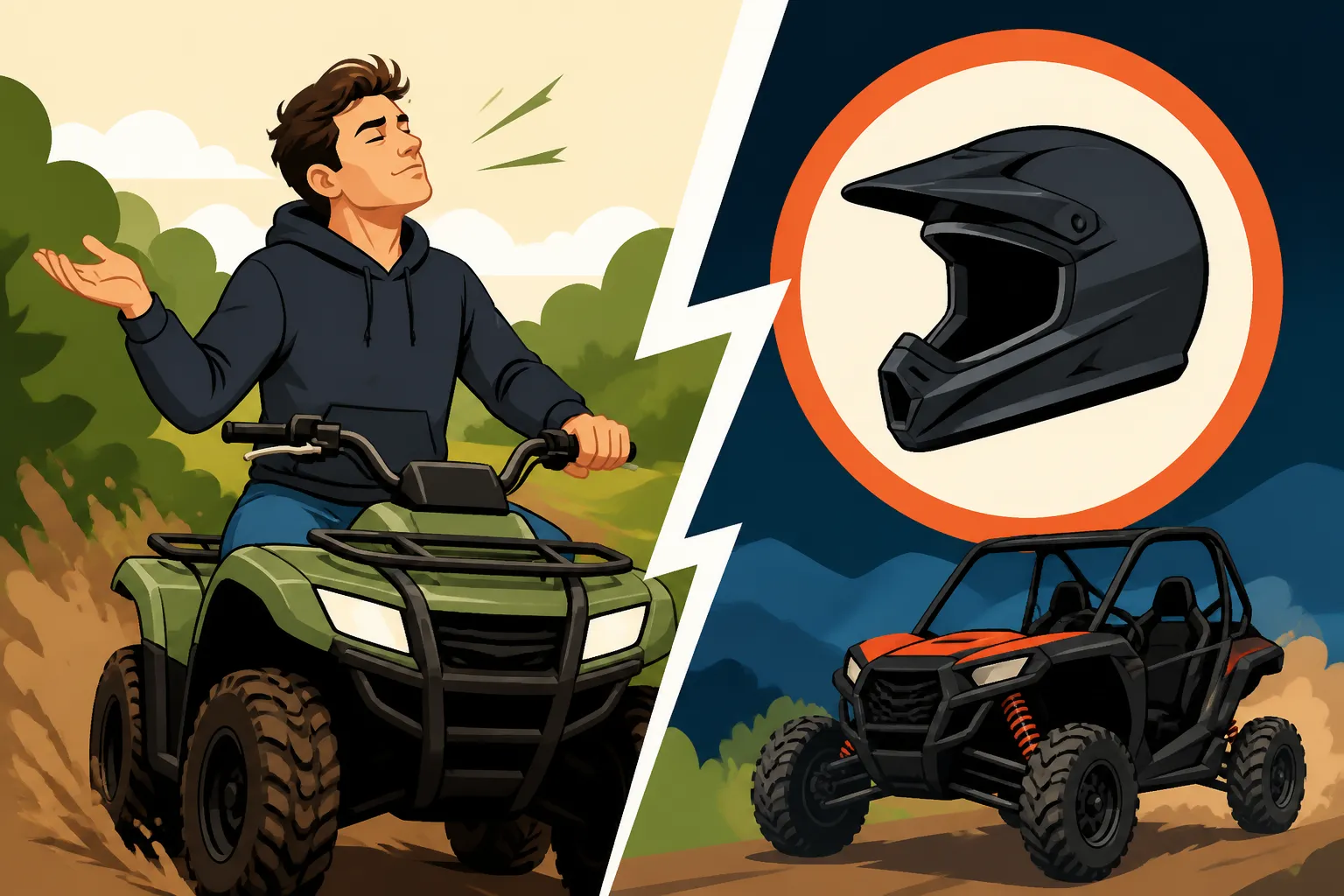
Now, for the part that often catches people off guard: for ATV riders who are eighteen years of age or older, Missouri law does not explicitly require the use of a helmet. That's right—unlike some neighboring states or even motorcycle laws within Missouri, adults on ATVs have the legal option to ride without head protection. This is why you see so many experienced riders, and even casual weekend warriors, with open faces and the wind in their hair, legally operating their machines on private land, dirt roads, or off-road trails without a helmet. It's a legal loophole, or perhaps a deliberate omission, that sets Missouri apart for ATV enthusiasts.
This lack of a statewide mandate for adult ATV riders often leads to misconceptions and sometimes, a false sense of security. While the law grants this freedom, it's crucial to remember that legal doesn't always equate to safe. The legislative intent behind this specific framing for ATVs likely considered the varied environments in which these machines are used—from slow-speed utility tasks on farms to recreational trail riding. Unlike motorcycles, which are primarily designed for highway speeds, ATVs operate in a broader range of conditions where the perceived need for constant helmet use might have been viewed differently by lawmakers. However, regardless of the law's silence, personal judgment regarding safety remains paramount.
Beyond the ATV: How Other Off-Road Vehicles are Treated
The world of off-road vehicles is diverse, and Missouri's laws try to keep pace, though sometimes it feels like they're playing catch-up. It's not just ATVs out there; we've got a whole ecosystem of side-by-sides, utility vehicles, and recreational off-highway vehicles (ROVs) that each fall under slightly different regulations, especially when it comes to safety gear like helmets. Understanding these distinctions is key to staying legal and safe, whether you're cruising through the woods or making a quick run down a county road.
Side-by-Sides and Recreational Off-Highway Vehicles (ROVs)
Missouri law makes a clear distinction between a traditional ATV, where you straddle the seat like a motorcycle, and a side-by-side (SXS) or recreational off-highway vehicle (ROV), where you sit side-by-side, often with a steering wheel and foot pedals. While both are used off-road, their design leads to different safety considerations. For ROVs and side-by-sides, state law generally does not mandate helmets for adult operators or passengers when used off-road. Instead, the focus shifts to other inherent safety features of these machines.
ROVs are typically equipped with roll cages, safety nets or doors, and seat belts, which are designed to provide protection in the event of a rollover or collision. These features are seen as the primary safety mechanisms for side-by-side occupants, offering a different kind of protection than a helmet on an ATV. Many riders, after investing in accessories like windshields, roofs, and door kits from brands like SuperATV, feel even more secure. It’s important to remember that these machines are heavier, often wider, and handle differently than a quad, necessitating a different approach to safety regulations. Always ensure your seatbelt is fastened and any factory-installed safety equipment is in good working order, as these are your first lines of defense.
Special Cases: Street Legal UTVs and Road Use
Here's where things can get a bit more complicated and where an adult might actually find themselves needing a helmet for an ROV. While ATVs are generally not street-legal in Missouri, many counties and municipalities have enacted ordinances that allow ROVs (like side-by-sides) to operate on certain public roads. These allowances often come with specific stipulations, transforming your off-road machine into a sort of low-speed vehicle for limited road use. When a UTV transitions to street-legal status, even if only for a few miles, the rules often change.
For example, if you're taking advantage of [Missouri's 3-Mile Rule for Side-by-Sides] or securing a [Missouri's Special Permit for Road Use] from your local municipality or county, you're stepping into a different regulatory landscape. These local permits might, and often do, include requirements for helmets, even for adults, especially if the ordinance is designed to mirror motorcycle safety standards. Additionally, operating an ROV on a public road typically requires the driver to possess an [Operator's or Chauffeur's License in Missouri]. So, while the state might not mandate a helmet for an adult in a side-by-side off-road, the moment you put tires on asphalt under a local ordinance, that situation can flip. Always check with your local city hall or county sheriff's department for their specific rules before you venture onto public roads with your UTV. A quick call can save you a potential fine and, more importantly, ensure your safety.
Where Helmets Are Still Non-Negotiable: Public Riding Areas
Even if Missouri state law gives adult ATV riders a pass on helmets, don't let that fool you into thinking it's an all-clear everywhere you go. Public riding areas, like state parks and national forests, often have their own set of rules, and they tend to be much stricter when it comes to head protection. This is where many riders get caught off guard, showing up ready for a day on the trails only to find themselves needing to purchase or borrow a helmet.
State Parks and National Forests
When you pull your rig into a place like [St. Joe State Park's Sand Flats in Missouri] or [Finger Lakes State Park in Missouri], you're entering an environment that operates under its own specific regulations, designed with universal safety in mind. These parks are open to a wide range of riders, from absolute beginners to seasoned veterans, on diverse terrain that can change quickly. Because of this, state park rules almost universally mandate helmet use for all ATV and UTV riders, regardless of age. This means if you're 35 and riding your quad at St. Joe, you must wear a helmet. The same often applies to designated ATV trails within national forests, such as those in the Mark Twain National Forest.
These park and forest rules are created to ensure a baseline of safety for everyone enjoying the trails. They account for the potential for unexpected obstacles, varying skill levels of riders, and the general unpredictability of off-road environments. It’s a collective safety measure—your helmet protects you, and by complying, you contribute to a safer environment for all other trail users. Always check the specific rules for the park or forest you plan to visit before you load up your machine; their websites or ranger stations will have the most current information. Ignoring these rules won't just get you a stern talking-to; it could result in being turned away or even fined.
Youth Riding Areas and Specific Trail Rules
Within these larger public lands, and even at some private riding parks, there are often specific areas or trails designated exclusively for youth riders. These zones are designed to be safer, less challenging environments where kids can learn and hone their skills. As you might expect, the helmet rule is rigidly enforced in these areas. No exceptions. A child, even under adult supervision, will not be permitted to ride in a youth area without a properly fitted and fastened helmet. This aligns directly with the state's general mandate for riders under 18, but the parks often go a step further to ensure strict compliance.
Beyond dedicated youth areas, some trails within parks or forests might have specific difficulty ratings or unique hazards that lead to additional safety recommendations, even if not always explicitly mandated as law. Park rangers and trail staff are dedicated to ensuring rider safety, and they have the authority to enforce these regulations. They're looking out for everyone's well-being, and a missing helmet on an adult, even if legal elsewhere in Missouri, could lead to a conversation you'd rather not have at the trailhead. When you're riding on public land, assume a helmet is required, because 99% of the time, it will be. For general guidelines, check [Missouri Rules for Riding Public Land].
The Personal Choice: Weighing Risk and Comfort
Given that Missouri law offers adults the choice, the decision to wear a helmet often comes down to personal preference, perceived risk, and comfort. It's a deeply individual calculation, but one that every rider should confront head-on. While the law grants freedom, it doesn't absolve us of responsibility for our own safety.
The Risks of Riding Without a Helmet
Let's be blunt: riding any off-road vehicle, whether an ATV or a UTV, carries inherent risks. Even on a slow, easy ride across a pasture, a moment's inattention, an unexpected rut, or a hidden rock can send you over the handlebars or cause a rollover. Without a helmet, your head is completely exposed to these dangers. The statistics on head injuries from ATV accidents are sobering, and they underscore why safety advocates universally recommend helmets, regardless of state law. An impact with the ground, a tree, or even your own machine's roll cage can result in concussions, skull fractures, or far worse, permanently altering your life or ending it.
It's easy to think, "It won't happen to me," or "I'm just going a short distance." But accidents are, by definition, unexpected. They don't discriminate based on your experience level or the length of your ride. Your head is perhaps the most vulnerable and vital part of your body. Protecting it from impacts, abrasions from flying debris, or even just a low-hanging branch is a fundamental aspect of responsible riding. While the law might not hold your hand, common sense and a strong appreciation for your own well-being should guide this decision.
Why Many Adults Choose to Skip (and Why Some Don't)
So, if the risks are clear, why do so many Missouri adults choose to ride without a helmet? There are several common reasons. Comfort is a big one—helmets can feel hot and restrictive, especially during Missouri's humid summers. Riders might complain about reduced peripheral vision, muffled hearing, or simply the feeling of being confined. For short, low-speed rides, especially on familiar private property, some riders perceive the risk as minimal and the helmet as an unnecessary hindrance. Others might have grown up riding without them and see them as an imposition on their "freedom" to enjoy the outdoors.
However, a significant number of adult riders in Missouri do choose to wear helmets, and their reasons are equally compelling. They prioritize safety above all else, understanding that an accident can happen anytime, anywhere. Many appreciate the protection from dust, bugs, and branches that a full-face helmet or a helmet with a good visor offers. Modern helmets, many available through retailers like SuperATV, have come a long way in terms of ventilation, lightweight materials, and comfort, addressing some of the traditional complaints. For these riders, the peace of mind knowing their head is protected far outweighs any perceived discomfort. They see it not as a legal obligation, but as a non-negotiable part of their personal safety strategy.
Making the Smart Choice: Recommendations and Best Practices
Ultimately, whether you choose to wear a helmet as an adult ATV rider in Missouri is a personal decision where the law offers you freedom. However, that freedom comes with the responsibility of assessing risk and prioritizing your own safety. For those who choose to wear one, or for those considering it, knowing what to look for can make all the difference.
What to Consider When Choosing a Helmet
If you've decided to prioritize your head protection, even when the law doesn't strictly require it, investing in the right helmet is crucial. Here's what to look for:
- Certification: Always look for helmets that meet safety standards like DOT (Department of Transportation) for basic road legality, or Snell (Snell Memorial Foundation) for higher impact protection. These certifications ensure the helmet has passed rigorous testing.
- Fit and Comfort: A helmet that doesn't fit properly won't protect you effectively. It should be snug but not uncomfortably tight, with no pressure points. It shouldn't shift or wobble when you shake your head. Try on different brands and sizes. Many modern helmets offer advanced ventilation systems to combat heat and humidity, which is a huge plus for Missouri summers.
- Type of Helmet:
- Full-face helmets: Offer the most comprehensive protection for your head and face, ideal for aggressive trail riding or higher speeds.
- Modular helmets: Offer the protection of a full-face but allow the chin bar to flip up, providing convenience for breaks.
- Open-face (3/4) helmets: Provide good head protection but leave the face exposed; usually combined with goggles.
- Motocross/Off-road helmets: Feature extended chin bars and visors, designed for dirt riding and worn with goggles.
- Features: Look for helmets with good ventilation, a removable and washable liner, and perhaps features like MIPS (Multi-directional Impact Protection System) for enhanced rotational impact protection. While shopping for parts or accessories, remember that a place like SuperATV can offer insights into popular helmet styles and complementary gear.
A good helmet is an investment, but it's an investment in your brain and your future. Don't compromise on quality for a few dollars.
Beyond the Helmet: Other Essential Safety Gear
While the helmet is paramount for head protection, it's just one piece of a comprehensive safety strategy. Responsible ATV and UTV riding involves gearing up from head to toe, especially given the unpredictable nature of off-road environments. Think of it as building your personal armor against the trail's challenges.
Here’s a breakdown of other essential gear that complements your helmet:
- Eye Protection: If your helmet doesn't have a visor, high-quality goggles are absolutely essential. They protect your eyes from dust, mud, branches, insects, and UV rays. Clear lenses are great for low light, while tinted or mirrored lenses are better for bright conditions.
- Gloves: Protect your hands from blisters, abrasions, and impacts, while also improving grip on the handlebars. Look for gloves with reinforced palms and knuckle protection.
- Long-sleeved shirt/jacket and long pants: Even on a hot day, long sleeves and pants made of durable material (like denim or specialized riding gear) protect your skin from scrapes, cuts, and sun exposure. These offer far more protection than shorts and a t-shirt in a spill.
- Over-the-ankle boots: Sturdy boots provide ankle support and protect your feet from impacts, hot engine parts, and shifting terrain. Avoid sneakers or open-toed shoes.
- Chest Protector/Roost Guard: For more aggressive riding, a chest protector can shield your torso from impacts with handlebars or flying debris.
- Knee and Elbow Pads: These add another layer of protection for joints that are highly susceptible to injury in a fall.
Remember, the goal is to enjoy the ride safely. While Missouri's laws may allow adults to ride without a helmet in many situations, choosing to wear one, along with other appropriate gear, is a smart decision that significantly reduces your risk of serious injury. Before you hit the trails or backroads, do a quick self-check to ensure you're geared up for whatever the ride might throw at you.
Missouri ATV Helmet Requirements: A Quick Guide
| Rider Age | Riding Location | Helmet Required by State Law (ATV) | Helmet Recommended | Notes |
|---|---|---|---|---|
| Under 18 | Any Location | Yes | Absolutely! | Legal mandate for all minors on ATVs. |
| 18 and Over | Private Land | No | Yes | Personal choice, but high risk without. |
| 18 and Over | Public Trails (Parks/Forests) | No (State Law) | Yes (Park/Forest Rule) | Most public areas have their own mandatory helmet rules. |
| 18 and Over | Public Roads (UTV/ROV) | No (State Law, but see notes) | Yes | Local ordinances for road-legal UTVs may mandate helmets. |
Disclaimer
This article is for general informational purposes only and does not constitute professional advice. Laws, prices and regulations vary by location and change over time. Consult a qualified professional for guidance on your specific situation.