Missouri Passenger Rules on an ATV
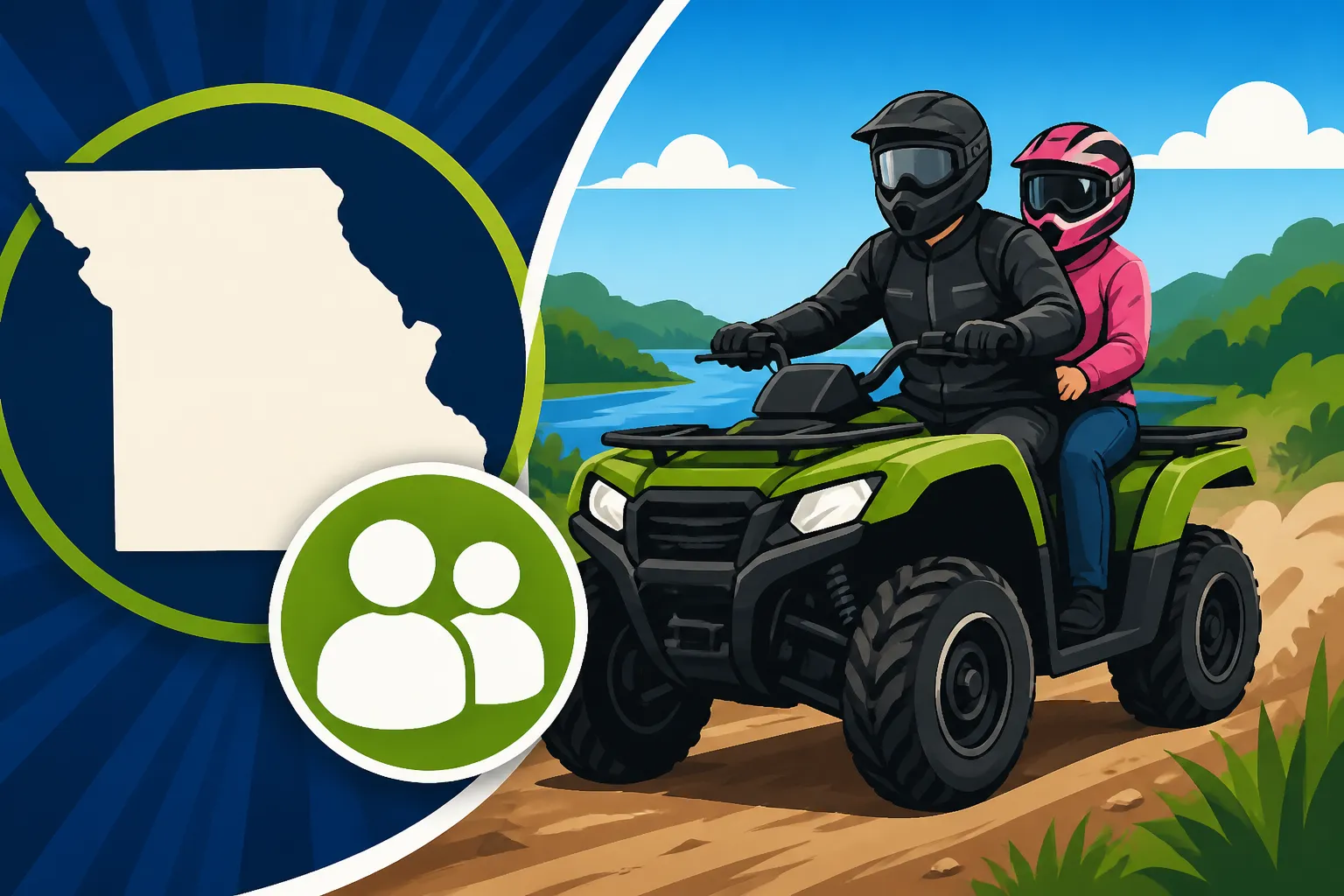
It's a question almost every ATV owner in Missouri eventually asks, especially when you're heading out to the trails, going deer hunting, or just doing some chores around the property: "Can I bring a passenger on my quad?" The frustration often comes from seeing side-by-sides packed with people, making you wonder why your trusty ATV seems to have different rules. Navigating Missouri's regulations for passengers on ATVs can feel like riding through thick brush without a clear path, but this guide will clear up the confusion and help you understand exactly what the law says and why.
Understanding Missouri's Core ATV Passenger Rule
Let's get straight to the heart of the matter for ATV owners in the Show-Me State. Missouri's law is pretty clear when it comes to riding with a buddy on your quad: ATVs are generally designed for one operator, and that's it. This isn't just a suggestion from the manufacturer; it's codified in Missouri statute. The intention behind this rule is pure and simple: safety. ATVs are built to be ridden by shifting your weight, leaning into turns, and reacting quickly to terrain changes. Adding a passenger dramatically changes the machine's balance and handling characteristics, often making it unstable and far more prone to rollovers or loss of control.
The "One Person Per Seat" Principle: What It Really Means
When the law talks about an ATV being designed for one operator, it's really looking at the physical design of the machine. Think about it: a standard ATV has one seat, meant for one person to straddle. There are handlebars, footpegs, and controls positioned for a single rider. When you try to squeeze a second person onto that seat, you're not only compromising their ability to hold on safely but also making it incredibly difficult for the operator to properly control the ATV. The machine's suspension, weight distribution, and turning radius are all calibrated for one rider. Adding another person, especially a full-grown adult, pushes these limits beyond their design intent. It's not about being selfish with your ride; it's about the fundamental mechanics of the machine and the inherent risks involved.
The Legal Basis: Where This Rule Comes From in Missouri Statute
Missouri Revised Statutes, specifically Section 300.010, which defines "all-terrain vehicle," and other related sections on vehicle operation, implicitly establish this single-operator rule. While it might not explicitly say "no passengers on an ATV" in a single, glaring sentence, the definition and subsequent operational guidelines consistently treat the ATV as a single-rider vehicle. The legislative intent, mirroring manufacturer guidelines, is that ATVs are for a sole operator. Ignoring this means you're operating outside of the vehicle's design and the state's safety regulations. This distinction becomes even more critical when comparing ATVs to side-by-sides, which are built differently and have their own set of rules entirely. For more on how Missouri differentiates these machines, you might find [Why Missouri Splits ATVs, UTVs and ROVs] enlightening.
Why This Rule Exists: Safety and Manufacturer Design
Ultimately, this rule boils down to rider safety. Manufacturers design ATVs with a specific center of gravity and handling dynamics for a single rider. The shift in weight a passenger introduces can easily lead to a loss of balance, especially on uneven terrain, during turns, or when accelerating or braking suddenly. Think about going over a jump or traversing a steep incline – a passenger makes these maneuvers exponentially more dangerous. Beyond that, the lack of dedicated handholds or footrests for a passenger means they're often holding onto the driver or precariously clinging to the machine itself, making them vulnerable to being thrown off. While it might seem inconvenient, this rule is a protective measure, aimed at preventing serious injuries or worse. Trying to modify an ATV with aftermarket seats without proper engineering and legal approval doesn't change the underlying safety issues or legal standing.
Exceptions and Nuances to the Passenger Rule
Okay, so we've established that generally, ATVs are for one rider only. But, as with many laws, there are always those specific circumstances or types of machines that fall into a different category. Missouri recognizes some key distinctions, especially when it comes to certain tasks or machine types. It's important to understand these nuances so you don't inadvertently break the law or, more importantly, put yourself or someone else at risk.
The Agricultural Workaround: When Farm Work Changes Everything
Here's one of the primary exceptions to the "no passenger" rule for ATVs: agricultural use. Missouri law provides a bit more leeway when an ATV is being used strictly for farming purposes. If you're on your own property, or property where you have explicit permission, and the ATV is being used to perform necessary agricultural tasks, you can carry a passenger. This might mean hauling feed, inspecting fences, or assisting with other farm chores. The key here is the purpose of the ride – it must be directly related to farming. This isn't a loophole to take your kids joyriding on the back of your quad through the pasture after chores are done. It's a pragmatic recognition that these machines are vital tools for agricultural operations, and sometimes a second person is necessary to get the job done efficiently and safely within that context. For more details on this, check out [When Farm Work Allows a Passenger on an ATV].
Two-Seat Machines: How the Rule Treats Purpose-Built Two-Seaters
This is where a lot of confusion comes in. What if your ATV is actually designed for two people? Some manufacturers produce "two-up" or tandem ATVs, which have an extended seat, dedicated passenger handholds, and separate footrests, and are engineered with a longer wheelbase and heavier-duty suspension to accommodate the extra weight. If your ATV is explicitly manufactured and sold as a two-person machine, then yes, Missouri law permits you to carry a passenger on it. The key is "purpose-built." You can't just slap an extra seat onto a single-rider ATV and call it a two-seater; it has to be designed from the factory to safely carry two people. Always check your owner's manual or the vehicle's specifications to confirm its intended passenger capacity. The distinction is crucial, and it's all about how the manufacturer engineered the machine for safety. Understanding [How the Passenger Rule Treats a Two-Seat Machine] can save you a lot of grief.
Youth Riders and Passengers: Specific Considerations for Minors
When it comes to youth riders, Missouri has additional rules, and these often intersect with passenger guidelines. Generally, children are not permitted to operate an ATV until they meet certain age and supervision requirements, especially on public lands. And when it comes to being a passenger, if your ATV is a single-rider model, the general rule of no passengers still applies, regardless of age. Even on agricultural land, while the "farm work" exception might permit a passenger, exercising extreme caution when carrying minors is paramount. Their smaller size and inability to brace themselves properly make them especially vulnerable in the event of a sudden stop or maneuver. For those considering riding with younger family members, it’s vital to be aware of [Missouri Helmet Law for Riders Under 18] and [Missouri Minimum Age to Ride an ATV], as these provide further context to safe operation around minors. Always prioritize safety gear and appropriate supervision.
UTVs/Side-by-Sides vs. ATVs: A Crucial Distinction
It's absolutely vital to understand that when we talk about passenger rules, there's a world of difference between an ATV (All-Terrain Vehicle) and a UTV (Utility Terrain Vehicle) or ROV (Recreational Off-Highway Vehicle), often called a side-by-side. Many folks see a side-by-side with two, three, or even four people riding comfortably and think, "Why can't I do that on my quad?" The answer lies in their fundamental design and the specific laws that govern each type of vehicle in Missouri. This distinction is not just semantic; it has significant implications for safety, legality, and what you can and cannot do on roads and trails.
Designed for Passengers: Why UTVs Are Different
Unlike ATVs, UTVs and side-by-sides are designed from the ground up to carry multiple passengers. They feature bucket or bench seats, often with seatbelts, and a roll cage or similar protective structure. The operator sits in the vehicle, rather than straddling it, and controls are typically car-like (steering wheel, pedals). This design intent makes them inherently more stable for carrying multiple occupants. They have a wider stance, a different weight distribution, and a higher payload capacity compared to a traditional ATV. Because of this, the state of Missouri treats them differently under the law, recognizing their design for multiple occupants. If you're wondering about the legal definition, you might find [What the Law Calls a Recreational Off-Highway Vehicle] helpful.
Seatbelt and Roll Bar Requirements: Safety Gear for Multiple Riders
When you're riding in a UTV or side-by-side with passengers, Missouri law (especially for road-legal use) often mandates specific safety features. This includes the use of seatbelts by all occupants and the presence of a factory-installed roll bar or roll-over protective structure (ROPS). These features are crucial because, while UTVs are more stable than ATVs with passengers, rollovers can still occur, especially on uneven terrain or at higher speeds. The seatbelts are there to keep occupants inside the protective cage, and the roll bar is designed to provide a zone of protection in the event of a tip-over. These aren't optional extras; they're fundamental safety components that distinguish a UTV's multi-passenger capability from an ATV's single-rider design. Many aftermarket companies, like SuperATV, offer enhanced roll cages or safety accessories, but always ensure they comply with local regulations and never compromise the original safety engineering.
Road Use and Passenger Capacity: How Local Ordinances Play a Role
This is where the distinction truly comes into its own. While ATVs are almost universally prohibited from public roads in Missouri, UTVs and side-by-sides can sometimes be made street-legal, or at least allowed on certain roads, under specific conditions and local ordinances. When a UTV is permitted on a public road, the passenger capacity is generally limited to the number of factory-installed seating positions with corresponding seatbelts. This means if your side-by-side has two seats and two seatbelts, you can carry one passenger. If it has four seats, you can carry three passengers. You cannot exceed the manufacturer's designed seating capacity. Many cities and counties in Missouri have adopted ordinances to allow UTVs on their streets, often with stipulations like speed limits, daylight-only operation, and, crucially, adherence to passenger limits and safety gear like seatbelts. It's a patchwork of regulations, so knowing your local rules is essential. For example, [Missouri's 3-Mile Rule for Side-by-Sides] outlines one specific road use scenario, and [Missouri Rules for a Passenger in a UTV] dives deeper into how passengers are handled in these vehicles. Always confirm with local authorities if you plan to operate a UTV with passengers on public roads.
To help visualize the differences in passenger rules, here's a quick comparison:
| Feature/Vehicle Type | Standard ATV (Single Rider) | Purpose-Built Two-Up ATV | UTV/Side-by-Side |
|---|---|---|---|
| Designed for Passengers | No (Generally one operator) | Yes (Specific models) | Yes |
| Typical Seating | Straddle, single seat | Extended straddle, 2 seats | Bucket/Bench seats |
| Passenger Legality (General) | No | Yes | Yes |
| Agricultural Exemption | Yes (Farm work only) | Yes | Yes |
| Seatbelts Required | N/A | No (Generally) | Yes (For all occupants) |
| Roll Bar/ROPS | N/A | No (Generally) | Yes (Factory-installed) |
| Road Use (with passengers) | No | No | Possible, per local ordinance/permit |
| Control Type | Handlebars, lean-steer | Handlebars, lean-steer | Steering wheel, pedal-steer |
Consequences of Violating Missouri's Passenger Rules
Nobody wants to deal with a citation or, worse, an accident. Understanding the rules for carrying passengers on your ATV isn't just about avoiding a ticket; it's about protecting yourself and those you care about. Violating Missouri's passenger rules for ATVs can lead to a range of unpleasant consequences, from fines to more severe legal and financial repercussions if an accident occurs. It’s always best to err on the side of caution and adhere to the established safety guidelines.
What a Class C Misdemeanor Means for You
In Missouri, operating an ATV with an unauthorized passenger, particularly on public land or in areas where the rules are strictly enforced, can result in a Class C misdemeanor. While this might sound minor, it's a criminal offense, not just a traffic ticket. A Class C misdemeanor can carry a penalty of imprisonment for a term not to exceed fifteen days, a fine not to exceed a specific amount, or both. Beyond the immediate fine, having a misdemeanor on your record can have long-term implications, impacting everything from job applications to certain professional licenses. It's a hassle nobody needs, and it's easily avoidable by simply following the single-rider rule for your ATV. You can read more about what this entails in [A Class C Misdemeanor in Missouri].
The Real-World Risks Beyond the Fine
While the legal penalties are a deterrent, the most significant consequences of violating ATV passenger rules are the real-world safety risks. As discussed earlier, ATVs are not designed for passengers. Carrying one significantly compromises the machine's stability, making it much harder to control. If you encounter a sudden obstacle, a change in terrain, or need to make a sharp turn, the added weight and shifted center of gravity can easily lead to a rollover. A rollover at speed, or on challenging terrain, can result in serious injuries for both the operator and the passenger – broken bones, head injuries, spinal trauma, or worse. These aren't just hypothetical scenarios; they happen all too frequently. Even if you're riding slowly on flat ground, a sudden bump or dip could dislodge an unsecured passenger, leading to a fall. No amount of fun is worth the risk of serious injury to yourself or a friend.
Insurance Implications: How a Violation Might Affect Your Coverage
Here's a financial consequence that often goes overlooked: your insurance. Most ATV insurance policies are written with the assumption that you will operate the vehicle according to manufacturer guidelines and state laws. If you are involved in an accident while carrying an unauthorized passenger on your ATV, your insurance company might deny coverage for any resulting injuries or damages. They could argue that you were operating the vehicle in a manner inconsistent with its design and applicable laws, thus voiding your coverage. This means you could be personally liable for medical bills, property damage, and potentially extensive legal fees, which could amount to a substantial financial burden. Always review your policy and consider the risks of operating outside of established regulations. It's a conversation worth having with your insurance provider before you decide to bend the rules.
Disclaimer
This article is for general informational purposes only and does not constitute professional advice. Laws, prices and regulations vary by location and change over time. Consult a qualified professional for guidance on your specific situation.