Missouri Rules for a Passenger in a UTV
Navigating the rules for carrying passengers in your UTV in Missouri can feel like deciphering a secret code, especially with all the differing regulations between vehicle types and riding locations. It's truly frustrating when you just want to take your family or friends out for a ride, only to worry if you're breaking some obscure law. This guide aims to clear up that confusion, specifically focusing on what Missouri law says about having passengers in your side-by-side, both on and off public roads.
The Fundamental Distinction: Why UTV Passengers Are Different in Missouri
It's easy to lump all off-road vehicles together, but Missouri law makes a very clear distinction, especially when it comes to passengers and road use. This distinction is crucial for understanding why you can carry a passenger in your UTV under certain circumstances, while a traditional ATV has much stricter rules. The legislature has recognized the inherent design differences between these machines, and those differences directly impact passenger regulations.
Side-by-Sides vs. Traditional ATVs: A Legal View
Let's be real, a traditional ATV, or "quad," is designed for a single operator who straddles the machine, much like a motorcycle. Its balance and control are entirely dependent on the rider's body movements. Adding a passenger dramatically alters its center of gravity, making it inherently unstable and much harder to control, especially at speed or on uneven terrain. This is precisely why [Missouri Passenger Rules on an ATV] are so restrictive, generally prohibiting passengers unless specifically designed for two and used in very limited circumstances, often relating to farm work.
A UTV, on the other hand, is built with a different philosophy. It features a side-by-side seating arrangement, often with bucket seats or a bench seat, a steering wheel, and roll-over protection. These machines are engineered from the ground up to carry multiple occupants, typically two to six, depending on the model. Because of this design, Missouri law generally treats UTVs (often categorized as Recreational Off-Highway Vehicles, or ROVs, within the statutes) differently than ATVs when it comes to passengers. The key here is the design of the machine – if it was manufactured with multiple seating positions, that's what the law generally considers.
Understanding Missouri's Road-Legal Exceptions for UTVs
While UTVs are primarily off-road vehicles, Missouri does have specific exceptions that allow them to be operated on certain public roads. These exceptions are where the rules for passengers really come into play. It's not a free-for-all, and simply having a UTV doesn't mean you can cruise down any highway with a full crew. You'll often hear about the "3-mile rule" or special permits, and these provisions define when you can be on the road, and by extension, who can be in your passenger seats.
Without these specific exceptions, taking your UTV on a public road, with or without passengers, is generally prohibited. The state is trying to balance the desire for recreation and utility with public safety on roadways shared with traditional motor vehicles. So, before you load up your friends and head out, it's vital to understand the specific context of your ride.
Riding on Missouri Roads: Specific Passenger Rules for UTVs
Once you understand that UTVs can have passengers due to their design, the next step is figuring out where and when those passengers can ride with you on public roads in Missouri. This is where the specific road-use exceptions come into play, each with its own nuances regarding occupancy.
The 3-Mile Rule and Carrying Passengers
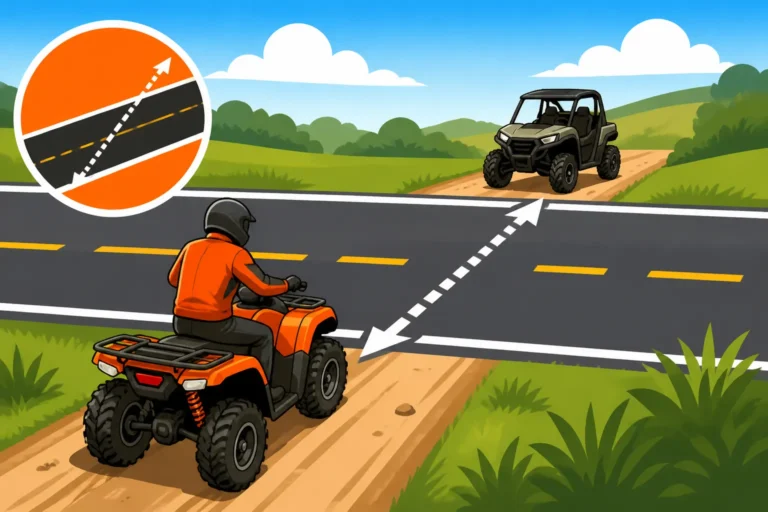
One of the most common ways a UTV might find itself on a Missouri public road is under the "3-mile rule." This rule, specifically for ROVs (which includes most side-by-sides), allows operation on a highway for a distance of not more than three miles from the point of origin, for the purpose of accessing a service or other property. Essentially, it's designed to let you make short hops – maybe to the gas station, a neighbor's house, or a nearby trail access point – without having to load your UTV onto a trailer. You can read more about it here: [Missouri's 3-Mile Rule for Side-by-Sides].
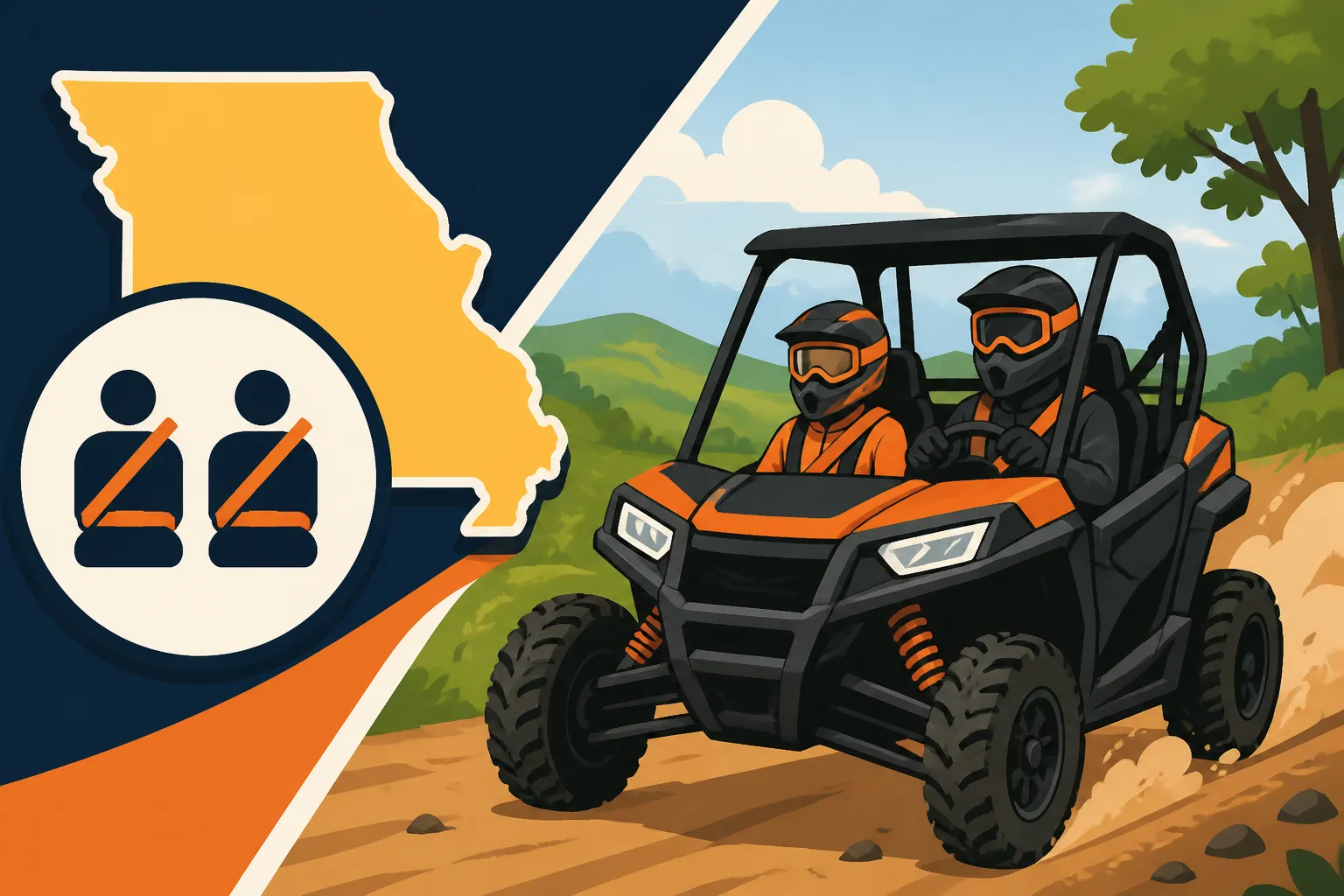
When operating under the 3-mile rule, Missouri law does allow passengers in your UTV, provided the vehicle was manufactured with seating positions for those passengers. This isn't a loophole to cram more people in than designed. If your UTV has two factory seats, you can have one passenger. If it's a four-seater, you can have three passengers. Crucially, all occupants must be in a designated seating position, and if the UTV is equipped with seat belts, everyone must be wearing them. Imagine you're just running down to the corner store with your child to grab some bait for the afternoon. As long as your UTV has a proper seat for them and they're belted in, you're usually good within that three-mile radius.
However, it’s important to remember that this rule is intended for short-distance travel. It's not a carte blanche for joyriding on public roads. Plus, local ordinances can sometimes supersede or add to state laws, so always check with your specific city or county to ensure there aren't additional restrictions.
Special Permits, Agricultural Use, and Passenger Capacity
Beyond the 3-mile rule, Missouri offers other pathways for UTVs to legally access public roads, and these also have provisions for passengers.
-
Special Permits: Many Missouri cities and counties have enacted ordinances that allow UTVs on their local roads, often requiring a special permit. These permits usually come with a set of conditions, which can include specific operating hours, safety equipment requirements (like turn signals or mirrors), and crucially, rules about passengers. In most cases, if the permit allows UTVs on the road, it will also permit passengers up to the vehicle's manufacturer-designed capacity, provided all safety restraints are used. For example, a town like Lake Ozark might have specific requirements for UTVs on its streets, and these often align with the manufacturer's seating capacity. Always check the specific ordinance for the area you plan to ride in, as they can vary greatly. You can often find information on [Missouri Cities That Allow UTVs on Streets].
-
Agricultural Use: Missouri law provides an exception for UTVs being used for agricultural purposes. If you're operating your UTV on a public road "for agricultural purposes between the official sunrise and sunset on any day," passengers are generally allowed up to the manufacturer's seating capacity. This is common for farmers moving between fields, checking livestock, or hauling equipment. Think of a farmer driving their side-by-side with their farmhand to another part of the property, perhaps carrying tools in the bed. This is specifically covered under [Missouri's Agricultural Highway Exception]. Again, proper seating and seat belt usage are paramount.
The common thread across all these road-use scenarios is that if a UTV is permitted on the road, passengers are allowed as long as they are within the manufacturer's designed seating capacity and using all available safety restraints. This ensures that the vehicle is being used as intended by its designers, maximizing safety for everyone aboard.
| Scenario | Passenger Allowed? | Conditions |
|---|---|---|
| Traditional ATV on Road | Generally No | Only if specifically designed for two and for farm use |
| UTV (ROV) on Road (3-Mile Rule) | Yes, up to designed capacity | Must be in designated seat, wear seat belt if equipped |
| UTV (ROV) on Road (Special Permit) | Yes, up to designed capacity | Must be in designated seat, wear seat belt, adhere to permit conditions |
| UTV (ROV) on Road (Agricultural) | Yes, up to designed capacity | Must be in designated seat, wear seat belt, for agricultural purposes only |
| UTV (ROV) Off-Road (Private Land) | Yes, up to designed capacity | At landowner's discretion, follow best safety practices |
| UTV (ROV) Off-Road (State Parks/Designated Areas) | Yes, up to designed capacity | Adhere to park rules (e.g., [Missouri Passenger Rules on an ATV]) |
Passenger Safety, Equipment, and Best Practices for UTVs
While Missouri law clarifies when you can carry passengers, it's equally important to consider how to do so safely. Legal compliance is one thing, but ensuring the well-being of everyone in your UTV is another. Aftermarket companies like SuperATV understand this well, offering a range of accessories designed to enhance safety and comfort.
Seat Belts, Roll Bars, and Manufacturer Guidelines
Missouri law is quite clear: if your UTV is equipped with seat belts from the factory, all occupants must be wearing them when operating on public roads under one of the allowed exceptions. This isn't just a suggestion; it's a legal requirement. A UTV's roll-over protection structure (ROPS), often referred to as a "roll bar" or "roll cage," is designed to protect occupants in the event of a tip-over or accident. However, the ROPS is only truly effective if occupants remain securely inside its protected zone, and that's where seat belts come in. You can learn more about this by looking at [Missouri Seat Belt Rules in a Side-by-side] and [Missouri Roll Bar Requirements].
It's also crucial to stick to the manufacturer's designed seating capacity. Don't try to squeeze three people onto a two-person bench seat or carry passengers in the cargo bed. These areas are not designed for human occupancy and offer no protection in an accident. Always consult your UTV's owner's manual for specific guidelines on passenger weight limits, seating positions, and recommended safety procedures. They've engineered these machines with specific tolerances and safety features in mind.
Common Sense and Off-Road Passenger Considerations
Beyond the legalities of public road use, common sense and best practices should always prevail, especially when venturing off-road or on private property. While private land typically isn't subject to the same strict state statutes regarding passengers as public roads, it doesn't mean safety goes out the window.
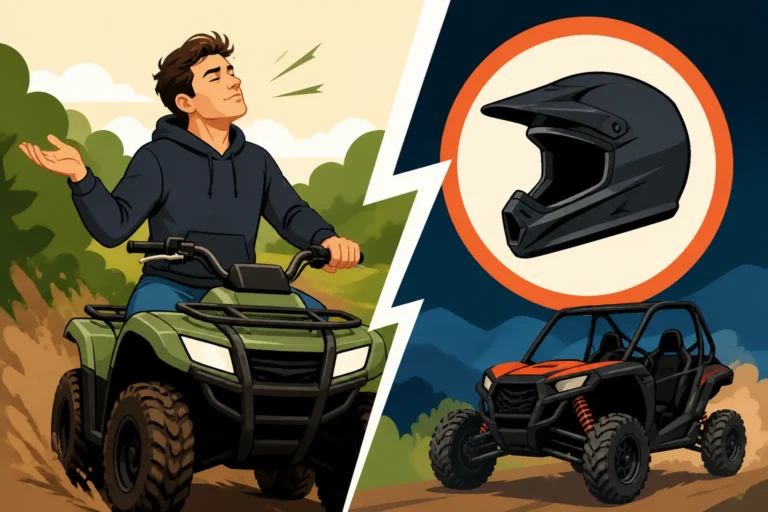
- Rider Age and Maturity: Consider the age and maturity of your passengers. Younger children should always be in appropriate safety restraints and supervised. Even though Missouri doesn't have a universal helmet law for adults on UTVs, for younger riders or in challenging terrain, a helmet is always a wise choice. [Missouri Helmet Law for Riders Under 18] is still a good guideline.
- Terrain and Conditions: Adjust your driving style to the terrain and conditions, especially with passengers aboard. Steep inclines, rough trails, or muddy conditions demand slower speeds and extra caution. Explain to your passengers how to safely brace themselves and keep their limbs inside the vehicle.
- Designated Riding Areas: When riding at designated off-road parks or state areas, always check their specific rules. Many parks have their own regulations regarding passengers, safety flags, and even width limits. For instance, some trails might be too narrow for wider multi-passenger UTVs. Even if the law allows it, a specific park might have a different rule for [Missouri Rules for Riding Private Land] vs. state land.
- Aftermarket Enhancements: Many UTV owners enhance their vehicles with aftermarket accessories, some of which improve passenger safety and comfort. Companies like SuperATV offer things like upgraded harnesses, grab handles, and additional netting that can help keep passengers secure and protected, especially on rugged trails. While not always legally required, these additions can significantly boost safety.
Ultimately, carrying passengers in your UTV in Missouri is permissible under many circumstances, particularly on public roads where specific exceptions exist. The core principles are always to ensure the vehicle is designed for the number of occupants, that they are properly seated and restrained, and that you are adhering to both state law and common-sense safety practices.
Disclaimer
This article is for general informational purposes only and does not constitute professional advice. Laws, prices and regulations vary by location and change over time. Consult a qualified professional for guidance on your specific situation.