Missouri Rules for Riding in Winter
Riding your ATV or UTV in Missouri during the winter months can be an exhilarating experience, offering crisp air and stunning, snow-covered landscapes that are truly unique. However, the season also brings a whole new set of challenges and hazards that can turn a fun outing into a dangerous situation quickly if you're not prepared. This guide will walk you through the essential rules, safety considerations, and preparation tips you'll need to know to safely enjoy Missouri's winter trails and roads with your off-road machine.
The Unique Challenges of Winter Riding in Missouri
Missouri winters can be unpredictable, swinging from mild, rainy days to bitter cold and heavy snow in a matter of hours. These conditions create a distinct set of obstacles for ATV and UTV riders that go beyond what you'd typically encounter during warmer months. It's not just about bundling up; it's about understanding how the environment changes your machine's performance and the terrain's stability. Ignoring these factors can lead to breakdowns, accidents, or even severe health risks.
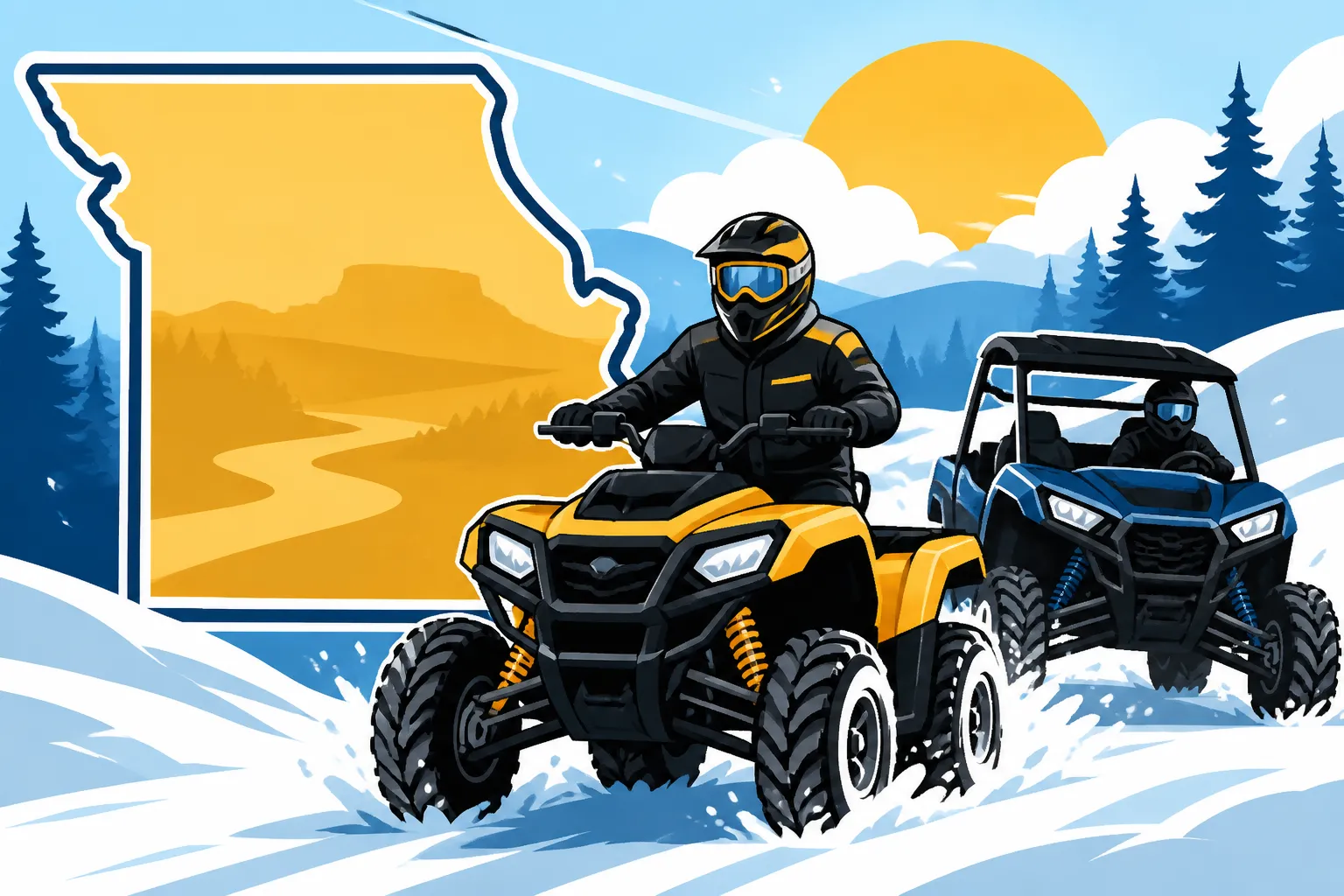
The thrill of carving through fresh powder is undeniable, but that picture-perfect landscape hides dangers that demand respect and careful planning. You're not just fighting the cold, you're fighting reduced traction, obscured obstacles, and the sheer unforgiving nature of a frozen environment. Every decision, from what you wear to how you approach a turn, needs to be filtered through the lens of winter conditions.
Icy Trails and Frozen Water Crossings
One of the biggest hazards you'll face when riding in Missouri during winter is ice. Trails that are perfectly navigable in summer can become treacherous sheets of ice, especially in shaded areas or after freeze-thaw cycles. Hidden patches of black ice can appear out of nowhere, robbing your tires of traction and sending you sliding. A sudden slide, even at low speeds, can result in a rollover or being thrown from your machine, leading to serious injuries. It’s a very real concern, particularly on trails with any kind of slope or tight turns where momentum can quickly turn against you.
Water crossings, which might be fun splashes in warmer weather, become incredibly dangerous in winter. You might encounter thin ice that could crack under the weight of your machine, or even open water that's deceptively deep and frigid. Falling into icy water isn't just a matter of getting wet; it can rapidly lead to hypothermia, especially if you're far from warmth and dry clothes. Even if the ice seems thick enough, crossing can disturb the integrity, making it dangerous for subsequent riders or even yourself on the return trip. Always err on the side of extreme caution, and if there's any doubt about the ice thickness or the depth of the water beneath, it's always best to find an alternative route or turn back. No trail is worth the risk of a broken machine or, worse, a broken bone or worse.
Reduced Visibility and Shortened Daylight Hours
Winter days are notoriously short in Missouri, meaning the window of daylight for safe riding shrinks significantly. The sun rises later and sets earlier, often casting long shadows that obscure obstacles. This reduced daylight directly impacts your visibility, making it harder to spot hazards like fallen logs, rocks, or deep ruts hidden under a blanket of snow. What looks like a smooth drift might conceal a gaping hole or a frozen ditch, waiting to snag a tire. It’s a common frustration for riders who want to maximize their time on the trails but find themselves rushing against the setting sun.
Beyond the reduced daylight, winter weather itself often brings conditions that further diminish visibility. Snowfall, fog, and even heavy rain that freezes on impact can create whiteout conditions or severe glare from the sun reflecting off snow. Riding through swirling snow can disorient you, making it easy to lose your bearings, especially if you're exploring unfamiliar areas. It's crucial to plan your rides meticulously, aiming to be back at your starting point well before dusk. For any rides extending into twilight or darkness, bright headlights, tail lights, and reflective gear become non-negotiable safety items. Remember, other riders and potential rescue personnel also have reduced visibility, so doing your part to be seen is vital. [Missouri Rules for Riding at Night] offers good information on this topic.
The Cold's Impact on Rider and Machine
The biting cold of a Missouri winter doesn't just affect your comfort; it can have serious repercussions for both you and your machine. For riders, hypothermia and frostbite are real and present dangers, especially if you're not dressed properly or if you get stranded. Even seemingly mild winter days can become dangerous if you're exposed to wind and moisture for extended periods. Numb fingers and toes don't just feel miserable; they impair your ability to control your machine and react to changing conditions, increasing your risk of an accident.
Your ATV or UTV also struggles in the cold. Batteries lose efficiency, making starting more difficult. Fluids like oil and coolant become thicker, putting extra strain on the engine and making it work harder. Rubber and plastic components, like tires and hoses, become brittle and more prone to cracking or breaking. Fuel lines can freeze, and carburetors can ice up. What might seem like a minor mechanical hiccup in warmer weather can quickly become a major problem when temperatures drop below freezing, leaving you stranded far from help. This is where meticulous pre-ride checks and proper [Missouri ATV Maintenance Costs] considerations become critical.
Legalities of Winter ATV/UTV Use on Missouri Roads and Public Land
Missouri’s rules for ATVs and UTVs don't hibernate in the winter. While the conditions might be different, the foundational laws regarding where and how you can ride generally remain in effect. It's easy to assume that because there's snow on the ground, some rules might be relaxed, especially if you're just trying to get from point A to point B on a rural road. However, that's a dangerous assumption to make. Understanding the legal landscape is just as important as knowing how to handle your machine in slippery conditions.
The state isn't going to give you a pass just because it's cold outside. Whether you're riding to clear snow from a driveway, access a hunting blind, or simply enjoy a scenic ride, you still need to adhere to the existing regulations for public roads and designated riding areas. This means knowing your local ordinances, understanding state statutes, and ensuring your machine meets all necessary requirements before you even think about firing it up for a winter excursion.
Navigating Road Restrictions in Icy Conditions
Missouri generally restricts ATV and UTV use on public roads. While there are some exceptions, such as for agricultural purposes during daylight hours or under specific local ordinances and special permits, these rules don't magically change because there's snow or ice. In fact, driving on a public road in icy conditions could draw even more attention from law enforcement due to the increased safety risk. Trying to use your machine to run a quick errand on a snowy street, even if it feels safer than a car, is still likely against the rules in most areas.
Some local municipalities or counties may have ordinances that allow UTVs (but typically not ATVs, due to their design) on specific city or county roads, especially for short distances or for specific purposes. However, these permits often come with their own set of requirements, such as a safety flag, working lights, and often proof of insurance. It's crucial to check with your local sheriff's department or city hall before venturing onto any public road in winter conditions, regardless of how deserted it looks. Simply riding on a [Missouri Rules for Riding a County Road] because it's snowy doesn't make it legal without the proper local authorization.
Public Land Access and Winter Closures
Many of Missouri's public lands, including state parks and national forests, offer designated ATV and UTV riding areas. However, these areas often have specific operating hours and seasonal closures that you must check before planning a winter ride. Just because a trail is open in October doesn't mean it's open in January. Winter weather, especially heavy snow, ice, or excessive mud from thaw cycles, can lead to temporary or extended closures for safety or resource protection reasons. Trying to ride a closed trail isn't just disrespectful; it can lead to fines and, more importantly, put you and potential rescue teams at risk.
For example, places like St. Joe State Park or Finger Lakes State Park might have specific hours, and those hours could be adjusted in winter. National Forest lands, like the Mark Twain National Forest (which includes areas like Sutton Bluff and Chadwick), also have their own regulations and often require specific permits. Always check the official websites or call the ranger district office for current conditions and closures before you load up your machine. It's better to be a little inconvenienced by checking than to arrive at a trailhead only to find it gated and locked. Also, be aware that even if a trail is "open," deep snow or ice can render it impassable or extremely dangerous, regardless of its official status. [Missouri Trails Open in Winter] will have more detail.
Decals, Permits, and the Chill Factor
Regardless of the season, if you're riding your ATV on state-managed public land in Missouri, you'll still need your current Missouri Department of Revenue decal affixed to your machine. This [Missouri's Three-Year ATV Decal] proves your machine is titled and "registered" for off-road use. Winter doesn't exempt you from this requirement, nor from displaying it properly. Similarly, if you're riding in a specific state park or national forest ORV area, you'll need the appropriate daily or annual permit for that area, even if it's freezing outside.
For UTVs, while they aren't registered with the state Department of Revenue in the same way as ATVs, specific public land ORV areas often require a separate UTV permit. The cost for these permits can sometimes differ from ATV permits, and the rules about machine width (e.g., limits often around 64 inches) still apply, regardless of whether you're dealing with snowdrifts. Just because a machine isn't registered for road use doesn't mean it's free from all permit requirements when you take it to a designated off-road park. Don't let the chill factor distract you from ensuring all your paperwork is in order before you hit the snow-covered trails.
Preparing Your Machine and Yourself for Missouri's Winter Trails
Successfully and safely tackling Missouri's winter trails isn't just about knowing the rules; it's about preparation. The cold, snow, and ice demand that both your machine and your body are ready for the challenge. Skimping on preparation can lead to a miserable experience at best, and a dangerous, costly one at worst. Think of it as gearing up for battle against the elements – you wouldn't go to war without the right armor and weapons, and you shouldn't head into winter without the right gear and a properly serviced machine.
This isn't just about throwing on an extra layer or kicking the tires. It involves a systematic approach to winterizing your ATV or UTV, ensuring you have the right accessories for enhanced safety and capability, and making sure you, the rider, are dressed for success against the biting cold and potential moisture. Every item on your checklist contributes to a safer, more enjoyable winter adventure.
Winterizing Your ATV or UTV
Before your first true winter ride, it's essential to give your ATV or UTV a thorough winterization check. This goes beyond a regular oil change. Thicker oil suitable for colder temperatures can help your engine start easier and reduce wear. Check your battery; cold weather severely impacts battery performance, so ensure it's fully charged and in good condition. You might even consider a battery tender if your machine sits for extended periods between rides. Antifreeze levels are crucial – make sure your coolant system is topped off with the correct mix to prevent freezing and potential engine damage.
Beyond the fluids and battery, inspect your tires for proper inflation and condition. Worn tires will have significantly less grip on snow and ice. Check all lights, including headlights, tail lights, and brake lights, and ensure they are clean and functional for reduced visibility. Consider adding a winch if your machine doesn't have one; getting stuck in deep snow or mud can quickly turn into an emergency in freezing temperatures. Brands like SuperATV offer robust winch systems that can be a lifesaver when you inevitably find yourself needing a pull. This preventative maintenance will pay dividends in reliability and safety.
Here’s a quick checklist for winterizing your machine:
| Component | Winter Check Action | Importance |
|---|---|---|
| Battery | Test charge, clean terminals, consider tender | Essential for cold starts, prevents stranding |
| Engine Oil | Check level, consider cold-weather specific viscosity | Ensures proper lubrication in low temperatures |
| Coolant | Verify proper antifreeze/water mix, top off | Prevents freezing, protects engine |
| Tires | Check pressure, inspect tread for wear | Maximizes traction on snow/ice |
| Brakes | Inspect pads, fluid, ensure responsiveness | Critical for control on slippery surfaces |
| Lights | Test all lights, clean lenses | Improves visibility for you and others |
| Winch | Inspect cable, test operation (if equipped) | Recovery in deep snow/mud, prevents stranding |
| Fuel System | Add fuel stabilizer if storing, check for water in tank | Prevents fuel degradation, keeps lines clear |
Essential Gear for Cold Weather Riding
Dressing appropriately for winter riding is paramount to your comfort and safety. Layers are your best friend. Start with a moisture-wicking base layer to draw sweat away from your body, preventing chills. Add an insulating mid-layer, like fleece, and finish with a waterproof and windproof outer shell. This three-layer system allows you to adjust to changing temperatures and activity levels. Don't forget your extremities: warm, waterproof gloves or mittens (with hand warmers inside), insulated boots, and a balaclava or neck gaiter under your helmet are critical for preventing frostbite. [Missouri Helmet Law for ATV Riders] is always a good read, even in winter.
Beyond clothing, think about accessories that enhance your machine's winter capability. Heated grips or a heated seat can make a monumental difference in comfort, especially on longer rides. A snow plow attachment for your UTV can transform it into a powerful snow-clearing machine for driveways or access roads. Many brands, including SuperATV, offer various plow systems designed to handle Missouri's snowfall. Consider a full cab enclosure for UTVs, which can protect you from wind, snow, and sleet, often making riding much more enjoyable. Carrying a small emergency kit with things like a first-aid kit, fire starter, dry matches, a space blanket, and extra food is always a good idea, but it becomes absolutely essential in winter when exposure risks are higher.
Traction and Recovery for Snow and Ice
Riding on snow and ice demands a different approach than dry trails. Your primary concern will be traction. Standard ATV/UTV tires often struggle in deep snow or on slick ice. Consider specialized snow tires or even tire chains for extreme conditions. These can provide significantly better grip, reducing your chances of getting stuck or losing control. Remember, even with the best tires, aggressive throttle input or sudden braking on ice is a recipe for disaster. Smooth, deliberate movements are key.
Recovery gear is non-negotiable for winter riding. As mentioned, a winch is a fantastic investment. Beyond that, a robust tow strap, a small shovel (for digging out of snowdrifts), and even traction boards can be invaluable if you get stuck. When riding with others, ensure everyone has basic recovery knowledge and gear, and establish a plan for what to do if someone gets stranded. Getting stuck alone in deep snow with dropping temperatures is a serious situation. Remember to ride with a buddy or let someone know your planned route and expected return time. This extra layer of caution can literally save your life if an unexpected situation arises. [Missouri ATV Trailer Costs] might also be on your mind if you need to haul your recovery gear.
Disclaimer
This article is for general informational purposes only and does not constitute professional advice. Laws, prices and regulations vary by location and change over time. Consult a qualified professional for guidance on your specific situation.