Missouri Rules for Riding a Snow-Covered Road
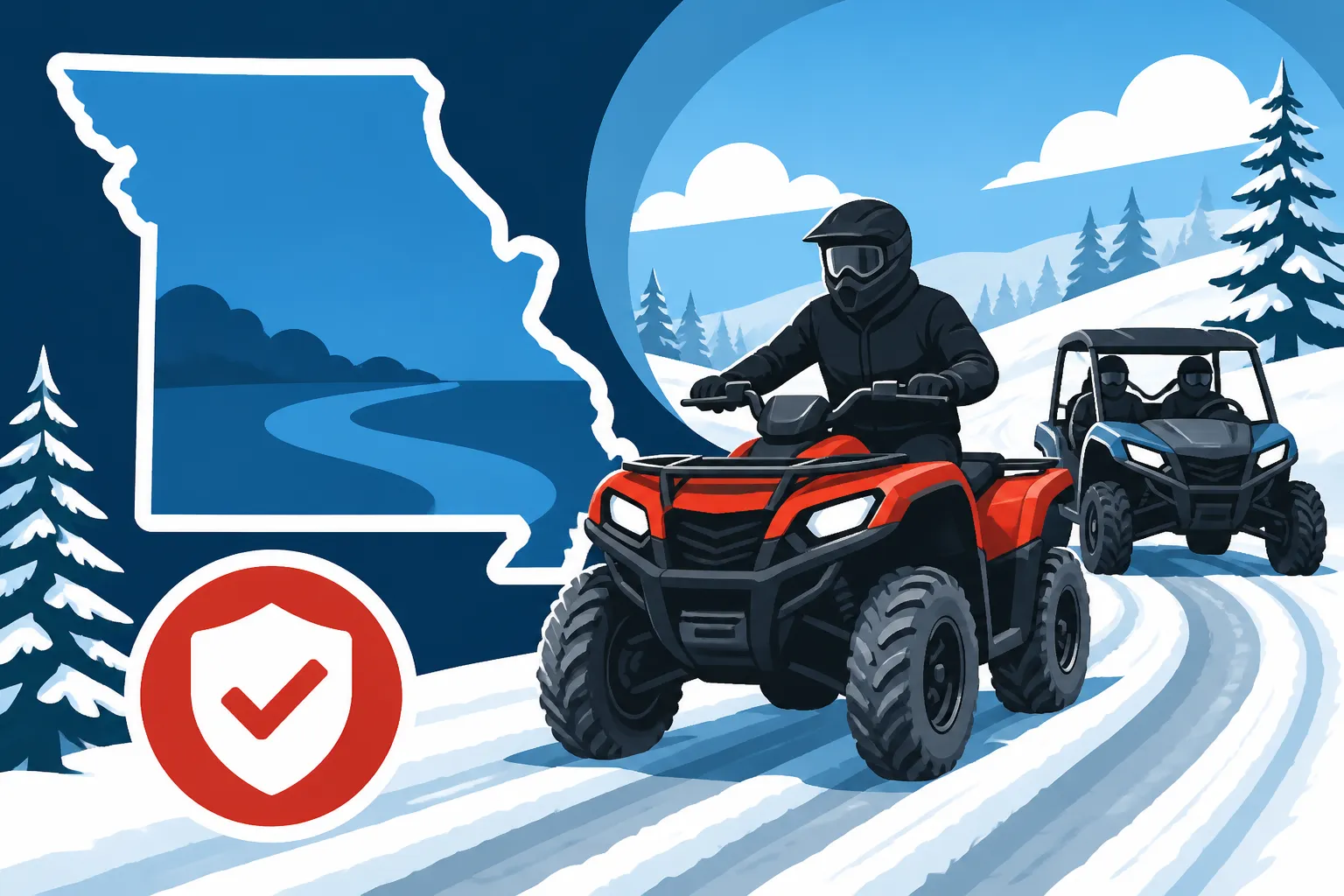
There's nothing quite like a fresh blanket of snow, transforming the familiar Missouri landscape into a winter wonderland, and for many ATV and UTV owners, that sight immediately sparks the desire to take their machine out for a spin. But before you fire up that engine and head out onto what looks like a pristine, untouched canvas, you need to understand that the law doesn't necessarily see a snow-covered road the same way you do. Many riders mistakenly believe that snow magically makes public roads "off-road" or that emergency use is always permitted, leading to confusion, frustration, and often, unexpected legal trouble. This guide will walk you through the very real Missouri rules for riding on a snow-covered road, helping you avoid common pitfalls and ensure your winter adventures stay on the right side of the law.
Understanding Missouri's Core Rules: Snow Doesn't Change the Law
It's a common misconception: "The road's covered in snow, so it's basically a trail now, right?" Unfortunately, from a legal standpoint in Missouri, a public road remains a public road, regardless of how much snow has fallen. The presence of snow, ice, or any other weather condition does not magically convert it into a recreational off-road area. The core statutes governing ATV and UTV use on public roadways stay firmly in place, which means the same restrictions you face on a clear summer day are still in effect when winter hits. This is often a tough pill to swallow for riders eager to enjoy the unique experience of snow riding, but understanding this fundamental principle is key to staying out of trouble.
The Unyielding Definition of an ATV and ROV
Missouri law is quite specific about what constitutes an all-terrain vehicle (ATV) and a recreational off-highway vehicle (ROV), which often includes what we commonly call a side-by-side or UTV. An ATV is generally defined as a motorized vehicle designed to travel on four or more low-pressure tires, 50 inches or less in width, with a dry weight of 1,500 pounds or less, and having a seat designed to be straddled by the operator. [50 Inches Wide or a Straddle Seat] ROVs, on the other hand, are often wider and feature side-by-side seating, steering wheels, and roll bars, and they usually exceed the 50-inch width and 1,500-pound dry weight limits for an ATV. [Utility Vehicles Outside the Missouri System]
Crucially, these definitions don't change with the seasons. Your 50-inch quad doesn't suddenly become a utility vehicle just because there's snow, nor does your 64-inch side-by-side become an ATV. These classifications dictate where and how your machine can be used, and they are immutable regardless of the weather. For ATVs, this typically means no public road use whatsoever, with very narrow exceptions. For ROVs, there are a few more avenues for legal road use, but they come with strict conditions that must be met at all times, snow or no snow.
Do Snow-Covered Roads Become Off-Road?
This is perhaps the biggest point of confusion for winter riders. The urge to "blaze a trail" through fresh snow on a county road can be incredibly strong, but it's vital to remember that a snow-covered public roadway is still considered a part of the public highway system. It's not an unregulated playground simply because the asphalt or gravel is hidden. The jurisdiction of state, county, and city authorities extends over those roads whether they are dry, wet, or buried under several feet of snow. Therefore, you are still subject to all traffic laws, speed limits, and, most importantly, the specific regulations governing ATV and UTV operation on public ways.
Think of it this way: a car driving through deep snow on a highway is still operating on a highway and must adhere to all applicable laws. The same principle applies to your off-road vehicle. The only places that genuinely become "off-road" by virtue of snow are typically private properties where you have explicit permission to ride, or designated public ORV parks that remain open during winter conditions. Riding down a county road, even if it hasn't been plowed yet, without meeting the strict criteria for legal road use, is still an illegal act in Missouri.
The Myth of "Emergency" Road Use in Snow
Another common belief is that if roads are impassable for regular vehicles, your ATV or UTV can be used for "emergency" travel, like going to the store for supplies or checking on a neighbor. While this sounds logical and neighborly, Missouri law does not have a broad "emergency use" clause that exempts ATVs or UTVs from road use restrictions during snowstorms. There are specific, limited exceptions for agricultural or industrial use, or for operators with a disability, which might be applicable in some specific scenarios, but these are not blanket permissions for general travel during a snow emergency.
For example, if you live on a farm and need to feed livestock, and your only access is a short stretch of snow-covered county road, you might be covered under agricultural use provisions, but this is far from a general "go to town for milk" pass. [Missouri Rules for Agricultural Road Use] Relying on an undefined "emergency" can put you at significant risk of a citation. It's always best to err on the side of caution and assume that if your machine isn't typically street legal, snow doesn't change that.
Specific Scenarios for Snow-Covered Roads: Where Can You Actually Ride?
So, if public roads are largely off-limits, where can you enjoy your ATV or UTV when the snow flies? The answer primarily lies in understanding the existing legal framework and applying it to winter conditions. Missouri's rules don't suddenly become more lenient; instead, you're working within the same boundaries, which can feel even more restrictive when you're looking at a winter wonderland just begging to be explored.
Private Property and Farm Lanes in the Snow
This is by far the safest and most legally sound option for enjoying your ATV or UTV in the snow. If you own the land or have explicit permission from the landowner, you can ride to your heart's content on private property. This includes your own fields, wooded lots, private driveways, and farm lanes. Many rural Missourians use their ATVs and UTVs for snow removal on their private property, plowing driveways, or clearing paths to barns and outbuildings. For this kind of work, having robust equipment, perhaps even a durable plow blade from a company like SuperATV, can make winter chores much easier.
On private land, you're free from the vast majority of state road-use restrictions, though basic safety practices and respect for the land itself are always paramount. If you're helping a neighbor, ensure you have their clear permission. Remember, even on private land, if you have to cross a public road or travel a short distance on one to get to another section of private property, you'll still be subject to those public road rules for that short segment.
Navigating County and City Roads Under Local Permits
For UTVs (ROVs) specifically, some Missouri cities and counties have enacted ordinances that permit their use on local streets, often under specific conditions. [Missouri Cities That Allow UTVs on Streets] These permits typically require the vehicle to meet certain safety equipment standards (headlights, taillights, turn signals, seat belts, roll bars, and often a safety flag), and the operator must usually hold a valid driver's license and maintain insurance. [Missouri Driver's License Rules for ROVs] [Missouri Safety Flag Requirements]
When snow covers these permitted roads, these rules do not change. If your city or county allows you to operate your UTV on its streets, that permission extends to snow-covered streets, provided you continue to meet all the permit requirements. This means your lights must still function perfectly, your flag must still be visible at the required height, and you must still adhere to any speed limits or operational hours specified by the local ordinance. It's not a free pass to operate an unequipped UTV, nor does it allow ATVs to ride where they normally can't. Always check your local municipality's specific ordinance, as these vary widely.
Crossing State Highways in Winter Conditions
Missouri law does provide a very limited exception for crossing a state highway (or other public roads) if you are legally operating on private property on both sides of the road. This usually requires crossing at a 90-degree angle and yielding to all traffic. [Missouri Rules for Crossing a Highway] When roads are snow-covered, this exception still applies, but it comes with vastly increased risks. Reduced visibility, slick conditions, and the potential for other vehicles to lose control make crossing a highway in winter weather incredibly dangerous.
While technically permissible under specific circumstances, exercising this right during a snowstorm demands extreme caution. Ensure your visibility is maximized – bright lights, reflective gear, and a tall safety flag are even more critical. If you have equipped your machine with winter accessories from a reputable brand like SuperATV, such as bright LED light bars, they can significantly enhance your ability to see and be seen in whiteout conditions. Always assume that other drivers may not see you, and if you have any doubt about the safety of a crossing, it's always best to find an alternative route or simply wait for conditions to improve.
Agricultural Exceptions: Still on the Clock
For farmers, agricultural use of ATVs and UTVs on public roads is one of the few long-standing exceptions in Missouri law. Machines used for farming purposes can often travel short distances on public roads between fields or to access parts of the farm, especially between sunrise and sunset. [Missouri Agricultural Use From Sunrise to Sunset] This exception typically applies to hauling feed, checking fences, or other bona fide agricultural tasks.
The presence of snow does not nullify this agricultural exception. If you are legitimately using your ATV or UTV for farming purposes, you can still avail yourself of these provisions on snow-covered roads. However, the same caveats apply: the use must be genuinely agricultural, not recreational; it's typically limited to short distances; and extreme caution is warranted due to hazardous road conditions. You're still expected to operate safely and with due regard for other traffic, even if that traffic is minimal due to the weather.
Essential Safety and Equipment for Winter Riding
Riding in snow is a unique and exhilarating experience, but it also introduces a host of safety challenges that aren't present during warmer months. Beyond the legalities, ensuring your machine and yourself are properly equipped for winter conditions is paramount. Ignoring these safety considerations can turn a fun ride into a dangerous situation very quickly, especially on snow-covered or icy roads.
Visibility: Lights, Flags, and Reflectors in Whiteouts
When riding in snowy conditions, visibility is dramatically reduced, both for you and for anyone else on the road (if you are legally permitted to be there). Snow can fall heavily, creating whiteout conditions, and snowdrifts can obscure your line of sight.
- Lights: Ensure all your factory lights are functioning perfectly. For added safety, consider aftermarket LED light bars or auxiliary lights that significantly boost your illumination. Many riders install brighter headlights or even specialized fog lights, which can cut through falling snow more effectively than standard beams.
- Safety Flags: If your local ordinance or park rules require a safety flag for road use or specific trails, ensure it's flying high and clear. A bright orange or blaze orange flag, especially one on a flexible mast, can make your machine much more noticeable over snowbanks or drifts. [Missouri Safety Flag Height]
- Reflective Gear: Wear reflective clothing or attach reflective tape to your helmet and machine. This is crucial for making yourself visible to plows, other emergency vehicles, or any cars that might be out, especially around dawn, dusk, or in poor weather. Even if you're only on private land, it's a smart precaution.
Traction: Tires, Chains, or Tracks for Snowy Conditions
Snow and ice are treacherous surfaces for any vehicle, and ATVs and UTVs are no exception. Standard tires, designed for dirt and mud, may struggle significantly on slick, snow-covered roads or trails.
- Tires: Consider specific snow tires if you ride frequently in winter. These often have a softer rubber compound and more aggressive tread patterns designed to grip snow and ice.
- Chains: For extreme conditions or if you need to perform heavy work like plowing, tire chains can provide a significant boost in traction. Always ensure they are properly installed and compatible with your tire size and machine.
- Track Systems: For the ultimate in snow mobility, especially if you deal with deep snow on private land, track systems are an excellent (though costly) investment. Companies like SuperATV offer conversion kits that replace your wheels with tracks, transforming your machine into a true snow beast. While track systems can make your machine incredibly capable in snow, they do not change its legal status for public road use. A tracked ATV is still an ATV and still subject to the same road restrictions.
Personal Gear: Dressing for the Missouri Winter Ride
Riding in Missouri winters means contending with bitter cold, wind, and often wet conditions. Proper personal protective equipment (PPE) is not just about impact protection, but also about hypothermia prevention.
- Layer Up: Wear multiple layers of clothing, including a moisture-wicking base layer, insulating mid-layers, and a waterproof/windproof outer shell.
- Warm Accessories: Don't forget insulated gloves, a neck gaiter or balaclava, and warm socks.
- Helmet: While Missouri's helmet law only requires helmets for ATV riders under 18, wearing one for any off-road activity is highly recommended. [Missouri Helmet Law for Riders Under 18] In winter, a full-face helmet or one with a good shield and anti-fog treatment will provide crucial protection against cold wind, snow, and potential impacts.
- Eye Protection: Goggles or a helmet visor are essential to protect your eyes from wind, snow, and flying debris. Ensure they don't fog up, which can be a significant hazard.
Consequences of Illegally Riding on Snow-Covered Roads
Ignoring Missouri's ATV and UTV road-use laws, especially during challenging winter conditions, isn't just a matter of principle; it can lead to very real and costly consequences. Law enforcement officers are aware that snow often tempts riders onto public ways, and they will enforce the law as consistently as they do in fair weather. The potential ramifications extend beyond simple fines, impacting your finances, your driving record, and even your ability to get insurance.
Tickets and Fines for Unlawful Road Use
The most immediate consequence of illegally riding an ATV or UTV on a snow-covered public road is receiving a citation. Operating an ATV on a public road where it's not permitted, or a UTV without the necessary permits and equipment, can result in a Class C misdemeanor in Missouri. [A Class C Misdemeanor in Missouri] This can carry fines, court costs, and potentially points on your driver's license, even though your ATV or UTV isn't a registered road vehicle. A deputy or state trooper isn't likely to give you a pass just because the roads are snowy and you're "just trying to get around."
The specifics of the fine can vary by jurisdiction, but it's rarely a slap on the wrist. Repeated offenses can lead to escalating penalties. Furthermore, if your machine is found to be improperly equipped – for example, a UTV lacking required lights or a safety flag where an ordinance allows road use – you could face additional citations for those deficiencies. These costs quickly add up and can turn a supposedly fun snow ride into a very expensive regret.
Accidents and Insurance Implications
This is where the risks become truly severe. An accident involving an ATV or UTV on a public road, especially one made slick by snow and ice, can have devastating consequences. If you are operating your machine illegally on a public road and are involved in an accident, your personal liability could be enormous. Most ATV/UTV insurance policies are designed to cover off-road use, private property incidents, or specific park riding, but they very rarely extend to illegal public road operation.
If you cause damage to another vehicle, public property, or injure someone while illegally operating on a snow-covered road, your insurance company could deny coverage, leaving you personally responsible for all damages, medical bills, and legal fees. This financial exposure can be ruinous. Even if you only injure yourself or damage your own machine, without coverage, you're looking at significant out-of-pocket expenses for repairs or medical treatment. It's simply not worth the risk.
Protecting Your Riding Privileges
Finally, illegal road use, particularly if it results in accidents or multiple citations, can affect your overall riding privileges and reputation. While ATVs and UTVs don't have a traditional "driving record" like cars, continuous violations can lead to increased scrutiny from law enforcement. In some cases, severe infractions could even lead to your regular driver's license being impacted, particularly if the incident involves reckless behavior or significant property damage.
Beyond legal penalties, there's also the broader impact on the riding community. Incidents of illegal and unsafe ATV/UTV road use create negative public perception, making it harder for advocates to push for more reasonable and expanded riding opportunities in the future. By respecting the law, even when it feels inconvenient during a snowstorm, you contribute to a positive image for all Missouri riders and help ensure that we can continue to enjoy our machines safely and legally for years to come.
Summary of Missouri ATV/UTV Road Rules in Snow
To help clarify the often-confusing landscape of Missouri's ATV and UTV rules, especially when snow blankets the state, here's a quick reference guide. Remember, these are general guidelines, and specific local ordinances or unique circumstances (like certain types of agricultural use) may have additional requirements. Always consult the most current regulations for your specific location and situation.
| Aspect | ATV (All-Terrain Vehicle) | UTV/ROV (Recreational Off-Highway Vehicle) | Impact of Snow-Covered Roads |
|---|---|---|---|
| Basic Road Legality | Generally NOT street legal. | Can be street legal in certain cities/counties with permits. | Snow does NOT change legal status. A public road remains a public road. |
| Local Permits | Not applicable for ATVs. | Required for road use where allowed by local ordinance. [Missouri Special Permit Cost for ATVs] | Permits are still required and all conditions must be met. |
| Agricultural Use | Limited use for bona fide farm work (short distances, sunrise to sunset). [Missouri Rules for Riding a Farm Lane] | Limited use for bona fide farm work (short distances, sunrise to sunset). | Continues to apply, but extreme caution needed due to conditions. |
| Private Property | Permitted with landowner's permission. | Permitted with landowner's permission. | Best and safest option for snow riding. |
| Highway Crossings | Limited crossing at 90-degree angle if legal on both sides. | Limited crossing at 90-degree angle if legal on both sides. | Legal but HIGHLY dangerous in snow due to visibility and traction. |
| Required Equipment | None for road use (as generally prohibited). | Varies by local ordinance (headlights, taillights, turn signals, safety flag, seat belts, roll bars, etc.). | All required equipment must be fully functional and visible despite snow. |
| Driver's License | Not applicable for road use. | Required for road use where allowed by local ordinance. [An Operator's or Chauffeur's License in Missouri] | Valid license still required. |
| Insurance | Typically not required for off-road use, but highly recommended. | Required for road use where allowed by local ordinance. [Missouri ATV Insurance Requirement] | Required for road use, may not cover illegal operation in snow. |
| Penalties | Class C Misdemeanor, fines, potential driver's license points. | Class C Misdemeanor, fines, potential driver's license points, loss of permit. | Enforcement remains the same; snow is not an excuse. |
| Safety Flag | Not required for general ATV use; check park rules. | Often required for permitted road use; check local ordinance. | Enhanced visibility is critical; ensure flag is clear of snow/ice. |
| Visibility Gear | Highly recommended for personal safety on trails/private land. | Essential for road use, especially in snow. | High-visibility clothing, auxiliary lights, and reflectors are critical in low visibility. |
| Traction Aids | Snow tires, chains, track systems. | Snow tires, chains, track systems. | Enhances safety and capability but does NOT grant road legality. |
Ultimately, while the allure of a snow-covered landscape can be strong, the rules for operating your ATV or UTV on Missouri's public roads remain largely unchanged. It’s crucial to understand these regulations to ensure both your safety and your legal standing. Stick to private property or legally permitted areas, gear up appropriately for winter conditions, and always prioritize caution over adventure when it comes to snow-covered roads.
Disclaimer
This article is for general informational purposes only and does not constitute professional advice. Laws, prices and regulations vary by location and change over time. Consult a qualified professional for guidance on your specific situation.