Riding a Farm Road Before Dawn
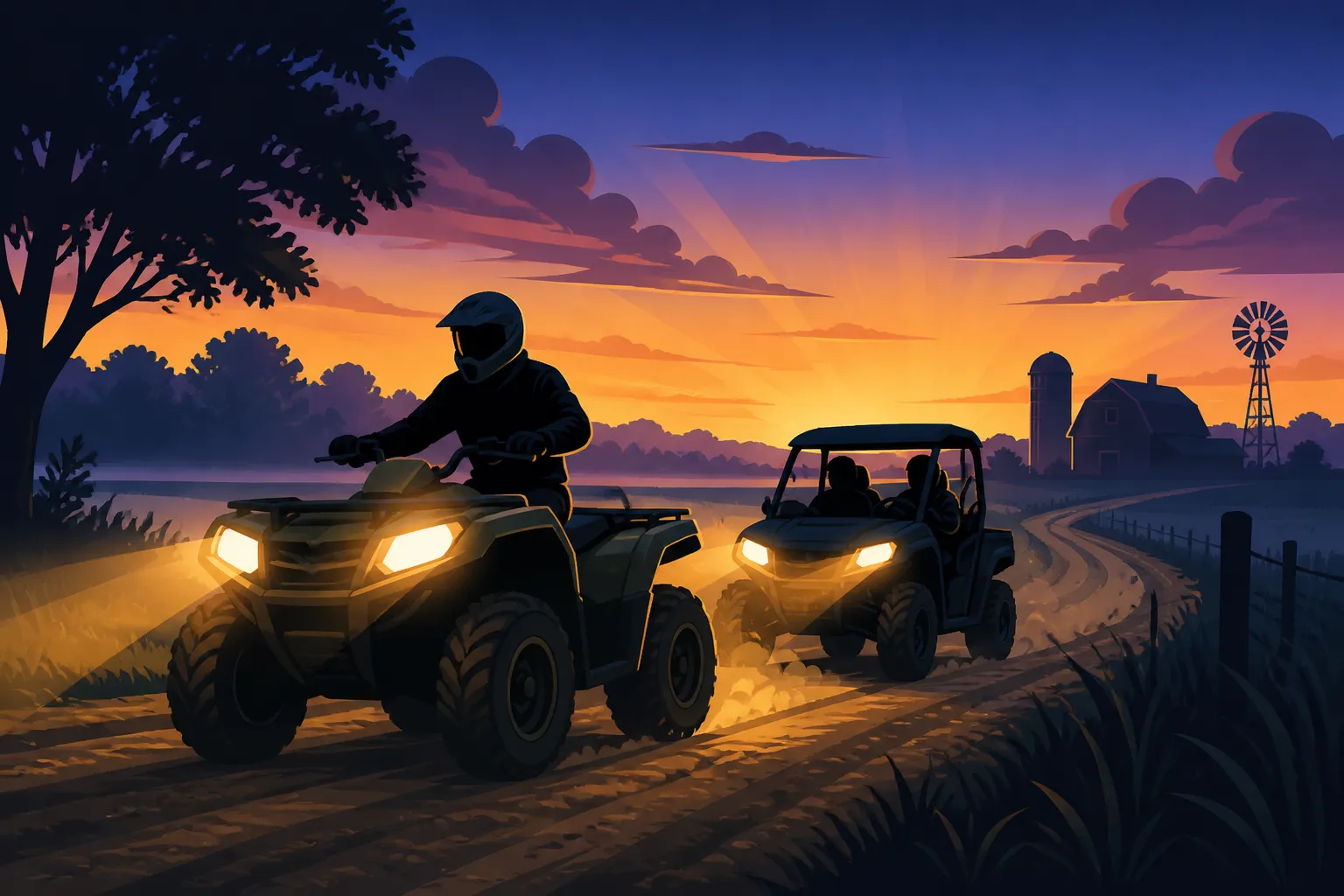
There's nothing quite like the quiet hum of an ATV or UTV breaking the stillness of a Missouri morning. For many of us in rural areas, these machines aren't just for recreation; they're essential tools for getting a jump on chores, checking fences, or heading to a prime hunting spot before the sun even thinks about peeking over the horizon. But here in Missouri, using your off-road machine on a public road, even a quiet farm lane, comes with its own set of rules, and the "before dawn" part adds another layer of confusion. This guide is here to clear up those early morning jitters and help you understand how to legally and safely navigate those crucial pre-sunrise hours on Missouri's farm roads.
The Core Rule for Agricultural Use on Missouri Roads
Missouri law understands that ATVs and UTVs are vital for farming and agricultural operations. It's not like the state expects you to hitch a horse to a plow to get your work done! However, this understanding comes with specific conditions, especially when it comes to the time of day.
What "Agricultural Use" Really Means in Missouri
When the law talks about "agricultural use," it's not just a blanket term for anything done on a farm. It specifically refers to activities directly related to farming, ranching, or other agricultural production. This might include:
- Moving equipment: Hauling a small trailer with tools, seed, or fence posts from one field to another.
- Checking livestock: Traveling a short distance down a county road to check on cattle in a different pasture.
- Transporting supplies: Bringing feed or veterinary supplies from the barn to an isolated paddock.
- Field preparation: Moving to and from fields for planting, cultivating, or harvesting-related tasks.
It's crucial to understand that "agricultural use" is about the task at hand, not just the location. If you're using your ATV to drive to a fishing spot, even if that spot is on your own land and you access it via a county road, that's not considered agricultural use. The intent behind your journey matters significantly. This distinction is vital because the exemptions for ATVs on public roads are generally narrow and specifically tied to genuine farm work. We're talking about practical, boots-on-the-ground tasks, not a leisure ride through the countryside, no matter how beautiful the sunrise. It's really about maintaining the functionality of a farm or ranch, ensuring that the necessary work can be performed efficiently without breaking state laws.
The Sunrise to Sunset Restriction
This is where the "before dawn" part gets tricky. Missouri statutes generally specify that ATVs and UTVs used for agricultural purposes on public roads are permitted only between [Missouri Agricultural Use From Sunrise to Sunset]. This means that once the sun dips below the horizon, or before it fully rises, your window for legal operation on public roads for agricultural purposes typically closes.
Now, you might be thinking, "But I need to check my cattle at 5 AM!" or "The deer are moving before light!" And you're absolutely right; farm life doesn't always adhere to a strict 9-to-5 schedule or wait for the sun. This restriction is one of the most frustrating aspects for farmers and landowners who depend on their machines for early morning tasks. While there's a strong emphasis on safety and visibility in low light, the default legal position for agricultural use leans towards daylight hours. This rule is designed with safety in mind, as operating these machines, often without the same extensive lighting or safety features as a car, during periods of low visibility can significantly increase the risk of accidents. It puts the onus on operators to ensure they are seen, but the law tries to avoid that risk by limiting the hours. It also makes a big distinction from specific local ordinances that might allow [Missouri's 3-Mile Rule for Side-by-Sides] for recreational ROVs, which often have different lighting requirements and permit processes. These agricultural rules are distinct and often more restrictive in terms of time.
Short Distances and Specific Tasks
Even when operating within the permissible hours, the agricultural exemption is typically for "short distances." The law doesn't explicitly define what "short" means in terms of miles, which can be a source of anxiety for operators. However, the spirit of the law implies that you're using the road as a necessary bridge between parts of your property or to access a nearby farm operation, not for extended travel.
Imagine you have a hayfield across the county road from your barn. Driving your UTV, perhaps outfitted with some robust SuperATV cargo racks to carry tools, across that road to work the field is a clear example of a short distance for a specific task. Driving ten miles to the next town for supplies, even if they're farm-related, would likely push the boundaries of what's considered a "short distance" under this exemption. The emphasis here is on the necessity and brevity of the road use, directly linked to agricultural activity. It's about practical movement for essential work, not casual travel. This is where a little common sense and good judgment come into play, always erring on the side of caution to avoid potential issues with local law enforcement.
Navigating the Night: Headlights, Taillights, and Safety
Even if you're trying to sneak in some farm work just as dawn is breaking, or you're legitimately on the road after sunset, visibility becomes paramount. The "sunrise to sunset" rule is a major hurdle for pre-dawn riding, but let's consider the safety aspects if you absolutely must be out in low light.
Why Visibility is Non-Negotiable
Riding any vehicle on a public road in low light conditions is inherently dangerous. For ATVs and UTVs, which might be smaller and less conspicuous than a standard car or truck, the risk is even higher. Other drivers might not be expecting an off-road machine on the road, especially not before full daylight.
Your machine's factory headlights and taillights are your first line of defense. Ensure they are clean, functional, and properly aimed. If you're on an older machine, or one that hasn't seen much road time, it's a good idea to upgrade your lighting. SuperATV offers a wide range of aftermarket lighting solutions, from powerful LED light bars that illuminate the path ahead to brighter taillights that ensure you're seen from behind. Even if you're only riding a few hundred yards to [Hauling Feed Down a County Road], imagine a sleepy commuter rounding a blind curve. You need to be seen. Running lights, high beams, and even auxiliary lights can make a huge difference in preventing an accident during those critical low-light periods. Remember, it's not just about you seeing where you're going; it's about making sure everyone else sees you.
Equipment Beyond Lights
Beyond your machine's lighting, personal visibility is also key. Think about wearing reflective clothing or a high-visibility vest. Even if you're just heading out for a quick check, an extra layer of reflectivity can literally be a lifesaver.
While not always explicitly required for agricultural use on local roads, a [Missouri's 7-Foot Safety Flag] can significantly improve your visibility, especially on rolling terrain where your machine might disappear behind a rise. A flag, particularly one with bright, fluorescent material, extends your visible profile above the vehicle, making you easier to spot over fences or dips in the road. And let's not forget personal protective equipment. Even on a short, slow farm road trip, a helmet is a smart choice, especially for younger riders, given [Missouri Helmet Law for Riders Under 18]. Sturdy boots, gloves, and long sleeves can protect against unexpected hazards. Farm roads, even quiet ones, can have potholes, loose gravel, and unexpected obstacles. Being prepared for the worst can save you a lot of pain and trouble.
Here's a quick comparison of essential safety considerations for early morning farm road use:
| Safety Aspect | Best Practice | Why It Matters |
|---|---|---|
| Headlights | Ensure bright, clean, and functional; consider LED upgrades (e.g., SuperATV) | To see obstacles and be seen by oncoming traffic. |
| Taillights | Ensure bright and functional; consider brighter aftermarket options | To be seen from behind, especially by approaching vehicles. |
| Reflective Gear | Wear a high-visibility vest or reflective clothing | Increases your personal visibility, making you stand out in low light. |
| Safety Flag | Use a 7-foot flag with bright material (recommended, even if not required) | Extends visibility above terrain, especially for smaller machines. |
| Helmet | Always wear one, especially if under 18 | Protects against head injuries in case of a fall or collision. |
| Machine Maintenance | Regular checks on tires, brakes, and steering before any road use | Ensures reliable operation and prevents mechanical failure on the road. |
Crossing a State Route at an Angle
Sometimes, agricultural operations require you to cross a busier state route to access fields or pastures. Missouri law does allow for [Crossing a Missouri Highway on a Quad] under specific conditions related to agricultural use. These crossings must be made as directly and safely as possible, typically at a 90-degree angle to minimize time spent in the flow of traffic.
Before attempting such a crossing, make sure you have a clear line of sight in both directions. Never assume oncoming traffic sees you. Flashing your headlights, if equipped, and signaling your intent can help. This isn't the time for a casual roll-through; it's a critical maneuver that demands your full attention and adherence to traffic laws for the highway itself. Even during daylight hours, these crossings can be risky, so attempting them before dawn dramatically increases the danger and is generally not advised if it can be avoided. Always prioritize waiting for clear visibility and ensuring you're legally permitted to even be on the road for agricultural purposes at that hour.
Local Ordinances and the "Agricultural Highway Exception"
While state law provides the overarching framework, local jurisdictions in Missouri can sometimes add their own layers of regulation. It's a patchwork that can be confusing, especially for those trying to do legitimate farm work.
How Counties and Cities Might Differ
Missouri has a state-level agricultural exemption that allows ATVs and UTVs on public roads for farm-related activities. However, the exact interpretation and enforcement can vary by county or even by specific township. Some local governments might have ordinances that further define "short distances" or specify certain roads where ATVs are not permitted, even for agricultural use. While the state statute generally allows agricultural use from [Missouri Agricultural Use From Sunrise to Sunset], a particularly conservative local ordinance might frown upon any vehicle on the road before full daylight, even if it's technically for farm work.
It's always a good idea to check with your local sheriff's department or county commissioner's office if you frequently use public roads for farm operations, especially at odd hours. This proactive step can save you a lot of grief down the line. Don't confuse the agricultural exemption with the recreational permits that some cities and counties offer for [Missouri's Special Permit for Road Use] for side-by-sides. Those are entirely different beasts, usually requiring specific equipment, a fee, and strict adherence to a different set of rules that often don't apply to ATVs or farm use. The key here is that the agricultural exemption is rooted in the necessity of the work, not recreational access.
Who Enforces the Rules and What They Look For
Local law enforcement – typically county sheriffs or sometimes state highway patrol – are the ones who will be checking if you're operating your machine within the bounds of the law. If you're stopped on a public road before dawn, even on a quiet farm lane, they will likely want to know:
- Your purpose: Are you genuinely engaged in agricultural activities? Be prepared to explain what you're doing. This might involve [Hauling Feed Down a County Road] or checking a specific fence line.
- Your destination: Are you traveling a "short distance" for this purpose?
- Your machine's equipment: Do you have functioning lights? Are you adequately visible?
- Your age and licensure: While generally not required for agricultural ATV use on roads, operating an ROV recreationally on roads might require a valid driver's license. [Why a Missouri Registrant Must Be Sixteen] is another point that applies to general operation, though farm duties sometimes have different age supervision rules.
An officer might be understanding of legitimate farm work, especially in rural communities where this practice is common. However, they also have a duty to enforce safety. Being polite, having a clear explanation of your activities, and ensuring your machine is properly equipped for the conditions can go a long way. Having proof of ownership (like your [Titling an ATV in Missouri] documents) or a clear explanation of your farm operations can help establish credibility.
The Fine Line Between Farm Work and Recreational Riding
This is arguably the most critical distinction. The agricultural exemption is not a loophole for recreational riding at early hours. If you're heading out to check game cameras, scout for deer, or simply enjoy a quiet morning ride, even if it's on land you own or lease for hunting, that typically does not fall under agricultural use. These activities are recreational.
Consider this scenario: You own a hunting property and want to drive your ATV down a county road before sunrise to get to your deer stand. While related to land management, this is generally seen as recreational. Now, imagine you're a cattle farmer driving your UTV to check on a calving cow in a back pasture before light. This is clearly agricultural. The difference in intent is what separates a legal exemption from a potential citation. If your primary goal isn't directly related to producing crops or livestock, you're likely outside the scope of the agricultural exemption, especially during the "before dawn" hours. It's about being truthful with yourself about the true purpose of your journey.
Practical Considerations for Early Morning Farm Riding
Beyond the legalities, there are practical aspects to consider when you're using your ATV or UTV for farm work before the sun comes up. These aren't just about avoiding a ticket; they're about efficiency, safety, and being a good neighbor.
Checking Your Machine Before Dawn
Just because it's dark doesn't mean you can skip your pre-ride checks. In fact, low light makes it even more important to ensure your machine is in top shape. A quick once-over can prevent a breakdown in a remote pasture or on a lonely road.
- Tires: Check tire pressure and look for any visible damage. A flat tire in the dark is no fun.
- Lights: This is obvious, but verify all headlights, taillights, and any auxiliary lights are working. Clean off any mud or dust that accumulated from the previous day's work.
- Fluids: A quick check of oil and coolant levels, especially if you're putting in long hours.
- Brakes: Test both front and rear brakes to ensure they are responsive.
- Fuel: Make sure you have enough fuel for your tasks. Running out in the dark is always a hassle.
Having a small, bright flashlight on hand is invaluable for these checks. Also, knowing your [What Missouri Counts as an ATV] and ensuring your specific machine (be it a quad or a side-by-side) is maintained according to its manufacturer's recommendations is key to reliable operation. Keeping a small toolkit and a spare tire repair kit can also save you a lot of headaches when you're miles from the barn in the dark.
Securing Your Load and Yourself
Early morning farm work often involves hauling something—feed, tools, a water tank. Securing your load properly is critical, especially when visibility is poor. Loose items can shift, become projectiles, or even fall off, creating hazards for you and others.
Use heavy-duty straps or bungee cords to secure anything you're carrying on racks or in a cargo bed. If you have a UTV, make sure items are not protruding dangerously. For personal safety, wear appropriate gear. While Missouri doesn't have a universal helmet law for adult ATV riders, it's always a good idea, particularly in low light or on unfamiliar terrain. If you have younger family members helping with farm chores, remember [Missouri Helmet Law for Riders Under 18] is still in effect on public lands and often wise even on private property. Furthermore, ensuring you're sober and alert is paramount. Operating an ATV or UTV under the influence is not only illegal (subject to [Missouri DWI Rules for ATV Riders]), but incredibly dangerous, especially in the pre-dawn darkness.
The "Neighborly" Aspect
Even when you're legally operating your machine for farm work before dawn, it's wise to consider your neighbors. Many rural residents value their early morning quiet.
- Noise: While you can't exactly silent your engine, try to keep noise to a minimum when near residences. Avoid unnecessary revving. If you have an aftermarket exhaust that makes your machine extra loud, consider the time of day.
- Lights: Be mindful of where your bright headlights are pointing, especially if you're passing homes. You don't want to accidentally shine them into someone's bedroom window.
- Property Lines: Even on a public road, be aware of where private property begins. Respect fences and signs. And if you're accessing a different part of your property through someone else's, make sure you have explicit permission. And when you pass through gates on your property or shared access points, it’s always good practice to remember to be a good steward and follow the advice of [Closing Every Gate You Open on a Pasture Lane]. These small courtesies go a long way in maintaining good community relations, which are often vital in rural settings.
By being mindful of these legal and practical considerations, you can continue to use your ATV or UTV as the invaluable farm tool it is, even during those critical pre-dawn hours, while staying safe and within the bounds of Missouri law.
Disclaimer
This article is for general informational purposes only and does not constitute professional advice. Laws, prices and regulations vary by location and change over time. Consult a qualified professional for guidance on your specific situation.