Riding a Sandbar on the Meramec
There's a special kind of freedom that comes with a Missouri summer day, especially when you're dreaming of kicking up sand and splashing through shallow water on your ATV or UTV. For many riders, the idea of finding a wide-open sandbar on a river like the Meramec sounds like pure heaven—a natural playground away from designated trails. But before you load up your machine and head for the river, it's crucial to understand that while the dream is vibrant, the reality of legality and access can be as shifting as the sand itself. This guide will walk you through the nuances of riding ATVs and UTVs on Missouri's river sandbars, focusing on how to navigate the legal landscape and ride responsibly.
The Allure and The Legal Quandary of River Riding
There's an undeniable draw to river sandbars. They offer a unique riding experience that’s different from wooded trails or dedicated parks. The wide-open spaces, the thrill of splashing through shallow water, and the sense of remoteness can make for an unforgettable day. However, this freedom comes with a significant caveat: the rules aren't always clear-cut, and what might seem like an innocuous patch of sand can quickly become a legal quagmire if you're not careful.
Why Sandbars Call to Riders
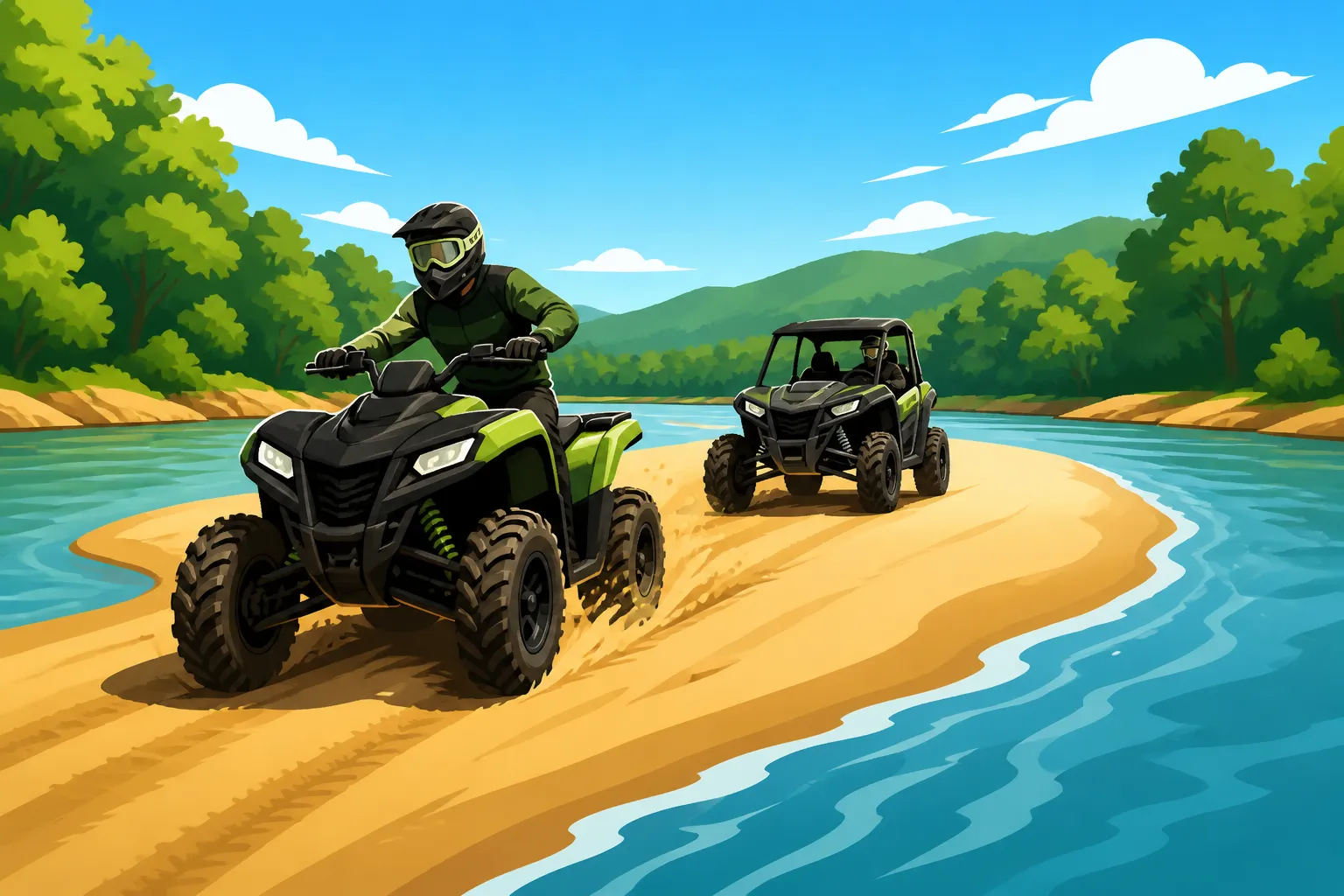
Imagine a sprawling expanse of soft, yielding sand, carved out by the river's ebb and flow. For ATV and UTV enthusiasts, these natural playgrounds offer a unique blend of challenges and open-throttle fun. You can practice control in loose terrain, splash through the shallow edges, and perhaps even find a secluded spot for a picnic away from the usual crowds. It's the kind of riding that connects you directly with the raw, untamed beauty of Missouri's waterways. This appeal is deeply rooted in the sense of exploration and the joy of navigating a landscape that changes with every flood and drought.
Riders often seek out sandbars for their perceived freedom from the structured rules of designated parks. There's no marked trail to follow, no permit booth to stop at, and often, fewer people. This natural, open-air environment offers a stark contrast to the more regulated experience of places like St. Joe State Park or Chadwick Motorcycle and ATV Use Area. The thought of being able to simply 'go explore' on a vast, shifting landscape is incredibly enticing, especially when you have a machine built for just such an adventure. It’s about the raw experience, the feeling of the sun on your face, and the spray from your tires as you skim across the water's edge.
The Murky Waters of Legality
Here's where the dream often clashes with reality. Many riders assume that if a sandbar is "in the river" or "looks public," it must be fair game. Unfortunately, this is a common misconception that can lead to significant legal trouble. In Missouri, just because land appears undeveloped or isn't fenced doesn't mean it's public access. This is especially true along river corridors, where land ownership often extends right down to the river's edge, or even includes portions of the riverbed itself. The concept of "navigable waters" can be complex, and even if the water is technically public, the land beneath it or adjacent to it might not be.
Missouri law treats ATVs and UTVs somewhat differently from traditional vehicles, but they are not exempt from trespass laws. While you might be tempted to treat a riverbed like an unregulated wilderness, it's critical to remember that someone, somewhere, likely owns that land. Local ordinances, state statutes, and even federal regulations might apply depending on the specific location of the sandbar. Understanding these complexities can feel like trying to catch smoke, but ignorance of the law is never a valid defense. It’s far better to be informed and cautious than to face a hefty fine or have your machine impounded.
Understanding Access: Public Versus Private Land
The biggest hurdle to legally riding on a sandbar in Missouri is typically gaining legitimate access. Unlike state parks or designated riding areas, river sandbars often fall into a legal gray area where ownership is not always obvious, and public access is rarely guaranteed without prior investigation. Assuming a sandbar is public can land you in serious trouble.
The Banks Are Not Always Public
It's a common misunderstanding: if you can get to the river, surely you can ride the riverbed, right? Not necessarily. In Missouri, land ownership along rivers and streams is often private. This means that the riparian landowners (those whose property borders the river) usually own the land extending down to the ordinary high water mark, and sometimes even further. Getting to the sandbar often means crossing private land, and even the sandbar itself might be part of a private parcel. This is particularly true for rivers like the Meramec, where much of the surrounding land is privately owned farmland, hunting grounds, or residential property. [Missouri Trespass Rules for Riders] are very clear on this point: entering private property without permission is illegal, regardless of whether you think it's abandoned or un-posted.
Think about it from a landowner's perspective. They might be using that riverside property for fishing, hunting, agriculture, or simply enjoying their own peace and quiet. An unexpected ATV or UTV tearing across their land, even if it's just to get to a sandbar, can be seen as an invasion of privacy and a destruction of property. They have every right to protect their land, and many landowners are becoming increasingly vigilant due to past incidents of littering, noise, and property damage. Even if the river itself is considered navigable and therefore public domain for activities like floating or fishing, the banks and exposed sandbars are often legally considered part of the adjacent private property.
Securing Permission: The Golden Rule
Given the complexities of land ownership along Missouri's rivers, the absolute "golden rule" for sandbar riding is to always secure explicit permission from the landowner before you even think about unloading your machine. This isn't just a polite suggestion; it's a legal necessity. Approaching a landowner with respect and a clear request demonstrates good faith and can often open doors that would otherwise remain closed. You might be surprised at how willing some landowners are to grant access, especially if you promise to be respectful, pack out what you pack in, and avoid disturbing their property or livestock. [Missouri Landowner Permission Requirements] usually mean a verbal agreement, but a written one can offer even more clarity and protection for both parties.
When you ask for permission, be specific. Explain exactly what you want to do (ride your ATV on the sandbar), where you plan to access the river, and approximately how long you'll be there. Offer to provide your contact information. If they say no, respect their decision and move on. There are other opportunities out there. Never assume silence implies consent, and never try to sneak onto property. If a landowner does grant permission, it's a good idea to clarify any specific rules they might have, such as areas to avoid, gates to close, or times when riding is not permitted. Remember that sandbars can be dynamic; what was there last week might be underwater this week, or a new sandbar might have formed further downstream.
Responsible Riding Practices on Missouri Riverbeds
Once you've navigated the tricky waters of access and secured permission (if needed), your responsibility shifts to ensuring your riding practices are both safe and environmentally conscious. A sandbar, by its very nature, is a fragile ecosystem, and reckless riding can have lasting negative impacts.
Tread Lightly: Environmental Impact
Riding on river sandbars and gravel bars is a unique experience, but it also carries a significant responsibility to protect the environment. These areas are often crucial habitats for various species of plants and animals, some of which may be sensitive or endangered. Heavy ATVs and UTVs can easily compact soil, destroy vegetation, and disturb wildlife nests or breeding grounds. The churning of tires in shallow water can stir up sediment, impacting water quality and harming aquatic life. This is why many environmental groups and conservation agencies discourage or prohibit this type of riding in sensitive areas. [Missouri Rules for Riding a Creek Bed] often highlight these environmental considerations.
To truly "tread lightly," consider your impact. Avoid riding directly through deep pools where fish or amphibians might be concentrated. Stick to drier, more stable sections of the sandbar where possible, and avoid tearing through fragile vegetation along the banks. If you encounter wildlife, give it a wide berth and observe from a distance. Proper waste disposal is also paramount; pack out all trash, including anything that might fall off your machine or out of your pockets. Even seemingly innocuous items like cigarette butts or bottle caps can pollute the river environment. Remember, the beauty of the Meramec is its natural state, and it's up to us as riders to help preserve it for future generations.
Safety First: Gear, Group, and Good Sense
Beyond environmental concerns, safety should always be your top priority when riding on a river sandbar. The terrain is unpredictable, water levels can change rapidly, and help might be a long way off. Always wear appropriate safety gear, including a helmet, goggles, long sleeves, long pants, gloves, and sturdy boots. Even if [Missouri Helmet Law for ATV Riders] only mandates helmets for those under 18 in certain contexts, it's just plain smart for everyone. Bringing a first-aid kit, a communication device (like a satellite messenger, as cell service can be spotty), and plenty of water is non-negotiable.
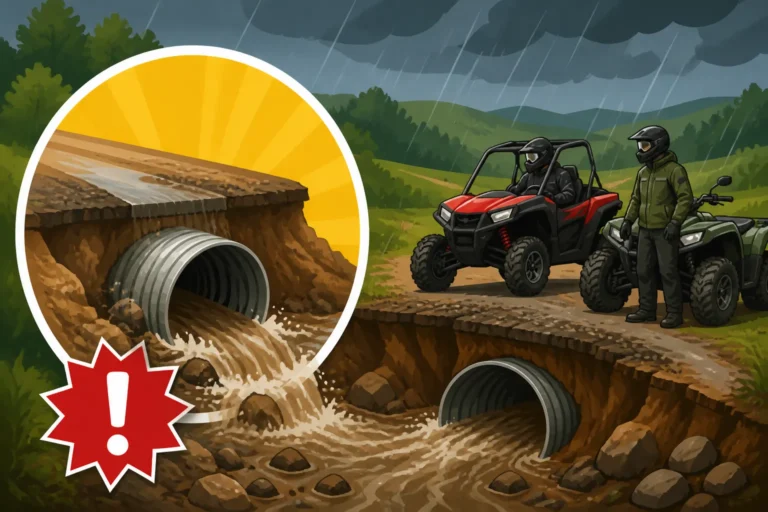
Riding with a group is highly recommended. There's safety in numbers, and if one machine gets stuck or a rider gets injured, immediate assistance is available. When riding, be mindful of hidden hazards like submerged logs, deep pockets of quicksand-like material, or sudden drop-offs in the riverbed. SuperATV and other aftermarket companies offer skid plates and upgraded suspension components that can help protect your machine from unseen obstacles, but nothing replaces good judgment. Pay close attention to water currents and avoid trying to cross sections of the river that appear too deep or fast-moving. It’s also wise to check weather forecasts before you head out, as sudden rain upstream can quickly raise water levels and create dangerous flash flood conditions. For more general guidelines about riding off-road, it's a good idea to review basic safety principles.
| Safety Consideration | Importance for Sandbar Riding | Action Steps |
|---|---|---|
| Proper Gear | Essential for impact/abrasion protection | Helmet, goggles, gloves, long sleeves/pants, sturdy boots. |
| Water Awareness | River currents, depth, and hidden obstacles. | Never ride through fast-moving or deep water; check for submerged items. |
| Group Riding | Increased safety in case of emergency or breakdown. | Always ride with at least one other person; establish communication. |
| First Aid & Comm. | Remote locations mean help might be distant. | Carry a well-stocked first-aid kit, fully charged phone, or satellite messenger. |
| Environmental Respect | Fragile ecosystems, avoid damage. | Stay on durable surfaces, avoid vegetation, pack out all trash. |
| Weather Watch | Flash floods and changing conditions. | Check forecasts, be aware of upstream rain, know your exit routes. |
Navigating Potential Pitfalls and Penalties
Even with the best intentions, riding on sandbars can lead to unexpected challenges. Understanding the potential pitfalls, from getting stuck to facing legal consequences, is crucial for any responsible rider. It’s not just about knowing where you can ride, but also about knowing the consequences if things go wrong or if you've made a misstep.
When a Fun Day Turns Serious
Picture this: you’re having a fantastic time, carving turns on a wide-open sandbar, when suddenly, your wheels sink into soft, silty sand. You're stuck. Or perhaps you've been riding all morning, decide to pull out, and find that heavy rains upstream have swelled the river, making your previous access point impassable. These aren't just hypothetical scenarios; they're very real risks when riding on riverbeds. Getting a heavy ATV or UTV unstuck from deep mud or sand, especially when alone, can be a monumental task. This is where a winch, like those offered by SuperATV, becomes an invaluable piece of equipment, but even then, it requires skill and proper anchoring to use safely.
Beyond getting stuck, there's the risk of injury. The ever-changing nature of a riverbed means obstacles like broken branches, sharp rocks, or unexpected holes can appear out of nowhere. A simple rollover on a sandbar, while perhaps less severe than a crash into a tree, can still lead to broken bones or concussions. And let's not forget the possibility of encountering illicit activities or unsavory characters in remote locations. The perceived solitude can also mean that if something does go wrong—an injury, a mechanical failure, or a dangerous encounter—help might be hours away. This emphasizes the importance of telling someone your plans, sticking to them, and checking in periodically.
Respecting the Law, Even in the Wilds
The legal ramifications of illegal sandbar riding can be significant. If you're caught trespassing on private property, you could face fines, have your machine impounded, and even be charged with a misdemeanor. [What a Class C Misdemeanor Costs an ATV Rider] can be substantial, often involving hundreds of dollars in fines, court costs, and potentially community service or even jail time depending on the severity and frequency of the offense. These penalties are designed to deter illegal activity and protect landowners' rights and the environment. It's a harsh reality, but one that every rider needs to be aware of.
Beyond trespassing, there are other laws that apply regardless of where you're riding. [Missouri DWI Rules for ATV Riders] are just as stringent on a sandbar as they are on a public road or trail. Consuming alcohol or drugs while operating an ATV or UTV is illegal and incredibly dangerous. Similarly, [Missouri Open Container Rules on an ATV] generally apply, meaning open alcoholic beverages are prohibited. Even if you think you're "out in the middle of nowhere," law enforcement officers have jurisdiction over navigable waters and adjacent lands, and they can and do patrol these areas, especially if landowners report issues. Therefore, always ride sober, be respectful, and if in doubt about access, err on the side of caution. It's always better to find a designated riding park or get explicit permission than to risk legal trouble.
Disclaimer
This article is for general informational purposes only and does not constitute professional advice. Laws, prices and regulations vary by location and change over time. Consult a qualified professional for guidance on your specific situation.