Can You Drive a UTV on a Missouri Road?
It can be incredibly frustrating when you invest in a UTV, envisioning cruising down a backroad to a fishing spot or just hopping over to the neighbor's, only to hit a wall of confusion about what's actually legal. Missouri's rules for driving UTVs on public roads aren't always clear-cut, leading many owners to wonder if their beloved side-by-side can ever leave the trail or private property. This guide is here to untangle the complexities, explaining exactly when and where you might legally drive your UTV on a Missouri road, and what you’ll need to do it right.
The General Rule: UTVs and Missouri Roads Are Mostly Separate
Let's get straight to it: generally speaking, no, you cannot simply drive your UTV on any public road in Missouri like you would a car or a truck. This is often a tough pill to swallow for owners who see their UTVs as versatile, capable machines that could easily handle a trip down a county road. The state views UTVs, or "Recreational Off-Highway Vehicles" (ROVs) as the law often calls them, differently from other registered motor vehicles, and this distinction is the root of most of the confusion and limitations.
Why UTVs Aren't Like Cars
The primary reason UTVs aren't treated like regular vehicles is their design and intended use. They're built for off-road performance, rugged terrain, and recreational activities, not for highway speeds or heavy traffic. Think about the features: open cabins (often without full doors or windows), exposed tires, and suspension systems designed for impacts, not smooth pavement. While many UTVs today are incredibly advanced and comfortable, they still lack many of the safety features and certifications required for traditional on-road vehicles. They don't typically have standard automotive brake lights, turn signals, windshield wipers, or specific crash-test ratings that passenger cars are mandated to have. Missouri's lawmakers, in their wisdom, decided that these machines, while fun and useful, don't meet the stringent requirements for safe operation on highways, byways, and main thoroughfares.
The Legal Distinctions Missouri Makes
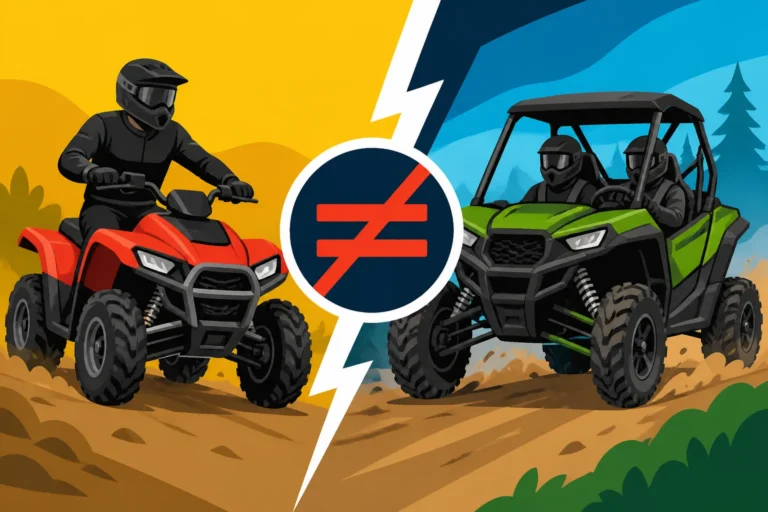
Missouri law specifically defines different types of off-road machines, and UTVs (often falling under the ROV category) have their own set of rules, distinct from ATVs and even from "utility vehicles" (which can sometimes be granted more road access for specific agricultural or industrial purposes). The key legal distinction for UTVs is that they are generally excluded from the definition of a "motor vehicle" for the purpose of highway use and registration. This means they aren't issued traditional license plates, and you can't just head to the Department of Revenue to get them street legal in the same way you would a car or truck. It's a fundamental difference that dictates everything else about their road legality. Because of these distinctions, you won't be heading to a state office to discuss [Titling and Registering a Quad in One Visit] for your side-by-side.
Local Ordinances: Your Best Bet for Limited Road Use
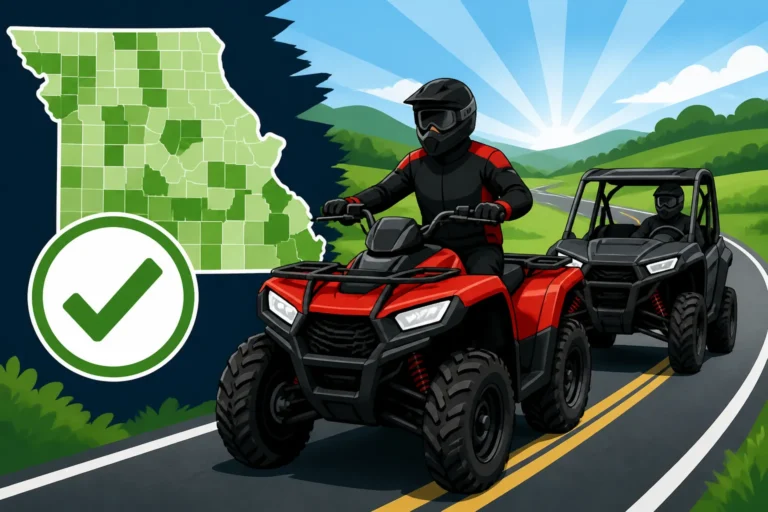
While the state generally restricts UTVs from public roads, there's a significant caveat: local control. Many Missouri cities, towns, and counties have taken matters into their own hands, enacting ordinances that permit UTVs on certain local roads under specific conditions. This is where most UTV owners find their opportunity for limited road use. It means that whether you can drive your UTV down Main Street often depends entirely on where Main Street is located.
How Cities and Counties Create Exceptions
Missouri law provides a pathway for local governments to create these exceptions. A city council or county commission can vote to allow ROVs on their public roads, or specific segments of them. This process usually involves public hearings, community input, and a good look at local safety concerns. Once an ordinance is passed, it typically outlines the specific roads where UTVs are allowed, the hours of operation, and any required safety equipment or permits. What might be perfectly legal in one small town in the Ozarks could land you a ticket just across the county line. This patchwork of rules means you absolutely must do your homework on the specific jurisdiction you plan to ride in. For instance, you might find that [Missouri Cities That Allow UTVs on Streets] have very different rules than their rural county counterparts.
Getting a Special Permit
If your local jurisdiction has an ordinance allowing UTVs on roads, you’ll almost certainly need a special permit. This isn't just a suggestion; it's a legal requirement designed to ensure you understand and comply with the local rules. Obtaining this permit usually involves a visit to the city hall, the police department, or the county sheriff's office. You'll fill out an application, often provide proof of ownership, and sometimes show proof of insurance. Expect to pay a fee, which helps the local government cover administrative costs and potentially local road maintenance. The cost of a permit can vary widely, but it's generally an annual fee. Be prepared for a conversation about [Missouri's Special Permit for Road Use] when you go in.
Here's a quick look at common permit requirements:
| Requirement | Description |
|---|---|
| Application Form | Usually available at the local police department, sheriff's office, or city hall. Requires owner and vehicle information. |
| Proof of Ownership | Vehicle title or bill of sale to verify you own the UTV. |
| Proof of Insurance | Many ordinances require liability insurance coverage, similar to what's needed for an automobile, to protect against accidents involving other vehicles or property. |
| Valid Driver's License | The operator of the UTV on public roads must typically hold a valid Missouri operator's or chauffeur's license. |
| Safety Equipment | Demonstrating that your UTV is equipped with all necessary safety gear, as specified by the local ordinance (e.g., lights, horn, mirrors, flag). |
| Inspection (Optional) | Some jurisdictions may require a physical inspection of the UTV to ensure it meets all safety equipment requirements before issuing a permit. |
| Permit Fee | An annual fee to obtain and renew the permit. Fees vary significantly by jurisdiction. |
It’s crucial to understand that a permit from one city almost never applies to another. If you live in Harrisonville and get a permit there, you can't assume that permit will let you ride in nearby Pleasant Hill. Each jurisdiction sets its own rules, and you'll need to respect those boundaries.
Common Permit Requirements and Limitations
Local ordinances allowing UTVs on roads come with a host of specific requirements and limitations. These are in place for safety and to manage traffic flow. Here are some of the most common things you’ll encounter:
- Operator's License: Almost universally, anyone driving a UTV on a public road under a local ordinance must possess a valid driver's license – an operator's or chauffeur's license. This means your 15-year-old, even if they're a skilled off-road rider, usually won't be able to drive the UTV on public streets. We talk more about [Missouri Driver's License Rules for ROVs] in another post.
- Time of Day Restrictions: Many ordinances limit UTV operation to daylight hours, often from sunrise to sunset. This is a common safety measure, as UTVs are less visible at night, even with lights.
- Speed Limits: You'll typically find that UTVs are restricted to lower speeds on permitted roads, often 35 mph or less, regardless of the posted speed limit for cars. This acknowledges their design limitations and helps keep everyone safe.
- Road Type Restrictions: Often, UTVs are allowed only on specific types of roads, like county roads, secondary roads, or subdivision streets, and explicitly prohibited from state highways, federal routes, or major arterial roads.
- Safety Equipment: Local ordinances will almost certainly mandate specific safety equipment. This usually includes:
- Headlights and Taillights: Operational during permitted hours.
- Brake Lights: Functioning properly.
- Turn Signals: Required in many areas, even if not factory installed on your UTV (many UTV owners turn to aftermarket solutions like those offered by SuperATV to add these essential features).
- Mirrors: At least one rearview mirror, and often side mirrors.
- Horn: An audible warning device.
- Safety Flag: Many jurisdictions require a visible safety flag, often seven feet tall, to increase visibility. This is a big one, so make sure to look into [Missouri's 7-Foot Safety Flag] if you plan to ride locally.
- Seat Belts: If your UTV has them, they must be worn by all occupants.
- Roll Bar/Roll Over Protection System (ROPS): The factory-installed ROPS is usually sufficient, but it must be present and in good condition.
- Passenger Rules: While UTVs are built for multiple passengers, some local ordinances might have restrictions on the number of passengers or require all passengers to be in designated seating positions with seatbelts. It's wise to check [Missouri Rules for a Passenger in a UTV].
One very specific state rule to be aware of, even when permitted locally, is [Missouri's 3-Mile Rule for Side-by-Sides]. This allows ROVs to be operated on state roads within a three-mile radius of the operator's residence for the purpose of accessing services, but it has strict limitations and does not grant free rein on all roads. It's a very narrow exception, often supplemented by local ordinances.
Agricultural and Industrial Exemptions: When Work Calls
Beyond local recreational permits, Missouri law also provides specific exemptions for UTVs and similar machines when used for bona fide agricultural or industrial purposes. This isn't about cruising for fun; it's about getting work done. These exemptions recognize that farmers, ranchers, and certain businesses rely on these machines to efficiently move around their property and occasionally on adjacent public roads.
Farm-to-Farm Travel and Agricultural Use
If you're a farmer, Missouri law often provides more leeway for operating your UTV on public roads, especially county roads. This typically applies to situations where you need to move equipment, livestock, or supplies between fields, barns, or different parcels of land that are separated by a public road. The key here is that the use must be directly related to agricultural operations.
For example, a farmer might use their UTV to:
- Haul tools, fencing materials, or feed across a county road from one section of a farm to another.
- Check on livestock in a pasture accessible only by a short stretch of public road.
- Transport workers or small equipment to a distant field during planting or harvest season.
These agricultural exemptions often come with specific time restrictions, typically limiting operation to between sunrise and sunset. While you might be exempt from a local permit in these situations, your UTV should still have basic safety equipment like lights and a safety flag to be visible to other traffic. This specific exception is often referred to as [Missouri's Agricultural Highway Exception]. It's not a blanket permit for all farm vehicles on all roads, so understanding the nuances is critical.
Industrial and Business Use
Similar to agricultural exemptions, certain industrial or business operations might also have specific allowances for UTVs on public roads. This usually applies to scenarios where a UTV is essential for work on a large property that abuts a public road, or for short transfers between industrial sites. Examples might include:
- Utility workers using a UTV to access power lines or infrastructure along a public right-of-way.
- Construction crews moving tools or personnel across a short stretch of road between job sites.
- Landscaping companies operating on a large estate that requires crossing a public lane to move equipment.
Again, the purpose must be industrial or business-related, and the use is typically limited in distance and duration. It’s not about joyriding to lunch; it’s about practical necessity for the job at hand. For both agricultural and industrial uses, the operator should still possess a valid driver’s license, and the UTV should be equipped for visibility and basic safety.
Specific Rules for These Exemptions
It’s important to note that even with these work-related exemptions, they are not an open invitation to treat your UTV like a road-legal truck. These uses are highly specific and usually subject to common-sense safety requirements. This includes:
- Operating at safe speeds: Always travel at a speed appropriate for the road conditions and the vehicle, which means much slower than car traffic.
- Maintaining visibility: Headlights, taillights, and often a bright orange or red safety flag are highly recommended, if not outright required by general state statute for slow-moving vehicles.
- Yielding to other traffic: You are typically the slower, less protected vehicle, so extra caution is paramount.
- Direct route: The travel must be a direct route between the points of agricultural or industrial operation, not a meandering drive.
Misusing these exemptions can lead to citations, and law enforcement is generally vigilant about ensuring these powerful machines are used appropriately on public infrastructure.
Safety and Equipment for Permitted Road Use
Regardless of whether you're riding under a local ordinance or an agricultural exemption, safety is paramount. If you're going to put your UTV on a public road, even for a short distance, it absolutely needs to be properly equipped and operated by a qualified driver. This isn't just about avoiding a ticket; it's about protecting yourself, your passengers, and everyone else on the road.
Required Lighting and Safety Gear
As discussed earlier, basic safety equipment is a must. If your UTV isn't factory-equipped with these items, you'll need to add them. Many manufacturers, and aftermarket suppliers like SuperATV, offer kits to make your UTV more road-ready.
- Headlights and Taillights: These aren't just for looking cool; they're essential for being seen. Make sure they are functional and bright. You'll want to review [Missouri Lighting Requirements for ROVs].
- Brake Lights: Absolutely critical. Drivers behind you need to know when you're slowing down or stopping.
- Turn Signals: While not always factory-installed on all UTVs, these are often required by local ordinances for road use. Aftermarket kits are widely available and can be fairly simple to install.
- Mirrors: A rearview mirror is usually required, and side mirrors are a very good idea for situational awareness.
- Horn: A working horn allows you to signal your presence or warn others.
- Safety Flag: Often specified to be at least seven feet tall from the ground, with a bright orange or red pennant of a certain size (e.g., [30 Square Inches of Day-Glow]). This significantly enhances your visibility, especially on rolling terrain or where sightlines are limited. For specific requirements, refer to [Missouri Safety Flag Requirements].
- Seat Belts: If your UTV has them (which most do), they must be used by all occupants. This isn't just a recommendation; it's often a legal requirement on public roads.
- Roll Over Protection System (ROPS): The factory cage on your UTV serves this purpose. Ensure it's not damaged or modified in a way that compromises its integrity.
It's a good practice to keep your UTV in top mechanical condition, especially if you plan to use it on roads. Check your tires, brakes, and steering regularly.
Operator Licensing and Age Rules
To operate a UTV on any public road in Missouri, even under a local ordinance or exemption, the driver almost universally needs a valid operator's or chauffeur's license. This means a standard Missouri driver's license is sufficient. This requirement is in place because driving on public roads involves navigating traffic laws, sharing the road with other vehicles, and making quick decisions – skills typically associated with licensed drivers.
Age also plays a role. Generally, if you need a driver's license, you must be at least 16 years old. This means that younger riders, even if they are permitted to operate UTVs on private land or designated off-road parks, are usually prohibited from driving them on public roads. There are no special "UTV licenses" in Missouri; it falls under the standard driver's license system when road use is permitted.
Insurance Considerations
While Missouri does not require state-level registration or insurance for UTVs solely used off-road, if you plan to operate your UTV on public roads under a local ordinance, you will likely need proof of insurance. Most local permits explicitly state this requirement. This insurance typically covers liability in case you're involved in an accident that causes damage or injury to another person or property.
It's crucial to contact your insurance provider and inform them of your intentions. Many standard ATV/UTV policies might not automatically cover road use, even if it's legally permitted by a local ordinance. You might need to add a specific endorsement or rider to your policy to ensure you're covered. Driving without proper insurance, even if you have a permit, can lead to significant financial risk and legal penalties if an accident occurs. Don't assume you're covered; verify it with your agent before you hit the blacktop.
In summary, while driving a UTV on a Missouri road isn't a free-for-all, it's also not impossible. It hinges on specific local ordinances or narrow agricultural/industrial exemptions, all of which come with strict rules regarding permits, safety equipment, and operator qualifications. Do your homework, get the right permits, equip your machine properly, and always prioritize safety.
Disclaimer
This article is for general informational purposes only and does not constitute professional advice. Laws, prices and regulations vary by location and change over time. Consult a qualified professional for guidance on your specific situation.