Missouri Agricultural Use From Sunrise to Sunset
There's nothing quite like the convenience of using your ATV or UTV to get essential farm work done, whether it's hauling feed to the back forty, checking fences along a county road, or moving equipment from one field to another. However, the open road can feel like a minefield of regulations when you're trying to figure out if your trusty off-road machine is allowed to even touch the asphalt. Many Missouri landowners and farmers face this constant juggle: how do you efficiently manage your land without breaking the law when you need to cover short distances on public roads? This guide will dive deep into Missouri's specific allowances for agricultural use of ATVs and UTVs, focusing on the critical "sunrise to sunset" rule and what it really means for your daily operations.
The Core Challenge: Why ATVs and UTVs Are Generally Not Street Legal in Missouri
Let's face it, one of the biggest frustrations for ATV and UTV owners in Missouri is the general prohibition against riding these machines on public roads. It seems so simple: you have a powerful, versatile vehicle, and you just need to get it from point A to point B on a paved or gravel road. But the state sees things differently, and for reasons that often come back to safety and the fundamental design of these machines.
Defining Off-Road Vehicles in Missouri Law
Missouri law is pretty clear about what it considers an all-terrain vehicle (ATV) and how it differentiates it from a utility vehicle (UTV) or recreational off-highway vehicle (ROV). For an ATV, we're talking about a motorized vehicle manufactured and designed primarily for off-highway use, having a width of 50 inches or less, dry weight of 1,500 pounds or less, and traveling on three or more non-highway tires. Critically, it has a seat designed to be straddled by the operator and handlebars for steering. Think of your traditional quad. [What Missouri Counts as an ATV]
A UTV or ROV, on the other hand, is generally wider, often has a steering wheel, side-by-side seating, and seat belts. These are the machines that look more like a miniature car or truck. While both are designed for off-highway adventure, their structural differences mean they sometimes fall under slightly different rules, even if they share the same general "not street legal" status. Both types are built to tackle rough terrain, mud, and trails, not to navigate traffic alongside passenger cars.
The Rationale Behind Road Restrictions
So, why the strict rules? It boils down to safety and design. Imagine trying to stop a heavy ATV or UTV quickly on wet asphalt, especially one with knobby tires designed for grip in the dirt, not smooth pavement. They simply don't handle like a car or truck. ATVs typically lack essential street-legal equipment like turn signals, proper mirrors, and DOT-approved tires that are necessary for safe road use. Even many UTVs, while more car-like, often don't meet all the stringent safety standards for highway vehicles.
The state's concern is about the potential for accidents when these off-road machines mix with faster, heavier road traffic. There are also liability questions that arise if an accident occurs involving an unregistered, uninsured off-road vehicle on a public road. These regulations, while sometimes inconvenient, are primarily in place to protect riders and other motorists. It's a common lament among riders who just want to get to the next trail or field without having to load up on a trailer, but the law is firm on the general prohibition.
Unpacking Missouri's Agricultural Highway Exception
This is where the good news comes in for those living and working on farms! Recognizing the practical necessities of farm life, Missouri has carved out specific exceptions that allow ATVs and UTVs to be operated on public roads for agricultural purposes. It's not a free pass to joyride, but a conditional allowance designed to support farmers in their daily tasks.
Who Can Utilize This Exemption and For What Purpose
The agricultural exemption isn't for just anyone; it's specifically for individuals engaged in bona fide farming or ranching operations. This means if you're using your machine to haul tools, check livestock, move feed, or perform any other task directly related to the cultivation of the land, raising of crops, or management of livestock, you likely qualify. This exception acknowledges that a farmer's "workplace" often extends beyond a single field and sometimes necessitates brief travel on public roadways to access different parts of their property or neighboring fields.
It's crucial to understand that "agricultural purpose" is key. Taking your quad out for a recreational spin down a county road, even if you own a farm, would not fall under this exemption. The intent and nature of your travel must be directly tied to agricultural operations. Think of it this way: are you doing something that helps your farm produce? If so, you're likely on the right track. This specific allowance is detailed in Missouri statutes and provides a much-needed lifeline for farmers. [Missouri Rules for Agricultural Road Use]
The "Sunrise to Sunset" Window for Farm Use
One of the most defining aspects of Missouri's agricultural exception is the "sunrise to sunset" rule. This isn't just a suggestion; it's a hard and fast legal requirement. You are only permitted to operate your ATV or UTV on public roads for agricultural purposes during the hours between official sunrise and official sunset. As soon as dusk settles, or before the sun comes up, that exemption evaporates.
Why this strict time limit? Visibility is the main concern. While your farm machine might have headlights and taillights, they are often not designed to provide the same level of illumination or visibility to other drivers as standard highway vehicles. Driving in low light or darkness significantly increases the risk of accidents, especially on rural roads where other drivers might not expect to encounter an off-road vehicle. If you're caught using the exemption after dark, you could face penalties, regardless of your agricultural intent. It's a practical measure to ensure everyone's safety, and it's a rule that farm operators need to take very seriously. [Missouri Rules for Riding at Night]
Navigating Permitted Road Use and Equipment Needs for Farm Machines
Understanding when you can use your machine for farm work on the road is one thing, but knowing where and how is equally important. Missouri's agricultural exemption doesn't throw all caution to the wind; it still comes with stipulations about the types of roads you can use and the basic safety equipment your machine needs.
Specific Road Types and Crossing Rules
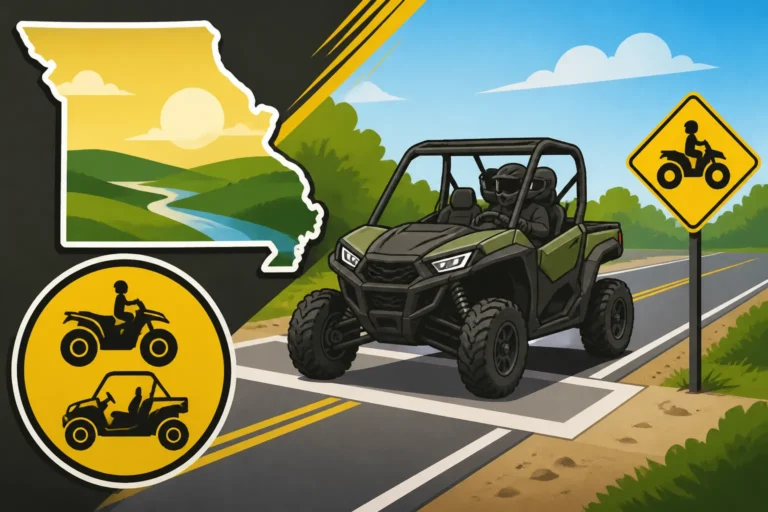
Under the agricultural exemption, you'll primarily find yourself on county roads, farm lanes, and gravel roads. These are often the arteries connecting your fields and outbuildings. It's perfectly permissible to ride your ATV or UTV on these types of roads for short distances as part of your farm operations. [Missouri Rules for Riding a County Road]
However, the rules tighten considerably when it comes to state highways or major paved routes. Generally, you're allowed to cross a state highway or other major roadway, but only at an angle of approximately 90 degrees to the roadway, and only where safe and practicable. This means you can't ride along a state highway for any significant distance, even if it feels like the most direct route to your next pasture. The goal is to minimize exposure to high-speed traffic. Think of it as a quick dash across, not a journey down the shoulder. [Missouri Rules for Crossing a Highway] Always be extra cautious, yield to all highway traffic, and ensure your path is clear before attempting a crossing.
Essential Safety Equipment for Farm-Exempt Use
While your ATV or UTV isn't expected to be fully street-legal under this exemption, there are still some fundamental safety requirements. First and foremost, your machine must have functional headlights, taillights, and brakes. These are non-negotiable for safe operation, even during daylight hours.
Secondly, it's highly recommended – and often required by common sense – to display a slow-moving vehicle (SMV) sign on the rear of your machine if you're operating on a public road. This bright orange triangle is a universally recognized signal that your vehicle is traveling slower than normal traffic, giving other drivers crucial time to react. You'll often see these on tractors and combines for the same reason.
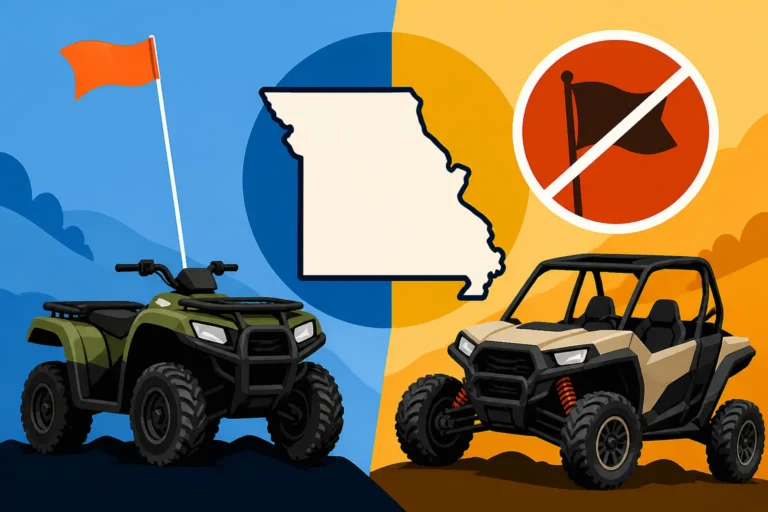
Beyond the legal minimums, consider aftermarket safety features that can make your machine even safer for brief road use. Products from companies like SuperATV can significantly enhance visibility and utility. Think about adding extra LED lights for better illumination, or even a wide-angle rearview mirror system to help you see traffic approaching from behind. A [Missouri's 7-Foot Safety Flag] might also be a smart addition for increased visibility, especially if you're navigating over hills or through areas with tall crops. While often associated with state parks, the principle of making your machine stand out is invaluable on any public road. These small investments can make a big difference in preventing an accident.
Differentiating ATV and UTV Agricultural Road Privileges
While both ATVs and UTVs fall under the "off-road vehicle" umbrella, their design differences sometimes lead to distinct legal considerations, even within the realm of agricultural exemptions. It’s important to understand where the rules align and where they might diverge, especially if you operate both types of machines on your farm.
Similarities in Agricultural Exemption for Both Machine Types
When it comes to the core agricultural exemption, both ATVs and UTVs are generally treated the same. The "sunrise to sunset" rule applies equally, and the requirement for the travel to be for a direct "agricultural purpose" is universal. Whether you're hauling fencing supplies on your quad or bringing feed out in your side-by-side, the fundamental conditions for using public roads remain consistent: it must be daylight, and it must be part of your farm operations.
Both machines, under this specific exemption, are still considered off-road vehicles. They aren't magically transformed into street-legal automobiles just because they're doing farm work. This means the limitations on where you can ride (short distances on county roads, highway crossings only) apply to both equally. So, no long trips down Highway 61 in either machine, no matter how much you might want to save on fuel for your pickup.
Overlapping and Distinct Road-Legal Pathways for UTVs (ROVs)
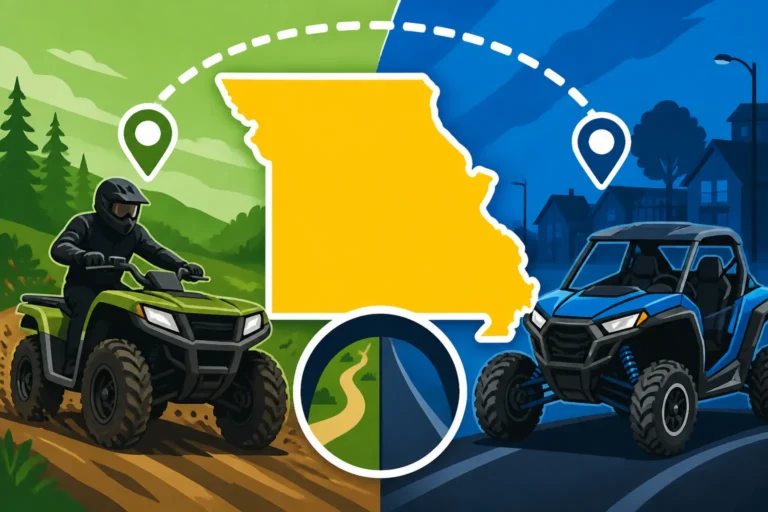
Here's where it gets a little more nuanced, primarily benefiting UTV (ROV) owners. While UTVs do qualify for the agricultural exemption just like ATVs, they also have access to additional pathways for road use that ATVs typically do not.
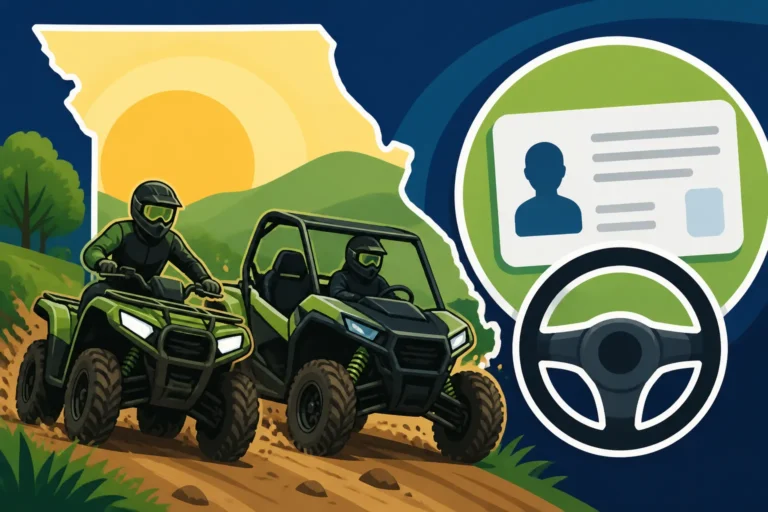
One significant difference is Missouri's "3-mile rule" for ROVs. This state law allows an ROV (which includes many UTVs) to be operated on state roads within three miles of the operator's home, primarily for recreational purposes, provided the local jurisdiction has passed an ordinance allowing it. This is a separate provision from the agricultural exemption and has its own set of requirements, such as functional headlights, taillights, brake lights, a horn, a rearview mirror, and an orange safety flag extending at least 7 feet above the ground. [Missouri's 3-Mile Rule for Side-by-Sides] An operator's or chauffeur's license is also required for this rule.
Furthermore, many Missouri cities and counties have enacted ordinances that permit UTVs (and sometimes ATVs, though less commonly) to be operated on specific local roads with a special permit. [Can You Drive a UTV on a Missouri Road?] These permits often come with their own set of equipment requirements, hours of operation, and designated routes.
The key takeaway is this: a UTV can leverage the agricultural exemption for farm tasks during daylight hours and potentially utilize the 3-mile rule or a local ordinance for other types of road use. An ATV, due to its definition, generally only has access to the agricultural exemption or very limited local ordinances, as the 3-mile rule is specifically for ROVs (side-by-sides). This gives UTV owners more flexibility when it comes to legal road access beyond strict farm operations.
Ensuring Compliance and Avoiding Pitfalls
Nobody wants a ticket, especially when you're just trying to get honest work done on the farm. Navigating the agricultural exemption requires diligence and an understanding of what constitutes legitimate use versus misuse. Staying compliant means more than just knowing the rules; it means being prepared to demonstrate that you are indeed following them.
Proving Agricultural Use if Stopped
Imagine you're driving your ATV or UTV down a county road, pulling a small trailer full of fence posts, heading to fix a broken perimeter. A deputy pulls you over. They're not just looking at your machine; they're trying to determine if your use falls within the legal exemption. What might they ask for, and what should you be prepared to provide?
Primarily, they'll want to understand the purpose of your travel. Be ready to explain clearly and concisely what agricultural task you are performing. This isn't the time for vague answers. You might be asked for proof of land ownership, a farm business registration, or other documentation that establishes you as an active participant in an agricultural operation. While no specific "agricultural license" exists for ATVs/UTVs, having identification and being able to articulately explain your farm-related activity is crucial. A simple, "I'm moving hay to my cattle in the north pasture," is often sufficient, especially if the context (your machine, the hay, the rural location) supports your claim.
It's about demonstrating that your journey isn't recreational, but an essential part of your livelihood. Remember, the law is designed to help farmers, but it relies on common sense and good faith.
Consequences of Misuse and Violations
The agricultural exemption is a privilege, not an inherent right to take your off-road machine onto public roads. Misusing this exemption can lead to a variety of unwanted consequences. The most common penalty for illegally operating an ATV or UTV on a public road in Missouri is a traffic citation, which can carry a fine. These fines can add up, and repeat offenses will certainly catch the attention of law enforcement. [Missouri Fines for Illegal ATV Road Use]
Beyond just a fine, if your machine is deemed to be operated illegally, it could potentially be towed and impounded, leaving you with towing and storage fees on top of any legal penalties. In the event of an accident while operating outside the legal parameters of the exemption, you could also face significant liability issues, as most off-road insurance policies do not cover incidents on public roads. This could leave you personally responsible for damages to property or injuries to others, a financial burden no one wants to bear.
The bottom line is that the agricultural exemption is a conditional permission. Stick to the "sunrise to sunset" window, ensure your travel is directly related to farm work, and equip your machine with the necessary safety items. Deviating from these guidelines can quickly turn a convenient farm trip into a costly legal headache.
Practical Considerations for Farm Machine Operators
While the legal framework provides the boundaries, practical, real-world considerations are what make the difference in daily farm operations. Beyond just staying within the law, there are steps you can take to make your use of ATVs and UTVs on public roads safer and more efficient.
Enhancing Visibility and Safety for Road Transfers
Even during daylight hours, an ATV or UTV can be harder for other drivers to see compared to a full-sized truck. Therefore, going above and beyond the minimum safety requirements is always a smart move. Consider investing in high-visibility elements for your machine. Bright colored flags, like those from SuperATV, can be extremely effective, especially if you're pulling a trailer or operating in areas with tall crops or undulating terrain. Reflective tape on the rear and sides of your machine, even on your helmet if you wear one, can also significantly increase your profile to other motorists.
Think about additional lighting. While your stock headlights and taillights are required to be functional, adding auxiliary LED lights can provide much better illumination and make your machine more noticeable. A well-placed rearview mirror, or even side mirrors if your machine allows, can dramatically improve your awareness of traffic behind you, which is critical when making turns or crossing roads. Always drive defensively; assume other drivers don't see you and be prepared to react. Signaling your intentions clearly, even if it's just with hand signals, can prevent misunderstandings.
Understanding Local Nuances and Road Conditions
While the state law provides the overarching framework for agricultural use, it's always a good idea to be aware of any local interpretations or specific nuances in your county or immediate area. Some local law enforcement agencies might have specific expectations for how farm machines operate on their roads. While they can't override state law, understanding local enforcement priorities can help you avoid unnecessary stops.
Furthermore, remember that "road conditions" can vary wildly, especially on rural county and gravel roads. Heavy rain can lead to washouts, creating hidden hazards that are particularly dangerous for off-road vehicles. Dusty conditions on gravel roads can drastically reduce visibility for both you and oncoming traffic. Always adjust your speed and driving style to match the conditions. If you're riding a [Missouri Rules for Riding a Farm Lane] that crosses a creek bed, know what the water levels are like. Pay attention to local signage, and if in doubt about a particular road or crossing, it's always safer to err on the side of caution. Good communication with your local sheriff's department or police chief can often clear up any ambiguities.
Comparison of ATV vs. UTV (ROV) Road Use in Missouri
Understanding the distinct possibilities and restrictions for ATVs versus UTVs (ROVs) is essential for Missouri operators. While the agricultural exemption provides a common ground, other road-use pathways reveal important differences.
| Feature/Condition | ATV (Agricultural Use) | UTV/ROV (Agricultural Use) | UTV/ROV (Non-Agricultural Road Use) |
|---|---|---|---|
| Primary Legal Basis | State Agricultural Exemption (Mo. Rev. Stat.) | State Agricultural Exemption (Mo. Rev. Stat.) | 3-Mile Rule, Special City/County Permits |
| Time Restriction | Sunrise to Sunset ONLY | Sunrise to Sunset ONLY | None (if permitted by local ordinance or 3-mile rule) |
| Purpose | Direct agricultural operations (farming, ranching) | Direct agricultural operations (farming, ranching) | Any purpose permitted by local ordinance/3-mile rule (often recreational) |
| Permitted Roads | County roads, farm lanes, short highway crossings | County roads, farm lanes, short highway crossings | Roads specified by local ordinance/within 3 miles of home (with local approval) |
| Required Safety Equipment | Functional brakes, lights. SMV sign (strongly advised). | Functional brakes, lights. SMV sign (strongly advised). | Varies by ordinance (often head/tail lights, brake lights, seatbelts, roll bar, horn, rearview mirror, 7-ft flag). |
| Driver's License Required | Not explicitly for agricultural exemption | Not explicitly for agricultural exemption | Yes, standard operator's license for 3-mile rule/permit |
| Decal/Registration | MO ATV decal required (if meeting ATV definition) | No MO decal/registration for UTVs (typically not required for road use) | No MO decal/registration for UTVs (typically not required for road use) |
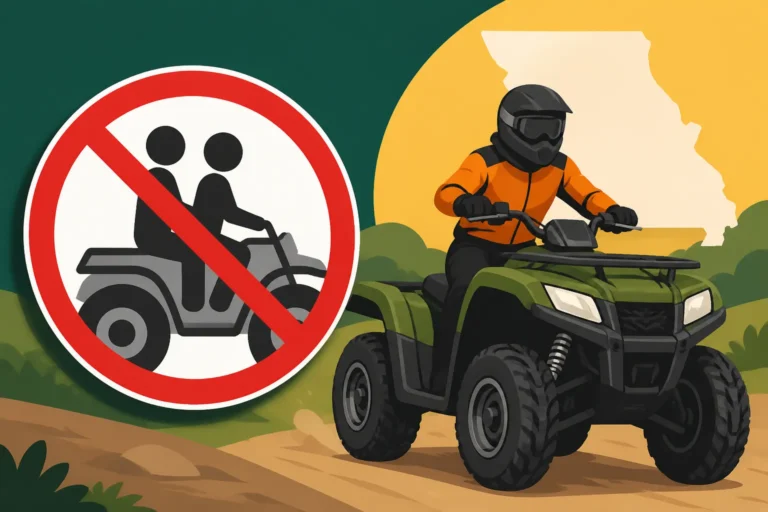
| Passengers | Generally restricted unless machine designed for 2 | Often permitted if machine designed for 2 or more | Permitted if machine designed for capacity |
| Helmets | Missouri helmet law for riders under 18 applies | Missouri helmet law for riders under 18 applies | Missouri helmet law for riders under 18 applies |
Disclaimer
This article is for general informational purposes only and does not constitute professional advice. Laws, prices and regulations vary by location and change over time. Consult a qualified professional for guidance on your specific situation.