Missouri Rules for Riding a Subdivision Street
It can be incredibly frustrating to own an ATV or UTV and feel like your riding options are limited to trails or private land, especially when you just want to take a quick spin down your own subdivision street to a neighbor's house or the local store. Many folks in Missouri scratch their heads trying to figure out if it's even allowed, given the often-confusing state laws. This guide will walk you through the nuances of riding your machine on subdivision streets in Missouri, explaining where the power lies and what steps you might need to take.
Understanding Missouri's General Stance on ATVs and UTVs on Roads
Missouri law has a very particular way of looking at off-highway vehicles (OHVs), and it’s not always what people expect. When it comes to public roads, including those quiet streets in your subdivision, the state generally takes a pretty conservative stance. It’s not a free-for-all, and simply owning an ATV or UTV doesn't automatically grant you road privileges.
The Core Distinction: ATVs vs. UTVs/ROVs
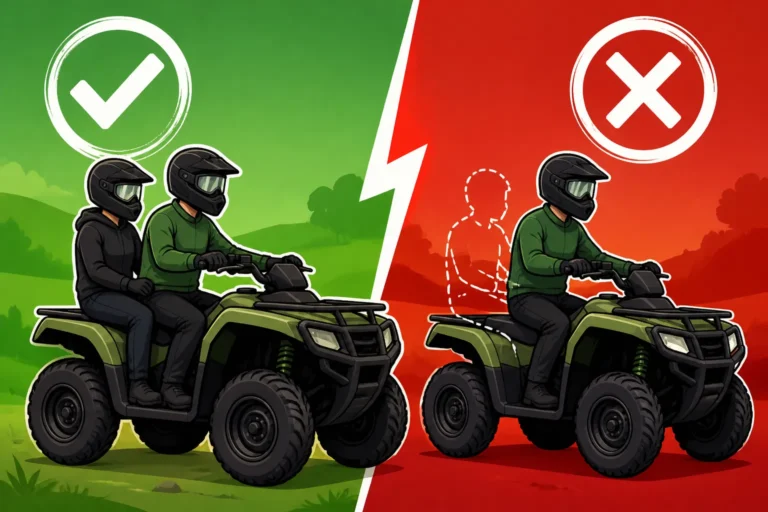
First, it’s crucial to understand that Missouri law makes a pretty big distinction between what it calls an "all-terrain vehicle" (ATV) and a "recreational off-highway vehicle" (ROV), which many of us commonly refer to as a utility terrain vehicle (UTV) or side-by-side. ATVs are typically designed for a single rider, with a straddle seat and handlebars, while ROVs have side-by-side seating, a steering wheel, and roll-over protection. This distinction isn't just academic; it directly impacts what, if any, road use might be permitted.
For the most part, traditional ATVs are quite restricted on Missouri roads. State law generally prohibits their use on public roads unless specifically exempted for things like agricultural purposes or during emergencies. This means that if you have a quad, even a large one, the likelihood of riding it legally on a subdivision street is much lower than if you have a UTV. The state just doesn't see them as suitable for shared road use in the same way. This is why you'll often see distinct rules for each type of machine. If you're wondering [Why Missouri Splits ATVs, UTVs and ROVs], it really comes down to their design and perceived safety on paved surfaces with other traffic.
Why Street Legal Is Rarely Simple
The idea of making your ATV or UTV "street legal" can be a bit of a mirage in Missouri, especially if you're thinking of statewide road access. While there are plenty of aftermarket parts, like turn signals, mirrors, and horns, that can make your machine look like it belongs on the road, these additions alone don't automatically grant you permission to ride on public streets across the entire state. Missouri law doesn't have a broad, all-encompassing "street legal" category for these vehicles in the way some other states might.
Instead, road use for UTVs (and in very limited cases, ATVs) in Missouri is often a patchwork of specific exceptions, agricultural allowances, or, most commonly for subdivision streets, local ordinances. This means that while a great LED light bar from SuperATV might make your machine more visible, it doesn't bypass the fundamental legal framework. Many riders get caught out by this, investing in upgrades only to find they still can't legally ride where they want. It’s a common frustration to see people riding on roads in one town, only to be told it’s illegal in the next.
Local Control: How Subdivision Streets Become Accessible (or Not)
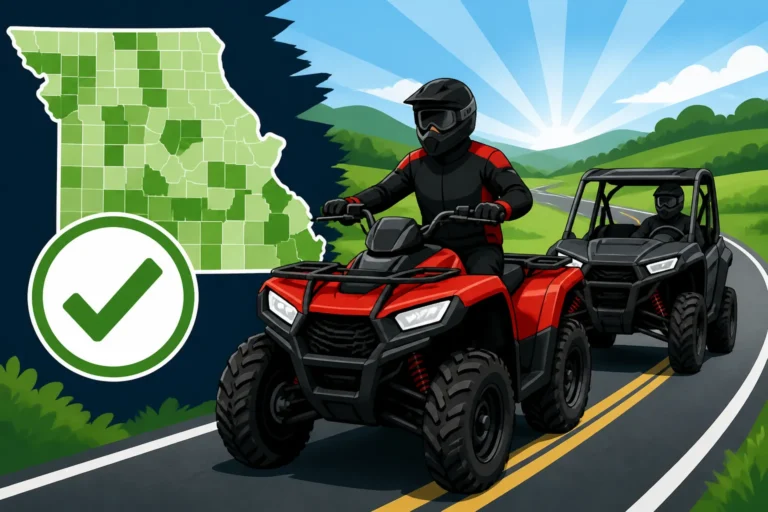
This is where the rubber meets the road, quite literally. When it comes to subdivision streets, the power to permit ATV or UTV use largely rests with your local city or county government. Missouri state law allows cities and counties to enact ordinances that open up certain streets to these vehicles, provided they meet specific criteria. This means your ability to cruise through your neighborhood might depend entirely on where you live and what your local elected officials have decided.
The Role of City and County Ordinances
Many Missouri towns and counties have recognized the growing popularity of UTVs and the desire of residents to use them for short trips within their communities. In response, local governing bodies – your city council or county commission – can pass ordinances that permit the operation of UTVs (and sometimes ATVs, though less commonly) on specified public roads within their jurisdiction. These ordinances are the key to unlocking subdivision street access. Without a local ordinance specifically allowing it, even your quiet cul-de-sac technically remains off-limits according to state law for most OHVs.
The process usually involves public discussion, sometimes a vote, and then the creation of a formal local law. These ordinances will specify which roads are open (often all but state highways), what kind of vehicles are permitted, who can operate them, and what equipment is required. For example, some cities in the Lake of the Ozarks region, like Lake Ozark itself, have embraced UTV use on their streets, allowing residents and visitors to drive their machines to restaurants and shops. You'll find many [Missouri Cities That Allow UTVs on Streets], but the rules can vary significantly from one town to the next.
Common Requirements for Local Road Use Permits
If your city or county has an ordinance allowing UTVs on subdivision streets, you'll almost certainly need to obtain a local permit. This isn't the same as state registration, but it's equally important for legal operation within that specific municipality. While requirements can vary, here are some common elements you'll likely encounter:
- Proof of Insurance: Most ordinances will require you to carry liability insurance for your UTV. This makes sense, as you'll be sharing the road with cars and trucks, and accidents can happen. It's a fundamental safety net for everyone.
- Valid Driver's License: The operator of the UTV will almost always need a valid driver's license, often an operator's or chauffeur's license, just as if they were driving a car. [Missouri Driver's License Rules for ROVs] are clear on this for any road use.
- Safety Equipment: This is where those aftermarket upgrades really come into play. Local ordinances often mandate specific safety features:
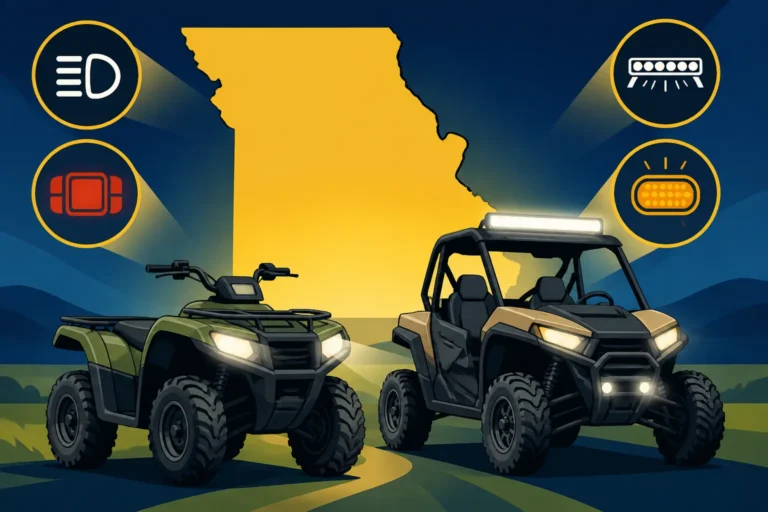
- Headlights and Taillights: Essential for visibility, especially around dawn, dusk, or in inclement weather.
- Brake Lights and Turn Signals: Crucial for communicating your intentions to other drivers. Many riders turn to brands like SuperATV for reliable lighting kits that meet these requirements.
- Horn: To alert pedestrians or other drivers.
- Mirrors: Usually at least one rearview mirror, and often side mirrors, to ensure you can see traffic around you.
- Safety Flag: Some ordinances, echoing state park rules or the [Missouri Safety Flag Requirements] for certain road uses, require a brightly colored flag mounted at a specific height (often 7 feet) to increase visibility. This is particularly important for smaller machines or those that might be obscured by larger vehicles.
- Seatbelts and Roll Bars: For UTVs, these are typically standard factory equipment and are often mandated by local ordinances to be present and functional, aligning with [Missouri Seat Belt Rules in a Side-by-Side] and [Missouri Roll Bar Requirements].
- Decal or Sticker: Upon successful application and inspection (if required), the city will often issue a special decal or sticker that you must display on your UTV, signifying that you have a valid local permit.
You might also hear about Missouri's specific "3-Mile Rule." This rule, found in state statute, allows a Recreational Off-Highway Vehicle (ROV) to be operated on a street or highway that is not a state or federal highway for a distance of up to three miles from the operator's residence to access a place of business, provided specific conditions are met (like having a valid driver's license, insurance, and proper lighting). However, this rule is often supplemented or superseded by more specific local ordinances when it comes to general subdivision street access beyond that very limited scope. It's important to understand the [Missouri 3-Mile Rule Explained] and how it might or might not apply in your specific situation, as it's not a blanket pass for joyriding on all local streets.
Obtaining a Local Permit
The process for getting a local permit for your UTV or ATV (if allowed) is usually straightforward, but it requires a bit of legwork.
- Check Your Local Laws: The absolute first step is to contact your city clerk's office, police department, or county sheriff's office. Ask if there's an ordinance in place that allows UTVs or ATVs on public streets. If there isn't, then unfortunately, riding on those streets is likely prohibited.
- Gather Documentation: If an ordinance exists, they'll tell you what's needed. This will typically include your driver's license, proof of insurance, and possibly the vehicle's title or bill of sale.
- Complete the Application: Fill out any required application forms.
- Pay the Fee: There will almost certainly be a permit fee. This fee varies widely by municipality; it could be a small annual charge or a slightly larger one for a multi-year permit. This money often goes towards administrative costs or even local trail maintenance. If you're looking for guidance on this, a good resource might be [Missouri Special Permit Cost for ATVs] for general context, though UTV permits are more common.
- Vehicle Inspection: Some cities or counties require a physical inspection of your machine to ensure it meets all the safety equipment requirements of their ordinance. This is where having those functional headlights, taillights, horn, and mirrors (perhaps from SuperATV) will pay off. An officer might check for things like working brake lights and the presence of a safety flag mast.
- Receive Your Permit: Once everything is in order, you'll be issued a permit, often in the form of a sticker or decal to place on your machine. This permit is your official permission slip to ride on the designated local streets. You might typically [Get a Road Permit From a Police Department] or city hall.
Practical Realities and Common Pitfalls
Even with local ordinances, navigating the rules for riding an ATV or UTV on subdivision streets can present challenges. It's not always as simple as getting a permit and hitting the road.
Navigating Different Local Rules
One of the biggest headaches for riders in Missouri is the sheer variability of local rules. A permit from City A might be completely invalid just across the county line in City B. What’s allowed in a rural county might be strictly prohibited in a more densely populated suburban town. This can lead to confusion and inadvertent violations if you’re not vigilant. Imagine living in a subdivision that straddles two different town jurisdictions – you might be legal on one side of your street but illegal on the other!
Because there's no statewide "street legal" designation for general ATV/UTV use, every city and county is essentially operating under its own rules once they decide to open up their roads. This means that if you plan to ride your UTV in multiple municipalities, you'll need to research and potentially acquire permits from each one. Don't assume that because your machine has a permit in Harrisonville, you can automatically ride it legally in Lake Ozark, for instance. Always check the specific ordinance for the area you intend to ride.
Crossing State Highways and Main Roads
Even if your local subdivision streets are open to UTVs, it's highly unlikely that state highways or federal routes running through or near your town will be. Missouri state law remains very restrictive on these major thoroughfares. Local ordinances typically cannot override state law regarding state-maintained roads. This means you usually cannot legally ride your UTV down a state route to get from one part of your town to another, even if both parts are accessible via local streets.
Exceptions for crossing these roads typically exist, often at a 90-degree angle, to get from one permitted local road to another, but not for traveling any distance along the state highway. Agricultural use is another major exception, allowing farmers to use OHVs on certain roads during specific times for farm-related activities. Always verify these details with local authorities. Getting caught riding illegally on a state highway can lead to significant penalties.
Penalties for Non-Compliance
Ignoring the rules, whether intentionally or out of ignorance, can lead to real consequences. Operating an ATV or UTV on a public road where it's not permitted, or without the necessary local permit and equipment, can result in:
- Traffic Citations and Fines: You could receive a ticket with a monetary fine, similar to any other traffic violation. The cost of these fines can vary, but they're often substantial enough to make you wish you'd checked the rules first. [Missouri Fines for Illegal ATV Road Use] can add up quickly.
- Machine Impoundment: In some cases, law enforcement might impound your machine, leading to additional towing and storage fees on top of the fine. Retrieving an impounded vehicle is rarely a pleasant or cheap experience.
- Insurance Issues: If you're involved in an accident while riding illegally, your insurance company might deny coverage, leaving you personally liable for damages and injuries. This is a huge risk and a compelling reason to ensure you're always riding within the bounds of the law.
Law enforcement officers, whether city police or county sheriff's deputies, are generally well-versed in their local ordinances regarding UTVs and ATVs. They can and will enforce these rules to ensure public safety and adherence to local laws.
Specific Examples of Missouri Municipalities and Their Rules
While it's impossible to list every city and county in Missouri, many have adopted ordinances to address the growing popularity of UTVs and side-by-sides. These examples show the variety of approaches.
What to Look For in a Local Ordinance
When you contact your local city or county, you'll want to specifically ask about key aspects of their ordinance. This table summarizes what you're looking for:
| Ordinance Feature | Description | Why it matters |
|---|---|---|
| Vehicle Type | Does it permit ATVs, UTVs, or both? | Crucial for knowing if your machine is allowed. UTVs are far more commonly permitted. |
| Permit Requirement | Do you need a special permit? What's the cost and duration? | Essential for legal operation; don't ride without it. |
| Permit Issuing Body | Is it the Police Department, City Hall, or Sheriff's Office? | Tells you where to apply and who to contact. |
| Equipment Mandates | Are specific lights, horn, mirrors, flag, seatbelts, or roll bars required? | You might need to add accessories (like from SuperATV) or ensure existing ones are functional. |
| Operator Age/License | What age is required? Is a valid driver's license necessary? | Ensures you (or anyone operating the machine) meet the legal age and licensing standards. |
| Approved Roads | Which streets are open? Are state routes excluded? | Defines your legal riding area; often excludes state and federal highways. |
| Hours of Operation | Are there time restrictions (e.g., no riding between sunset and sunrise)? | Limits when you can legally ride, especially important for night riding. |
| Speed Limits | Are there specific speed limits for OHVs on local streets, often lower than the posted car limit? | Important for safety and avoiding tickets; may be 25 mph or less in residential areas. |
| Insurance Proof | Is proof of liability insurance required? | Non-negotiable for protecting yourself and others in case of an accident. |
| Penalties | What are the fines or other consequences for violations? | Motivates compliance and highlights the risks of riding illegally. |
For instance, some communities around the Lake of the Ozarks, like Lake Ozark, have comprehensive ordinances that allow UTVs on most city streets, often with a permit fee and specific safety requirements like lights, flags, and proof of insurance. Other towns, like Harrisonville in Cass County, have also adopted measures to allow UTVs on certain municipal roads, often requiring a permit from the police department after an inspection. Cass County itself has had discussions about county-wide ordinances for UTVs on county roads, which would impact many rural subdivision streets outside city limits.
It’s crucial to remember that these ordinances are dynamic. They can be amended, new ones can be passed, or old ones repealed. Therefore, it's always best practice to check with your specific local government for the most current and accurate information before you venture out on your subdivision street.
Riding your ATV or UTV on a subdivision street in Missouri isn't a simple yes or no answer. It's a nuanced situation heavily dependent on your local city or county government. While state law is generally restrictive, many communities have carved out exceptions through specific ordinances for UTVs. Doing your homework, understanding the requirements for a local permit, and ensuring your machine meets all safety mandates is the only way to enjoy your ride legally and safely. Always reach out to your local city hall or sheriff's office to get the definitive word for your specific neighborhood.
Disclaimer
This article is for general informational purposes only and does not constitute professional advice. Laws, prices and regulations vary by location and change over time. Consult a qualified professional for guidance on your specific situation.