Insurance Missouri Requires on a Street
It's incredibly frustrating when you just want to take your ATV or UTV down the road for a short jaunt to a friend's house, or even to the nearest gas station, only to be met with a confusing maze of rules about what's "street legal" and, more importantly, what kind of insurance you absolutely need. Many riders assume that because their machine isn't a car, the same insurance rules don't apply, but in Missouri, that couldn't be further from the truth when you're on public asphalt. This guide will walk you through the specific insurance requirements Missouri demands when you venture onto a public street with your off-highway vehicle, helping you avoid costly fines and devastating personal liability.
Understanding Missouri's Stance on Off-Road Vehicles on Streets
Missouri's approach to off-road vehicles (ORVs) like ATVs and UTVs on public streets can feel like a riddle wrapped in an enigma. On one hand, the state generally considers these machines exactly what their name implies: off-road vehicles, not designed or intended for highway use. On the other hand, there are specific, albeit limited, pathways that allow these powerful machines to touch public pavement. Understanding this fundamental distinction is the first step in unraveling the insurance puzzle.
The General Rule: Off-Road Means Off-Road
At its core, Missouri law classifies ATVs, UTVs, and Recreational Off-Highway Vehicles (ROVs) as machines built for trails, fields, and private land. They are designed for rugged terrain, not for cruising down Main Street at 45 mph alongside cars and trucks. This is why you won't see a standard license plate on most ATVs, and why the state opts for a [Missouri's Three-Year ATV Decal] system instead of full vehicle registration. The intention behind this classification is safety; ORVs often lack the turn signals, rearview mirrors, braking systems, and crash protection features that are standard on street-legal vehicles. Attempting to treat them as such without proper authorization and modifications is not only illegal but extremely dangerous. Many riders have learned this the hard way, thinking a quick hop to the store wouldn't matter, only to find themselves pulled over and cited for illegal road use.
The Nuance of Missouri's Laws: ATVs vs. UTVs vs. ROVs
Missouri's legal definitions also play a critical role in how these machines are treated, particularly when it comes to road use and subsequent insurance needs. An All-Terrain Vehicle (ATV) is typically defined by its straddle seat and handlebars, designed for a single rider or, in some cases, a specific two-up model. A Utility Vehicle (UTV) and a Recreational Off-Highway Vehicle (ROV), often called "side-by-sides," are generally defined by their non-straddle seating, steering wheel, and roll-over protection system (ROPS). While UTVs and ROVs are structurally very similar, the legal distinction often comes down to specific dimensions, intended use, and how state or local ordinances choose to categorize them.
This distinction is crucial because when Missouri does allow some road use, it's almost exclusively geared towards ROVs/UTVs, not traditional ATVs. This is the basis of [Missouri's 3-Mile Rule for Side-by-Sides] and special local permits. The state recognizes that these machines, with their steering wheels, seatbelts, and roll cages (often enhanced with aftermarket safety cages from companies like SuperATV), bear a closer resemblance to small cars than a quad does, making them marginally more adaptable for limited road operation. This means your insurance considerations will differ significantly depending on whether you're riding an ATV or a UTV/ROV.
Why Street Legal Isn't Standard Issue in Missouri
The core reason why ATVs and UTVs aren't street legal "out of the box" in Missouri boils down to safety and regulatory design. Automobile manufacturers adhere to strict federal motor vehicle safety standards (FMVSS) for everything from crashworthiness to lighting, tires, and emissions. ORV manufacturers, conversely, build to different standards because their products are intended for off-road environments where those specific federal highway standards don't apply.
This regulatory gap means that simply adding a turn signal kit or a horn isn't enough to magically transform an ORV into a street-legal vehicle from the state's perspective. The very chassis, suspension, and braking systems are designed for different forces and uses. Furthermore, the state maintains a clear separation in how these vehicles are titled and registered. ATVs get a decal and a title, but no full registration that would allow unlimited road access. Utility vehicles, under the general definition, often don't even require a state decal, highlighting their intended complete separation from public roadways unless specific, narrow exceptions are met. This foundational perspective from the state impacts every other aspect of road use, including the critical need for insurance.
When Insurance Becomes a Must-Have: Local Ordinances and Special Permits
For the vast majority of Missouri, taking your ATV or UTV onto a public street is prohibited. However, there are specific, limited circumstances where local municipalities or counties have carved out exceptions. These exceptions almost universally come with a non-negotiable requirement: proof of insurance. This isn't just a suggestion; it's a mandatory prerequisite for legal road operation.
The Gateway to Road Use: City and County Permits
The primary way an ORV can legally operate on a public street in Missouri is through a special permit issued by a city or county. These permits are not uniform across the state; each municipality decides for itself whether to allow ORV use on its streets and under what conditions. [Missouri Cities That Allow UTVs on Streets] have generally passed local ordinances that define permissible areas, times, and vehicle requirements. This is where your UTV might gain limited street access.
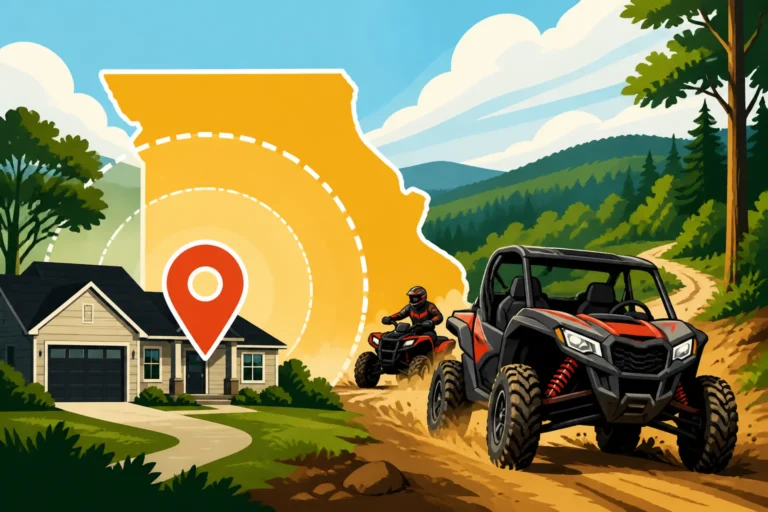
For example, a city might allow UTVs on all city streets with a speed limit under 45 mph, or perhaps only on specific roads within a 3-mile radius of the owner's residence. These permits usually require an application process, a fee, and a commitment to adhere to local rules regarding hours of operation, safety equipment (like flags, headlights, and seatbelts), and crucially, insurance. Without a valid local permit, even if your UTV is decked out with every conceivable road-legal accessory, you are still operating illegally on city or county roads.
The Implicit Requirement: Insurance as a Condition of a Permit
It’s absolutely critical to understand that if a city or county issues a [Missouri's Special Permit for Road Use] for your UTV, they will almost certainly require proof of financial responsibility, typically in the form of liability insurance. This isn't just a state rule that happens to apply; it's a condition set forth by the local ordinance itself. The municipality is essentially saying, "We will allow you to operate this off-road vehicle on our streets, but only if you can demonstrate you can cover damages if you cause an accident." This protects the city, its residents, and you from catastrophic financial burden.
This requirement often mirrors the state's mandatory insurance laws for automobiles, even though the vehicle itself isn't a "motor vehicle" in the traditional sense. It's a pragmatic approach to mitigate risk. Before you even think about applying for one of these permits, contact your insurance provider to see if they offer coverage for street-legal UTV operation, or be prepared to shop around. Without that policy in place, your permit application will likely be rejected, or your permit could be revoked.
What a Missouri Deputy Checks on a Road-Legal ROV
When a law enforcement officer, whether a city police officer, county sheriff's deputy, or Missouri State Highway Patrol trooper, spots a UTV or ATV on a public road, their immediate assumption is that it's operating illegally. If you are operating under a valid local ordinance and special permit, you need to be prepared to demonstrate that instantly. [What a Missouri Deputy Checks on a Road-Legal ROV] will almost certainly include proof of your local permit and, without a doubt, proof of insurance.
Imagine this scenario: you're driving your side-by-side to a local gas station, legally, under your city's ordinance. A deputy pulls you over. They'll want to see your driver's license (because operating a UTV on the road typically requires a valid operator's license, as per [Missouri Driver's License Rules for ROVs]), your local permit, and your current insurance card. They'll also be checking for compliance with any specific equipment requirements of the local ordinance, such as headlamps, tail lamps, turn signals, seatbelts, and potentially a safety flag. If any of these items are missing, or if you can't produce proof of insurance, you could face tickets for illegal operation, or worse, for operating an uninsured vehicle, which carries significant penalties in Missouri. Always carry the physical proof, or a reliable digital copy, of your insurance policy, just as you would for your car.
What Kind of Insurance Does Missouri Expect for Road Use?
When a Missouri city or county grants a special permit for an off-road vehicle to operate on its streets, the insurance requirement isn't usually some vague idea of "having insurance." It typically means specific liability coverage, designed to protect others from damages or injuries you might cause. This isn't your standard ATV trail riding policy; it needs to be robust enough to handle the risks of sharing the road with cars, trucks, and pedestrians.
Liability: The Bare Minimum for Street Legal Operation
The foundational type of insurance required for street-legal ORV operation in Missouri is liability coverage. Just like with automobiles, liability insurance protects you financially if you're at fault in an accident that causes bodily injury to another person or damage to their property. This is about protecting other people and their stuff from your machine. It typically does not cover damages to your own ATV or UTV.
Missouri has mandatory minimum liability limits for conventional motor vehicles, which are often adopted or referenced by local ordinances allowing ROV street use. While specific dollar amounts can vary and you should always check the most current figures from your insurance provider and local municipality, these typically include:
- Bodily Injury Liability: Coverage for injuries sustained by others in an accident where you are at fault.
- Property Damage Liability: Coverage for damage to other people's property (e.g., their car, a fence, a mailbox) in an accident where you are at fault.
These limits are the legal minimum, and savvy riders often opt for higher limits to provide greater financial protection in the event of a serious accident. Imagine hitting a brand-new pickup truck or causing a multi-car pileup; the damages can quickly exceed minimum coverage, leaving you personally responsible for the rest. This minimum liability is the absolute cornerstone of [Missouri ATV Insurance Requirement] when you take your machine to the street.
Distinguishing ATV/UTV Policies from Car Insurance
It's a common misconception that if you have car insurance, it might automatically cover your ATV or UTV for road use. This is almost never the case. Automobile insurance policies are specifically designed for vehicles that meet federal motor vehicle safety standards and are registered for highway use. ATVs and UTVs, even those with street-legal modifications and local permits, fall outside this category.
You need a specialized ATV/UTV insurance policy. These policies are designed to cover the unique risks associated with off-road vehicles. When you're seeking coverage for street use, you need to be very explicit with your insurance agent. Many standard off-road policies might cover you on trails or private property, but explicitly exclude any operation on public roads unless specifically endorsed for street-legal use.
When speaking with an agent, be sure to:
- State your intention clearly: "I need coverage for my UTV to operate on public streets under a city/county ordinance."
- Describe your machine accurately: Provide make, model, year, and any factory or aftermarket modifications that help it meet road-legal requirements (e.g., SuperATV's signal kits, mirrors, windshields).
- Specify the nature of the permitted use: Explain it's limited local road use, not highway travel.
Not all insurance carriers offer this specialized "street-legal ORV" endorsement, so you might need to shop around with companies that specialize in powersports insurance.
How Policy Limits Work in the Off-Road World
Understanding policy limits is crucial for anyone venturing onto public roads with an ORV. Policy limits define the maximum amount your insurance company will pay out for a covered loss. For liability, these are typically expressed as three numbers, for example, 25/50/25.
- The first number (e.g., $25,000) is the maximum paid for bodily injury to one person in an accident.
- The second number (e.g., $50,000) is the maximum paid for total bodily injury to all people in one accident.
- The third number (e.g., $25,000) is the maximum paid for property damage in one accident.
If the damages exceed these limits, you are personally responsible for the remainder. This is why choosing higher limits, even beyond the minimum required by a local ordinance, is often a wise financial decision. An accident involving a pedestrian, another vehicle, or serious property damage can easily lead to claims far exceeding the basic minimums. While the state's minimums for cars might seem low enough, the unique exposure of an ORV on the road, with its different handling characteristics and open design, often warrants a closer look at more robust coverage. Don't just settle for the lowest possible amount; consider what you truly stand to lose if things go wrong.
Navigating the Insurance Landscape: Finding the Right Policy
Finding the right insurance policy for your street-legal ATV or UTV in Missouri can feel like a quest, especially since it's not as straightforward as insuring a car. Not every carrier offers the specific type of coverage you need for legally operating an ORV on public streets under a local permit. This section will guide you through the process of finding, asking about, and securing appropriate coverage.
Shopping Around for Off-Road Vehicle Insurance
Because street-legal ORV insurance is a niche product, your first stop shouldn't necessarily be your auto insurance provider, though it's always worth asking if they offer powersports policies. You'll likely have better luck with insurance companies that specialize in motorcycles, boats, and other recreational vehicles. These companies are more familiar with the unique risks and regulations surrounding ATVs and UTVs.
Here's a strategy for shopping around:
- Start with Powersports Specialists: Look for major carriers known for their motorcycle and ATV/UTV insurance lines. These companies often have agents who are well-versed in the specifics of off-road vehicle coverage, including endorsements for limited street use.
- Local Agents: An independent insurance agent in your area who deals with multiple carriers might be your best resource. They can shop different policies on your behalf and find carriers willing to underwrite street-legal ORV use in your specific Missouri municipality. They'll also be familiar with local ordinances and their corresponding insurance requirements, such as those that specify [Proof of Insurance Under a Missouri Ordinance].
- Online Quotes: While convenient, online quote tools might not always capture the nuances of street-legal ORV coverage. Use them as a starting point, but always follow up with a phone call to a licensed agent to confirm that the policy quoted specifically covers public road use under a municipal permit, and not just off-road riding.
Be prepared to discuss not just the make and model of your machine, but also the specific local ordinance you plan to operate under, the type of roads (e.g., city streets, county roads), and any modifications you've made to comply with street-legal requirements, such as adding turn signals, mirrors, or a horn.
What an Insurer Asks About a Quad or UTV
When you call an insurance company, they'll have a specific set of questions to determine your eligibility and premium. For an ORV, these questions go beyond what they'd ask for a car. [What an Insurer Asks About a Quad] (or UTV) often includes:
- Vehicle Information: Make, model, year, VIN, engine size. This is standard.
- Usage: Where and how often do you ride? Is it purely recreational, or do you use it for farm work? Critically, will it be operated on public roads?
- Modifications: Have you installed any aftermarket parts? If you've modified your UTV for street legality with items like LED light bars, mirrors, or a windshield, mention these. Some insurers might require certain safety modifications to be in place. If you've upgraded with robust parts from a brand like SuperATV, make sure to disclose these, as they may impact the value and the coverage you need.
- Storage: Where is the vehicle stored when not in use (garage, shed, outside)?
- Riding Experience: Your age, driving record, and any previous accidents or claims.
- Permit Status: Do you have, or are you applying for, a specific city or county permit for street use? This is a key piece of information that will dictate the type of coverage required.
Be completely honest and thorough in your answers. Misrepresenting how you use your ORV, especially regarding street operation, could lead to a claim being denied, leaving you on the hook for all damages.
Common Stumbling Blocks to Getting Coverage
While finding street-legal ORV insurance is possible, it's not always easy. Here are some common hurdles you might encounter:
- Limited Carriers: Not all insurance companies offer this niche product. You might get a few "no, we don't cover that" responses before finding a suitable provider.
- Specific Exclusions: Many standard ATV/UTV policies explicitly exclude coverage for operation on public roads. You need an endorsement or rider specifically for this. Make sure your policy documents clearly state coverage for street use under a municipal permit.
- High Premiums: Because of the increased risk of operating an ORV on public roads, premiums might be higher than a pure off-road policy. Insurers consider the potential for higher-speed collisions, interaction with more traffic, and greater injury potential.
- Vehicle Requirements: Your ORV must meet specific safety equipment requirements mandated by the local ordinance (e.g., headlights, taillights, turn signals, brake lights, horn, mirrors, seatbelts, DOT-approved tires). If your machine doesn't have these, or if they're not up to par, an insurer might decline coverage until you've made the necessary upgrades. This is where quality aftermarket parts can be essential.
- Geographic Restrictions: Some policies might only cover street use within specific counties or cities where the permits are valid, so ensure your intended riding area is covered.
Don't get discouraged if the first few calls don't yield results. Patience and persistence, along with clearly communicating your needs, will eventually lead you to the right policy.
The Risks of Riding Uninsured on Missouri's Roads
Riding your ATV or UTV on Missouri's public roads without the legally required insurance (when a permit dictates it) is an incredibly risky gamble. The consequences aren't just a slap on the wrist; they can be financially devastating and lead to legal trouble, turning a fun ride into a costly nightmare. Missouri takes its mandatory insurance laws seriously, and while the context for ORVs is slightly different than for cars, the penalties for non-compliance are still severe.
Penalties for Lacking Required Insurance
If you're caught operating your UTV on a Missouri street under a local permit that requires insurance, and you don't have it, you're looking at a ticket for operating an uninsured motor vehicle. While an ORV isn't a "motor vehicle" in all contexts, for the purpose of municipal road permits and the financial responsibility they demand, it effectively falls under similar mandatory insurance provisions.
The penalties for operating an uninsured vehicle in Missouri can include:
- Significant Fines: These can range from hundreds to potentially thousands of dollars. [Missouri Fines for Illegal ATV Road Use] often start with the initial citation, but additional fines for lack of insurance can stack on top.
- License Suspension: Your driver's license (which is often required to operate a street-legal UTV anyway) can be suspended. This means you wouldn't be able to legally drive any vehicle, including your car, until the issue is resolved.
- Impoundment of Your Vehicle: In some cases, your ATV or UTV could be impounded, incurring towing and storage fees that quickly add up. You would then need to show proof of insurance to get it back, in addition to paying all associated fees and fines.
- Points on Your Driving Record: Lacking insurance typically results in points being added to your driving record, which can lead to higher insurance premiums for all your vehicles in the future.
These penalties are designed to deter uninsured driving, and they apply even if you didn't cause an accident. Simply being caught without the proper insurance is enough to trigger these consequences.
Financial Fallout from an Uninsured Accident
The legal penalties are just the beginning. The truly devastating risk of riding uninsured is the financial fallout if you are involved in an accident where you are at fault. If you cause bodily injury or property damage to another party, and you don't have liability insurance, you are 100% personally responsible for all costs.
Imagine these scenarios:
- Hitting a Car: You misjudge a turn on your UTV and collide with a parked car, or worse, another moving vehicle. The repairs to their vehicle, potential medical bills for any occupants, and legal fees could easily reach tens of thousands of dollars, or even hundreds of thousands if injuries are severe.
- Injuring a Pedestrian: A truly nightmare scenario, hitting a pedestrian can lead to massive medical expenses, lost wages, and pain and suffering claims that could bankrupt you.
- Property Damage: Swerving to avoid something, you crash into a fence, a lamppost, or someone's mailbox. You'd be liable for the cost of repair or replacement.
Without insurance, these costs come directly out of your pocket. This means your savings, your future earnings, and even your assets (like your home or other vehicles) could be at risk. The other party's insurance company will pursue you relentlessly to recover their costs, and if you don't have the funds, they can sue you, garnish your wages, or place liens on your property. This is the stark reality of the financial obligation required by [Missouri ATV Insurance Requirement] when you venture onto public streets.
Understanding Missouri's Mandatory Insurance Law
Missouri has a mandatory insurance law that requires all registered motor vehicles to carry a minimum amount of liability coverage. While ATVs and UTVs have a unique classification, when a local ordinance grants them street access, it essentially pulls them into the spirit, if not the letter, of this mandatory insurance framework. The local permit becomes the legal mechanism that triggers this requirement.
The intent behind mandatory insurance is to ensure that victims of accidents are not left without recourse. It socializes the risk of driving, ensuring that responsible parties can cover the damages they inflict. By requiring proof of insurance for street-legal ORVs, Missouri municipalities are extending this principle to a class of vehicles that typically don't fall under traditional motor vehicle registration. This means that ignorance of the law is no excuse. If you choose to ride on public streets where a permit and insurance are required, you are expected to comply fully, or face the severe consequences.
Beyond Basic Coverage: Considering Additional Protections for Street-Legal Rides
While liability insurance is the bare minimum for legally operating an ORV on Missouri streets under a local permit, it's often not enough to fully protect your investment. Your ATV or UTV is likely a significant purchase, and once you're on the road, it faces new risks that go beyond simply damaging someone else's property. Thinking about comprehensive, collision, and even uninsured motorist coverage can offer a much-needed layer of peace of mind.
Comprehensive and Collision for Your Valued Machine
Liability insurance, as we've discussed, covers damages you cause to others. But what about your own pride and joy? If your UTV is street-legal, it's likely a substantial investment. If it's damaged in an accident you cause, or stolen, or suffers non-collision damage, liability insurance won't pay a dime for your machine. This is where comprehensive and collision coverage come into play.
- Collision Coverage: This pays for damages to your own ATV or UTV if it collides with another vehicle or object (like a tree, a guardrail, or a ditch), regardless of who is at fault. If you're involved in an accident on a city street and your UTV is crumpled, collision coverage will help cover the repair or replacement costs, minus your deductible. This is incredibly important when you're sharing the road with much larger, heavier vehicles.
- Comprehensive Coverage: This protects your ORV from damages that aren't collision-related. Think about theft, vandalism, fire, natural disasters (like hail or floods, which can be a real concern in Missouri), or even hitting an animal. If your street-legal UTV is parked outside your house and gets stolen, or if a tree falls on it during a storm, comprehensive coverage is what steps in.
Given the cost of modern ATVs and UTVs, especially those upgraded for street use with quality parts, investing in both collision and comprehensive coverage is a smart move. It ensures that your investment is protected, whether you're on the trail or the road.
Protecting Your Investment in Accessories
Many riders, especially those modifying their machines for street use, invest heavily in aftermarket accessories. This could include winches, upgraded tires, light bars, a new roof, a sound system, or safety features like reinforced roll cages or windshields from reputable brands like SuperATV. These accessories can add thousands to the value of your ORV.
The critical thing to know is that standard comprehensive and collision policies often have limits on how much they'll pay for aftermarket accessories. If you've spent a lot on customizing your street-legal UTV, you'll want to:
- Itemize Your Accessories: Keep a detailed list of all aftermarket parts, their cost, and when they were installed.
- Inform Your Insurer: When getting your policy, disclose all significant accessories. Many policies offer specific endorsements or riders to increase the coverage limit for custom parts and equipment. Without this, your $500 winch or your custom sound system might only be covered for a fraction of its value, or not at all.
- Review Limits: Make sure the coverage limits for accessories are adequate to replace your investment. You don't want to find out after an accident that your insurer will only cover a few hundred dollars of modifications when you've invested thousands.
Protecting these upgrades is just as important as protecting the machine itself, especially since many street-legal modifications are necessary investments to comply with local ordinances.
Uninsured/Underinsured Motorist Coverage: Why It Matters
Even if you meticulously follow all rules and carry robust liability insurance, you can't control what other drivers do. What happens if an uninsured or underinsured driver hits you while you're legally operating your UTV on the street? Without specific protection, you could be left with significant medical bills and repair costs for your ORV, with no one to recover them from.
- Uninsured Motorist (UM) Coverage: This protects you if you're involved in an accident with a driver who has no insurance. It typically covers your medical expenses and, in some cases, property damage to your UTV.
- Underinsured Motorist (UIM) Coverage: This kicks in if an at-fault driver has some insurance, but their policy limits aren't high enough to cover all your damages and medical bills. UIM coverage would then pay the difference, up to your policy limits.
Given that Missouri has a significant number of uninsured drivers on its roads, adding UM/UIM coverage to your street-legal ORV policy is a highly recommended layer of protection. It's a small additional cost that can save you from immense financial strain if you're hit by someone who isn't playing by the rules. It's about protecting yourself from others' irresponsibility when you're out there riding.
Special Scenarios and Exceptions: Farm Use, Crossing Highways, and Dealer Machines
While the primary focus for street-legal insurance is typically on UTVs operating under local municipal permits, Missouri's laws offer a few other scenarios where ORVs might legally touch public roads. These situations have their own distinct rules and, crucially, varying implications for insurance. Understanding these exceptions is key to avoiding an unexpected run-in with law enforcement or a massive liability.
Agricultural Exemptions: When Farm Work Allows a Passenger on an ATV
Missouri law provides certain exemptions for ORVs used in agricultural operations. A farmer, for instance, might be allowed to operate an ATV or UTV on a public road for specific farm-related tasks, such as moving equipment between fields or hauling feed. This is often covered under [Missouri's Agricultural Highway Exception], which permits limited road use from sunrise to sunset for agricultural purposes. In some cases, this exception might even allow for a passenger on an ATV if it's necessary for farm work, deviating from the general rule of [Missouri Passenger Rules on an ATV].
However, "agricultural use" is not a blank check to ride anywhere at any time. It's usually restricted to specific roads (like county roads or less-trafficked state routes), specific distances, and during daylight hours. While the state doesn't typically mandate specific "farm ATV insurance" for these limited road excursions, the general principle of liability still applies. If a farmer operating their UTV or ATV for farm business causes an accident on a public road, they are still liable for any damages or injuries. Farm liability insurance or a specialized ORV policy that extends coverage to road use for agricultural purposes would be prudent. Relying solely on a homeowner's or farm policy might not provide adequate coverage for an on-road accident with an ORV. Always consult your insurance agent about specific farm vehicle coverage.
Crossing a Missouri Highway on a Quad: Brief Road Exposure
Another specific, limited exception allows ATVs and UTVs to cross a state highway. This isn't about riding on the highway; it's about traversing it to get from one section of private property to another, or from one trail to another. [Missouri Rules for Crossing a Highway] stipulate that the crossing must be done at approximately a 90-degree angle to the roadway, and the ORV operator must yield to all oncoming traffic. The intent is to allow for practical movement without enabling extensive road travel.
For these brief crossings, specific state-mandated insurance for the ORV is generally not required, as the vehicle isn't "operating" on the highway in the same sense as a licensed automobile. However, the operator is still responsible for any damage or injury caused during the crossing. If an ATV driver misjudges traffic and causes an accident while crossing, personal liability would still be a factor. Therefore, having a comprehensive ATV/UTV insurance policy that includes liability coverage, even if it's primarily for off-road use, is still highly advisable. This general liability could kick in if an accident occurs, protecting you from potentially ruinous costs.
Dealer Demos and Rental Fleets: Different Rules
The rules also often differ for ORVs owned by dealerships or rental companies.
- Dealer Demo Machines: When a dealership allows a potential buyer to test drive an ATV or UTV, even if it briefly touches a public road (where permitted), it's typically covered under the dealer's garage liability insurance policy. This is a commercial policy designed to cover incidents involving their inventory. Customers usually don't need their own personal insurance for these brief, supervised demonstrations.
- Rental Fleets: Similarly, ORVs rented from a commercial operation, perhaps near an ORV park or a lake resort, will generally be covered by the rental company's commercial insurance. However, renters are usually required to purchase a damage waiver or a limited liability policy from the rental company, which covers some costs but often comes with specific exclusions or high deductibles. Always read the rental agreement carefully to understand what you are and aren't covered for, and what your personal liability would be if an accident occurred.
These commercial scenarios highlight that whenever an ORV touches public pavement, regardless of ownership, the question of financial responsibility for potential accidents is paramount. The insurance mechanism simply shifts from personal policies to commercial ones.
Keeping Your Paperwork in Order: Proof of Insurance and Other Documents
You've done the hard work: you've secured a local permit and found the perfect insurance policy for your street-legal UTV. Congratulations! But your job isn't quite done. The final, crucial step is ensuring you have all the necessary documentation readily accessible whenever you're operating your machine on public roads. Getting pulled over for a quick check shouldn't turn into a citation because you left your critical papers at home.
What to Carry When You Ride on the Street
When you're riding your UTV on public roads under a special municipal permit in Missouri, consider your machine essentially a "mini-car" in terms of required documents. You need to carry proof of:
- Valid Driver's License: As mentioned in [Missouri Driver's License Rules for ROVs], most local ordinances require the operator to possess a valid driver's or chauffeur's license. This isn't something to leave in your wallet at home; it needs to be on your person.
- Local ORV Permit: The actual physical permit issued by the city or county is your permission slip to be on their streets. This often includes a decal to be displayed on your machine, but you should also carry the permit document itself.
- Proof of Insurance: Your insurance card or a copy of your policy declarations page is essential. This document proves you meet the liability requirements of the local ordinance. It's the tangible evidence of your [Missouri ATV Insurance Requirement].
- Vehicle Title or Registration (if applicable): While UTVs often don't have standard registration in Missouri, having your title or a copy available can confirm ownership if questions arise. ATVs, of course, will have their Missouri decal.
Finding a secure, waterproof spot on your UTV for these documents is vital. A small dry bag or a secure, waterproof compartment can protect them from the elements and ensure they're always there when you need them. Riding with loose papers tucked into a pocket is a recipe for disaster.
The Digital Age: Is a Phone Photo of Your Title Good Enough?
In our increasingly digital world, many states now accept digital proof of insurance on your smartphone. Missouri generally allows this for motor vehicles, and this acceptance often extends to ORVs operating under local street-legal permits. A clear, readable photo of your current insurance card on your phone should be acceptable.
However, a few caveats apply:
- Battery Life: Your phone won't help if its battery dies or if you have no signal in a remote area.
- Damaged Phone: If your phone is damaged in an accident, you won't be able to access the proof.
- Other Documents: While digital insurance proof is often accepted, a physical copy of your local ORV permit and your driver's license will always be preferred, and in the case of your license, required.
For maximum peace of mind, it’s still wise to carry a physical copy of your insurance card and permit in addition to a digital version. This redundancy ensures you're covered no matter the circumstance. For documents like your title, a clear photograph on your phone is usually sufficient for identity verification, but the physical title should be kept in a safe place, not on your machine. [Where to Keep an ATV Title Safe at Home] is usually a locked firebox or safe.
Keeping Your Permit and Insurance Current
Just like with your car, your ORV permit and insurance policy have expiration dates. It's easy to forget about an annual permit or a three-year decal, especially when you're busy enjoying the ride.
- Permit Renewals: Local ORV permits usually need to be renewed annually. Pay attention to the expiration date and process your renewal well in advance to avoid any lapse in legal street operation.
- Insurance Renewals: Insurance policies are typically renewed every six months or annually. Your insurance provider will send you renewal notices, but it's ultimately your responsibility to ensure continuous coverage. A lapse in insurance, even for a day, could leave you exposed to penalties and financial risk if you operate your ORV on public streets.
Set reminders on your calendar or phone for both your permit and insurance renewal dates. A proactive approach will save you from potential headaches, fines, and the catastrophic costs of riding uninsured. When you adhere to all these requirements, you're not just following the law; you're contributing to a safer riding environment for everyone.
| Document Type | Required for Street-Legal ORV Use | Best Practice for Carrying | Notes |
|---|---|---|---|
| Driver's License | Yes | Physical on Person | Required for operator by most ordinances. |
| Local ORV Permit | Yes | Physical on Machine/Person | Essential proof of legal street access. Display decal if provided. |
| Proof of Insurance | Yes | Physical Card & Digital Photo | Critical for liability; digital often accepted, but physical is safer backup. |
| Vehicle Title | No (Keep at home) | Digital Photo (Optional) | Not required on person, but a photo can help with ownership verification. |
| VIN | Yes (on machine) | Visible on Vehicle | Always needed for law enforcement to identify your machine. |
| Any Specific Safety Cert | Varies by ordinance | Physical on Machine/Person | Check local ordinance for helmet laws, flag requirements, etc. |
Disclaimer
This article is for general informational purposes only and does not constitute professional advice. Laws, prices and regulations vary by location and change over time. Consult a qualified professional for guidance on your specific situation.