A Missouri Deputy at a Roadside Stop
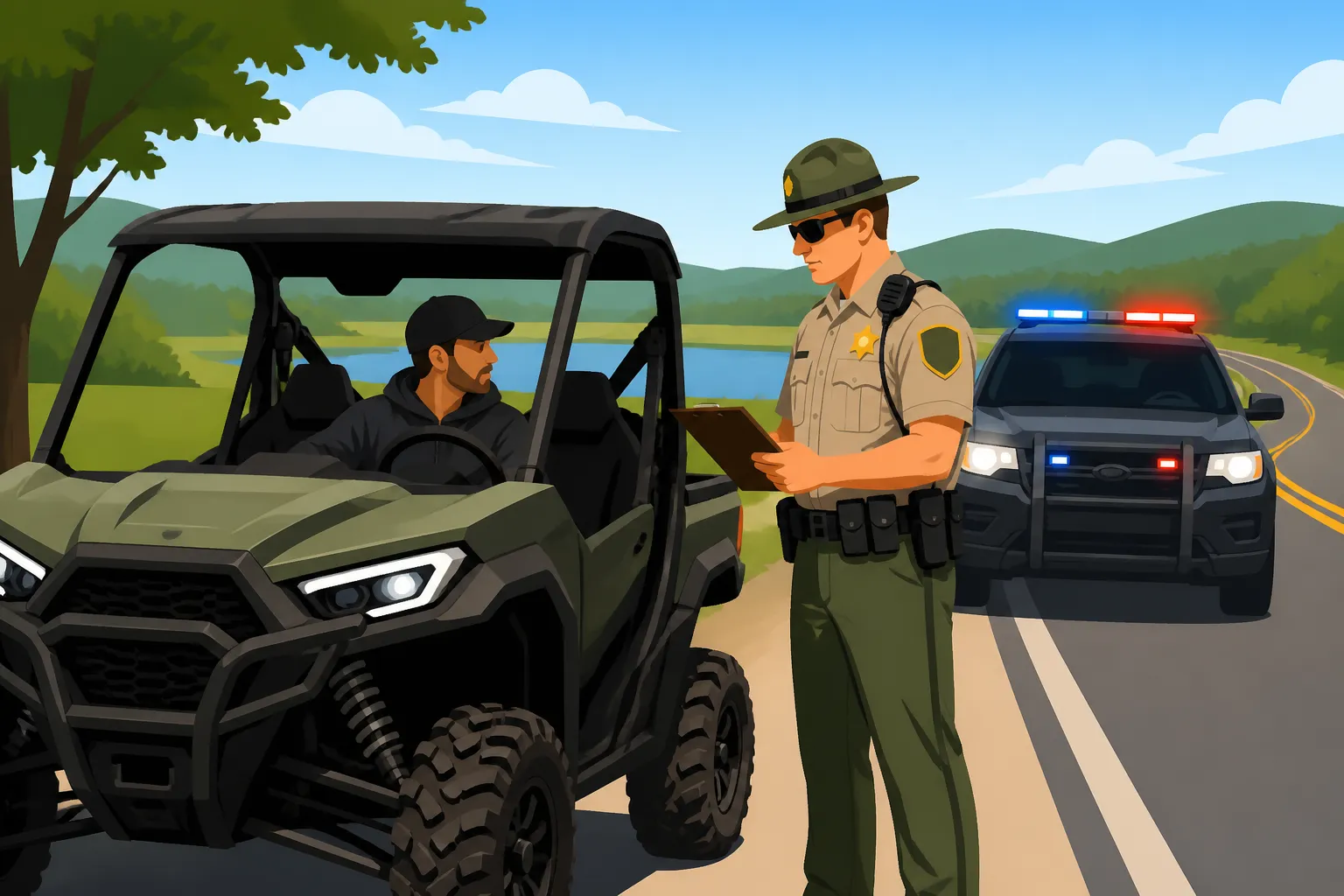
Picture this: you're just trying to get some chores done, maybe move a deer stand across a gravel lane, or perhaps you're cruising through a small town that actually allows UTVs on its streets, feeling like you're following all the rules. Then, out of nowhere, the blue lights flash in your rearview mirror. Your heart sinks. A roadside stop with an ATV or UTV in Missouri can be a really confusing and even intimidating experience because the rules aren't always clear-cut. This guide is here to walk you through exactly what to expect when a Missouri deputy pulls you over while you're on your machine, helping you understand your rights and responsibilities.
Understanding the Legal Landscape for Missouri ATV/UTV Road Use
Getting stopped on your ATV or UTV by a Missouri deputy often boils down to a fundamental misunderstanding, or sometimes a deliberate ignoring, of where these machines are legally allowed to operate. It’s not like driving a car, where most roads are fair game. Off-road vehicles have a much more restricted existence on public roadways here in the Show-Me State, and knowing those distinctions is your first line of defense.
The Core Distinction: ATV vs. UTV on Missouri Roads
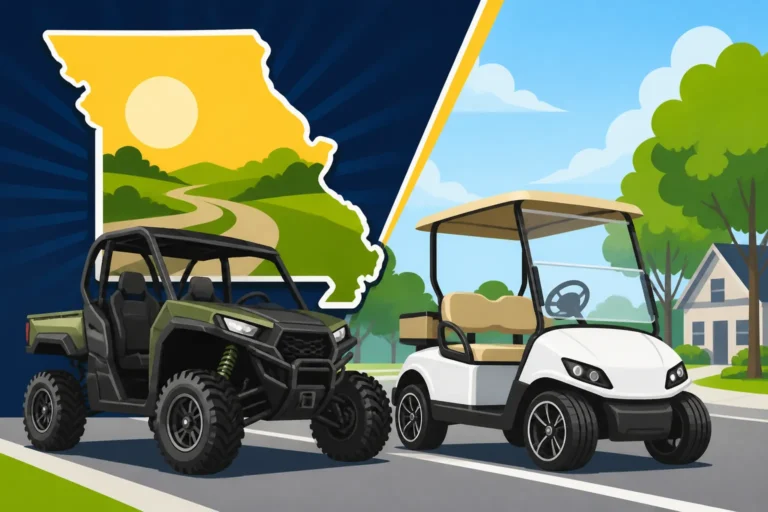
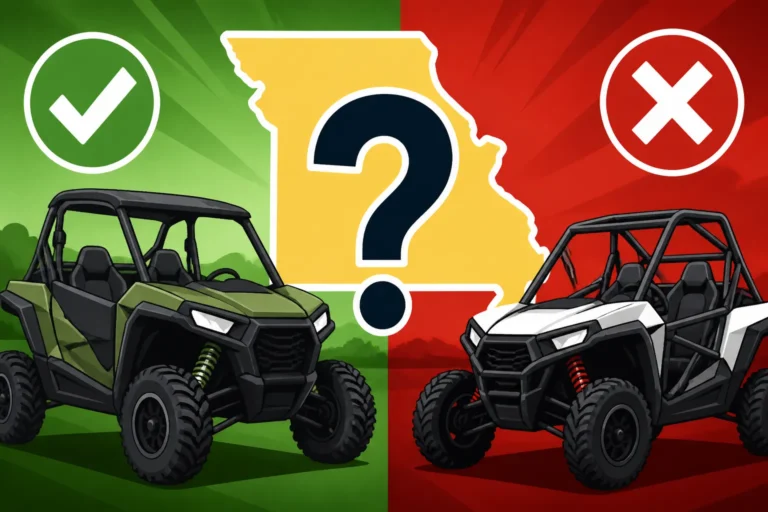
The first thing a deputy is likely considering, even before they get out of their patrol car, is whether your machine is an ATV or a UTV (which the law often lumps with Recreational Off-Highway Vehicles, or ROVs). Missouri law draws a pretty clear line, and it's a difference that drastically impacts where you can and can't ride.
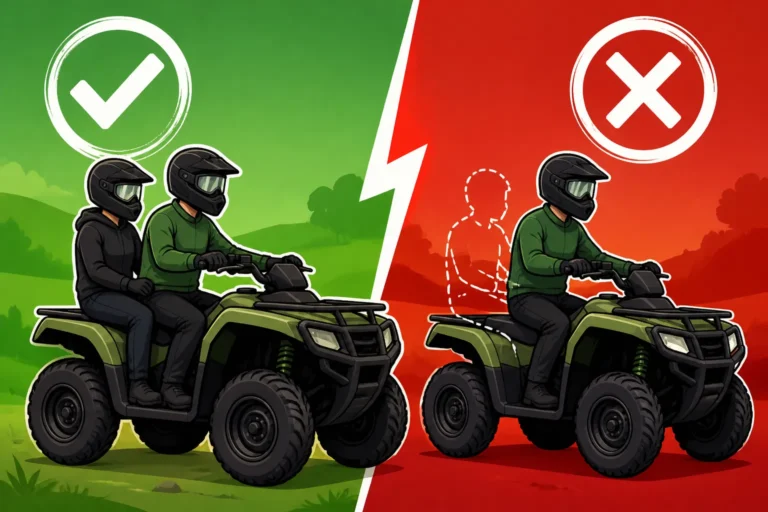
For most ATVs – those machines with a straddle seat and handlebars, typically designed for one rider – their presence on public roads is extremely limited. Generally speaking, ATVs are not street legal in Missouri. There are very narrow exceptions, primarily for agricultural purposes, and even then, it's usually about crossing a road or traveling very short distances between farm properties from sunrise to sunset. If you're joyriding on a county road on an ATV, you're almost certainly in violation of state law, and that's often why those blue lights come on. It’s a common frustration for ATV owners who just want to get to the next trail or property line without trailering. You can learn more about this in [Are ATVs Street Legal in Missouri?].
UTVs, or side-by-sides, on the other hand, have a bit more leeway, but it's still far from unrestricted freedom. State law allows cities and counties to pass ordinances that permit UTVs on certain roads within their jurisdictions. This means that a UTV might be perfectly legal on the streets of, say, Lake Ozark, but completely illegal just a few miles down the road in an unincorporated county area that hasn't passed such an ordinance. These local ordinances often come with their own set of requirements – things like permits, insurance, proper lighting, seatbelts, and safety flags. If you're stopped in a UTV, the deputy will immediately be thinking about whether you're in an area that allows them, and if so, whether you meet all those specific local requirements. Many UTV owners invest in aftermarket accessories from companies like SuperATV to ensure they meet these diverse requirements, from turn signals to robust roll cages.
When a Deputy Has Reason to Stop You
Deputies don't just pull over ATVs and UTVs for fun; they usually have a specific reason rooted in perceived public safety or a violation of law. Understanding these common triggers can help you avoid a stop in the first place.
The most obvious reason is simply being observed operating your ATV or UTV on a public road where it's explicitly forbidden. This is a very common scenario, especially for ATV riders. If a deputy sees you cruising down a state highway or a county road on a quad, they have probable cause to stop you right there.
For UTVs, the reasons can be a bit more nuanced. A deputy might stop you if:
- No visible permit or decal: If your local ordinance requires a special permit or decal to be displayed, and it's not visible, that's a red flag.
- Operating outside permitted hours: Some ordinances restrict UTV use to certain hours, like sunrise to sunset.
- Missing safety equipment: If your UTV is on a permitted road but lacks a required safety flag, working headlights, taillights, seatbelts, or turn signals (depending on the ordinance), you could be stopped. Many riders install lighting kits from SuperATV to ensure their machine is visible and compliant.
- Suspicious or unsafe operation: Reckless driving, excessive speed, or operating under the influence are universal reasons for any vehicle stop, including ATVs and UTVs.
- Crossing a highway illegally: Even where UTVs are permitted on some roads, there are specific rules for crossing state highways, often requiring perpendicular crossings. If you're seen riding parallel on a highway shoulder, that's a stop waiting to happen.
It’s truly a maze of rules, and often, the blue lights flash because the deputy just isn't sure if you're legal or not, and they need to investigate. Knowing [Can You Drive a UTV on a Missouri Road?] is crucial before you even start your engine on public land.
What to Expect During a Roadside Stop
So, the lights are on, and you've pulled over safely. What happens next can feel intimidating, but knowing what to expect can help you remain calm and cooperate effectively. The deputy will approach your machine, likely ask for specific documents, and visually inspect your vehicle. Their main goal is to ascertain if you're operating legally and safely according to state and local statutes.
Your Documents and the Deputy's Questions
When the deputy approaches, they will typically ask for your driver's license, proof of insurance (if required by the local ordinance or if you're operating under an agricultural exemption that allows limited road use), and your machine's title.
- Driver's License: For UTVs on permitted roads, Missouri generally requires an operator's or chauffeur's license. If you’re riding an ATV for agricultural purposes, you might still need to show your driver's license. Even if the law doesn’t explicitly require a license for your specific situation, having valid identification is always a good idea.
- Title: You should always have your ATV or UTV title readily available, or at least a clear photo of it on your phone, though a physical copy is preferable. This proves ownership and helps the deputy verify the machine's identity. For more on this, check out [Missouri ATV Title Paperwork].
- Proof of Insurance: While Missouri doesn't universally require insurance for off-road vehicle operation on private land, if you're operating a UTV on a city or county road that allows it, that local ordinance almost certainly mandates proof of liability insurance. Similarly, if you're riding under an agricultural exception, having insurance is a smart move and sometimes required for certain road uses.
- Permit/Decal: If you're in a city or county that issues a special permit or decal for UTV road use, have this displayed clearly on your machine and be prepared to show any corresponding paperwork. There might be a fee for this, as discussed in [Missouri Special Permit Cost for ATVs].
Beyond documents, the deputy will likely ask a series of questions:
- Where are you coming from and where are you going? This helps them understand your route and the purpose of your travel.
- Are you aware of the rules for operating this vehicle on public roads? This gauges your understanding and whether the violation (if any) was intentional or due to ignorance.
- Do you have permission to be on this land/road? If you're on a private road or crossing private land, they might inquire about permission.
Be polite, truthful, and concise in your answers. It's best to answer direct questions without volunteering excessive information.
Machine Inspection: Decals, Equipment, and Compliance
The deputy will also perform a visual inspection of your ATV or UTV. They are looking for specific indicators of compliance (or non-compliance) with Missouri law and local ordinances.
- Decals: For ATVs that are titled and have the Missouri three-year decal, the deputy will look for it. It should be mounted on the right front fork. If it's missing or improperly placed, that could be an issue. Learn about proper placement in [Missouri ATV Decal Placement]. UTVs, by contrast, do not typically receive this decal.
- Safety Equipment (for UTVs/ROVs on Permitted Roads): This is a big one for UTVs. The deputy will check for:
- Safety Flag: Is it present? Does it meet the height requirement (usually 7 feet from the ground)? Is it the correct color and size (at least 30 square inches of day-glow orange or red-orange)? Many riders choose durable flag poles and flags, often found through accessory providers like SuperATV, to ensure compliance. Check [Missouri Safety Flag Requirements] for specifics.
- Headlights and Taillights: Are they working? Are they visible from the required distances? Most ordinances require them to be on at all times on public roads.
- Brake Lights: Do they illuminate when the brake is applied?
- Turn Signals: Required by some local ordinances for UTVs.
- Horn: Another item sometimes mandated by local ordinances.
- Rearview Mirror: Often required.
- Seatbelts: If your UTV has seatbelts, they must be worn by all occupants.
- Roll Bar/Roll Cage: Essential safety feature, often checked.
- VIN (Vehicle Identification Number): The deputy might verify the VIN on your machine matches the one on your title.
- Machine Definition: For both ATVs and UTVs, they might be mentally or explicitly checking the legal definition. Is it under 50 inches wide with a straddle seat (ATV)? Or is it a wider, side-by-side machine that falls under the ROV/UTV definition? This classification dictates which set of laws applies.
The deputy’s inspection is all about making sure your machine is equipped and operated according to the specific rules of that particular road or jurisdiction.
Navigating the Outcome: Citations, Warnings, or Education
The interaction with the deputy can end in several ways: a warning, a citation, or sometimes just an educational conversation. Your attitude, your preparedness, and the specifics of the situation will heavily influence the outcome.
Common Violations and Potential Penalties
The most frequent reason for a citation during an ATV or UTV stop is illegal operation on a public road. This means you were riding where the machine simply isn't allowed, or you were in a permitted area but failed to meet the specific requirements of that local ordinance.
Common violations that lead to citations include:
- Operating an ATV on a public road for non-agricultural purposes: This is generally a Class C Misdemeanor in Missouri, which can carry fines and potentially other legal consequences. You can learn more about the implications in [A Class C Misdemeanor in Missouri].
- Operating a UTV on an unpermitted public road: Even if you have all the safety gear, if the city or county hasn't passed an ordinance allowing UTVs on that specific road, you're in violation.
- Failure to display a required permit/decal: If the local ordinance requires a visible permit, and yours isn't there.
- Lack of required safety equipment: No safety flag, no working lights, or unbuckled passengers in a UTV where seatbelts are mandatory.
- No proof of insurance (where required): This is a critical component for UTVs on many permitted roads.
- Driving without a valid operator's license (for UTVs on permitted roads): Just like a car, you need to be properly licensed.
The penalties can vary widely. A minor infraction might result in a warning, especially if the deputy determines it was an honest mistake and you correct it immediately (e.g., by trailering your machine off the road). However, more serious violations, particularly repeat offenses or dangerous operation, will likely lead to a citation. Fines can range from tens to hundreds of dollars, and depending on the severity, your machine could even be impounded. It’s important to understand the gravity of these situations, as detailed in [Missouri Fines for Illegal ATV Road Use].
What You Can Do to Be Prepared and Respectful
The best way to handle a roadside stop is to prevent it in the first place by understanding and adhering to the rules. But if you do find yourself pulled over, here's how to navigate the interaction:
- Stay Calm and Cooperative: Your demeanor can significantly impact the interaction. Be polite, avoid arguing, and follow instructions.
- Have Your Documents Ready: As mentioned, have your driver's license, title, proof of insurance, and any local permits easily accessible.
- Know the Local Rules: Before you ever venture onto a public road, confirm the specific ordinances for that city or county. Websites for city halls and county sheriff's offices are good places to start. Knowing whether [Missouri Cities That Allow UTVs on Streets] or [Missouri Counties That Allow ATVs on Roads] apply to your riding area is paramount.
- Equip Your Machine Properly: If you plan to ride your UTV on permitted roads, invest in the necessary safety equipment. Companies like SuperATV offer a range of products, from full enclosures to mirrors and light bars, that can help you meet local requirements. Don't cut corners on things like a properly sized and mounted safety flag or working headlights.
- Be Honest: If you've made a mistake, acknowledge it. Deputies often appreciate honesty and might be more inclined to issue a warning rather than a ticket if they perceive genuine misunderstanding rather than blatant disregard for the law.
- Don't Resist: Do not argue, become confrontational, or attempt to flee. This will only escalate the situation and lead to more serious charges.
Remember, most deputies are simply trying to enforce laws designed to keep everyone safe. While it can feel frustrating to be stopped, especially if you believe you're within your rights, a calm and prepared approach is always the most effective.
Here's a quick reference for common requirements related to roadside stops in Missouri:
| Document/Item | ATVs (Agricultural Use) | UTVs (on Permitted Roads) |
|---|---|---|
| Driver's License | Recommended, often required for road use | Required (operator's or chauffeur's) |
| Machine Title | Recommended to have on person or photo | Recommended to have on person or photo |
| Proof of Insurance | Recommended, sometimes required for agricultural road use | Required by most local ordinances |
| MO Decal | Yes, on right front fork | No (UTVs are not registered in the same way) |
| Local Permit | No | Yes, if required by local ordinance (must be displayed) |
| Safety Flag | Not typically required | Yes, if required by local ordinance (specific height/size) |
| Head/Taillights | Required for agricultural road use at night | Yes, typically required to be on at all times on roads |
| Brake Lights | Recommended | Yes, typically required |
| Turn Signals | No | Yes, often required by local ordinances |
| Horn | No | Yes, often required by local ordinances |
| Seatbelts | Not applicable (single rider) | Yes, required for all occupants if factory-equipped |
| Roll Bar/Cage | Not applicable | Yes, factory-equipped |
Disclaimer
This article is for general informational purposes only and does not constitute professional advice. Laws, prices and regulations vary by location and change over time. Consult a qualified professional for guidance on your specific situation.