Lead Mine Tailings at Missouri’s St. Joe
St. Joe State Park’s lead-mining past is visible in its unusual landscape: open, pale ground, rolling piles and riding areas that look different from a typical Ozark forest trail. That variety can make planning tricky. This guide explains what the tailings are, how to ride the area responsibly, and what to check before unloading at the St. Joe off-road vehicle area.
Understanding the Lead Mine Tailings at St. Joe
How mining shaped the landscape
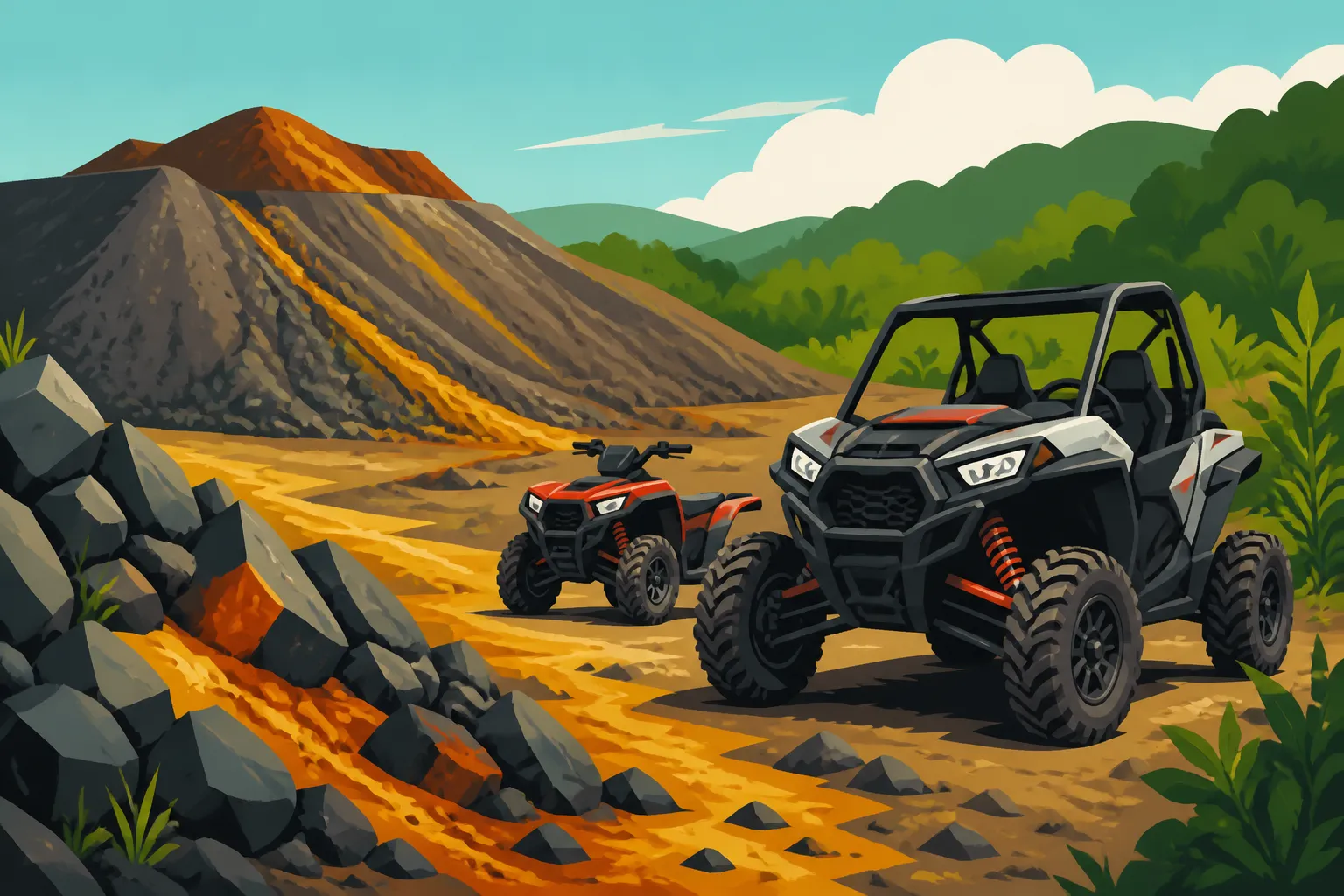
St. Joe State Park sits in St. Francois County, near Park Hills and Bonne Terre. The area was heavily affected by lead mining, and its former industrial use still shows in the terrain. Mine tailings are leftover material from processing ore. Around St. Joe, that mining legacy contributes to the broad, open, pale-colored areas that catch many visitors’ attention.
The landscape is not one uniform surface. You may see open riding areas, rougher ground, wooded stretches and slopes, with conditions that change across the park. A wide-open patch can look inviting from a distance, but appearances do not tell you whether it is an approved route or safe to cross. Follow marked trails and posted boundaries rather than treating every bare or sandy-looking area as an invitation to explore.
That distinction matters both for safety and for protecting the site. Former industrial ground can conceal uneven surfaces, loose material, drainage changes or other hazards that are difficult to judge from a vehicle. Staying on designated routes also helps keep riding concentrated where it is intended, reducing unnecessary damage to vegetation and the landscape.
What riders mean by “tailings”
People sometimes use “tailings” loosely to describe the whole open, mine-scarred look of the park. Technically, tailings are the material left after valuable minerals have been separated from mined ore. The term is useful for understanding the landscape’s history, but it does not tell you that every visible mound or exposed patch is a riding surface.
If you are visiting for the first time, it is easy to assume that a flat-looking area is a natural extension of the trail. Instead, look for signs, trail markers and the route shown on the park map. If a route’s status is unclear, pause and check with park staff rather than riding through and hoping you have interpreted the terrain correctly.
The tailings are part of what makes St. Joe memorable, but they are not a reason to ride off route. Consider the park a managed recreation area with distinct riding zones, not an unrestricted former mine. For a sense of how the sandier open ground differs from the mine landscape, see [St. Joe State Park's Sand Flats in Missouri].
Choosing a Route and Reading the Terrain
Match your route to your machine and experience
St. Joe offers a different kind of ride from a narrow, wooded Ozark trail. Open terrain can give you a wider view and more room to manage a turn, but loose or uneven ground still calls for attention. A machine that feels settled on hard-packed ground may handle differently on loose material, especially when turning, climbing or braking.
Before setting out, consider your machine’s width, tires, ground clearance and your own riding experience. A new rider may be more comfortable starting on an easier marked route and building confidence gradually. Experienced riders should still avoid assuming a route will remain consistent from beginning to end; surfaces can change, and a familiar-looking open stretch may conceal ruts or abrupt transitions.
The table below is a practical planning aid, not a substitute for the current park map or posted rules. Use it to think through what you may encounter, then confirm that your planned route is open and appropriate for your machine.
| Terrain or setting | What to watch for | A sensible approach |
|---|---|---|
| Open, pale ground | Loose or changing surface, low visibility of small obstacles | Reduce speed and stay on marked routes |
| Rolling or uneven ground | Blind rises, abrupt drops or changes in traction | Approach cautiously and leave room to stop |
| Wooded trail sections | Roots, branches, narrow turns and reduced sightlines | Keep a controlled pace and watch for oncoming riders |
| Busy staging areas | Parked trailers, pedestrians and machines moving in different directions | Follow posted speed limits and give people room |
| A route that appears closed or unclear | Signs, barriers or uncertainty about whether it is open | Stop and confirm with park staff |
Use maps as a planning tool, not permission to roam
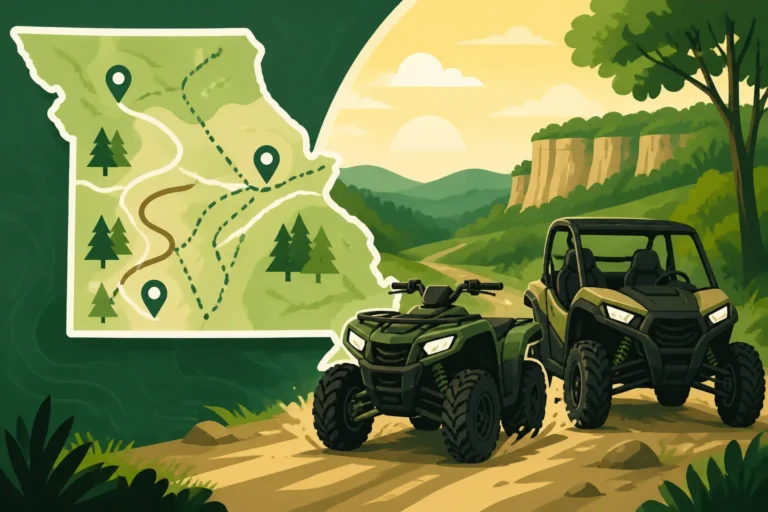
A map can make a first visit less stressful, especially when you are coordinating a group with different machines or experience levels. Review the park’s trail information before you unload, identify your likely route and make a simple plan for where to regroup. A state park map is a good starting point because it helps you orient yourself within the managed recreation area.
Digital mapping tools can be useful as a second reference. For example, riders may use onX Offroad to prepare a route and keep track of their location, but a phone map should not override a closure sign, barrier or current direction from park staff. Download or save the information you need before you leave reliable service, and keep your device protected from dust, vibration and weather.
A practical habit is to agree on a few clear checkpoints before the ride. If one rider needs to stop, or the group becomes separated at a junction, everyone knows where to wait rather than continuing in different directions. For additional route-planning context, consult [Missouri Trail Maps From State Parks] and [Missouri Trail Conditions Before You Ride]. Always verify that the route information you plan to use matches what is posted on the ground.
Preparing for a Safe and Comfortable Visit
Check access, hours and permits before you haul
A long drive with an ATV or UTV in tow is frustrating enough without arriving to find that access, permit sales or a trail area does not match your plan. Check the park’s current operating information before leaving, including where riders enter, when the area is open and how permits are handled. Park procedures can differ from registration requirements, so having a machine’s state paperwork does not automatically answer every question about riding at a particular recreation area.
Seasonal schedules can affect when you can ride and when you can purchase or use an ORV permit. Review [St. Joe's April to September Hours] and [St. Joe's October to March Hours] for season-specific planning, and check [When ORV Permit Sales Stop at St. Joe] if you expect to arrive later in the day. Confirm the current details directly with the park before setting out, particularly if you are traveling a long distance or arriving close to a seasonal change.
Pack your documents and riding essentials where you can reach them without unpacking the whole trailer. A small waterproof bag can hold identification, permit information, a phone, keys and any paperwork you may need to show. It is also wise to bring drinking water, basic first-aid supplies, eye protection and a way to contact your group if you become separated.
Check equipment and park-specific requirements
A pre-ride check is especially helpful when the machine has been sitting between trips. Check tire condition and pressure, brakes, throttle response, steering, lights and fuel before you leave home. Look for loose fasteners, damaged plastic and leaks. A small problem noticed in the driveway is easier to handle than the same problem in a staging area or out on a trail.
Missouri state park riding rules may include requirements for items such as helmets, safety flags, spark arresters and sound limits. The exact requirements depend on the place and activity, so do not assume that the equipment accepted on a road or private property is automatically acceptable at a park. Review [Missouri Flag Rules at a State Park] and [Missouri Sound Limits at a State Park], and read the signs at the entrance and staging area before you ride.
Also pay attention to the machine itself. A loose flag, poorly secured cargo or damaged muffler can create problems for you and for other riders. If a requirement is unclear, ask before unloading or riding. A few minutes of checking is a lot less aggravating than having to turn around after the group has geared up.
Riding Responsibly Around the Mining Landscape
Stay on marked routes and respect closures
At a place with such a visible industrial past, it can be tempting to explore whatever looks interesting. Resist that urge. Ride only where the park allows off-road vehicle use, follow signs and barriers, and do not make a new route around a muddy patch or obstruction. A detour can damage vegetation, widen the trail and make it harder for staff to maintain clear boundaries.
Closures may reflect trail conditions, maintenance or other safety and resource concerns. A route that was open during your last visit may not be open today. Check notices before unloading, then keep looking for signs as you ride. If a trail is closed, turn around where it is safe and choose an open route rather than treating the closure as optional.
This is one area where onX Offroad or another navigation tool can help you stay oriented, but it cannot confirm that a route is open at the moment you arrive. Posted signs and park staff take priority. The same goes for a route shown on an older screenshot, printed map or saved track. If there is a mismatch between your map and what you see on the ground, stop and follow the current park direction.
Share the area with other visitors
St. Joe draws more than riders, and even within the riding area, people travel at different speeds and may be using different kinds of machines. Slow down in staging areas, give pedestrians a wide berth and avoid revving or accelerating near parked vehicles. On a trail, approach blind corners and rises carefully, and leave enough space to respond if another rider appears.
Keep your group together without pressuring the slowest rider to go faster than feels comfortable. Pick a place to regroup before leaving the staging area, and make sure everyone knows what to do if the group gets split. If you ride with children or new riders, choose routes that suit their ability and keep them within close supervision. A confident adult should be able to stop and help without the rest of the group disappearing around the next turn.
Noise and dust are part of off-road riding, but considerate choices make the visit better for everyone. Keep your machine in good repair, obey posted speed limits and avoid unnecessary high revving near other visitors. The park’s published guidance on [Missouri State Park ORV Hours] and its posted rules can help you build a visit that fits the area’s operating expectations.
Planning a Better St. Joe Riding Day
Build a flexible itinerary
A first visit can feel easier if you plan for a few hours of riding rather than trying to cover everything. Start by checking in, confirming the route map and getting familiar with the staging area. Then choose a marked route that matches the group’s experience and machine types. After the first loop, stop to check that everyone is comfortable before deciding whether to continue or try another route.
Leave room in the plan for conditions to change. A route may feel different after rain, a busy weekend or maintenance work. If the ground is slick, visibility is poor or someone in your group is tiring, shorten the ride. Turning back early is not a failed outing; it is often the choice that keeps a minor concern from becoming an injury or a difficult recovery.
For groups using digital navigation, one rider can keep a map open while another focuses on the trail. Avoid expecting every person to ride while looking at a screen. A saved map in onX Offroad may help with orientation, but riders should stop in a safe place to check it rather than handling a phone while moving. Agree on a backup regrouping point in case a device loses power or signal.
Know what to verify before each trip
Even if you have ridden St. Joe before, make a fresh check before each visit. Confirm operating hours, permit procedures, current trail access and any temporary notices. Recheck the machine-specific rules as well, particularly if you are bringing a different vehicle or riding with someone who has not visited the park before. A UTV and an ATV may have different practical considerations, and an unfamiliar rider may not know where the riding area begins or ends.
Make sure everyone in the group understands the basic plan: which route you intend to take, where you will regroup, what to do if someone stops and how to respond to a closure. Carry water and suitable clothing for the conditions, and tell someone who is not riding where you plan to go and when you expect to be back. These steps sound simple, but they matter when a ride takes longer than expected or a machine needs attention.
For a broader look at the location and its riding environment, read [St. Joe State Park's Sand Flats in Missouri] alongside [Missouri Trail Closures to Check First]. Use those resources to shape your plan, then rely on current park notices and on-site instructions for the final call. St. Joe’s mining history gives the area its distinctive character; responsible riding helps keep that landscape and its recreation opportunities available to visitors.
Disclaimer
This article is for general informational purposes only and does not constitute professional advice. Laws, prices and regulations vary by location and change over time. Consult a qualified professional for guidance on your specific situation.