Missouri Trails With Rock
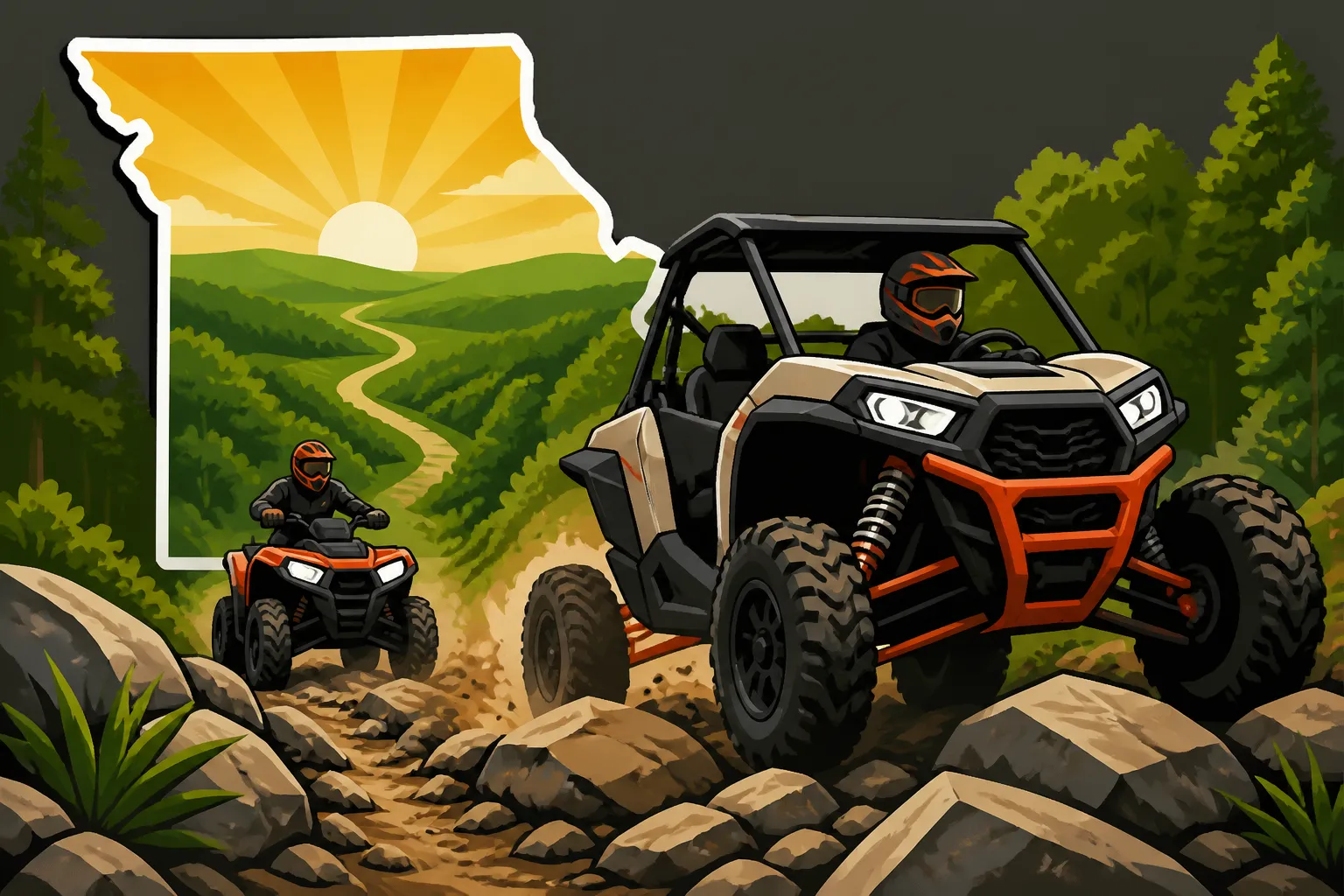
Rocky trails can turn a relaxed Missouri ride into a tire-slipping, undercarriage-banging workout, especially after rain loosens the gravel or hides sharp edges. The good news is that Missouri has several very different riding areas, and knowing what kind of rock, terrain, and trail rules to expect helps you choose a route your machine and riding group can handle.
Where to Find Rocky ATV and UTV Trails in Missouri
The Ozarks are the natural starting point when you’re looking for rocky riding. Their forest trails can include exposed stone, loose chert, uneven climbs, and creek crossings. But “rocky” doesn’t describe every Missouri off-road park: some popular areas are better known for sand or reclaimed mine terrain.
Chadwick Recreation Area
Chadwick, in the Mark Twain National Forest near Sparta, is a major destination for riders looking for Ozark terrain. The area has an extensive trail network, and the ride can feel quite different from one section to another. You may encounter rocky surfaces, ruts, hills, and water crossings, so a route that looks straightforward on a map can take longer once you’re navigating it on the ground.
The loose stone deserves particular attention. A tire may grip well on a solid rock face but skitter on loose chert over hard-packed earth. On a downhill section, braking abruptly can make that movement harder to manage. Keep your speed controlled, leave room between machines, and avoid following so closely that the rider ahead has to choose between continuing and stopping in your line.
Chadwick is a forest riding area, so check the rules and conditions that apply to the trails you intend to use. A state park permit and a national forest permit are not interchangeable by default. Before loading, review [Missouri's National Forest Riding](Missouri's National Forest Riding) and [Missouri Trail Closures to Check First](Missouri Trail Closures to Check First). The local trailhead board and land manager’s notices are especially important after storms, when a route may be damaged or temporarily closed.
Sutton Bluff Recreation Area
Sutton Bluff, in Reynolds County, offers another Ozark forest riding experience. Expect natural terrain rather than a groomed, uniform surface: rock, changing grades, and weather-worn stretches can all affect how a trail feels. If your group includes newer riders, it can help to start with a shorter outing and see how everyone handles the surface before committing to a longer route.
Machine width matters here. Sutton Bluff has trail restrictions that riders should check before setting out, and a wide side-by-side may not be suitable for every route. Don’t rely on a friend’s description of a trail from a different machine or a previous visit. Review [Why Sutton Bluff Stops Machines at 50 Inches](Why Sutton Bluff Stops Machines at 50 Inches) and confirm the current access information before hauling your vehicle to the area.
Sutton Bluff is also a good place to make a conservative call about weather. A rocky trail may seem easier when dry, but rain can wash soil away, expose new obstacles, and make slopes slick. If recent conditions have been wet, check [Missouri Riding After Heavy Rain](Missouri Riding After Heavy Rain) and look for trail notices before you go.
How Missouri’s Other Riding Areas Compare
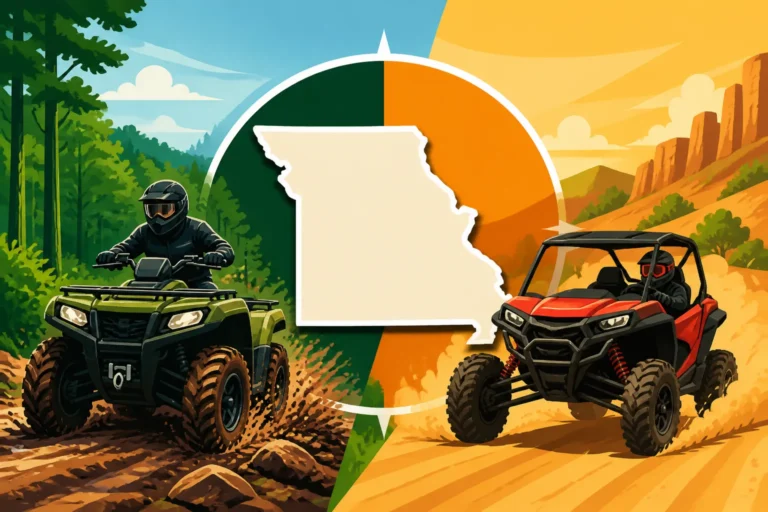
Not every popular Missouri off-road destination is a rock-focused ride. St. Joe State Park is known for its sand flats and former mine landscape, which can offer a very different kind of challenge from the Ozark forests. Finger Lakes State Park also has a distinct landscape shaped by its mining history. Those areas may suit a group looking for a change of scenery, but they should not be treated as substitutes for a rocky forest route.
| Riding area | Terrain to plan for | A useful planning question |
|---|---|---|
| Chadwick | Ozark forest trails with changing natural surfaces | Is the route open, and does it fit the machine and riders in your group? |
| Sutton Bluff | Forest terrain where rock, grades, and trail restrictions matter | Does your machine meet the access requirements? |
| St. Joe State Park | Sand and reclaimed mine terrain | Are you prepared for sand rather than a rock-focused ride? |
| Finger Lakes State Park | A former coal-mining landscape with its own riding conditions | Which trails and facilities are open for your planned visit? |
For a broader look at destinations and ride styles, see [Best Places to Ride an ATV in Missouri](Best Places to Ride an ATV in Missouri) and [Missouri Trail Difficulty Ratings](Missouri Trail Difficulty Ratings). The point is not to find the “hardest” trail on paper. It’s to pick a place and route that match your equipment, experience, and appetite for rough ground.
What Rocky Missouri Trails Feel Like Under the Tires
Rock can mean several things on a ride. A trail might be covered in loose gravel, cross a bedrock ledge, climb over embedded stones, or run through a creek bed where the footing changes from one section to the next. Each surface calls for a slightly different response.
Loose Chert and Gravel
Loose chert is a common Ozark challenge. It can roll under the tires much like marbles, particularly on slopes and corners. A rider who’s used to packed dirt may instinctively turn sharply or brake hard when the machine slides. On loose stone, those quick inputs can make the tires lose more traction.
Instead, keep your movements smooth. Slow before a turn, look toward the line you want to follow, and make small steering corrections. Leave enough space to respond if the rider in front stops or needs to pick a different line. If you’re riding with children or first-timers, let the group know that a little tire movement doesn’t automatically mean the machine is out of control.
Loose rock can also make a trail feel more difficult on the way down than it did on the climb. Descend slowly and avoid crowding the machine ahead. If the slope looks uncomfortable, stop at a safe place and assess it rather than rushing to keep up. For additional context on the surface, see [Ozark Rock and Loose Chert](Ozark Rock and Loose Chert).
Embedded Rock, Creek Beds, and Eroded Sections
Embedded rocks are often more predictable than loose stone, but they can still catch a tire, scrape a skid plate, or shift the machine’s line. Pay attention to the shape of the trail ahead, not just the nearest obstacle. A rock that looks manageable on its own may sit beside a rut or at the edge of a narrow turn.
Creek crossings need extra caution because water can conceal the bottom. A shallow-looking crossing may have slick rock, a soft edge, or a deeper pocket than expected. Stop where you can do so safely and look for the clearest route. Don’t enter moving or rising water simply because another rider crossed earlier. Conditions can change quickly after rain.
Erosion can expose roots and stones or undercut the edge of a trail. If you see fresh washouts, avoid riding around a closure or cutting a new line through the vegetation. Trail damage spreads when riders create bypasses, and what looks like a small detour can quickly become a wider, unstable rut. [Creek Crossings in the Ozarks](Creek Crossings in the Ozarks) offers more to consider before tackling water on a forest ride.
Prepare Your ATV or UTV for Rocky Terrain
You don’t need a fully modified machine to enjoy a rocky ride, but a few basic checks can prevent a minor problem from spoiling the day. Start with the machine’s condition and the route’s requirements, then make sure your group has a plan for delays or changing weather.
Check Tires, Protection, and Controls
Inspect tires for cuts, embedded stones, visible damage, and proper inflation for your machine and the conditions. Don’t assume that a pressure setting that worked on a sandy trail is automatically ideal for rocky terrain. Follow the manufacturer’s guidance, and be cautious about changing pressure without understanding how it affects handling and tire protection.
Check the skid plate and other underbody protection for loose fasteners or damage, especially if you’ve recently ridden over rocks. Look at the wheels, steering, brakes, and suspension for anything that seems out of place. A new vibration, unusual steering pull, or grinding sound is a reason to stop and inspect rather than hoping it goes away on the next stretch.
A winch may be useful in some situations, but it is not a substitute for choosing a safe line or riding within your ability. If you carry recovery gear, know how to use it and keep other people clear of tensioned lines. For broader maintenance ideas, see [Tires for Ozark Chert](Tires for Ozark Chert) and [Winches for Ozark Creek Bottoms](Winches for Ozark Creek Bottoms).
Match the Route to the Machine and Riders
A route that works for a narrow ATV might not be suitable for a wide UTV. Check the specific trail system’s width limits and access rules before you go; don’t assume every public riding area uses the same restrictions. If you have more than one machine in the group, plan around the vehicle with the tightest clearance or the strictest access requirements.
Be realistic about rider experience, too. A newer rider may be confident on flat gravel but uncomfortable on loose rock or a steep, uneven descent. Start with a short, manageable loop and agree that anyone can ask to turn back. That small conversation can save a lot of pressure later, especially when a group is tempted to keep moving because it has already traveled a long way.
For help matching a machine to Missouri terrain, see [Which Ozark Loops Suit a Stock Machine](Which Ozark Loops Suit a Stock Machine) and [Missouri Trails for Beginners](Missouri Trails for Beginners). If the route requires a permit, verify what you need for that specific land manager and riding area. [Missouri ORV Permits Explained](Missouri ORV Permits Explained) is a useful starting point.
Plan a Safer Ride on Rocky Trails
A good ride starts before the first rocky climb. Check the trail status, confirm that your machine is allowed, and make sure you have enough daylight and fuel for the route you intend to ride. In the Ozarks, a short distance can take longer than expected when the trail is rough, your group stops to assess obstacles, or weather changes the surface.
Use Maps as a Planning Aid, Not a Guarantee
A map can help you understand where you’re going, but it can’t promise that every trail is open or that a route will be comfortable for your machine. Use the land manager’s information for official closures and rules, then use a mapping tool to help with navigation. Some riders use onX Offroad to review trail routes and orient themselves before a trip; onX Offroad can be one planning aid, but it should not replace posted restrictions, trailhead signs, or current closure notices.
Download or save the information you’ll need before leaving town. Cell service can be unreliable in remote hollows, so don’t assume you’ll be able to pull up a map or contact someone from every section of a trail. If your group uses onX Offroad, agree in advance on how everyone will follow the route and what to do if riders become separated.
It also helps to share your plan with someone who isn’t on the ride. Tell them which area you’re visiting, when you expect to return, and who is in the group. For more preparation advice, see [Missouri Trail Conditions Before You Ride](Missouri Trail Conditions Before You Ride) and [Cell Dead Zones in the Ozarks](Cell Dead Zones in the Ozarks).
Ride for the Conditions You Actually Have
A route that was easy last month may be rough after a storm or a season of heavy use. Watch for fresh washouts, loose rock, damaged culverts, and posted closures. If a trail looks unsafe, turn around rather than treating the map or the original plan as a promise that you must complete the ride.
Keep a comfortable following distance, especially on hills and loose surfaces. Avoid sudden braking and sharp turns where traction is uncertain. If you need to stop, choose a spot where other riders can see you and pass safely. Don’t stop just beyond a blind rise or in the middle of a narrow trail.
Finally, leave the route as you found it. Stay on designated trails, respect gates and signs, and don’t widen a path to get around an obstacle. Riding responsibly helps protect the trail and makes it more likely that the area remains available to everyone.
Rocky Missouri riding can be rewarding when the trail matches the machine and the group. Give yourself time to choose the right area, check the rules, and adjust your pace to the surface. A thoughtful plan makes it easier to enjoy the ride without turning every loose stone or creek crossing into a surprise.
Disclaimer
This article is for general informational purposes only and does not constitute professional advice. Laws, prices and regulations vary by location and change over time. Consult a qualified professional for guidance on your specific situation.