Missouri Trails With Sand
Missouri has fewer open sand-riding areas than many riders expect, so it helps to know where sandy terrain is actually part of a legal, established riding area. This guide explains what to expect at St. Joe State Park, how to plan for loose sand, and how to check access, machine fit, and conditions before you unload.
Where to Find Sand Riding in Missouri
St. Joe State Park is the main place to start
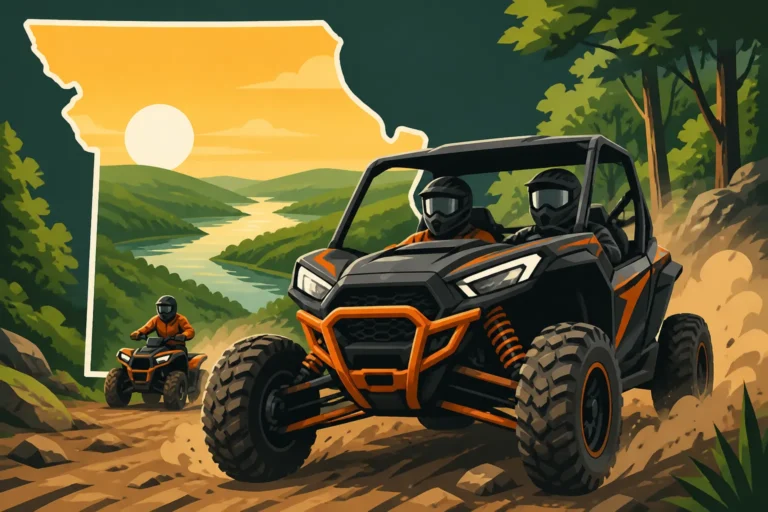
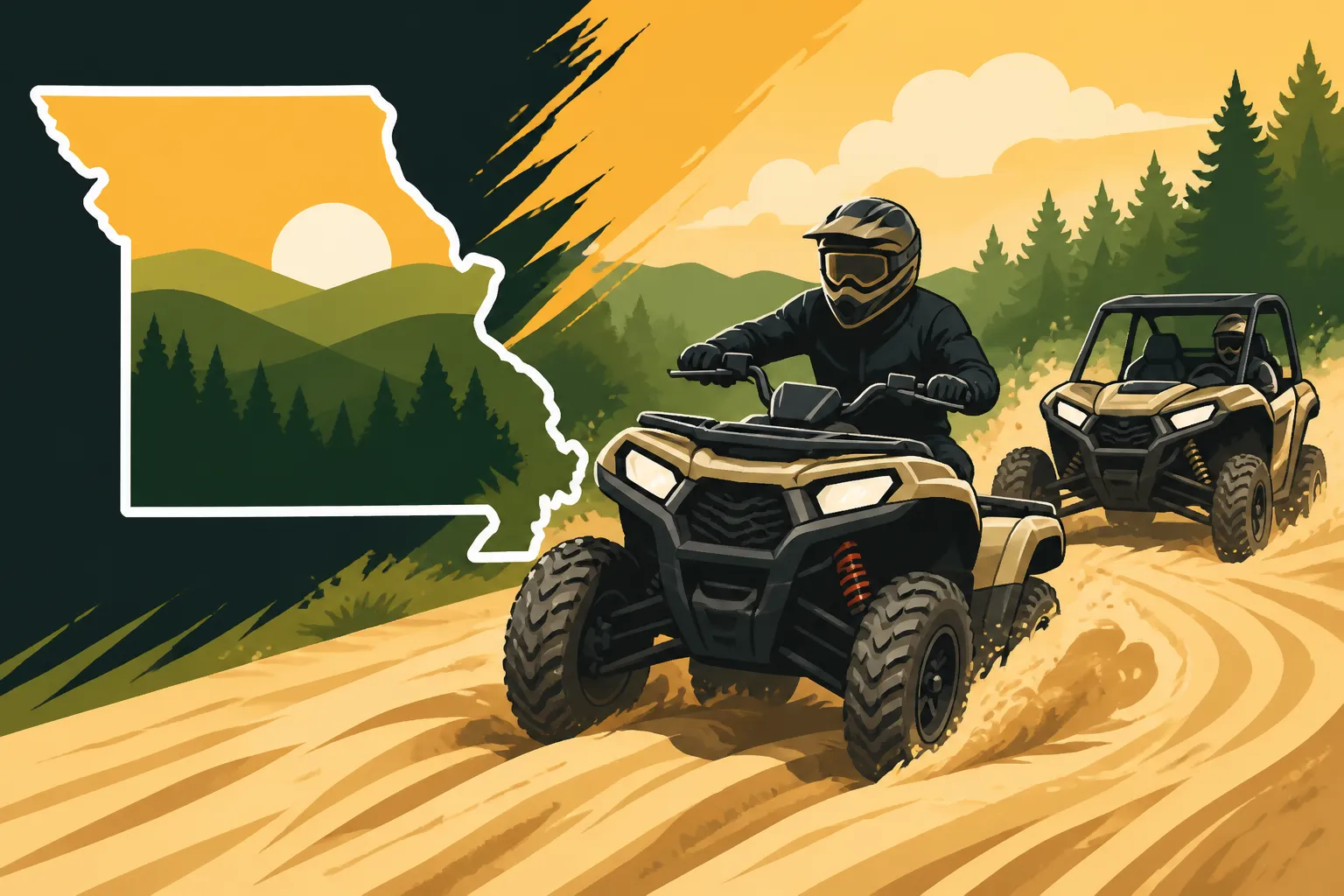
For riders specifically looking for sand, St. Joe State Park near Park Hills is the best-known starting point in Missouri. Its off-road area includes sandy flats associated with the region’s mining history, along with other terrain. It is not simply a stretch of unrestricted dunes: ride only in designated areas and follow the park’s posted rules and boundaries.
The sand flats can feel very different from a typical forest trail. You may have more room to choose a line than on a narrow wooded route, but loose ground can still catch a tire, pull a machine off course, or make a turn feel less predictable. A broad, open-looking patch does not automatically mean you can ride anywhere across it. Check the trail map and signs when you arrive, and stay on approved riding areas.
If you are planning your first visit, read [St. Joe State Park's Sand Flats in Missouri] and [Riding the Sand Flats at St. Joe] before loading up. They can help you understand why riders associate St. Joe with sand and what the park’s riding area offers. For the wider history of the landscape, [Missouri's Reclaimed Mine Riding] is also relevant: former mining ground can create a distinctive mix of terrain rather than one uniform surface.
A practical way to picture the visit is to imagine arriving with a family group that includes one experienced rider and one person who has never ridden loose sand. The experienced rider may want to explore more, while the beginner needs room to get comfortable. Agree on an easy starting area, keep the group together, and don’t let the fastest rider set the pace for everyone else.
Sand is a surface, not a guarantee of dune-style riding
“Sand riding” can bring to mind tall dunes and long, uninterrupted runs. St. Joe’s sandy areas may offer a different experience. The terrain, designated routes, and riding opportunities vary, and not every sandy patch is an open riding zone. Treat the location as a managed off-road park with different surfaces, not as a place where every open area is available for free riding.
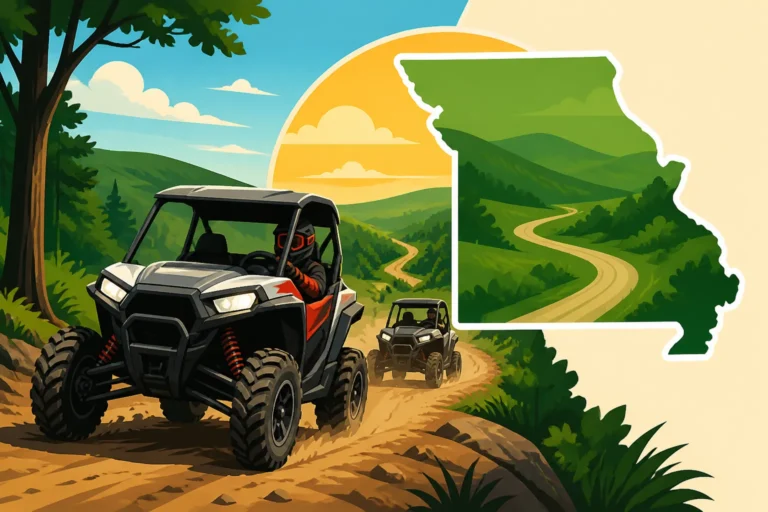
Missouri has many popular off-road destinations, but they do not all have the same character. Chadwick, Sutton Bluff, and Finger Lakes are often discussed for their forest, rocky, or mixed trail experiences. They may be worthwhile alternatives for a broader riding trip, but don’t assume a destination will provide extensive sand just because it has off-road trails. Check descriptions and maps before choosing a park for a sand-focused weekend.
If you are comparing locations, keep the questions specific: Is there designated sandy terrain? Is your machine allowed? Are the riding areas open? Do the trails match your group’s skill level? A quick search on onX Offroad can help with trip planning and general orientation, but an app map should not replace official park information, posted signs, or local closure notices.
Compare the riding experience before choosing a destination
This table is a starting point for planning, not a substitute for checking each site’s current rules and trail conditions.
| Riding option | What to expect | Best fit | What to confirm |
|---|---|---|---|
| St. Joe State Park | A managed off-road area with sandy flats and other terrain | Riders who specifically want to experience sand in Missouri | Park access, permitted riding areas, vehicle rules, and current conditions |
| Forest trail systems | More wooded, uneven, or rocky riding depending on the location | Riders looking for a trail-focused trip rather than open sand | Trail width, surface, closures, and machine restrictions |
| Private riding parks | Terrain and facilities vary by property | Groups seeking a particular riding style or services | Admission rules, operating days, machine limits, and what areas are included |
If sand is the main reason for your trip, plan around the location that is known for it rather than expecting every Missouri trail system to deliver the same surface. If your group wants variety, a broader trip might combine a sand-focused outing with a separate forest-trail day. Avoid trying to squeeze different riding styles into one day if travel, unloading, or park access will make the schedule stressful.
For official route planning, start with [Missouri Trail Maps From State Parks]. Before leaving home, check [Missouri Trail Conditions Before You Ride] and [Missouri Trail Closures to Check First]. Those checks matter especially when a trip depends on one particular riding area: a closed section or changed access plan can turn a long drive into a disappointing day.
How to Prepare for Missouri Sand Trails
Set up your machine for loose ground
Loose sand asks for a smoother riding style than firm dirt. A sudden throttle change can make the tires spin, while an abrupt steering input can cause the front end to wander. Start gently, keep your movements controlled, and learn how the machine responds in a clear, legal area before following a more experienced rider into unfamiliar terrain.
Tire pressure is one setup detail riders often ask about, but there is no universal setting that suits every machine, tire, rider, and surface. Follow your owner’s manual and the tire manufacturer’s guidance. Make changes cautiously, and don’t assume that a setting used for another rider’s machine will be safe for yours. For more discussion of Missouri riding surfaces, see [Tire Pressure for Loose Chert]; the same habit of adapting thoughtfully to terrain is useful even when the surface changes.
Before leaving, check the basics: tires, brakes, throttle, steering, fluids, fuel, and any loose cargo. Sand can make a small mechanical problem more frustrating because pushing, towing, or recovering a stuck machine may be harder than expected. A basic recovery plan should include suitable equipment, a way to communicate with your group, and agreement about when to stop rather than keep spinning the tires.
It also helps to dress for a dusty, gritty day. Eye protection, gloves, sturdy boots, and clothing that covers exposed skin make the ride more comfortable. Keep drinking water accessible, especially if the day is warm. Sand and grit can work into equipment and clothing, so bring a way to clean up before loading a machine and securing it for the drive home.
Ride with momentum, not panic
The goal in loose sand is controlled movement. If you enter a sandy patch too slowly, the machine may bog down; if you charge into it, you may lose control or surprise someone ahead. Approach at a measured pace, look where you want to go, and keep enough space from other riders to react to changing lines or sudden stops.
If your machine begins to bog, avoid repeatedly hammering the throttle. Spinning tires can dig the machine in deeper and throw sand toward other people. Stop, assess the situation, and use a recovery method suited to your machine and the park’s rules. If you ride with children or newer riders, demonstrate how to stop safely and call for help rather than attempting a recovery they are not prepared to manage.
Keep your group’s spacing comfortable. Dust and flying sand can reduce visibility, and a rider may not see a change in direction immediately. Agree on a simple regrouping plan before setting off: choose a visible meeting point, make sure everyone knows the route or boundary, and wait for the last rider at decision points. A map in onX Offroad may help your group orient itself, but don’t rely on a phone if the battery is low or signal is unreliable.
Sand riding also calls for attention to other people using the area. Slow down around staging areas, parked vehicles, and crowded spots. Give beginners room. Don’t cut across a marked route or ride close to someone who is stopped. The habits in [Missouri Trail Etiquette on Shared Ground] are useful anywhere riders share access, including a sandy open area.
Match the route to the least experienced rider
It is easy for a group to plan around its most confident rider. That can leave a beginner feeling pressured to keep up, especially when the terrain looks open and everyone else seems comfortable. Before the ride, agree that anyone can ask to stop, turn around, or take an easier route without being teased or rushed.
A first-time sand rider may need a few short practice runs to get used to steering and throttle control. Keep those practice attempts in a suitable designated area, away from busy routes and other riders. A parent riding with a teenager should also check age, supervision, and machine requirements before heading out; do not assume that a child who handles a machine well in a yard is ready for every park trail or open riding area.
For beginners, preparation starts with choosing the right destination and checking what areas are appropriate for the group. [Missouri Trails for Beginners] offers another useful planning angle. If someone in your group is unsure about riding loose ground, a quieter day or a more familiar surface may be a better first outing than a busy weekend.
Check Rules, Access, and Conditions Before You Go
Keep park permits separate from vehicle registration
A machine’s registration paperwork and permission to ride at a particular location are not necessarily the same thing. A state registration decal does not automatically provide access to every off-road area, and a park permit does not replace other requirements that may apply to the vehicle or rider. Check what the location requires before you travel.
For St. Joe State Park, confirm the park’s current access process, permitted riding areas, machine requirements, and any rules for helmets, passengers, age, or safety equipment. Do not rely on an old post, a friend’s recollection, or a map layer alone. Regulations and operating details can differ between a state park, a national forest trail system, and a privately operated riding area.
If the route includes other public land, verify the rules for that specific property as well. A permit for one place may not apply elsewhere. The articles [Missouri ORV Permits Explained] and [Do You Need a Permit for Missouri State Park Trails?] are helpful starting points for understanding how access permits fit into a trip, but confirm the requirements with the managing agency before you ride.
Check weather, closures, and trail notices
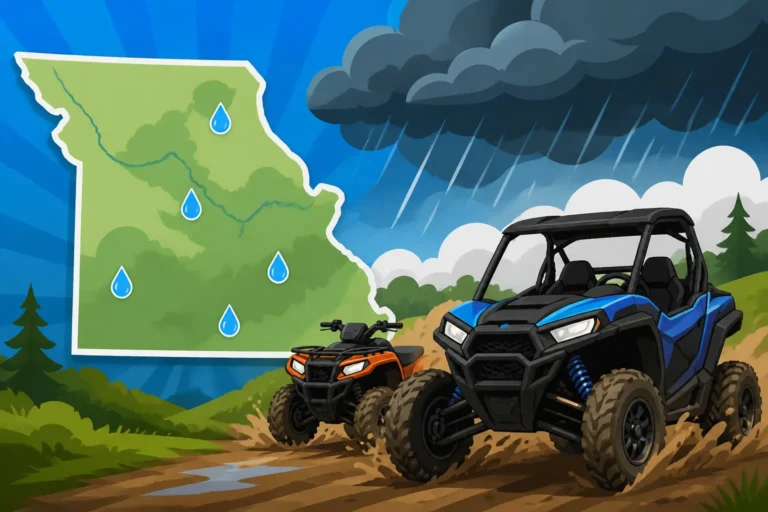
Rain can change a riding area quickly. Sandy ground may behave differently when wet, and water can expose ruts or hide soft spots. After heavy rain, don’t assume an area is ready for riding just because the parking lot is open. Check for closures and posted notices, and follow any instructions from park staff.
Weather matters even when the ground is dry. Heat, wind, and dust can make a long day tiring, particularly for children or newer riders. Build breaks into the plan and carry more water than you expect to need. If conditions are uncomfortable, shortening the ride is a sensible choice, not a failure to make the most of the trip.
A weather app or general map cannot tell you whether a particular trail is open. Check the official park or land-manager notices before leaving and again when you arrive. Use onX Offroad as a planning aid if it helps you keep track of your route, but treat the official map and signs as the final guide to where riding is allowed. For a broader refresher on wet conditions, see [Missouri Riding After Heavy Rain].
Plan the practical parts of the trip
A smooth ride day is about more than choosing a trail. Check the route to the park, trailer access, parking arrangements, fuel needs, and whether your group can unload and gear up without blocking other visitors. If you are bringing multiple machines, assign someone to check tie-downs and another person to confirm that everyone has the right equipment before the truck leaves.
Pack a small day kit with water, snacks, basic tools, first-aid supplies, a phone charger, and any recovery gear appropriate for your machines. Store important items securely so they do not bounce loose over rough ground. If the park has rules about equipment or where you can stop, follow them; a convenient-looking shoulder or open patch is not necessarily a permitted staging area.
After the ride, clean off sand and grit and inspect the machine before putting it away. Pay attention to the air filter, brakes, chain or belt system, and moving parts according to the maintenance instructions for your model. A quick inspection can reveal a problem before the next outing. If you are planning a weekend rather than a day trip, confirm overnight arrangements separately—trail access and camping access are not automatically the same.
A Sand-Riding Plan That Works
For a first Missouri sand ride, keep the plan simple: choose St. Joe State Park as the primary destination, verify its rules and access details, and give your group time to get familiar with the terrain. Avoid building the day around assumptions that every open-looking area is rideable or that a map app will show every current restriction.
Before loading, agree on the group’s pace and identify an easy place to regroup. Make sure each rider understands how to stop, what to do if a machine gets stuck, and how to ask for help. Keep a beginner near a supportive, experienced rider rather than letting the group stretch out until no one can see one another.
Once you are there, ride within the designated area, leave space for other people, and adjust your plan to the conditions. If the sand is softer than expected, visibility is poor, or a rider is getting tired, take a break or choose a different route. A little flexibility is often what turns a stressful outing into a day the whole group wants to repeat.
Use maps and planning tools, including onX Offroad if it is part of your routine, to prepare rather than to override on-site instructions. The best sand ride is not necessarily the longest one. It is the one where everyone knows the boundaries, has enough energy to ride safely, and gets home with the machine and the group in good shape.
Disclaimer
This article is for general informational purposes only and does not constitute professional advice. Laws, prices and regulations vary by location and change over time. Consult a qualified professional for guidance on your specific situation.