Camping at Cobb Ridge
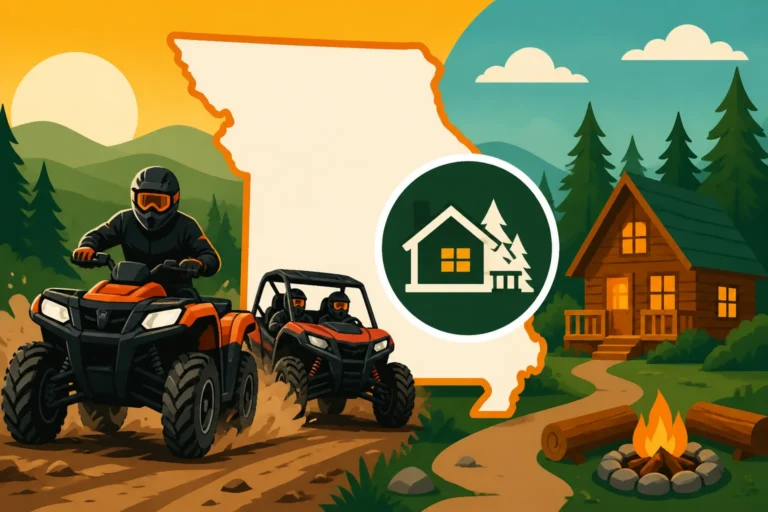
Camping at Cobb Ridge can make a Missouri ATV weekend easier: instead of driving back and forth from a distant motel, you can set up near the Chadwick riding area and plan your days around the trails. The key is to confirm what is open, what facilities are available, and which routes your machine may legally use before you unload.
What to know before camping at Cobb Ridge
Understand where the campground fits into a riding trip
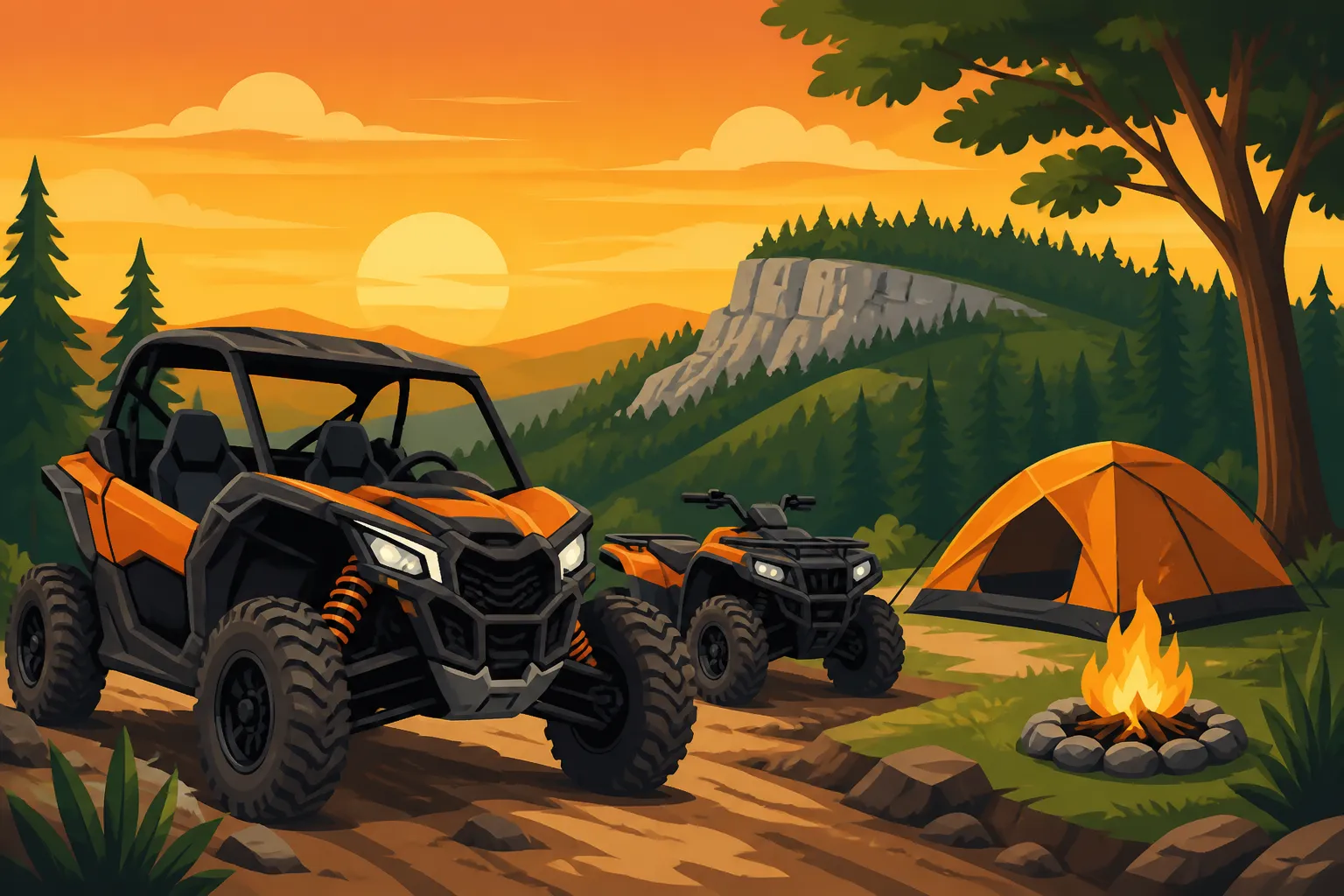
Cobb Ridge Recreation Area is in the Mark Twain National Forest near the Chadwick riding area. It is a practical base for riders who want to camp close to the Ozark trails rather than commute from farther away. The setting is wooded and rural, so expect a more straightforward outdoor campground experience than a full-service RV resort.
Being near a trail system does not mean every road or track is automatically open to every vehicle. Trail access, permitted machine types, seasonal closures, and riding rules can vary by route. Before your trip, check the latest campground and trail information through the responsible land manager. The guide to [Cobb Ridge Recreation Area Camping] can help you think through the campground side of the visit, while [Riding Chadwick in the Ava Ranger District] is useful for planning the riding portion.
It also helps to separate your camping plan from your riding plan. A campsite may be convenient for a particular trailhead or riding area, but that does not necessarily authorize riding directly from your site onto every nearby road. Check the official map and posted signs for legal connections, and trailer your machine if the route between camp and trail is not clearly permitted.
Check facilities and access before packing
Campground amenities can change, and a facility that was available on a past visit may be closed, seasonal, or temporarily out of service. Confirm essentials such as drinking water, restrooms, trash disposal, campsite access, and any reservation or payment requirements before leaving home. Do not assume there is potable water at the campground; if the information is unclear, bring enough water for drinking, cooking, and basic cleanup.
Think about your rig as well as your campsite. A truck and trailer need room to park without blocking a campground road or another site. If you have a large side-by-side trailer or are traveling with more than one machine, check whether the campsite layout can accommodate it. Arriving in daylight gives you a better chance to choose a suitable spot and unload without rushing.
Pack for a forest campground rather than a developed resort. Useful basics include a first-aid kit, headlamps, extra drinking water, a way to secure food, and a small repair kit for your machine. If you rely on your phone for navigation, download maps before you arrive. Service can be inconsistent in the Ozarks, and a map app such as onX Offroad can be a helpful planning aid when used alongside official forest maps and trail notices.
Planning rides from Cobb Ridge
Confirm permits, machine rules, and route access
Permit requirements depend on where you intend to ride. A campground stay and permission to ride on a particular trail are separate matters, so do not assume one automatically includes the other. Check the rules for the specific riding area and machine you plan to use. [Missouri National Forest ATV Permit] offers a starting point for understanding the forest permit question, and [Buying a Forest Permit at a Convenience Store] may help if you are arranging a permit during your trip.
Before unloading, verify that your machine is allowed on the intended route. Width restrictions, trail designations, and closures can affect whether an ATV or UTV can use a particular segment. Some forest routes may be suitable for a narrow machine but not a wider side-by-side. When a sign or map is unclear, stop and check rather than treating the absence of a barrier as permission.
A trail map is most useful when you can match it to the posted information on the ground. Mark likely staging areas, legal access points, and a conservative route back to camp. onX Offroad can help you review mapped routes and save information for offline use, but a digital map should not override a closure notice, gate, or official route designation. Keep a paper or downloaded forest map available as a backup.
Choose a ride that suits your group and conditions
Chadwick-area routes can feel very different depending on rain, trail maintenance, and your machine’s ground clearance and width. If you are new to the area, choose a shorter outing first. That gives you time to learn the trail markings, understand the terrain, and return to camp before fatigue or fading light becomes a problem. For orientation and route planning, [Riding Chadwick From Sparta] and [80 Miles in the Ava District] can provide useful context about the broader riding area.
The Ozarks can be rocky, steep, and uneven, with creek crossings and changing surfaces. A route that feels manageable in dry weather may become slippery or rutted after rain. Check [Missouri Riding After Heavy Rain] and [Missouri Trail Closures to Check] before setting out, especially after storms. If conditions are questionable, shorten the ride or choose a different activity rather than trying to push through a section that exceeds your group’s experience.
| Trip factor | What to check before you ride | Why it matters |
|---|---|---|
| Machine width | Compare your machine with route restrictions and signs | Some trails may not accommodate wider vehicles |
| Recent weather | Check for rain, washouts, and storm damage | Mud and runoff can make familiar routes harder |
| Trail status | Look for current closure notices and gates | A route shown on a map may be closed |
| Navigation | Save official maps and useful routes offline | Cell service may be unreliable in forested areas |
| Group ability | Match the route to the least experienced rider | A manageable pace helps everyone finish safely |
| Return plan | Choose a turnaround time and route back to camp | Daylight and fatigue can change quickly |
Making camp comfortable and safe
Set up with trailers, gear, and neighbors in mind
A little organization at camp can save frustration after a long drive. Before unloading, identify where the tow vehicle and trailer can sit, where people will walk, and how you will keep riding gear separate from food and sleeping equipment. Keep ramps, tie-downs, and tools in a consistent place so they are easy to find when it is time to load again.
Try to keep noise and movement considerate, especially early in the morning or later in the evening. Riders often want to get an early start, but nearby campers may not be on the same schedule. Avoid warming up or revving machines unnecessarily at camp, and follow posted rules about where machines can be operated or parked. If you are uncertain about riding within the campground, keep the machine off and use the designated access route or trailer it to an authorized staging area.
Weather can turn a comfortable campsite into a muddy one quickly. A tarp, extra dry bags, and a change of socks can make a wet ride much easier to recover from. Keep keys, phones, paperwork, and medications in a dry, secure place. For trail-day preparation, [Fuel Between Ozark Towns] is a helpful reminder to plan fuel stops rather than relying on finding fuel immediately beside a trailhead.
Prepare for limited service and changing conditions
Do not count on steady cell coverage for navigation, calls, or weather updates. Tell someone where you plan to ride and when you expect to be back. Keep emergency contacts and essential trip details written down or saved offline, and carry a charged power bank. [Cell Dead Zones in the Ozarks] is worth reviewing if your group depends heavily on phone-based navigation.
On the trail, ride within sight or agreed communication distance of your group. Establish a simple plan before separating: where to stop, what to do if someone takes a wrong turn, and how long to wait before turning back. A rider with a mechanical problem should not be left alone while the rest of the group rides on. Carry basic tools and know which repairs are realistic to make on the trail.
Leave camp and trails in good condition. Secure food and rubbish, use fire areas only as allowed, and follow any current fire restrictions. Respect gates and closures, stay on designated routes, and give other trail users space. If you meet hikers, equestrians, or another group, slow down and follow posted right-of-way guidance. A quiet, careful approach helps prevent a close encounter from becoming a safety problem.
A practical plan for a Cobb Ridge weekend
Before you leave home
Start with three checks: campground conditions, trail status, and permit requirements. Confirm the campground’s current facilities and access details, then check which routes are open and appropriate for your machine. Keep links to official notices saved, but also download maps in advance. onX Offroad may be useful for organizing route ideas and offline navigation, while official maps and signs remain essential for confirming where riding is permitted.
Next, inspect the machine and trailer. Check tires, brakes, lights, fluids, battery, winch operation if equipped, and tie-down points. Pack protective gear and a small repair kit, then bring more water than you expect to need. If you are traveling with children or less experienced riders, make the first ride short and uncomplicated; a successful warm-up outing is better than an ambitious route that leaves someone worn out or uncomfortable.
Finally, agree on a realistic schedule. Consider arriving early enough to set up before dark, riding during the cooler part of the day when practical, and leaving time to clean, secure, and load equipment. A simple plan reduces the small problems that can eat up a weekend: arriving after the campground is hard to navigate, discovering a trail is closed at the entrance, or realizing you have no offline map when service disappears.
On arrival and before the first ride
Read the campground and trailhead signs before unloading. Check for changes to access, fire use, parking, and trail conditions. If your intended route is not clearly open to your machine, ask the appropriate land manager or choose a route with clear authorization. Use [Parking a Rig at a Mark Twain Lot] as a reminder to think through parking and staging rather than assuming any open space is suitable for a vehicle and trailer.
Do a quick group check before heading out: helmets and protective gear secured, water packed, machines fueled, and everyone aware of the planned route and turnaround time. Take a photo of the trailhead map if useful, but do not rely on that photo as a substitute for current signs. If the weather worsens or the trail becomes more difficult than expected, turn around early. The best Cobb Ridge weekend is not the one with the longest ride; it is the one where your group gets back to camp safely, with enough energy to enjoy the next day.
Disclaimer
This article is for general informational purposes only and does not constitute professional advice. Laws, prices and regulations vary by location and change over time. Consult a qualified professional for guidance on your specific situation.