Sharing a Forest With Deer Hunters
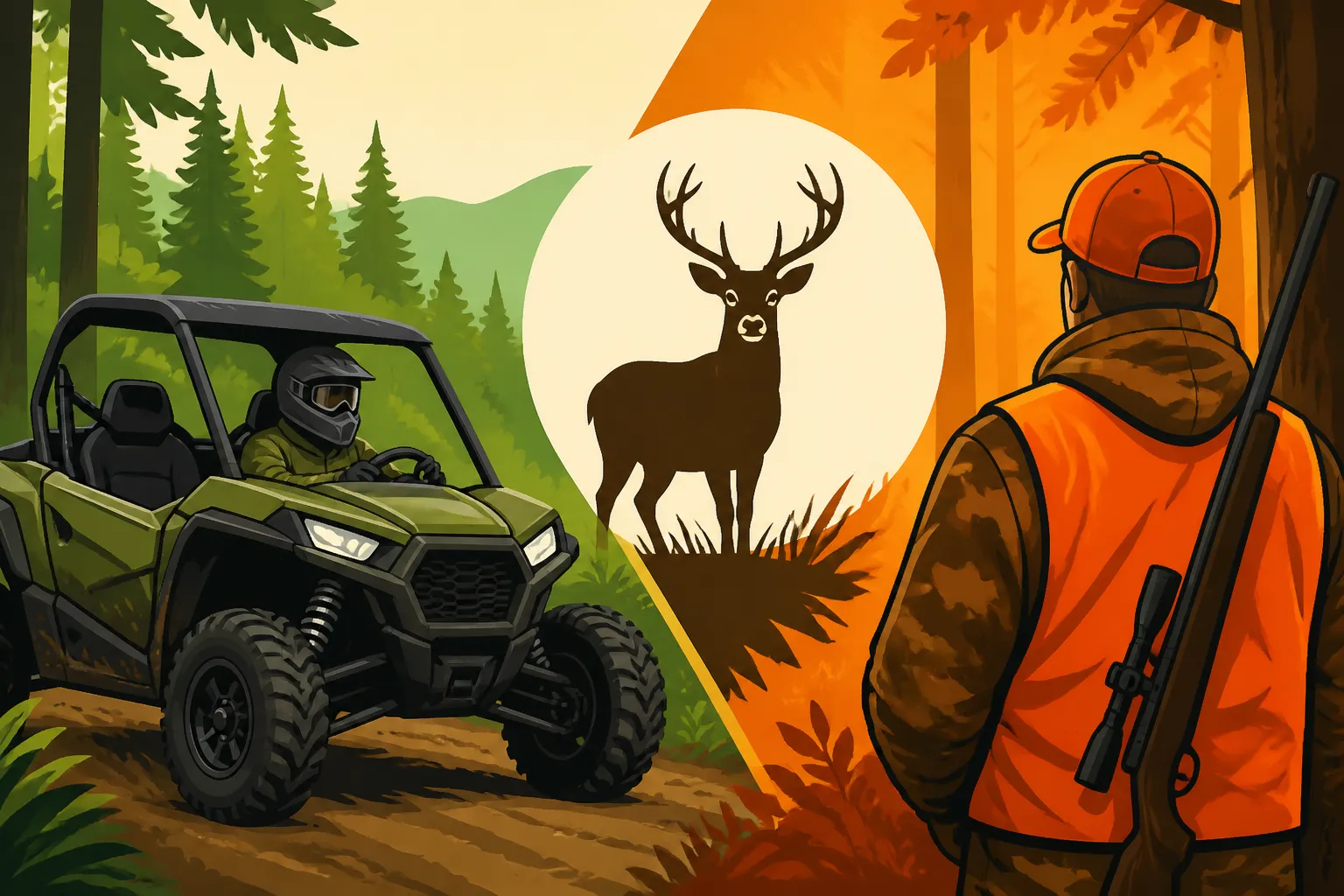
A quiet Missouri forest can become busy fast when deer season brings hunters to the same roads and trails ATV riders use. The hard part is knowing whether your route is open, how to stay visible, and what to do when you meet someone carrying a firearm. This guide covers practical ways to plan a considerate, safer ride around hunting activity.
Plan your Missouri ride around hunting activity
Check the land manager’s notices before you leave
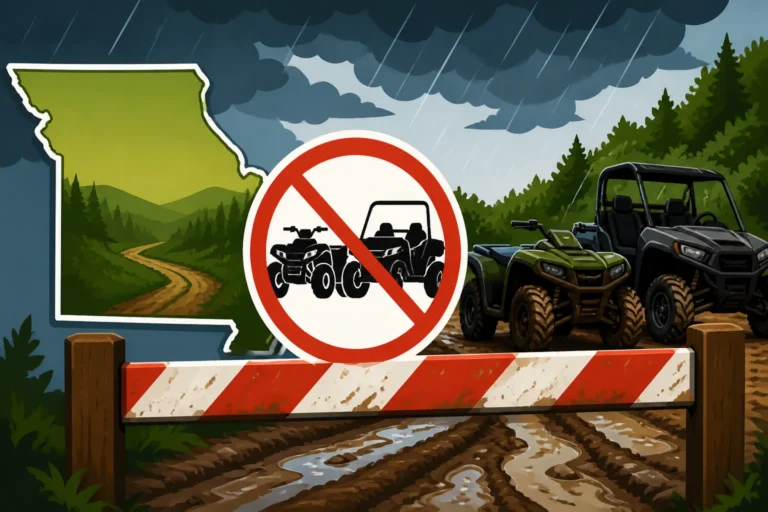
Missouri riding areas don’t all follow the same rules or schedules. A route in a national forest, state park, conservation area, or private riding park may have different access rules, seasonal restrictions, and trail closures. Hunting activity does not automatically mean every trail is closed, but it also doesn’t mean a trail is open just because it appears on a map.
Before loading up, check the land manager’s current notices for the specific area you plan to visit. Look for changes to trail access, seasonal closures, temporary restrictions, and instructions for riders and hunters. If you’re heading into the Mark Twain National Forest, confirm the rules for that forest location rather than relying on what you remember from another trail system.
A route-planning app such as onX Offroad can help you orient yourself and keep track of a planned route, but treat it as a navigation aid—not the final word on access. Compare your route with official maps and posted notices, and remember that a mapped road or trail may be closed or restricted. For a useful pre-trip routine, see Checking a Missouri Trail Notice Before You Load and Reading the Trailhead Board Before You Unload.
Choose your timing and route with care
A ride that begins late in the day can overlap with hunters heading into or out of the woods. Dawn and dusk can also make it harder for everyone to see and judge distance. If your plans are flexible, consider riding during a quieter part of the day and avoiding routes that pass close to popular parking areas, access roads, or known hunting locations.
Think about the whole route, not just the trail you intend to ride. You may need to travel on a forest road to reach the riding area, and hunters may be walking or driving along that same road. A narrow route with limited sightlines calls for a slower pace and more attention than an open staging area. If you hear gunfire nearby, don’t try to guess exactly where it came from or continue at speed. Stop somewhere safe, assess what you can see and hear, and choose a different route if you’re uncertain.
If you use onX Offroad to plan a route, save a simple alternative before you start. A backup route can keep you from feeling pressured to push on when an access point is crowded or conditions feel uncomfortable. For broader seasonal planning, Missouri Riding in Hunting Season and Missouri Trail Closures to Check are useful topics to review.
Make yourself easier to see and hear
Wear high-visibility clothing even when you aren’t hunting
A rider isn’t necessarily subject to the same clothing rules as a hunter, and requirements can differ by activity and location. Still, bright orange clothing is a practical choice when you’re sharing wooded ground during hunting season. Wear it where it can be seen—such as on your upper body—rather than relying on a small patch hidden by a pack or jacket.
Visibility matters most when trees, brush, bends, or changes in elevation block a clear view. A hunter may hear your machine before seeing you, but engine noise doesn’t tell them exactly where you are or which direction you’re moving. Bright clothing gives people another cue and can help distinguish you from the background. Review Blaze Orange on a Missouri November Ride for more context on visibility during a fall outing.
Also check the rules for the place you’re visiting. Public riding areas can have specific requirements for flags, lighting, or other equipment, and those rules may differ from general road requirements. Don’t assume a flag or garment that meets one location’s requirements will meet another’s. If a forest or park has posted instructions, follow those instructions. Missouri Safety Flag Requirements explains why it’s worth checking the rules for the riding area rather than making assumptions.
Slow down where people may be on foot
Hunters often leave a vehicle and walk into the woods, so an empty-looking trail can still have people nearby. Reduce speed near trail crossings, parking pullouts, gates, bends, and narrow sections where someone could be standing just out of view. Keep enough room to stop without skidding or swerving into the trees.
Use a steady, predictable pace rather than accelerating to get through a busy stretch. If you see a person, stop at a safe distance and give them time to decide what they need. Don’t crowd them, rev the engine, or assume they can quickly step off the route. A simple wave or calm verbal greeting can make your intentions clear without turning the encounter into a conversation that holds up the trail.
Noise is another part of being considerate. A loud machine can disturb wildlife and make it harder for other people to enjoy the forest. Keep your machine in good working order, avoid unnecessary revving, and respect posted sound rules. Missouri Trail Etiquette on Shared Ground offers more guidance on sharing a trail without making an already busy day harder for everyone.
Handle encounters calmly and safely
Give hunters room and avoid approaching their setup
If you come across a hunter on foot, a parked vehicle near a trail, or equipment that suggests someone is using the area, don’t ride closer to investigate. Stop in a safe place, keep a respectful distance, and consider turning around or taking your planned alternate route. A hunter may be concentrating on the surroundings, and approaching a blind or other setup can create an uncomfortable situation even if you’re simply curious.
If you need to pass someone, do it slowly and only when there is a clear, safe route. Avoid passing so close that your machine or gear could brush against a person or their equipment. Don’t touch unattended property, move markers, or ride around a barrier to get a better look. If a person asks you to stop or leave an area, stay calm and move away without escalating the encounter. If you believe a trail is officially closed or access is unclear, contact the land manager rather than arguing at the trail.
It can help to agree on a simple plan with your riding group before setting out: stop when anyone spots a person, keep the group together, and let the lead rider decide whether to turn around. That prevents one rider from continuing around a blind corner while the others are still stopped.
Know when to pause, reroute, or end the ride
There isn’t one perfect response to every situation. Use what you can observe. A busy trailhead, several vehicles parked along an access road, or repeated encounters with people on foot may be enough reason to choose a different route. If gunfire sounds close, you cannot tell where people are, or visibility is poor, pausing or leaving the area is a sensible choice—not an overreaction.
| What you notice | A practical response |
|---|---|
| People walking near a trail or road | Slow down, stop if needed, and give them plenty of room |
| A crowded parking area or access point | Avoid lingering and consider a different route |
| Posted closure or restricted access notice | Do not enter; use an open, permitted route |
| Gunfire nearby and unclear surroundings | Stop somewhere safe, reassess, and reroute or leave |
| A hunter’s equipment near the trail | Don’t approach or touch it; give the area space |
| Poor visibility at dusk or in thick woods | Reduce speed, make yourself visible, and consider ending the ride |
If you use onX Offroad or another navigation tool, keep an eye on your surroundings instead of focusing on the screen while moving. Check your location only when stopped safely. Download or carry the official map information you need before leaving an area with weak cell service, and don’t assume an app will show a newly posted closure.
For permitted routes, use the current land-manager information to confirm access before you ride. Missouri National Forest ATV Permit can help you understand the permit topic, while [Missouri Rules for Riding a National Forest] is relevant when you’re checking how forest access rules apply. Requirements can differ between a forest trail and a state park, so don’t treat one permit or rule set as universal.
Build a considerate hunting-season ride plan
Prepare your group before the wheels roll
A quick conversation at the truck can prevent a lot of confusion later. Tell everyone which trails you plan to use, where you’ll regroup if separated, and what to do if someone sees a hunter or a closure notice. Agree that nobody rides ahead around a blind corner or through an uncertain access point without the rest of the group.
Pack clothing that stands out, water, a charged phone, and a paper or offline map if available. Let someone who isn’t riding know where you expect to be and when you plan to return. In remote areas, cell coverage may be unreliable, so don’t make a phone map your only way to navigate. A secondary map or a clearly shared route can be especially helpful if the group has to turn back.
A route-planning tool like onX Offroad may help your group follow the same plan, but mark important details in advance: the intended trailhead, any alternative route, and a point where you’ll turn around if conditions change. Pair that plan with official maps and local notices. That way, the app supports your decisions without replacing posted rules or your own judgment.
Keep the forest usable for everyone
Hunters and riders may have different reasons for being in the woods, but both benefit when people follow access rules and treat one another with patience. Stay on authorized routes, leave gates as you find them, pack out your trash, and don’t use a trail encounter as an excuse to speed away or make extra noise. If a route is closed, choose another place to ride rather than trying to find a way around the restriction.
That same courtesy works in reverse: if a hunter gives you space or offers a calm warning about activity ahead, acknowledge it and make a safe decision. You don’t need to agree on every use of public land to share it responsibly. A little planning, visible clothing, and a willingness to reroute can make a Missouri forest ride more comfortable for everyone.
Before your next outing, check the area’s notices, confirm your route, bring visibility gear, and agree on a group plan. If conditions change once you arrive, it’s fine to choose a different trail or call the ride early. A good day in the woods is not measured by how many miles you force into the plan.
Disclaimer
This article is for general informational purposes only and does not constitute professional advice. Laws, prices and regulations vary by location and change over time. Consult a qualified professional for guidance on your specific situation.